
Jeremy Gross
Murderer Russell Ellwood
Murderer · USA · 1991
Russell Ellwood was a former taxi driver. Authorities suspected him of killing…
20 victims
Russell Ellwood
Murderer · USA · 1991
Russell Ellwood was a former taxi driver. Authorities suspected him of killing…
20 victims
 Robert Martines Perez
Murderer · USA · 1994
Name: Robert Martines Perez · Other name used in proceedings: Robert Martinez P…
15 victims
Robert Martines Perez
Murderer · USA · 1994
Name: Robert Martines Perez · Other name used in proceedings: Robert Martinez P…
15 victims
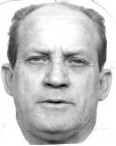 Billy Frank Vickers
Murderer · USA · 1993
Billy Frank Vickers Vickers was executed by lethal injection in Texas on Januar…
14 victims
Billy Frank Vickers
Murderer · USA · 1993
Billy Frank Vickers Vickers was executed by lethal injection in Texas on Januar…
14 victims
 Raymond Deleon Martinez
Spree killer · USA · 1983
Raymond Deleon Martinez was convicted and sentenced to death for the 1983 murde…
5 victims
Raymond Deleon Martinez
Spree killer · USA · 1983
Raymond Deleon Martinez was convicted and sentenced to death for the 1983 murde…
5 victims
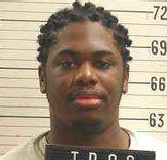 Devin Earl Banks
Murderer · USA · 2002
Devin Earl Banks killed Kadhem Al-Maily and permanently disabled Hussain Altile…
1 victim
Devin Earl Banks
Murderer · USA · 2002
Devin Earl Banks killed Kadhem Al-Maily and permanently disabled Hussain Altile…
1 victim
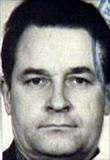 Leonardas Zavistonovicius
Mass murderer · Lithuania · 1998
Leonardas Zavistonovičius went on a house-to-house shooting spree in Draučiai,…
9 victims
Leonardas Zavistonovicius
Mass murderer · Lithuania · 1998
Leonardas Zavistonovičius went on a house-to-house shooting spree in Draučiai,…
9 victims
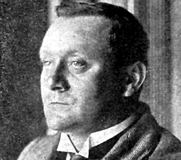 John Schrank
Attempted assassination · USA
John Schrank was born in Bavaria in 1876. In 1889, he moved with his family to…
1912 victims
John Schrank
Attempted assassination · USA
John Schrank was born in Bavaria in 1876. In 1889, he moved with his family to…
1912 victims
 Maura Perry
Murderer · USA · 2012
Maura Perry was convicted of first-degree murder and was sentenced to life in p…
1 victim
Maura Perry
Murderer · USA · 2012
Maura Perry was convicted of first-degree murder and was sentenced to life in p…
1 victim
- Gender
- male
- Country
- USA
- Location
- Indianapolis, Indiana, USA
- Date of birth
- September 19, 1979
- Age at first offence
- 19
- Characteristics
- robbery, domestic violence, drugs
- Victim profile
- Christopher Beers, 24 (convenience store clerk)
- Method of murder
- Shooting
- Date(s) of murder
- August 26, 1998
- Years active
- 1998
- Date of arrest
- Same day
- Status
-
Life imprisonment
Sentenced to life imprisonment without parole; conviction for robbery as a Class A felony was vacated and the case was remanded for resentencing to robbery as a Class B felony
Case details
Jeremy Gross was convicted of murder, felony murder, conspiracy to commit robbery, and robbery as a Class A felony in the State of Indiana v. Jeremy Gross.
Christopher Beers was the store clerk whom Gross shot during a robbery at a convenience store.
Timeline
- Early morning hours of August 26, 1998 — Jeremy Gross raised his arm and fired a handgun at Christopher Beers, the store clerk, while driving near a convenience store; J.J. Thompson later identified Gross as the shooter.
- August 26, 1998 — Gross took $650 in cash, disabled the store’s telephone lines, and grabbed the video recorder that served the surveillance cameras; Gross and his confederate Joshua Spears fled the scene.
- August 26, 1998 — Sheriff’s deputies found Beers’ body outside the store near a payphone; Beers died from multiple gunshot wounds to the head, chest, and abdomen.
- Less than 7 hours later — Gross confessed to detectives, steering them to the video recorder (VCR) and gun; divers recovered the gun after the VCR was found lying in shallow water protruding from the mud.
- June 18, 2002 — On direct appeal, the Indiana Supreme Court vacated the robbery-as-a-Class-A-felony sentence and remanded for resentencing to robbery as a Class B felony; otherwise it affirmed the judgment of the trial court.
- Spring of 2000 — The trial occurred, two years after the shooting.
- 2000 — The trial court sentenced Gross to life in prison without parole for the murder conviction and to a term of years for the conspiracy and robbery convictions.
Background
Gross was 18 years old at the time of the August 26, 1998 shooting. He approached a convenience store with a friend and intended to rob it.
Christopher Beers was 24 and was the lone clerk at the store that morning. Beers had completed one year at Purdue University before running out of money for tuition and was working to earn money to return to school. He was described as mild-mannered.
Gross had a friend/accomplice, Joshua Spears, who headed for another room to get the surveillance tape during the robbery.
The offence
Early morning events on August 26, 1998 involved a robbery and a shooting inside the Convenient Food Mart.
Gross stood outside the glass doors behind his accomplice, Joshua Spears. Gross held a small, black semiautomatic pistol at his side. Beers buzzed them in.
Gross entered the store and began shooting. The first shot hit Beers in the abdomen. Additional shots were fired, with one shot missing and another hitting Beers in the chest. As Beers pleaded, Gross followed him into the back office and shifted the pistol from his right hand to his left to get a better angle. From close range, Gross shot Beers in the face. Beers reached out for Gross and asked, “Why, Jeremy, why?” Gross told him to shut up. Beers crumpled to the floor.
Gross emptied the cash register and office safe of $650 and ripped the two telephone cords from the wall. The events happened in less than a minute.
Gross and Spears fled by foot through a neighborhood of mobile homes to their trailer park not more than half a mile away. Along the way, Gross and Spears threw the gun and the VCR over a wire fence into a retaining pond.
Investigation
A passer-by who was a regular customer at the Convenient Food Mart saw Gross and Spears enter the store and gave police a description. Another employee said the description sounded like that of Gross.
Less than seven hours later, Gross confessed to detectives and directed them to the VCR and the gun. Officers found the VCR lying in shallow water protruding from the mud; divers recovered the gun.
F.B.I. experts salvaged the videotape of the murder.
Gross gave a taped statement admitting that he entered the store to rob the cashier and that when the cashier refused to surrender the money, he shot him. Gross also admitted taking the security video recorder to conceal the crime.
Arrest
Gross was arrested shortly thereafter by officers of the Marion County Sheriff’s Department.
Trial
The trial took place in the spring of 2000.
Charges and convictions
The State charged Gross with murder, murder in the perpetration of a robbery, conspiracy to commit robbery, and robbery as a Class A felony.
A jury convicted Gross as charged. After the penalty phase, the jury recommended life without parole. The trial court accepted the jury’s recommendation and sentenced Gross accordingly.
Jury sentencing outcome
The penalty phase lasted five days. The trial court sentenced Gross to life imprisonment without parole for the murder conviction and to a term of years for the conspiracy and robbery convictions. No sentence was imposed for the felony murder conviction.
Video and evidence
The defense played a videotape showing Gross walking into the Convenient Food Mart and shooting Beers three times.
Gross’s confession included the statement: “He knew it was me. . . . I just couldn't stop. My fingers just kept going.”
Juror selection and attitudes toward capital punishment
On the 24-page jury questionnaire, Elizabeth Stone, who was 60 and works as a nurse, wrote that she “strongly favored” the death penalty. She told the interviewer: “I looked at it as an eye for an eye.” She also said: “Someone who takes someone's life deserves death.”
Another juror, 54-year-old Cheryl Berkowitz (then Cheryl Rader), who worked at a drug-treatment center, said during voir dire that she thought the death penalty was not used often enough.
Sentencing
At sentencing, the trial court found the felony murder aggravator proven beyond a reasonable doubt. The aggravator was: “The defendant committed the murder by intentionally killing the victim while committing or attempting to commit . . . Robbery.”
The trial court found mitigating circumstances including Gross’s unstable childhood characterized by a pattern of parental abuse and neglect, his attainment of a high school diploma, his satisfactory adjustment while incarcerated at a youth center and at Boy’s School, and his volunteering to tutor other inmates while incarcerated at the Marion County Jail awaiting trial.
The trial court found the mitigating circumstances outweighed by the aggravating circumstance and followed the jury’s recommendation.
On the direct appeal, Gross challenged the adequacy of weight given to mitigating factors, and also challenged the imposition of sentence for robbery as a Class A felony.
Appeals
Direct appeal to the Indiana Supreme Court
The Indiana Supreme Court considered two issues: (1) whether the trial court erred in imposing sentence for robbery as a Class A felony, and (2) whether Gross’s life sentence was appropriate.
Ruling on robbery as a Class A felony
The Indiana Supreme Court vacated Gross’s conviction and sentence for robbery as a Class A felony.
The court remanded for resentencing to impose sentence for robbery as a Class B felony.
The Supreme Court reasoned that double jeopardy concerns applied to the use of Beers’ death to elevate robbery to a Class A felony and that the jury was instructed on the elements of both varieties of robbery as a Class B felony. The court stated it vacated the sentence for robbery as a Class A felony and remanded for a new sentencing order imposing sentence for robbery as a Class B felony.
Ruling on life sentence
The Indiana Supreme Court affirmed the life sentence without parole in all other respects.
The Supreme Court found no manifest abuse of discretion in the trial court’s weighing of aggravating and mitigating factors. It stated that the mitigating weight warranted for each consideration was in the low range, individually and cumulatively, and that the aggravating circumstance was “substantial and serious.”
The Supreme Court concluded that the proper and appropriate sentence for Jeremy Gross was life without parole.
Other details
Prior and related family/childhood details presented in mitigation
Mitigation at trial included testimony and evidence about Gross’s childhood and family circumstances. Gross’s father drank often and became violent when drunk, including a memory of his father slamming his mother’s head into a refrigerator. Gross’s father and mother (Jeff and Cindy, respectively) were described as exceedingly drunk after watching the Indianapolis 500 on television and bar-hopping. Cindy was described as dousing a sofa with charcoal-lighter fluid, lighting a match, and taking their daughter Jennifer and their son Jeremy out of the home; Cindy was later found guilty of arson and placed on probation in the same courtroom.
Cindy disappeared for days at a time, frequently consuming vast quantities of alcohol and prescription drugs. Dog feces were described as littering the floors. Gross occasionally slept in a closet and had few clothes. Kids at school taunted him with the moniker “gross Jeremy,” and teachers sent home notes complaining of his dress and hygiene.
At age 8, when Gross’s sister was 10, state child-welfare services took them away from Cindy.
Confession details and admissions in court proceedings
Gross admitted entering the store to rob the cashier and shooting when the cashier refused to surrender the money.
Juror deliberations and verdict on sentencing
In deliberations, the jury was unanimous in the outcome. Nine voted for life without parole, one for a term of years, and two for death. The votes were tallied after further deliberations, and it became unanimous. The foreman recalled: “I said, 'We have a sentence of life,'” and “everybody in the room -- and I mean everybody -- started crying.”
A juror (Darlene Sue) requested that her last name not be used. She believed Gross should die and said: “He wasn't so scarred by his childhood that he didn't know right from wrong.” She told fellows on the jury: “I remember his friends who he was living with in the trailer, saying that he talked them into staying in school. That told me he knew what he was doing.”
Cheryl Berkowitz, the recovering addict and alcoholic, thought Gross deserved another chance and said he should have a chance to get out of prison someday. The foreman (Kevin Garrison) described struggling with whether Gross knew the difference between right and wrong, while also referencing the gruesomeness of the crime, including a photograph of Christopher Beers lying face down by a dangling pay phone.
Sentencing review comments
The State alleged an aggravating circumstance that Gross committed the murder by intentionally killing Beers while committing a robbery. The trial court found this aggravator proven beyond a reasonable doubt, and the record supported that finding.
Co-defendant note
Joshua Spears was charged and tried separately for the same offenses.

Spotted an error, or have more information about this case?