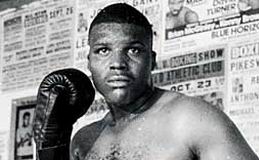
Reggie Gross
Murderer Brian Kevin Rosenfeld
Murderer · USA · 1985
Brian Kevin Rosenfeld Brian Kevin Rosenfeld was sentenced to three concurrent l…
23 victims
Brian Kevin Rosenfeld
Murderer · USA · 1985
Brian Kevin Rosenfeld Brian Kevin Rosenfeld was sentenced to three concurrent l…
23 victims
 Yahweh ben Yahweh
Murderer · USA · 1980
Yahweh ben Yahweh was born and legally named Hulon Mitchell Jr. (October 27, 19…
23 victims
Yahweh ben Yahweh
Murderer · USA · 1980
Yahweh ben Yahweh was born and legally named Hulon Mitchell Jr. (October 27, 19…
23 victims
 Russell Ellwood
Murderer · USA · 1991
Russell Ellwood was a former taxi driver. Authorities suspected him of killing…
20 victims
Russell Ellwood
Murderer · USA · 1991
Russell Ellwood was a former taxi driver. Authorities suspected him of killing…
20 victims
 James Michael Briddle
Murderer · USA · 1980
James Michael Briddle was executed by lethal injection in Texas on December 12,…
2 victims
James Michael Briddle
Murderer · USA · 1980
James Michael Briddle was executed by lethal injection in Texas on December 12,…
2 victims
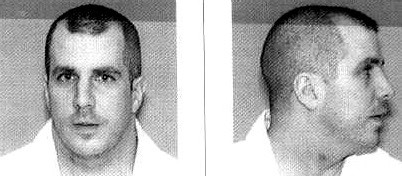 Britt Allen Ripkowski
Murderer · USA · 1997
Britt Allen Ripkowski was convicted of capital murder in Texas and received a s…
2 victims
Britt Allen Ripkowski
Murderer · USA · 1997
Britt Allen Ripkowski was convicted of capital murder in Texas and received a s…
2 victims
 Meriel Bemis
Murderer · USA · 2014
Meriel Bemis was a 21-year-old mother in DeKalb County, Georgia. She lived with…
1 victim
Meriel Bemis
Murderer · USA · 2014
Meriel Bemis was a 21-year-old mother in DeKalb County, Georgia. She lived with…
1 victim
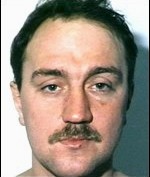 Ian Simms
Murderer · United Kingdom · 1988
Ian Simms — pub landlord and convicted of Helen McCourt’s murder. · Helen McCou…
1 victim
Ian Simms
Murderer · United Kingdom · 1988
Ian Simms — pub landlord and convicted of Helen McCourt’s murder. · Helen McCou…
1 victim
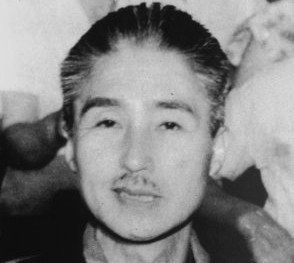 Sadamichi Hirasawa
Mass murderer · Japan · 1948
Sadamichi Hirasawa was a Japanese painter. He was also known as a tempera paint…
12 victims
Sadamichi Hirasawa
Mass murderer · Japan · 1948
Sadamichi Hirasawa was a Japanese painter. He was also known as a tempera paint…
12 victims
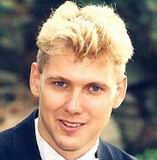 Paul Bernardo
Serial killer · Canada · 1990
Paul Kenneth Bernardo (born August 27, 1964 in Toronto, Ontario) was a Canadian…
3 victims
Paul Bernardo
Serial killer · Canada · 1990
Paul Kenneth Bernardo (born August 27, 1964 in Toronto, Ontario) was a Canadian…
3 victims
- Gender
- male
- Country
- USA
- Location
- Baltimore, Maryland, USA
- Date of birth
- January 1, 1962
- Age at first offence
- 24
- Characteristics
- drug dealer, murder for hire, history of mental illness, mentally ill
- Victim profile
- Andre Coxson / Zachary Roach and Rodney Young
- Method of murder
- Shooting
- Date(s) of murder
- September 12/23, 1986
- Years active
- 1986
- Date of arrest
- —
- Status
-
Life imprisonment
Sentenced to three life terms; two of them to run consecutively in 1989
Case overview
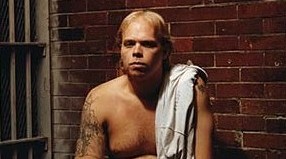
Reggie Gross (born January 1962) was a journeyman heavyweight boxer in the 1980s. He was imprisoned after being sentenced for three murders in 1989. He served his life sentences in a maximum security prison in Edgefield, South Carolina, and was eligible for parole in 2009.
Timeline
- June 1988 — Reggie Gross fought on the Tyson/Spinks undercard and was bombed out by Donovan “Razor” Ruddock in two rounds.
- June 13 (year not stated) — Reggie Gross met Mike Tyson at Madison Square Garden and fought Tyson.
- Fall 1986 — Baltimore homicide detectives arrested Gross in connection with the execution-style killing of Andre Coxson.
- May 1987 — A jury in Baltimore Circuit Court found Gross not guilty of the charges related to Andre Coxson.
- September 1986 — Gross’s crimes were focused on in the investigation, including the bloody war involving brothers Spencer and Alan Downer and killings associated with the Boardley gang.
- Sept. 12, 1986 — Gross admitted to killing Andre Coxson.
- Sept. 23, 1986 — Eleven days later, Gross admitted to killing Zachary Roach and Rodney Young on Gold Street in West Baltimore.
- 1989 — Gross pleaded guilty and was sentenced to three life terms, two to run consecutively.
- 1992 — Gross’s two youngest daughters visited him when he was housed at the federal prison in Lewisburg, Pa.
- about 2009 — Gross was eligible for parole.
Background
Reggie Gross was raised by a single mother. His father, Russell Allston, was stabbed to death during a West Baltimore street fight when Gross was 3 days old in 1961.
Gross lived in neighborhoods where his mother rented homes and where heroin and cocaine addicts were present. When he was 13, he was arrested in connection with a purse snatching, and police found a toy gun in his possession. He spent several years in a group home for juvenile offenders.
While in the group home, Gross met another teenager described as “Sugar Ray Leonard’s sister’s boyfriend,” whom Gross said he could not remember by name. The teenager knew some boxing fundamentals and training exercises. Gross learned to block punches and to shadow box, and he jogged every day.
By 1979, Gross was out of jail and working in a construction job. He bragged about being the next Muhammad Ali. Co-workers and friends challenged him to prove himself and to sign on with Mack Lewis, trainer of hundreds of boxers over several decades. Lewis took him into his gym, trained him to fight, and molded him into a light heavyweight boxer. Gross’s trainer liked him, worried about him, scolded him, and admonished him to stay away from bad guys and from women.
Gross stated:
“In one month with Mr. Mack, I was ready to fight.”
He also stated:
“In 11 months I turned pro. Eleven months! I was 19. I wore Pro Keds for my first fight, against a guy from Virginia.”
He reported having a 19-3 record as an amateur. At one point he had a 14-0 record as a light heavyweight.
Gross later described another man he knew as “Wimpy.” Gross said he never knew Wimpy’s full name. Gross reported that Wimpy drove a Datsun 280Z.
Gross stated that in March 1983, Wimpy drove him in the passenger seat to Atlantic City, N.J., for a light heavyweight championship fight between Michael Spinks and Dwight Braxton. Gross stated:
“On the way up in the car, he showed me $80,000 in the glove compartment.”
Gross stated:
“Eighty thousand dollars! I was green, man. I was living with my grandparents. I didn't know nothin'. He whipped the cocaine out. It was raw, good stuff. One sniff and it made you want more. I knew I couldn't do it.”
Gross later stated:
“But, apparently, Gross did use the cocaine. ‘I had did it,’ he said during the interview. ‘But I stopped.’”
In spring 1984, Gross’s son, 5-year-old Philip, died from burns he received in a fire at his grandmother’s rowhouse. After that, Gross said he lost his heart for boxing, though others believed he continued trying to train as a heavyweight for a shot at Tyson the next year.
The offence
Gross was associated with a violent drug gang described as waging a bloody war to control drug commerce in and around a West Baltimore housing project that no longer exists. Federal prosecutors accused Gross of serving as a paid assassin for a heroin dealer connected to the gang’s drug war.
Gross was accused of three street killings in September 1986. Federal prosecutors pinned three brutal street killings on Gross, and the focus of the investigation was on the bloody war of September 1986. The investigation described brothers Spencer and Alan Downer as part of the conflict.
Specific allegations included:
- Andre Coxson being killed by an execution-style shooting in West Baltimore.
- Two additional men, Zachary Roach and Rodney Young, being killed on Gold Street in West Baltimore.
During his guilty plea, Gross admitted to killing Andre Coxson on Sept. 12, 1986, and also admitted that eleven days later he killed Zachary Roach and Rodney Young on Gold Street in West Baltimore.
Gross stated:
“I was strung out on [heroin] by that time. ‘I was doing drugs hard. I was robbing people just to get fixes. ... I [overdosed] once, was taken to the hospital to be revived after a month of every day getting high. ... I had my car and my house and my girl and everything, but she didn't know I was going around robbin'. She used to fuss at me all the time and find needles in my shoes. We'd been robbin' people all over the city, all month, for drugs and money for drugs.’”
Gross said that on Gold Street:
“There wasn't supposed to be no killin'.”
The government said the killings were hits and that Gross received $3,000 for each.
Investigation and arrest
In fall 1986, Baltimore homicide detectives arrested Gross in connection with the execution-style killing of a rival of the Boardley gang, described as a street dealer named Andre Coxson.
Andre Coxson was described as being approached by Gross on Fayette Street in West Baltimore. Gross allegedly shot Coxson once, then stood over him and fired five more bullets into his head as Coxson begged for his life and tried to crawl away.
At trial, the state produced several witnesses who said they saw Gross carry out the killing and then flee down an alley.
The investigation expanded during 1987 through a combined force of federal and state investigators. One of Boardley’s intimates, Larry Donnell “Donnie” Andrews, cooperated with the investigation and wore a hidden microphone so the FBI could record conversations with, among others, Reggie Gross. The U.S. Attorney’s Office released an indictment naming 10 operatives of the Boardley gang, including its alleged enforcer, Gross.
Gross was accused not only of the Coxson killing, but also in the sub-machine-gun deaths of two other men who were mid-level drug dealers.
Trial
Coxson trial and acquittal
After Gross’s arrest, the fighter was found not guilty of the charges by a jury in Baltimore Circuit Court. The acquittal occurred in May 1987.
Longtime criminal defense attorney Harold Glaser won the acquittal, and he was paid with most of Gross’s take from the Tyson fight.
Gross said after the trial:
“Now that I was found innocent, where are all the apologies? Someone's got to pay,” he told The Sun in 1987.
The warning included that FBI agents were on his tail.
Guilty plea and sentencing
Gross’s case proceeded to a set for trial in summer 1989. Gross pleaded guilty to charges at the last minute.
He admitted to killing Andre Coxson on Sept. 12, 1986. He also admitted that eleven days later, Zachary Roach and Rodney Young were killed on Gold Street in West Baltimore.
Gross entered guilty pleas expecting a 75-year sentence from U.S. District Judge Paul V. Niemeyer. At sentencing, Gross stated:
“I made some huge mistakes. I can't change the past, but I can do better in the future.”
He also stated:
“I know that I will be going away a long while. I just pray that it will not be for the rest of my life.”
Judge Paul V. Niemeyer gave Gross a sentence of three life terms, two of them to run consecutively. Judge Niemeyer told Gross:
“You fell from a most promising career as a boxer.”
Judge Niemeyer also said:
“Unfortunately, you elected a life in which you would pursue some of the most brutal crimes.”
The sentence was viewed as 60 years by the U.S. Parole Commission.
Sentencing
Gross was sentenced in 1989 to three life terms, with two of them to run consecutively.
Gross was eligible for parole after serving a third of that, about 2009. His eligibility date in the narrative was described as “about 2009,” and also described as “for the first time in about eight years.”
Appeals and outcome
A jury found Gross not guilty of charges related to Andre Coxson in May 1987, and Gross later pleaded guilty in 1989 to three murders.
Other details
Boxing career
Gross was described as a journeyman heavyweight boxer in the 1980s.
His most notable wins included upsets of undefeated Smokin’ Bert Cooper (TKO8) and outstanding amateur and 14-0 pro Jimmy Clark (TKO9).
He was stopped in one round by Mike Tyson in an exciting but brief bout. The Tyson fight was at Madison Square Garden.
Gross was also said to have suffered losses to Frank Bruno and Jesse Ferguson.
Gross’s final fight was in June 1988 on the Tyson/Spinks undercard, where Donovan “Razor” Ruddock bombed him out in two rounds.
Gross received $50,000, described as his biggest payday as a fighter. He said he felt he should have done better with a more sophisticated manager, and that he had received as little as $1,000 for some of his best fights.
He made $10,000 in 1987 for fighting future WBF heavyweight champion Adilson Rodriquez in Brazil, and $15,000 for going eight rounds with future WBC heavyweight champion Frank Bruno in Spain.
In 1988, he earned $8,500 in his defeat to Canadian champion Donovan “Razor” Ruddock on the undercard of a Spinks-Tyson title bout.
Gross’s final record as a professional fighter was 19 wins and eight losses.
Deaths and injuries connected to the drug war
Gross’s drug-dealing pal “Wimpy” was shot to death in 1986.
So was another Boardley operative Gross knew as “Shorty.”
One of the victims described as Alan Downer had been a quadriplegic since he and his brother were shot in an assassination attempt.
Boardley was described as going away for 47 years, with a judge recommending he serve 40 before being eligible for parole.
Other gang members went to prison with sentences ranging from eight to 18 years. Some who cooperated got life sentences with recommendations for early eligibility for parole.
Prison life
Gross had earned a high school equivalency certificate in prison. He learned to operate a forklift, completed a course in pest control, and attended numerous counseling programs, including one for drug abuse.
He took part in “scared straight”-type sessions with at-risk teen-agers from South Carolina and Georgia. His team won the prison basketball championship.
The narrative described Gross being in a maximum security prison in Edgefield, South Carolina, and being housed in a maximum security prison described as two-man cell deep.
It also stated he had not had a visitor in seven years and had not seen his daughters in 12 years at the time described.
Mack Lewis visited Gross, accompanied by Pettway, and that was years earlier during his stint at a federal penitentiary in Atlanta. Gross wrote frequent letters to Lewis, and his only contact from the glory days was Lewis.
Gross stated:
“I hear from him all the time,”
and Mack Lewis said:
“I really feel sorry for him. But, you do what you can. I can't correct everybody.”
Gross stated in an interview:
“I haven't had any fights, no violence,”
and also said:
“I don't bother nobody. I keep to myself. I mind my own business, and nobody bothers me. They know I can fight. Ain't no use in me going around bragging or none of that stuff. I don't do that. A lot of people say, 'Man, why you in prison? You don't belong in prison, man.' They say that because of my personality. I don't bother anybody.”
Gross said:
“I get frustrated. ‘I wanna talk with my kids. I wanna talk with my family. I can't do all this time.’”
Gross wrote a letter from prison described as “last summer” and stated:
“I have contact with my mother, brothers, sisters, nieces and nephews, even the 18 new ones that were born since I've been in prison. I love them all dearly, though I don't call that much. When I do call, they all ask the same thing: 'When are you coming home? We love you and we miss you.' ”
Gross watched television and followed sports. He said:
“Anything from Baltimore I root for,”
including the reigning world heavyweight champion Rahman.
Gross stated:
“Hasim has a good punch. ... I told everyone here he was going to beat [Lennox Lewis]”
Gross said he stayed up all night waiting to hear the decision on his radio and felt good when he heard the decision.
Gross provided training advice on Rahman’s stomach:
“I like what I saw. What I want Hasim to do is work on his stomach. I saw him get hit in the gut, and he was almost like Larry Holmes. When he got hit in the gut, he spit out water. Got to work on his stomach.”
Gross sent that training advice to Rahman in a congratulatory card mailed to Mack Lewis’s house and asked the world champ for an autographed photo he could hang in his prison cell. He “hasn't heard back.”
Gross earned $200 a month in the prison factory and sewed button-hole plackets on uniform shirts for the Army and Air Force.
Gross used wages for telephone calls to “Mr. Mack” at his East Baltimore rowhouse.
Additional quoted material and names
Jose Torres wrote in “Fire and Fear” that he was most concerned with Gross among the boxers scheduled to fight Mike. Torres wrote:
“Of the three boxers scheduled to fight Mike - Reggie Gross, William Hosea and Lorenzo Boyd, I was most concerned with Gross. I had seen him in vicious battle in Pennsylvania against Jimmy Clark and I was so impressed with both fighters I urged [Tyson's manager] to keep an eye on them and to put them on his list of possible opponents for Mike.”
Gross recalled in relation to the Tyson fight:
“I hit that man on the chin. I say, 'Suppose I hit him one more time with this right hand. I'm gonna knock his block off.'”
Gross recalled:
“I say to myself, 'Oh my god, I'm on HBO, let me get up!'”
On getting floored again Gross recalled:
“Tyson landed two more left hooks to floor Gross again,”
and it was reported that referee Johnny Lobianco decided Gross was in no condition to continue.
Gross said about the Tyson fight and his feelings:
“Oh my god, I hit him,”
and he was described recalling the moment 15 years after the bout.
Gross received $50,000 and described money problems after becoming addicted to drugs and after being charged with murder.
People named in relation to the case
- Reggie Gross (defendant)
- Mike Tyson (boxer Gross fought)
- Hasim “The Rock” Rahman (world heavyweight champion mentioned)
- Mack Lewis (trainer)
- Larry Donnell “Donnie” Andrews (cooperating operative)
- Harold Glaser (defense attorney)
- Paul V. Niemeyer (U.S. District Judge who sentenced Gross)
- Andre Coxson (killing victim associated with the Coxson murder charge)
- Zachary Roach (killing victim admitted in plea)
- Rodney Young (killing victim admitted in plea)
- Spencer and Alan Downer (brothers in the drug war described)
- Alan Downer (injured quadriplegic victim)
- Jose Torres (author quoted)
- Frank Bruno (boxer Gross lost to)
- Jesse Ferguson (boxer Gross lost to)
- Smokin’ Bert Cooper (boxer Gross beat)
- Jimmy Clark (boxer Gross beat)
- William Hosea (named among boxers scheduled to fight Mike in Torres’s quote)
- Lorenzo Boyd (named among boxers scheduled to fight Mike in Torres’s quote)
- Michael Spinks and Dwight Braxton (fighters at the Atlantic City trip)
- Donovan “Razor” Ruddock (boxer who bombed Gross out in two rounds)
- Trevor Berbick (boxer Tyson was primed to fight in the narrative)
- Adilson Rodriquez (boxer Gross fought)
- Vincent Pettway (training partner mentioned)
- Warren Boardley (drug dealer described as employing Gross to kill)
- “Wimpy” (Gross’s described drug-dealing pal)
- “Shorty” (Boardley operative Gross knew)
- Johnny Lobianco (referee mentioned in the Tyson fight report)
- Dan Rodricks (journalist mentioned)
- The Sun’s Alan Goldstein (reported Tyson fight events)
- Perry Thorsvik (photographer mentioned)
- Russell Allston (father stabbed to death when Gross was 3 days old)
Spotted an error, or have more information about this case?