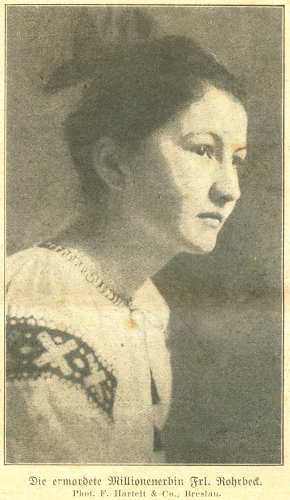
Peter Grupen
Murderer Kürt Erich Tetzner
Murderer · Germany · 1929
Kürt Erich Tetzner (also known as Stranelli) was a German businessman born in 1…
1 victim
Kürt Erich Tetzner
Murderer · Germany · 1929
Kürt Erich Tetzner (also known as Stranelli) was a German businessman born in 1…
1 victim
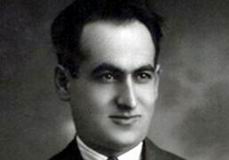 Soghomon Tehlirian
Murderer · Germany · 1921
Soghomon Tehlirian (Armenian: Սողոմոն Թեհլերյան) was born on April 2, 1897, in…
1 victim
Soghomon Tehlirian
Murderer · Germany · 1921
Soghomon Tehlirian (Armenian: Սողոմոն Թեհլերյան) was born on April 2, 1897, in…
1 victim
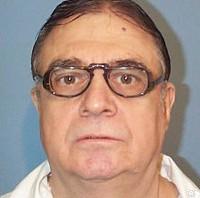 Tommy Arthur
Murderer · USA · 1982
Tommy Arthur was sentenced to death on December 5, 1991. · February 1, 1982 (9:…
1 victim
Tommy Arthur
Murderer · USA · 1982
Tommy Arthur was sentenced to death on December 5, 1991. · February 1, 1982 (9:…
1 victim
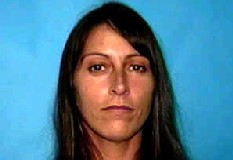 Deidre Hunt
Murderer · USA · 1989
Deidre Michelle Hunt was born 2/9/69. She was sentenced from Volusia County on…
2 victims
Deidre Hunt
Murderer · USA · 1989
Deidre Michelle Hunt was born 2/9/69. She was sentenced from Volusia County on…
2 victims
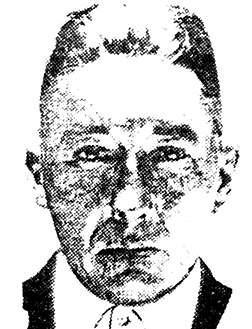 Arnold Sodeman
Serial killer · Australia · 1930
Arnold Karl Sodeman (12 December 1899 – 1 June 1936), also known as the School-…
4 victims
Arnold Sodeman
Serial killer · Australia · 1930
Arnold Karl Sodeman (12 December 1899 – 1 June 1936), also known as the School-…
4 victims
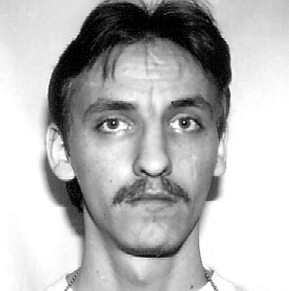 Richard Dillon
Murderer · USA · 1981
Richard Dillon · March 8, 1981 — Richard Dillon and another person committed a…
2 victims
Richard Dillon
Murderer · USA · 1981
Richard Dillon · March 8, 1981 — Richard Dillon and another person committed a…
2 victims
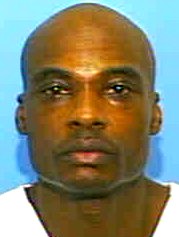 Willie Williams
Mass murderer · USA · 1991
08-13-93 — Received at DOC. · 09/02/91 — Date of offense. · 09/1/91 — Williams…
4 victims
Willie Williams
Mass murderer · USA · 1991
08-13-93 — Received at DOC. · 09/02/91 — Date of offense. · 09/1/91 — Williams…
4 victims
- Gender
- male
- Country
- Germany
- Location
- Hirschberg, Silesia, Germany
- Date of birth
- ???
- Characteristics
- parricide, rape
- Victim profile
- Ursula Schade, 12 (his stepdaughter) and Dorothea Rohrbeck, 16
- Method of murder
- Shooting
- Date(s) of murder
- February 14, 1921
- Years active
- 1921
- Date of arrest
- December 5, 1921
- Status
-
Executed
Executed by guillotine on January 1922
Case record: Peter Grupen
Overview
Peter Grupen was Ursula Schade’s stepfather and Dorothea Rohrbeck’s step uncle. He was arrested on a double-murder charge connected to the killings of Dorothea Rohrbeck and Ursula Schade.
Timeline
- February 14th, 1921 — Dorothea Rohrbeck and Ursula Schade were found shot dead in the Wardrobe Room at Kleppelsdorf Castle.
- September 19th — At trial, Grupen testified about the disappearance of his wife.
- Ten months later, December 5th, 1921 — The Director of Public Prosecutions authorized the arrest of Peter Grupen on a double-murder charge.
- December 20th, 1921 — Handwriting, hypnosis, and ballistics experts were questioned; Dr Moll, professor of hypnosis, gave principal testimony.
- December 21st, 1921 — The jury deliberated and returned its verdict more than seven votes; the court prepared for announcement.
- January 1922 — Peter Grupen was executed by guillotine shortly after Christmas.
The offence
On February 14th, 1921, Dorothea Rohrbeck was found shot in a room overlooking her garden at Kleppelsdorf Castle. Her cousin, Ursula Schade, was also found dead in the same room.
The Wardrobe Room was described as furnished with “two beds, a wardrobe, a washstand, dressing-table and two chairs.” The carpet covered about half the floor, was soaked with blood, and the two girls lay on it.
A revolver had been used to kill the two girls. A bag containing nineteen more bullets was visible in the blood pool under Ursula Schade’s body. A letter addressed “To Grannie” was found in the bag.
The farewell letter “To Grannie”
The letter read: “... I shot Dörte first and then myself. Now you won't have to worry about Dörte any more .... Your unhappy Ursel.”
Later in the trial, the farewell letter left by Ursula Schade was read aloud in court in full as: “Dear Grannie, Do not be cross with me for taking Daddy's revolver out of the desk. I want to help you. When Daddy was showing it to Uncle Willhelm I watched how it was done, then I took it afterwards on the quiet. With love to you and Daddy, Your unhappy Ursel”
Killing and immediate scene details
After discovery of the bodies:
- Dorothea Rohrbeck was already dead when her grandmother bent over her.
- Ursula Schade seemed to be still breathing; Ursula died a few minutes later.
- Grupen’s first words were: “Tell us who did it. I shall be blamed!”
- Grupen noticed the revolver with which the two young girls had been killed, and later admitted it belonged to him.
- Grupen carried Ursula onto the nearest bed, despite not following the “well-known rule that the victim of a murder must not be moved.”
Dr Peters from Löwenberg made a forensic verbal report one hour after discovery of the bodies: “I consider it impossible for Ursula to have killed her cousin. There are various reasons against her having committed suicide. Firstly, from a shot at a distance of less than five centimeters her eyebrows and probably her eyelashes as well would have been singed-but there are no signs of it. Secondly, suicides usually uncover the spot where they intend to shoot themselves. Thirdly, Ursula had thrown back her head in fright. If she had shot herself, the path of the bullet would have been different. Fourthly, if it had been suicide, the empty cases would have been found near the bodies, but they were scattered all over the room. The most remarkable thing of all, at least for the time being, is that the safety catch was on. So Ursula would have had to push it back after the murder, which is impossible. After the third shot-Dorothea was hit twice, her cousin once the murderer clicked the catch on instinctively.”
With a faint smile the police doctor added: “I should not be surprised if this was the 'little' mistake that every murderer makes sooner or later. In this case he has probably made it sooner.”
Investigation
An hour after the head of the local investigation department, Dr Dubiel, arrived with his murder squad, questioning began with the people in the house gathered under one roof.
People in the house during questioning
Dr Dubiel questioned:
- Dorothea’s grandmother, Frau Augusta Eckardt, aged seventy-five
- Grupen
- nine-year-old Irma (Irma Schade)
Dr Dubiel aimed to establish whether Grupen had left the drawing-room.
A chronology involving apples was described:
- Grupen and his stepdaughter had been playing a game with apples as stakes.
- When Irma wanted to eat a won apple, they discovered it was bad.
- Grupen first told Irma to throw it into the stove, then to take it outside instead.
- Irma left the room carrying the apple.
Frau Eckardt’s statement was quoted as: “I was knitting and I might have dropped off. I don't know.”
Irma did not remember whether her stepfather followed her out or remained in the drawing-room when she returned.
Sexual relationship and allegations at investigation
Dr Dubiel could not yet establish for certain whether Grupen had sexual intercourse with his twelve-year-old stepdaughter, but the narrative described hints and remarks that led him to feel sure there had been a “love affair.”
Fraulein Zahn stated: “Ursula was her stepfather's slave,” and explained: “It seemed as if he had hypnotized her.”
It was described that hypnosis was fashionable in post-war German society and that a man called Eric Hanussen travelled with his medium, Martha Farra.
Arrestee’s alibi and property inheritance motive
The narrative described a difficulty in arrest timing because of:
- Ursula’s farewell letter handwriting identification by Frau Eckardt
- Grupen’s alibi concerning whether he had left the room
Frau Eckardt and others were described as asserting that Frau Eckardt would become the murdered girl’s sole heir. Dr Dubiel explained the inheritance position in court interrogation as: “Your wife was first in line. She is the sister of Fraulein Rohrbeck's mother. Frau Eckardt would only inherit if it could be established that your wife was dead.”
During questioning by Dr Dubiel, Grupen responded regarding his wife’s disappearance: “You know very well that my wife walked out on me.”
Grupen said his wife “disappeared without a trace several years ago.”
Dr Dubiel asked whether Grupen had made inquiries, and Grupen said: “No. 1 was glad to see the back of her.”
When questioned about hiring a private detective, Grupen said: “I had to keep the old woman quiet.”
Dr Dubiel asked about shooting ability, and Grupen stated: “We learned to shoot at Verdun:”
He denied responsibility for the murder and denied that the revolver belonged to Ursula.
Additional investigative statements
Mohr, the housekeeper, was brought from Grupen’s house in Oldenbuttel near Itzehoe. In response to Dr Dubiel asking whether he carried on an affair in that location: “He slept with me last night,” was quoted.
The narrative described the Sunday night before the murder:
- They played the gramophone.
- Dorothea refused to dance when Grupen wanted to dance with her.
- Ursula and Dorothea watched the dancing of Frau Eckardt and Grupen.
- Dorothea cried out, rushed out, and slammed the door.
A specific song refrain was described as repeating on the gramophone: “You can have everything from me ... everything from me ... everything from me ... ” and was described as the hit song of the year.
Grupen called to his stepniece: “Look at your grandmother dancing,”
Arrest
On December 5th, 1921, the Director of Public Prosecutions authorized the arrest of Dorothea Rohrbeck’s step uncle, Peter Grupen, on a double-murder charge.
Grupen never confessed and instead denied the crime from the outset.
Trial
Court composition and parties
The trial opened at Hirschberg in Silesia on a sunny but bitterly cold winter’s day.
- President of the Court: Dr Krinke from Breslau
- Prosecution led by: Dr Reifenrath
- Defendant’s retained barristers:
- young Dr Ablass (local)
- Dr Mamroth from Breslau (experienced criminal lawyer)
- Jury:
Nine of the twelve jurors were comparatively well-to-do businessmen.
The other three included:
- Count Saurma-Jeltsch from Wilhelmsburg Castle
- Beckert, manager of the local bank
- Lieutenant Dulitz from Cunnersdorf
Procedural disputes over expert evidence
The prosecutor asked permission to introduce experts on suggestion and hypnosis, arguing that Ursula Schade had been under the hypnotic influence of her stepfather.
The defense objected. The three judges withdrew for consultation and later decided not to hear any expert witnesses at that stage.
Defence strategy and dispute over the farewell letters
In the trial, the farewell letter left by Ursula was read aloud. The case turned on whether Ursula wrote it under influence or on her own.
During trial, counsel argued about the possibility of hypnosis affecting both Ursula’s letter and the vanished wife’s letter.
When the prosecution asked permission to call a handwriting expert, Dr Mamroth objected with: “Perhaps Frau Grupen, too, was under 'hypnotic influence',” and jeered.
At one point Grupen cried: “I am innocent!”
The court experienced a sudden blackout at a critical moment.
Letter read by court: missing Frau Grupen to Dorothea
Fraulein Zahn said she had found a letter written by the missing Frau Grupen to her niece Dorothea on the day before her departure, and the President read it aloud:
“Dear Dörte , This is to say goodbye again before I leave for America, and to wish you a happy life in the future. It would certainly be best to have at your side a dear good man to help and advise you. Take your Uncle Peter as a good example. He has lost much, and will lose a great deal now, but he still manages to survive all the storms of life. Best wishes from your Aunt Gertrud”
Wife disappearance testimony (events before the murder)
Grupen’s wife disappearance was asked about during trial.
President: “What happened on September 19th?” Defendant: “My wife drove to Itzehoe. I went with her to the station.” President: “Was there anybody else in the carriage?” Defendant: “Yes, two maids.” President: “But they both got out.” Defendant: “That is so.” President: “How was your wife dressed?” Defendant: “She had a green hat. I cannot say for sure whether she was wearing a coat. I assumed she intended to go to Kleppelsdorf.” President: “But you were not worried that your wife never arrived in Kleppelsdorf. You made no inquiries. What did you think had happened?” Defendant: “That she had gone away with her lover. (Disturbance in court.)” President: “Who was your wife's lover?” Defendant: “A soap manufacturer called Schultz, with whom she had an affair during her first marriage.” President: “So your marriage with a woman some thirteen years older than yourself was unhappy from the start?” Defendant: “No, I was in love with her to start with.” President: “Had you any monetary reasons for marrying her?” Defendant: “No.”
The trial also addressed transfers and property arrangements before her disappearance:
- Two days before her disappearance, Frau Grupen transferred a mortgage worth 52,000 marks to her husband.
- She gave him complete power of attorney.
- A division of the property was to be made. It was described that Frau Eckardt accepted Gertrud Grupen’s disappearance, which was said to reflect an “obsession to emigrate to America one day.”
Evidence about sickness and alleged disease transmission
At an inquiry before trial, Sister Emma Kube testified that Ursula Schade had been suffering from venereal disease shortly before the murder. Police doctors examined the body, and Sister Kube’s statement was confirmed.
Grupen was questioned and admitted he, the child’s stepfather, suffered from the same disease, so it was described that he had probably passed it on to her.
Grupen denied misconduct with Ursula and also denied the murders.
In camera testimony of Irma Schade
The court heard Irma Schade’s testimony in the absence of Grupen.
Dr Krinke decided in favour of the prosecution’s request that Irma be heard without Grupen present.
Irma was described as neatly dressed, modest and well-behaved, and “not quite eleven.”
Key testimony included:
- She remembered going with Dorothea to the post.
- On the way back they bought oranges.
- Dorothea went to Fraulein Zahn’s room.
- Irma went into the room where father was sitting with her grandmother and Mohr.
- They played a game.
- She won an apple that was rotten.
- Grupen told her to take the apple to the lavatory.
- Irma left and threw it away.
- Irma said: “He came out after me. He stayed outside and I came back to the Winter Room:”
Irma answered questions about possessions and weapon:
- Judge: “Did you notice whether Ursula had anything hard in her pocket?” Irma: “No”
- Judge: “Did you ever see Ursula with a revolver and bullets?” Irma: “No”
Asked who packed luggage and keys:
- “Grandmother .”
- “Father.”
When asked precisely what happened on the day: “I remember exactly.”
When the evidence was read back to Grupen, the narrative described the jurors’ attention and Grupen’s searching look toward his stepdaughter.
Cross-examination about earlier omission
The defence cross-examined Irma about why she had never mentioned Grupen’s absence, despite being interrogated three times.
Asked how it was that she omitted it earlier, Irma responded: “I forgot,” and added: “Nobody asked me:”
Other witnesses and evidence
Fraulein Zahn
Fraulein Zahn testified in court and wore black.
The narrative included a specific letter that Zahn claimed to have found from missing Frau Grupen to Dorothea, which the President read aloud (quoted above).
Marie Mohr
Marie Mohr testified as housekeeper and described two new facts:
She stated that Ursula had woken her one night at the castle and asked where “the book box” was that visitors brought with them, supporting the suggestion Ursula had hidden the murder weapon in the box.
She testified: “On the 9th or 10th February, Ursel gave me a letter for her grandmother.” She said Ursula told her the letter contained “a big surprise for Grannie”. Mohr said: “The next day she asked for it” back, saying her grandmother should have the letter later.
During questioning, Mohr said: “Very cheerful,” when asked about Ursula’s mood.
Mohr agreed under questioning that Ursula cheerfully intended to announce a murder and a suicide. Under examination, the judge asked questions and Mohr answered. The judge’s phrasing included: “Answer yes or no.” and then: “Did the defendant follow little Irma when she took the apple to the lavatory?” Witness: “No.” “Did the defendant interrupt his game with her?” Witness: “Yes, but he did not leave the room.” “Not at any time?” Witness: “Not at any time.”
Asked what the defendant said when taken away, Mohr testified: “That I was to tell the truth, and that would show he was innocent.”
Frau Augusta Eckardt
Frau Augusta Eckardt entered court and gave evidence.
On the manner of her relationship with Grupen, she described how she and her daughter’s husband became acquainted at an engagement party, with the narrative quoting: “She met him at an engagement party. Herr Grupen joked with her, and she answered for the sake of the joke.”
She also described that her son-in-law Schade’s death was said to have been the result of a shooting accident, and mentioned an investigation involving Schultz, a soap manufacturer from Perleberg, who was giving her daughter bookkeeping lessons.
She testified that her daughter also had an affair with a veterinary surgeon Reske.
When asked about whether Grupen was in the Winter Room at the time, she said she was not watching him the whole time and accepted the possibility she “dropped off to sleep.” She then said: “1 don't believe Ursula did it.”
A letter Frau Eckardt had sent to Wilhelm Grupen was also read. The letter read: “There has been a fearful accident here. Ursel took the revolver out of Peter's desk, and yesterday afternoon she shot Dörte and herself. Isn't it awful? As if that weren't enough, Peter has been arrested, because they do not think Ursel could have done it. At the time of the tragedy we were upstairs with Irma in the drawing-room, as we can both swear. So his innocence is bound to be proved.”
Expert evidence
Handwriting and graphology
Dr Jeserich, brought from Berlin, was questioned: “Do you consider the so-called farewell letter that Ursula Schade addressed to her grandmother to be genuine?” He answered: “From a graphological point of view there is no doubt about the genuineness of this letter.”
He stated: “This letter and others which were certainly written by little Ursula are alike in every detail.” He stated the letter was written in pencil: “Yes.” He said another Ursula letter written in ink: “Yes. ); )”
He responded to the judge’s persistence: “Could the word 'unhappy' possibly have been added later?” “There is no reason to think so.”
On whether the farewell letters could have been forged under influence, he replied: “Even a letter with the most innocent contents would have shown signs of mental agitation if it had been written under suggestive influence. Neither Frau Grupen's letter nor that of Ursula shows the slightest signs of it.” (Attributed to Professor Schneidemühl in the narrative.)
Dr Reifenrath’s case and expert testimony included:
- Dr Jeserich: the two letters were genuine and matched.
- Professor Schneidemühl confirmed and added: “Only an incredibly skilful forger could have copied both handwritings with such convincing exactness.”
Professor Schneidemühl also testified that neither letter showed signs of mental agitation if written under suggestive influence:
Ballistics and gun expert
The ballistics expert, gunsmith Walter from Lowenberg, testified with a strong conclusion: “I am convinced,” he said that: “the murderer, standing somewhere near the centre of the room, aimed and fired first at Dorothea Rohrbeck, then at Ursula Schade who was running towards the door, and a third shot at Dorothea, who was still breathing. There is no doubt at all that Ursula was shot from a greater distance than her cousin. Ursula's scalp was not penetrated, though the shot was embedded in it. The shot through Dorothea's head had been fired at closer range.”
When asked if Ursula could handle the revolver well enough to shoot herself, Walter responded: “From my experience I do not consider a girl could have handled the weapon properly after merely watching a demonstration. And one cannot rely on the accuracy of anyone so young.”
Medical officers on suicide improbability
Dr Peters and Dr Scholtz and Dr Lesser agreed on one point that the participation of an alien hand must be accepted as proved, with Dr Lesser’s wording: “the participation of an alien hand must be accepted as proved”.
Dr Peters summarized: “When the gun was aimed at her, she jerked back her head in terror. The passage of the bullet shows that the murderer shot her from a position near Dörte who had collapsed.”
Hypnosis expert testimony: Dr Moll
Dr Moll, professor from Berlin, gave evidence for nearly a whole day.
The narrative included key statements from Dr Moll:
- He said it was unimportant whether Frau Grupen or Ursula had been hypnotized by Grupen: “There were people whose powers of suggestion were much greater than that of hypnotists.” He asserted Grupen’s power of suggestion: “Grupen's power to make a whole harem of women submissive simultaneously is still more unusual.” And with judge interjection: “Sexual bondage,” “can have a stronger influence than the most complete hypnosis.”
Dr Moll said: “Both Frau Grupen and his little stepdaughter Ursula were undoubtedly the defendant's slaves.”
He stated: “The farewell letter written by Ursula was not the kind that a child such as we have come to know from the evidence would write by herself. It is just as certain that this letter was dictated to the girl by Grupen as that he dictated his wife's letter before her alleged flight.”
He added: “Taking after his arrest he called to the housekeeper Mohr to stick to the truth; that the mixture of sexuality, force and suggestion was quite sufficient to deprive children, or even adults, of their will power, and to induce them to perform such actions as the writing of the farewell letters.”
He agreed with a juror question about the influence of his “penetrating stare”: “That is my opinion.”
Defence and defendant statements
Defence counsel remarks
Dr Mamroth argued: and jeered.
Dr Mamroth’s counsel position was repeatedly linked to the possibility Ursula wrote the letter on her own.
Dr Mamroth’s speech included: “It is the vox populi that demands a conviction. It is understandable that people want there to be a culprit, but this vox populi is the most dangerous thing in the world. It is a ghost that dissolves when one tries to grasp it ... Experts have appeared in this court who have not, as is proper, assisted the judges but the prosecution .... I came here with many doubts, but found my colleague to be convinced of the innocence of our client. I, too, have become increasingly certain of it as the trial has progressed.”
He concluded: “Put the certainty of two honourable advocates in the scales as well, and give it full weight. Then you will return a verdict of Not Guilty.”
Grupen’s remarks
Grupen stated: “I agree with the remarks of my two counsel ,” and added: “I only wish to say one thing. The public prosecutor thinks I received the Iron Cross as compensation for the loss of my arm. He had plenty of time during the ten months' investigation to inspect my military record. I volunteered to fight for a good cause, and now I am charged with killing an innocent child, a child I loved! I am completely innocent! ”
Verdict and outcome
The jury deliberated for about two hours and returned a guilty verdict.
The jury foreman, Lieutenant Dulitz from Cunnersdorf, announced:
- the defendant, “architect Peter Grupen from Oldenbuttel,” was guilty of the murder of “one Dorothea Rohrbeck” on “February 14th, 1921” at “Kleppelsdorf Castle near Lähn,” and that the deed was premeditated.
- the jury also found Grupen guilty of the murder of “Ursula Schade and of immoral conduct towards her.”
Immediately after the verdict, Grupen waived his right to appeal or clemency: “I waive here and now my right to any appeal or request for clemency. The jury’s verdict is a miscarriage of justice, but I can understand how they reached their decision. Perhaps the day will come when some of the details will be explained.”
Execution
Peter Grupen was executed shortly after Christmas in January 1922 by guillotine.
Other details
Victims
- Dorothea Rohrbeck, called “Dörte” by her relatives, born in 1905 and aged sixteen at the time described.
- Ursula Schade, aged twelve at the time of the murder (Irma was described as not quite eleven in court).
Family and relationships
- Dorothea Rohrbeck inherited everything when her father died.
- Peter Grupen married Ursula’s mother when Ursula already had several children.
- Frau Augusta Eckardt was Dorothea’s and Ursula’s grandmother and the widow of a banker; she was also mother-in-law to Peter Grupen.
- Dorothea’s governess was Fraulein Zahn.
- Grupen’s housekeeper and mistress was Fr1iulein Mohr.
- Sister Emma Kube lived very close to the castle and had looked after Dorothea since birth.
Places
- Kleppelsdorf Castle was on the Bober near the small town of Lähn, north-west of Hirschberg in Silesia.
- Hirschberg Assizes was held in Hirschberg in Silesia.
- Verdun and Hanover were referenced in relation to Grupen’s First World War service.
- Hamburg was referenced in relation to the Vulcan shipyard.
- Oldenbuttel near Itzehoe was referenced in relation to Mohr being brought from his house.
Spotted an error, or have more information about this case?