Raymond Gunn
Murderer William Hale
Murderer · USA · 1921
Name: William Hale · Known as: the so-called "King of the Osage Hills" · Occupa…
24 victims
William Hale
Murderer · USA · 1921
Name: William Hale · Known as: the so-called "King of the Osage Hills" · Occupa…
24 victims
 Paul Jaworski
Murderer · USA · 1926
Paul Jaworski was born in Poland as Paul Poluszynski in 1900. He later immigrat…
20 victims
Paul Jaworski
Murderer · USA · 1926
Paul Jaworski was born in Poland as Paul Poluszynski in 1900. He later immigrat…
20 victims
 Harry Maione
Murderer · USA · 1937
Harry “Happy” Maione (1908 – February 19, 1942) was a New York mobster who serv…
12 victims
Harry Maione
Murderer · USA · 1937
Harry “Happy” Maione (1908 – February 19, 1942) was a New York mobster who serv…
12 victims
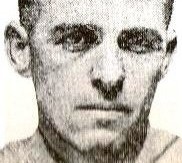 Edward Adams
Murderer · USA · 1920
Edward J. "Eddie" Adams was born in 1887 on a farm in Hutchinson, Kansas as W.J…
7 victims
Edward Adams
Murderer · USA · 1920
Edward J. "Eddie" Adams was born in 1887 on a farm in Hutchinson, Kansas as W.J…
7 victims
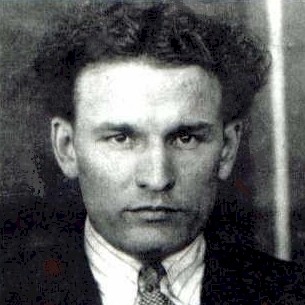 William Kenneth Wagner
Murderer · USA · 1924
William Kenneth (Kinnie) Wagner (born February 18, 1903 in Scott County, VA) wa…
6 victims
William Kenneth Wagner
Murderer · USA · 1924
William Kenneth (Kinnie) Wagner (born February 18, 1903 in Scott County, VA) wa…
6 victims
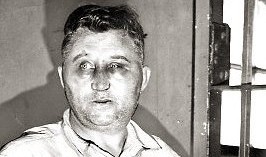 Harry Powers
Murderer · USA · 1931
Harry Powers was executed by hanging on March 18, 1932, at the West Virginia Pe…
5 victims
Harry Powers
Murderer · USA · 1931
Harry Powers was executed by hanging on March 18, 1932, at the West Virginia Pe…
5 victims
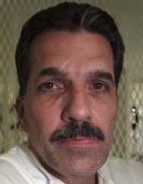 Stephen Moody
Murderer · USA · 1991
Stephen Lindsey Moody was convicted and sentenced to death for the robbery and…
1 victim
Stephen Moody
Murderer · USA · 1991
Stephen Lindsey Moody was convicted and sentenced to death for the robbery and…
1 victim
 Deanna Laney
Homicide · USA · 2003
Deanna Laney A jury acquitted Deanna Laney of all charges by reason of insanity…
1 victim
Deanna Laney
Homicide · USA · 2003
Deanna Laney A jury acquitted Deanna Laney of all charges by reason of insanity…
1 victim
 Deidre Hunt
Murderer · USA · 1989
Deidre Michelle Hunt was born 2/9/69. She was sentenced from Volusia County on…
2 victims
Deidre Hunt
Murderer · USA · 1989
Deidre Michelle Hunt was born 2/9/69. She was sentenced from Volusia County on…
2 victims
 Larry Kenneth Jackson
Murderer · USA · 1985
Larry Kenneth Jackson was an inmate at the Joseph Harp Correctional Center. He…
2 victims
Larry Kenneth Jackson
Murderer · USA · 1985
Larry Kenneth Jackson was an inmate at the Joseph Harp Correctional Center. He…
2 victims
- Gender
- male
- Country
- USA
- Location
- Maryville, Missouri , USA
- Date of birth
- January 11, 1904
- Age at first offence
- 26
- Characteristics
- attempted rape
- Victim profile
- Velma Colter, 20 (teacher)
- Method of murder
- St abbing with knife
- Date(s) of murder
- December 16, 1930
- Years active
- 1930
- Date of arrest
- 2 days after
- Status
-
Died in custody
Killed by a mob on January 12, 1931
Case record: Raymond Gunn
Timeline
- January 11, 1904 — Raymond Gunn was born in Maryville.
- September 1925 — Gunn was convicted of attempted rape of a student (after he accosted a woman on a rural lane outside of Maryville).
- January 28, 1928 — Gunn was released.
- 1929 — Gunn married a local woman; the couple moved to Omaha, Nebraska.
- December 16, 1930 — Velma Colter was killed in the one-room Garrett schoolhouse about a mile southwest of Maryville.
- December 18, 1930 — Authorities arrested several black men matching Gunn’s description; Gunn was found after that and had blood on his shirt.
- January 12, 1931 — Gunn was killed by a mob at the Garrett schoolhouse; his court date was set for this day.
- 1932 — Franklin Roosevelt campaigned saying he was going to take steps to stop lynching.
Background
Raymond Gunn was born to a local family in Maryville. He lived in Maryville and made a living as a hunter.
In September 1925, Gunn was convicted of attempted rape of a student at what is now Northwest Missouri State University after he accosted a woman on a rural lane outside of Maryville. Gunn never confessed to the 1925 crime. He was alleged to have been beaten while in custody. He was released on January 28, 1928.
In 1929, Gunn married a local woman. The couple moved to Omaha, Nebraska, where she died of pneumonia. Gunn returned to Maryville after her death.
The offence
On December 16, 1930, Velma Colter, a 20-year-old teacher and the daughter of a local farm couple, was killed in the one-room Garrett schoolhouse about a mile southwest of Maryville. When she did not return home as scheduled, her partially clad body was found in a pool of blood in the middle of the school. A bloody footprint was found.
Gunn was immediately suspected. A farmer said that he saw somebody matching Gunn’s description near the school.
Authorities later arrested several black men matching the description before finding Gunn on December 18, 1930. Gunn had blood on his shirt, which he claimed was rabbit blood. His footprint matched the one at the scene. Gunn also had a severe bite mark on his thumb. The woman who had accused Gunn of rape in 1925 said he stuck his thumbs in her mouth.
Gunn confessed, saying he had gone to the school with a hedge club after seeing Colter outside with a coal bucket. He said he hit her once after she bit him and then again after she hit him with the coal bucket.
Investigation
After Velma Colter’s body was found, officials suspected Gunn immediately. A farmer reported seeing someone matching Gunn’s description near the school.
Authorities arrested several black men matching the description before Gunn was found on December 18, 1930. Gunn had blood on his shirt and claimed it was rabbit blood. His footprint matched the one at the scene, and he had a severe bite mark on his thumb that was described in connection with the 1925 accusation.
Arrest
Talk of lynching began immediately after Gunn was taken into custody on December 18, 1930, and crowds began to assemble in Maryville.
Gunn was transferred to the Buchanan County, Missouri jail 45 miles south in St. Joseph, Missouri. Crowds gathered there as well, prompting the sheriff to order a truck with a mounted machine gun to be backed to the door. The operator of the gun appeared to aim the weapon at the crowd, although he later said he was just oiling it, and the crowd dispersed.
Gunn was transferred again, this time 100 miles south of Maryville to Kansas City, Missouri. At 3:30 a.m. on December 26, Gunn returned to Maryville for arraignment and then was taken back to Kansas City.
Trial
The court date for Gunn was set for January 12.
Colter’s mother was quoted as saying she could not bear a trial and would not testify. She stated that her son had been killed in France during World War I.
The Nodaway County prosecuting attorney said Gunn would get a fair trial. The prosecuting attorney appealed, along with many Maryville business leaders, to Missouri Governor Henry S. Caulfield to deploy the National Guard to prevent an anticipated lynching attempt.
Caulfield complied, and 60 troops were ordered at 7:30 a.m. to stand by at the National Guard a block north of the courthouse at what is today the Maryville Public Library. By law, the National Guard could only be deployed at the written request of the sheriff, which was never made. Sheriff Havre English later told the press that he did not call up the guard because he did not want them to get hurt.
Sentencing
Gunn’s court date was set for January 12, 1931; he was killed by a mob before any charges were filed in the case.
Outcome
Lynch mob
A large crowd occupied the Maryville square between the jail block to the northeast and the Nodaway County, Missouri courthouse.
The sheriff was transporting Gunn by car and drove directly into the mob. When the sheriff opened the door, a man pulled the sheriff aside and another took Gunn out of the car.
Men who later described the incident said the leader bluntly said to the sheriff: "either you move out of the way or die with this man, either way he's going to die today."
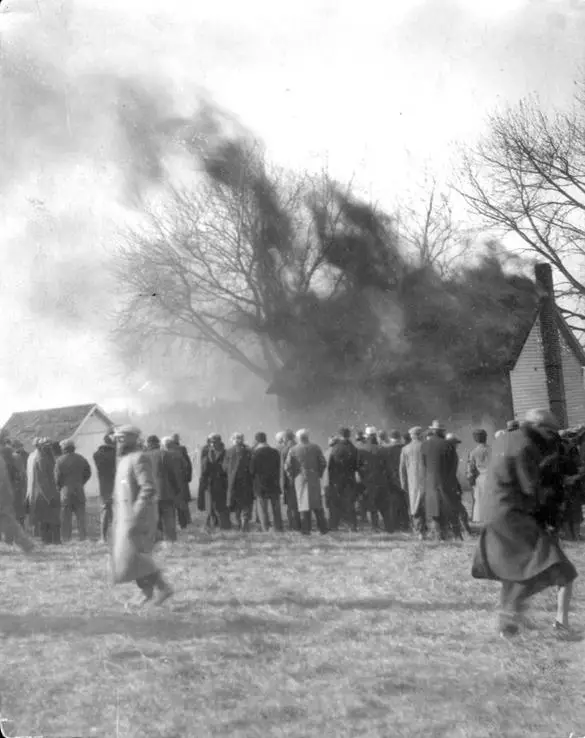
Gunn was chained and marched south down Main Street through the Maryville streets, avoiding the National Guardsmen. After an hour and a half, Gunn and the crowd arrived at the Garrett schoolhouse.
Gunn’s ears and nose were bleeding. The contents of the schoolhouse had been removed and placed on the lawn. A crowd estimated at between 2,000 and 4,000 had gathered.
Gunn was taken by 12 men inside the schoolhouse, where he was reported to have confessed again and claimed he had an accomplice named "Shike" Smith.
Gunn was taken to the roof of the building, where he was tied to a ridge pole. Gunn and the building were doused with gasoline. The leader of the group, only identified as a "man in a red coat", threw a lighted piece of paper into the building. Gunn screamed once and appeared lifeless in 11 minutes.
A reporter for the St. Joseph Gazette gave this description:
He twisted and revealed a huge blister ballooning on his left upper arm. Pieces of his skin blew away to the wind as the blistering heat became more intense and soon his torso was splotched with white patches of exposed flesh. His hair burned like a torch for moment then his head sagged. His body writhed. It took the appearance of a mummy.
The building’s roof collapsed within 16 minutes. Remnants of the school were taken away by the crowd as souvenirs.
Appeals
No appeals were described.
Aftermath
No charges were ever filed in the case.
Attempts to identify the man in the red coat had always been rebuffed with a claim that he was an outsider. However newspapers said all the other leaders were local.
The lynching was universally condemned by newspapers across the United States. The Atlanta Constitution published an editorial cartoon with the caption of "The Torch of Civilization in Missouri."
Residents were concerned that blacks from Kansas City were going to attack the city. Townspeople reportedly set up machine gun nests on Main Street.
Gunn’s family home was also burned.
The official 1930 census showed 90 blacks living in the town, with 35 enrolled in the Maryville school in 1930. In 1931, the number had dropped to six and eventually almost all blacks left the town.
The case received massive national publicity because it occurred outside the Southern lynch belt and because of its brazen and planned nature. It was also publicized because the sheriff did not activate National Guard troops that had been specifically deployed to prevent the lynching.
The case was frequently invoked in an unsuccessful attempt to pass a law called the Wagner-Costigan Act during the presidency of Franklin Roosevelt. The act would have made it a federal crime for law enforcement officials to refuse to take steps to prevent a lynching. In 1932, Franklin Roosevelt campaigned saying he was going to take steps to stop lynching, and he did create the Civil Rights Section of the Justice Department.
Other details
- Gunn’s life dates were January 11, 1904 to January 12, 1931.
- The lynching occurred after his being taken to the roof of the building where he was tied to a ridge pole.
- The Natchez Guard could only be deployed at the written request of the sheriff, and that request was never made.
- The operator of the mounted machine gun later said he was just oiling it.
Spotted an error, or have more information about this case?