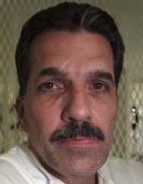
Stephen Moody
Murderer Brian Kevin Rosenfeld
Murderer · USA · 1985
Brian Kevin Rosenfeld Brian Kevin Rosenfeld was sentenced to three concurrent l…
23 victims
Brian Kevin Rosenfeld
Murderer · USA · 1985
Brian Kevin Rosenfeld Brian Kevin Rosenfeld was sentenced to three concurrent l…
23 victims
 Russell Ellwood
Murderer · USA · 1991
Russell Ellwood was a former taxi driver. Authorities suspected him of killing…
20 victims
Russell Ellwood
Murderer · USA · 1991
Russell Ellwood was a former taxi driver. Authorities suspected him of killing…
20 victims
 Robert Martines Perez
Murderer · USA · 1994
Name: Robert Martines Perez · Other name used in proceedings: Robert Martinez P…
15 victims
Robert Martines Perez
Murderer · USA · 1994
Name: Robert Martines Perez · Other name used in proceedings: Robert Martinez P…
15 victims
 Billy Frank Vickers
Murderer · USA · 1993
Billy Frank Vickers Vickers was executed by lethal injection in Texas on Januar…
14 victims
Billy Frank Vickers
Murderer · USA · 1993
Billy Frank Vickers Vickers was executed by lethal injection in Texas on Januar…
14 victims
 Leon Rutherford King
Murderer · USA · 1978
Name: Leon Rutherford King · Age at execution: 44 · Education level: 11th grade…
1 victim
Leon Rutherford King
Murderer · USA · 1978
Name: Leon Rutherford King · Age at execution: 44 · Education level: 11th grade…
1 victim
 Damien Echols
Murderer · USA · 1993
Damien Wayne Echols was one of the three men known as the West Memphis Three. H…
3 victims
Damien Echols
Murderer · USA · 1993
Damien Wayne Echols was one of the three men known as the West Memphis Three. H…
3 victims
 Elizabeth Potts
Murderer · USA · 1888
Elizabeth Potts (née Atherton) was convicted of murder in 1889 and was hanged t…
1 victim
Elizabeth Potts
Murderer · USA · 1888
Elizabeth Potts (née Atherton) was convicted of murder in 1889 and was hanged t…
1 victim
 Daisuke Mori
Murderer · Japan · 2000
Daisuke Mori (守大助, Mori Daisuke, born April 28, 1971) was a Japanese nurse who…
1 victim
Daisuke Mori
Murderer · Japan · 2000
Daisuke Mori (守大助, Mori Daisuke, born April 28, 1971) was a Japanese nurse who…
1 victim
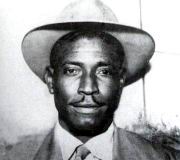 Louis Till
Murderer · Italy · 1945
Louis Till was executed by hanging by the U.S. Army on July 2, 1945. Louis Till…
1 victim
Louis Till
Murderer · Italy · 1945
Louis Till was executed by hanging by the U.S. Army on July 2, 1945. Louis Till…
1 victim
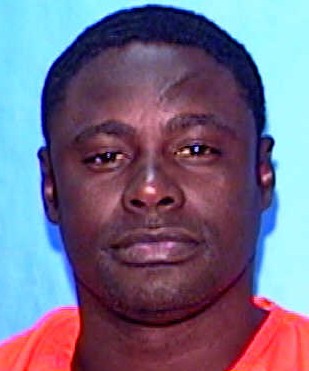 Michael Coleman
Murderer · 1998
Name: Michael Coleman Date of birth: 07/24/61 Jurisdiction: First Judicial Circ…
4 victims
Michael Coleman
Murderer · 1998
Name: Michael Coleman Date of birth: 07/24/61 Jurisdiction: First Judicial Circ…
4 victims
- Gender
- male
- Country
- USA
- Location
- Harris County, Texas, USA
- Date of birth
- July 16, 1957
- Age at first offence
- 34
- Characteristics
- robbery
- Victim profile
- Joseph Hall (male, 28)
- Method of murder
- Shooting ( sawed-off shotgun)
- Date(s) of murder
- October 19, 1991
- Years active
- 1991
- Date of arrest
- —
- Status
-
Executed
Executed by lethal injection in Texas on September 16, 2009
Case overview
Stephen Lindsey Moody was convicted and sentenced to death for the robbery and murder of Joseph Franz Hall. He was executed by lethal injection in Texas on September 16, 2009.
Timeline
- October 19, 1991 — Moody and Calvin Doby went to Joseph Hall’s residence in Houston and demanded money; they murdered Hall with a shotgun blast to the chest.
- March 19, 1993 — Moody was convicted and sentenced to death.
- January 17, 1996 — The Texas Court of Criminal Appeals affirmed Moody’s conviction and sentence.
- November 3, 1999 — The Texas Court of Criminal Appeals denied habeas corpus relief.
- May 1, 2000 — Moody filed a petition for writ of habeas corpus in U.S. district court.
- September 30, 2002 — The federal district court denied relief on two of Moody’s claims and granted relief on a third.
- October 7, 2003 — The United States Court of Appeals for the Fifth Circuit reversed the grant of relief by the federal district court.
- October 1, 2007 — The U.S. Supreme Court denied Moody’s petition.
- September 16, 2009 — Moody was executed by lethal injection in Texas.
The offence
On October 19, 1991, Moody and Calvin Doby went to Joseph Hall’s residence in Houston. They demanded money from Hall and murdered him with a shotgun blast to the chest.
Rene McKeage and Joseph Hall were returning home from dinner. McKeage noticed two unknown men walking on the street away from their house. When they entered their residence, McKeage was sitting in the bathroom when she heard Hall talking on the phone and then “somebody come rush in the house.” Hall yelled out her name, and she then heard another man’s voice screaming “Where is the money?” McKeage stayed in the bathroom. She initially thought the men were the police because of drugs that were in the house. She heard Hall say, “You’re not the cops. Let me see your badges.” She heard scuffling, and Moody walked into the bathroom and said, “stay there. Don’t move.” Moody was pointing a sawed-off shotgun at Rene. Moody left the bathroom, and Rene heard him ask Hall, “where is the money?” Hall said the money was in his pocket and asked Moody, “Please don’t shoot me.” Moody returned to the bathroom and again told Rene, “Stay there, don’t move.” Rene said, “Okay, I won’t move,” and Moody shut the bathroom door. Rene jumped out of the bathroom window, jumped the fence in the backyard, and ran to the next-door residence of Arthur Jesse Flores. During this time, she heard a gunshot come from inside the house. She entered Flores’ residence, told Flores that someone had shot Hall, and called 911. Ms. Juarez and Ms. Chavez also heard the gunshot and a scream, and saw two men walk out of the residence and back down the street.
After the murder, Doby and Moody returned to Melvin Ellis’s residence about forty-five minutes later and admitted to Ellis that they murdered Hall. Ellis testified that Doby confessed, “Man, we had some trouble over there, . . . we had to kill him.” Moody responded, “Man, you know I didn’t — that I had to do it,” and Ellis further testified that Moody told him, “I shot him right in the heart.” Ellis also testified that, upon the departure of Moody and Doby, he noticed a shotgun in the vehicle on the side where Moody was sitting.
Moody was indicted on October 6, 1992 for capital murder. Following a jury trial, Moody was convicted and sentenced to death in March 1993.
Investigation and accomplice evidence
In late September of 1991, Moody and his co-defendant Calvin Doby drove from Houston to Dayton, Texas while accompanied by Melvin Ellis and Lloyd Larrieu. Ellis testified that, while en route, Doby asked Larrieu from whom Larrieu was getting his drugs because Doby wanted to rob the individual. Larrieu provided Doby with the name and whereabouts of Hall. Ellis testified that Moody did not participate in the conversation.
On October 19, 1991, Ellis, Doby, and Larrieu drove to Hall’s residence. Larrieu pointed out Hall’s house and answered Doby’s questions regarding the whereabouts of Hall’s drugs and money. Larrieu told Doby that Hall lived with his girlfriend, Rene McKeage, kept his money in his pocket, and that Doby would know if Hall was home by the Camaro in the driveway. Doby contacted Moody by telephone, and the two of them met at Ellis’s residence an hour and half later. Moody and Doby then went to Hall’s residence and murdered him with a shotgun blast to the chest.
Moody’s long criminal career included bank robbery convictions after the Hall killing. By then, Moody was in prison starting to serve a 40-year sentence for bank robbery. The accomplice in the shooting, Calvin Doby, received a life sentence.
A relative of Doby provided a police tip after the slaying went unsolved for nearly a year. Rene McKeage later identified Moody from a photographic lineup.
Victim and disputed characterization
Joseph Franz Hall was described at Moody’s trial as a drug dealer known to carry a lot of cash. Joseph Hall’s son disputed this in a statement released following the execution:
“My father wasn’t a drug dealer, and drugs had nothing to do with his death,” Joseph Hall wrote. “He was robbed for money he received from an accident which left him crippled.”
Hall’s brother, mother, and niece added in a handwritten postscript: “Justice was served.”
Prior criminal history
Evidence at the punishment phase of Moody’s trial indicated that Moody had twice been convicted of burglary of a habitation with intent to commit theft. The evidence also indicated a conviction for felony auto theft and felony burglary of a motor vehicle with intent to commit theft.
Further criminal-history details included:
- In 1978, Moody was convicted of burglary of a habitation and sentenced to 8 years in prison; he was paroled in 1981.
- Before the end of the year, he was back in prison with a new 6-year sentence for auto theft; he was released in 1984.
- In 1985, he was sentenced to 14 years for burglary of a vehicle; he served 3½ years before being paroled again in 1988.
Trial
A jury convicted Moody and sentenced him to death on March 19, 1993.
During the proceedings related to Doby and Moody’s admission and testimony, Ellis testified that when Moody blurted out about money left at Ellis’s house, Moody said:
“He's a lying son of a bitch. He got $900.”
Sentencing
The jury sentenced Moody to death by lethal injection after answering Texas’s special issues in the affirmative during a separate punishment phase.
Moody was condemned for the October 19, 1991 robbery-murder of Joseph Hall. Moody accepted responsibility for killing Joseph Hall with a blast from a sawed-off shotgun at Hall’s Houston home in October 1991.
Moody directed his attorneys not to pursue an appeal to the Texas Board of Pardons and Paroles. He petitioned his judge in the spring to set his execution date as soon as possible, and said life on death row was “cruel and unusual punishment.”
Appeals and habeas corpus litigation
State proceedings
Moody’s direct appeal resulted in affirmation:
Moody’s habeas proceedings resulted in denial:
In Moody’s appeals, he challenged the trial court’s decision not to hold a hearing concerning the state’s exclusion of a black panelist from the jury. Moody’s attorneys argued that the exclusion was racially-motivated. The trial court ruled that Moody had no standing to contest the black panelist’s exclusion for racial reasons because Moody was white.
Federal habeas corpus proceedings and remedy
Moody filed for federal habeas relief:
- district court.
The federal habeas petition asserted ineffective assistance of counsel and violation of equal protection rights pursuant to Batson v. Kentucky, 476 U.S. 79.
The district court held that the Texas trial court improperly denied Moody’s request for a Batson challenge to contest the state’s use of peremptory strikes during jury voir dire. The district court reasoned that the Texas trial court failed to properly apply Powers v. Ohio.
The district court provisionally granted habeas relief on the equal protection claim and addressed the remedy. The district court stated that a new trial was required:
“As it appears that a hearing at this late date would not be feasible, the State of Texas must retry Petitioner.”
The district court ordered that the State either retry Moody within 180 days from its ruling or release him from custody. That order was stayed by the district court in December 2002 pending the outcome of the appeal.
On appeal:
United States Supreme Court
- October 1, 2007 — The U.S.
Batson proceedings (equal protection issue)
Moody was indicted on a charge of capital murder for the death of Joseph Franz Hall, and the death occurred during the commission of a botched armed robbery in 1991. A jury found Moody guilty in 1993 and sentenced him to death by lethal injection after answering Texas’s special issues affirmatively during a punishment phase.
During voir dire, the State used four of its thirteen peremptory challenges to strike four out of eight (50%) of the African-Americans on the venire. Moody objected to one strike when the State used a peremptory strike to exclude Jerome Hightower. Moody requested a Batson hearing. The trial judge denied Moody’s request and explained that because Moody was white he had no standing to raise a Batson equal protection claim when the excluded venireperson was of a different race. The State agreed with the trial court’s reasoning and volunteered a race-neutral explanation for striking Hightower, stating that Hightower had two brothers-in-law in prison, and that the family circumstances would have adversely affected his beliefs concerning whether a defendant could be rehabilitated by a long prison sentence.
The trial court dismissed Hightower without conducting the three-part Batson analysis solely on the basis that Moody had no standing to challenge the striking.
The colloquy included:
MR. GUERINOT: “We would like the record to reflect that this juror is a black male, and we would ask the State to specifically state in the record, after your voir dire and mine, the racially impartial reason that they are exercising a strike.”
THE COURT: “That will be denied, being the fact that the Defendant in this case is white. He is not part of any racial minority.”
MR. GUERINOT: “Thank you. Note our exception.”
THE COURT: “Give the gentleman an excuse and tell him he is free to go.”
MR. MORRIS: “In addition to that, if it be needed—probably doesn't need to—our point would be, of course, the records of the two brother-in-laws [sic], one robber and one dope pusher, and he says they can be rehabilitated, even though they've been up twice before . . .;”
THE COURT: “Tell him he's free to go and thank him for being with us.”
In direct appeal, Moody raised seven claims of error, including the equal protection claim at issue. The Texas Court of Criminal Appeals affirmed, stating that although the state trial court improperly failed to conduct a proper Batson hearing, the prosecutor’s race-neutral proffer was sufficient for a lawful exclusion of Hightower and that the prosecutor did not strike Hightower because of his race.
In subsequent federal habeas proceedings, the district court granted relief based on the Batson claim and ordered a remedy of retry or release, and that decision was later reversed and vacated on appeal.
Stephen Moody’s statements and conduct around execution
Moody accepted responsibility for killing Hall and told an interviewer:
“I don't blame my situation on anybody but myself,” he said. “I’m ready, man. I ain’t quitting. I went all the way. ... That’s how I look at it.”
Moody also stated:
“You do what you do,” Moody said. “You pay for what you do. ... I had plenty of chances in my life.”
He asked that no last-minute appeals be filed to try to block his execution. His lawyer said:
“We have to kind of sit on our hands,” Moody’s lawyer, Philip Hilder, said last week. “We wouldn’t be normally doing that, but it is his wishes.”
Moody made a sworn statement asserting that Calvin Doby was innocent. Moody said:
“My conscience will not let me remain silent any longer,”
“It is not right that Calvin Doby has suffered in prison all these years for something he did not do.”
Moody said that another man—not Doby—was his accomplice. He also asserted that Ellis’s testimony against Doby was unreliable because Ellis was taking psychiatric medications at the time of the murder.
In his last statement, Moody addressed Hall’s mother and son:
“I can only ask that you have the peace that I do.”
Moody commanded:
“Warden, pull the trigger.”
Execution details
Moody was executed at the Walls Unit in Huntsville. He was strapped to the Texas death chamber gurney in Huntsville.
The lethal drugs began flowing into his arms at 6:20 p.m. CDT, and he was pronounced dead eight minutes later. Another account stated he was pronounced dead at 6:28 p.m.
Aftermath and co-defendant
Moody’s accomplice, Calvin Doby, was convicted of capital murder and sentenced to life in prison. Doby remained in custody as of the time of writing. A new appeal in Doby’s case had been filed based on Moody’s sworn statement.
Doby told an interviewer:
“At the time of the crime, I was at home with my wife and our newborn,”
Doby’s attorney said Moody wanted to clear Doby five years earlier, but Moody’s attorneys did not allow him to make a formal statement because his appeals were still open and anything Moody said could have jeopardized his own case.
The victim’s son, Joseph Hall, issued a statement denying his father was a drug dealer after the execution:
“Drugs,” he wrote, “had nothing to do with his death. He was robbed of money he received from an accident which left him crippled.”
Legal case record (Fifth Circuit habeas opinion)
The United States Court of Appeals for the Fifth Circuit addressed Moody’s habeas litigation in:
- Stephen Lindsey MOODY, Petitioner-Appellee, v. Nathaniel QUARTERMAN, Director, Texas Department of Criminal Justice, Correctional Institutions Division, Respondent-Appellant.
- No. 02-21245.
- United States Court of Appeals, Fifth Circuit. January 17, 2007.
- Judges listed included JONES, Chief Judge, and STEWART and DENNIS, Circuit Judges; Circuit Judge CARL E. STEWART wrote the opinion.
Moody’s petition for habeas relief asserted ineffective assistance of counsel and violation of equal protection rights pursuant to Batson v. Kentucky. The district court denied relief on ineffective assistance claims and denied a COA on those grounds, but granted habeas relief based on the Batson claim. The Fifth Circuit vacated the district court’s grant and remanded for further proceedings, stating that the order granting Moody’s petition for habeas corpus was VACATED and REMANDED.
A dissent by DENNIS, Circuit Judge, argued that the state trial court’s no-standing ruling was contrary to Powers v. Ohio and foreclosed the Batson framework, and contended that the CCA’s appellate factfinding should not stand. The dissent argued for upholding habeas relief and stated it respectfully dissented from the majority’s reversal.
Spotted an error, or have more information about this case?