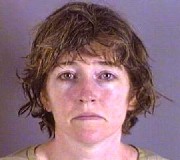
Deanna Laney
Homicide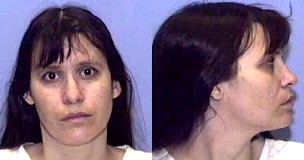 Andrea Yates
Homicide · USA · 2001
Andrea Pia Yates (born Andrea Pia Kennedy on July 2, 1964) was a former Houston…
5 victims
Andrea Yates
Homicide · USA · 2001
Andrea Pia Yates (born Andrea Pia Kennedy on July 2, 1964) was a former Houston…
5 victims
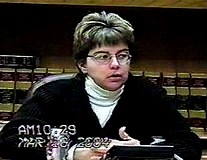 Coleen Thompson
Homicide · USA · 2002
Coleen Thompson was a former intensive care nurse at Shady Grove Adventist Hosp…
5 victims
Coleen Thompson
Homicide · USA · 2002
Coleen Thompson was a former intensive care nurse at Shady Grove Adventist Hosp…
5 victims
 Christine Paolilla
Homicide · USA · 2003
Christine Marie Paolilla was an American woman born on Long Island, New York on…
4 victims
Christine Paolilla
Homicide · USA · 2003
Christine Marie Paolilla was an American woman born on Long Island, New York on…
4 victims
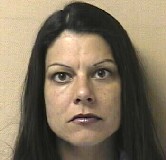 Melissa Marvin
Homicide · USA · 1999
Melissa Lynn Marvin was a 29-year-old waitress and amateur surfer at the time o…
4 victims
Melissa Marvin
Homicide · USA · 1999
Melissa Lynn Marvin was a 29-year-old waitress and amateur surfer at the time o…
4 victims
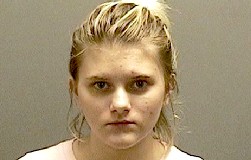 Erin Caffey
Homicide · USA · 2008
Erin Caffey (juvenile daughter of Terry Caffey and Penny Caffey; charged in con…
3 victims
Erin Caffey
Homicide · USA · 2008
Erin Caffey (juvenile daughter of Terry Caffey and Penny Caffey; charged in con…
3 victims
 Lashaun Harris
Homicide · USA · 2005
Oct. 19, 2005 — A jury trial later concerned the drownings of three young sons…
3 victims
Lashaun Harris
Homicide · USA · 2005
Oct. 19, 2005 — A jury trial later concerned the drownings of three young sons…
3 victims
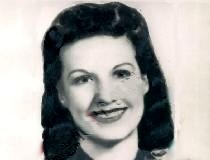 Gladys Broadhurst
Murderer · USA · 1946
Gladys Lincoln Broadhurst, also known as Gladys Elaine Broadhurst, murdered her…
1 victim
Gladys Broadhurst
Murderer · USA · 1946
Gladys Lincoln Broadhurst, also known as Gladys Elaine Broadhurst, murdered her…
1 victim
 Kelsey Patterson
Homicide · USA · 1992
Kelsey Patterson was executed by lethal injection in Texas on May 18, 2004, aft…
2 victims
Kelsey Patterson
Homicide · USA · 1992
Kelsey Patterson was executed by lethal injection in Texas on May 18, 2004, aft…
2 victims
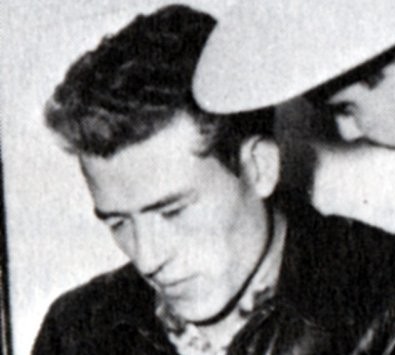 William Cook
Spree killer · USA · 1951
William Cook, also known as “Billy Boy” or “Cockeyed Cook,” committed a spree o…
6 victims
William Cook
Spree killer · USA · 1951
William Cook, also known as “Billy Boy” or “Cockeyed Cook,” committed a spree o…
6 victims
 Marc Lepine
Mass murderer · Canada · 1989
Marc Lépine committed a shooting at the École Polytechnique engineering school…
14 victims
Marc Lepine
Mass murderer · Canada · 1989
Marc Lépine committed a shooting at the École Polytechnique engineering school…
14 victims
- Gender
- female
- Country
- USA
- Location
- New Chapell Hill, Smith County, Texas, USA
- Date of birth
- 1965
- Age at first offence
- 38
- Characteristics
- parricide, child killer, history of mental illness
- Victim profile
- H er two older sons, Joshua, 8, and Luke, 6
- Method of murder
- Beating with a rock
- Date(s) of murder
- May 9, 2003
- Years active
- 2003
- Date of arrest
- Same day (surrenders)
- Status
-
Acquitted / overturned
Acquitted of all charges by reason of insanity on April 3, 2004
Case identification
Deanna Laney
Status and legal outcome
A jury acquitted Deanna Laney of all charges by reason of insanity on April 3, 2004.
Timeline
- April 3, 2004 — A jury acquitted Deanna Laney of all charges by reason of insanity.
- May 15 — The judge’s order in a later civil commitment matter was dated May 15.
- May 24, 2012 — Deanna Laney was released from Kerrville State Hospital.
- June 2004 — Vernon State Hospital transferred Laney from its maximum-security facility to Kerrville State Hospital.
- 2007 — Judge Kent stopped brief unsupervised furloughs after determining Laney had been transferred and was being allowed unsupervised furloughs by doctors.
- August to December 2005 — Laney’s treatment team granted her brief passes off the hospital campus in Kerrville.
- 2008 — Judge Kent retired from the bench.
- November — A closed-door civil commitment hearing took place in the 114th District Court, with the outcome described as unclear.
- April 2007 — The 12th Court of Appeals ruled that the Texas Department of Mental Health and Mental Retardation could not grant Laney passes to leave the facility with her parents to go shopping and dining in the Hill Country.
The offence
Deanna Laney killed her two oldest sons, Joshua (8) and Luke (6), by stoning. She also severely injured her youngest son, Aaron (14 months at the time of the killings), who survived but suffered brain damage.
Joshua and Luke were found dead in the front yard of the family’s New Chapel Hill home. Aaron was found seriously injured in his crib.
Laney’s attorneys admitted during trial that Laney stoned her children but contended that she was insane and did not know that what she was doing was wrong.
Laney told authorities “God told me she was supposed to kill my children,” and she claimed God ordered her to bash in her sons’ heads. During the investigation, Laney claimed God ordered her to bash in her sons’ heads.
Investigation and evidence
A 911 call was among the evidence jurors reviewed during deliberations.
Laney told a dispatcher, “I’ve killed my boys.” Smith County Sheriff J. B. Smith said the 911 call was made on a cellular phone and that Laney spoke in a “very calm, matter-of-fact way.”
Investigators arrived at the New Chapel Hill home about 12:52 a.m. Saturday and found Aaron in his crib wounded but still breathing.
Laney was not there when deputies arrived. Deputies found her wearing bloody clothes in a wooded area about 100 yards behind her house. Laney described where the other two children could be found but refused to go there herself.
Defense attorney Tonda Curry said the verdict did not mean Laney escaped punishment and stated: “Now and for the rest of her life, the punishment and torment that’s going on in her own head is more significant and more damaging to her than anything the criminal justice system could have done, other than death.”
Prosecutor Matt Bingham told the jury: “It was graphic, it was horrific and it was brutal.” Bingham also described Joshua’s killing, saying: “He got strike after strike after strike on his head to the point that his brains were coming out of his head like liquid.”
Prosecutor Matt Bingham said: “This is a case that the citizens of this county needed to make the decision on.”
Defense attorney Tonda Curry said: “There was no crying.” Curry also said: “She was insane. There is no other answer.”
During the trial, jurors asked Judge Cynthia Kent for the 911 tape and the transcript of the call and the testimony of Laney’s husband, Keith. The judge agreed to give jurors only the tape, explaining the transcript had not been admitted as evidence and that jurors could review Keith Laney’s testimony only if they cite a specific disagreement over it.
Jurors also asked for psychiatric testimony to resolve a disagreement over why Deanna Laney stopped beating Aaron, then 14 months old, but they reached a verdict before receiving the transcript.
Arrest and custody
After the killings, Laney was arrested. She remained at the Smith County Jail until a hearing regarding her transfer.
Laney was placed under suicide watch, and Sheriff J. B. Smith said Laney acted erratically in her jail cell, going “from a fetal position of crying, to walking around the cell singing gospel music. She stops and prays, then she goes into a crying hysteria,” and then “all of a sudden realizes what she’s done,” followed by “a flatline, blank stare.”
Smith County Sheriff J. B. Smith said he was “shocked, very concerned and upset about the release” later described in 2012.
Trial
Charges and pleas
Deanna Laney was charged with capital murder in the deaths of 8-year-old Joshua and 6-year-old Luke, and serious injury to a child in the beating of Aaron, 14 months old.
Laney pleaded not guilty by reason of insanity.
Under Texas law as described in the case record, people were found legally insane if, at the time of an offence, they did not know their conduct was wrong because of some mental illness or defect.
Key claims and arguments
Laney’s attorneys argued that she was insane and did not know her actions were wrong.
Prosecutors argued that Laney knew right from wrong and portrayed the killings as deceptively planned and coldly executed.
During closing arguments, Bingham pounded his fist as he recounted Joshua’s killing.
Defense counsel said there was “no crying” and that she was insane.
Prosecutors said Laney’s first call was to 911 to summon authorities.
Psychiatric evidence and insanity determination
Five mental health experts were consulted in Laney’s case: two each by the prosecution and defense, and one by the judge.
All of the mental health experts consulted concluded that Laney suffered from psychotic delusions which made her unable to know right from wrong at the time of the killings.
A prosecution witness, Dr. Park Dietz, testified that Laney believed God ordered her to kill her children last Mother’s Day weekend and said Laney struggled over whether to obey God or to selfishly keep her children.
Dietz testified: “She struggled over whether to obey God or to selfishly keep her children.”
Dietz testified: “To interpret what a baby leaves in his diaper reflects a mentally ill person.”
Dietz testified: “She told me she felt as if the Lord were saying ’If you keep rejecting, it’s going to keep getting worse,”’ according to the record.
Prosecutors and psychiatrists described delusions in which Laney interpreted everyday events or objects as messages from God. A psychiatrist testified that when Aaron had abnormal bowel movements, Laney thought it was a message from God that she was not properly “digesting” God’s word.
The record also stated that Laney had hallucinations of smelling sulfur associated with the devil.
The record included testimony that Laney believed Aaron played with a spear and that she saw objects such as a rock and a frog as signs.
A quote attributed to Dietz described how Laney felt about keeping or rejecting God’s will: “She struggled over whether to obey God or to selfishly keep her children,” and “If you keep rejecting, it’s going to keep getting worse.”
Prosecutors said psychiatrists testified that Laney could not finish killing the baby and that she told God, “You’re just going to have to do the rest.”
Defense attorneys argued that the psychiatric experts’ conclusions fit the Texas legal standard of insanity.
Jury deliberations and verdict
Jurors deliberated about seven hours before reaching their verdict in the deaths of Joshua and Luke and the beating of Aaron.
On April 3, 2004, the jury acquitted Laney of all charges by reason of insanity.
Sentencing and dispositional placement
The jury’s verdict required commitment to a maximum security state hospital.
A then-114th District Judge Cynthia Stevens Kent ordered Laney be placed in a maximum-security inpatient treatment facility after the acquittal.
Medical evaluations were to dictate when she would be released.
Laney would remain at the Smith County Jail until a hearing regarding her transfer.
Appeals
Attorneys for Laney appealed a decision stopping her unsupervised furloughs. The 12th Court of Appeals ruled in April 2007 that the Texas Department of Mental Health and Mental Retardation could not grant Laney passes to leave the facility with her parents to go shopping and dining in the Hill Country.
Outcome
In 2012, court documents obtained by KLTV-TV of Tyler showed that Laney had been released after four psychiatrists testified behind closed doors that she no longer posed a threat to others. State attorneys disagreed.
The record stated that she was subject to a list of conditions, including that she have no unsupervised contact with minors and submit to regular drug tests to ensure that she takes required medication.
The record also stated that Laney was released from Kerrville State Hospital on May 24, 2012, after being confined to the hospital since 2007 after she was transferred from Vernon State Hospital in 2004.
Other details
People involved (as named in the record)
- Deanna Laney — defendant; mother of Joshua, Luke, and Aaron.
- Joshua — 8-year-old son of Deanna Laney; found dead in the front yard.
- Luke — 6-year-old son of Deanna Laney; found dead in the front yard.
- Aaron — 14-month-old son of Deanna Laney; found seriously injured in his crib and later described as having brain damage.
- Keith Laney — husband of Deanna Laney; sat solemnly with his head down during the reading of the verdict; testified at trial.
- Tonda Curry — defense attorney.
- F.R. “Buck” Files — defense attorney.
- LaJuanda Lacy — defense attorney.
- Matt Bingham — Smith County District Attorney.
- Brett Harrison — former First Assistant District Attorney.
- April Sikes — current First Assistant District Attorney.
- Cynthia Stevens Kent — then-114th District Judge who ordered maximum-security inpatient placement.
- Judge Cynthia Kent / Judge Christy Kennedy — a judge referenced in later orders and proceedings; Judge Christy Kennedy is named with quoted order language in the record.
- Smith County Sheriff J. B. Smith — sheriff quoted in connection with reactions and details.
- Dr. Park Dietz — psychiatrist; prosecution witness.
- Dr. Philip Resnick — psychiatrist mentioned as having served on Andrea Yates’ defense team.
- Dr. Edward Gripon — psychiatrist mentioned as agreeing with the presence of mental illness.
- Dr. William Reed — court-appointed psychiatrist referenced in the record.
- Judge Christy Kennedy — judge whose order was quoted.
- Pam Sepmoree — Laney’s sister; testified about Laney acting strangely in the days leading up to the murders.
- Matt Bingham and F.R. Buck Files — defense and prosecution attorneys referenced in connection with sealed treatment plan and barred discussions.
Faith and family background
The record stated that Laney was a member of an Assemblies of God church, where she sang in the choir.
The record stated Laney home-schooled her children in New Chapel Hill.
Condition at time of acquittal and trial testimony details
The record described Laney’s demeanor during the trial, including that she wept uncontrollably as prosecutors portrayed the killings and that she was awaiting her children’s resurrections, with a described smile and statement: “I feel like he will reveal his power and they will be raised up. They will become alive again.”
Court proceedings and civil commitment hearing
A closed-door civil commitment hearing took place in the 114th District Court in November, and the outcome was described as unclear.
The record included quoted language from Judge Kennedy’s order:
“Witnesses testified that Deanna Laney was not likely to cause harm to herself, that she was not likely to cause serious harm to others and that she was not experiencing substantial mental deterioration of her ability to function independently. All witnesses testified that there was no further need for Deanna Laney to continue inpatient treatment.”
Transfer and hospital details
The record stated that Laney was transferred from Vernon State Hospital in June 2004 to Kerrville State Hospital.
It also stated that a maximum-security inpatient facility was used and that Kerrville State Hospital was described as a nonsecure inpatient facility.
The record stated that between August and December 2005, Laney’s treatment team granted her brief passes off the hospital campus in Kerrville.
It stated that in 2007, Judge Kent put a stop to unsupervised furloughs at the request of prosecutors after attorneys discovered the transfers and unsupervised furloughs.
Husband notification and sealed treatment plan
The record stated that Laney’s husband, Keith Laney, was notified of the release.
It also stated that Laney’s treatment plan was sealed because the case became a civil matter after she was acquitted.
Comparisons to another case
The record discussed similarities to Andrea Yates’ case: both women were described as members of churches (Laney Assemblies of God and Yates The Church of Christ), both home-schooled their children, both felt they had no choice but to do what they did to their children, and both called 911. The record also stated that both had some of the same psychiatrists assessing their states of mind for trials.
Deliberation questions and evidence handling
The record included that jurors asked for the 911 tape, the transcript of the call, and Keith Laney’s testimony. The judge gave only the tape and allowed Keith Laney’s testimony only if jurors cited a specific disagreement over it.
The record also included that jurors asked for psychiatric testimony to resolve a disagreement over why Laney stopped beating Aaron, but they reached a verdict before receiving the transcript.
Spotted an error, or have more information about this case?