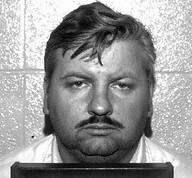
John Wayne Gacy
Serial killer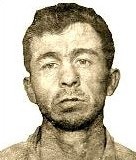 Donald Henry Gaskins
Serial killer · USA · 1969
Donald Henry Gaskins, also known as Donald “Pee Wee” Gaskins, was a serial kill…
200 victims
Donald Henry Gaskins
Serial killer · USA · 1969
Donald Henry Gaskins, also known as Donald “Pee Wee” Gaskins, was a serial kill…
200 victims
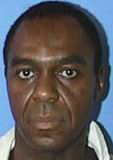 Carl Eugene Watts
Serial killer · USA · 1974
Carl Eugene Watts (born November 7, 1953; died September 21, 2007), also known…
100 victims
Carl Eugene Watts
Serial killer · USA · 1974
Carl Eugene Watts (born November 7, 1953; died September 21, 2007), also known…
100 victims
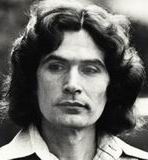 Rodney Alcala
Serial killer · USA · 1977
Rodney James Alcala (born August 23, 1943) was also known as Rodrigo Jacques Al…
100 victims
Rodney Alcala
Serial killer · USA · 1977
Rodney James Alcala (born August 23, 1943) was also known as Rodrigo Jacques Al…
100 victims
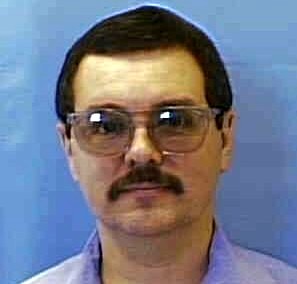 Donald Harvey
Serial killer · USA · 1970
Donald Harvey was known as an American serial killer and a self-professed “Ange…
87 victims
Donald Harvey
Serial killer · USA · 1970
Donald Harvey was known as an American serial killer and a self-professed “Ange…
87 victims
 Donald Leroy Evans
Serial killer · USA · 1975
Donald Leroy Evans (born July 5, 1957) was an American serial killer who murder…
60 victims
Donald Leroy Evans
Serial killer · USA · 1975
Donald Leroy Evans (born July 5, 1957) was an American serial killer who murder…
60 victims
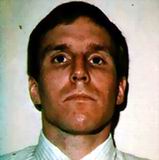 Michael Swango
Serial killer · USA · 1981
Michael Swango (Joseph Michael Swango) was a physician and American serial kill…
60 victims
Michael Swango
Serial killer · USA · 1981
Michael Swango (Joseph Michael Swango) was a physician and American serial kill…
60 victims
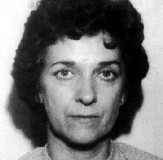 Audrey Hilley
Murderer · USA · 1975
Audrey Marie Hilley (June 4, 1933 - February 26, 1987) was an American murderer…
1 victim
Audrey Hilley
Murderer · USA · 1975
Audrey Marie Hilley (June 4, 1933 - February 26, 1987) was an American murderer…
1 victim
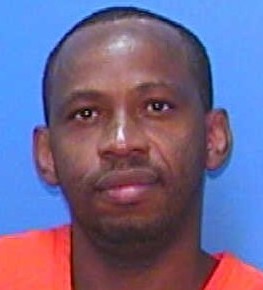 Robert Gordon
Murderer · USA · 1994
Defendant: Robert Gordon · Sixth Judicial Circuit, Pinellas County · Case numbe…
1 victim
Robert Gordon
Murderer · USA · 1994
Defendant: Robert Gordon · Sixth Judicial Circuit, Pinellas County · Case numbe…
1 victim
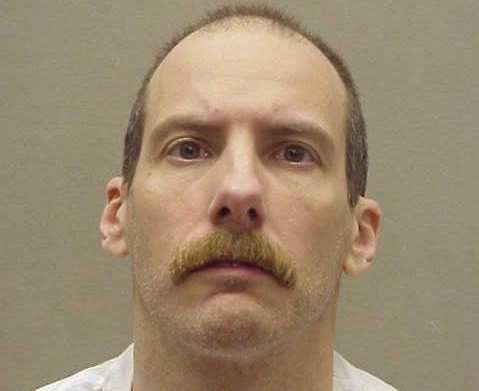 Eric Napoletano
Serial killer · USA · 1984
Eric Napoletano was described as a “sexually sadistic serial killer,” according…
3 victims
Eric Napoletano
Serial killer · USA · 1984
Eric Napoletano was described as a “sexually sadistic serial killer,” according…
3 victims
 Kelly Ryan
Murderer · USA · 2005
Kelly Ryan (born July 10, 1972 in Minneapolis, Minnesota) was a former Internat…
1 victim
Kelly Ryan
Murderer · USA · 2005
Kelly Ryan (born July 10, 1972 in Minneapolis, Minnesota) was a former Internat…
1 victim
 Steven Benson
Murderer · USA · 1985
Steven Benson was a 33-year-old Florida businessman who was arrested and charge…
2 victims
Steven Benson
Murderer · USA · 1985
Steven Benson was a 33-year-old Florida businessman who was arrested and charge…
2 victims
- Gender
- male
- Country
- USA
- Location
- Chicago, Illinois, USA
- Date of birth
- March 17, 1942
- Age at first offence
- 30
- Characteristics
- rape, serial rapist, torture, abuse
- Victim profile
- Boys and young men
- Method of murder
- Strangulation
- Date(s) of murder
- 1972 - 1978
- Years active
- 1972–1978
- Date of arrest
- December 21, 1978
- Status
-
Executed
Executed by lethal injection in Illinois on May 10, 1994
Overview
John Wayne Gacy was executed by lethal injection in Illinois on May 10, 1994. He had been convicted of 33 murders and sentenced to death for 12 of those murders, with the remaining murders resulting in natural life in prison.
Timeline
- 1979 — John Wayne Gacy was arrested for murder.
- Late 1978 — The law caught up with Gacy after a young man who disappeared after applying to Gacy for a job notified the police.
- On December 11, 1978 — Robert Piest, a 15-year-old Des Plaines high school sophomore, disappeared after leaving work at a pharmacy where Gacy had recently completed a remodeling job.
- On December 12, 1978 — Police focused attention on Gacy again after Piest came up missing.
- On December 13, 1978 — A search of Gacy’s house turned up items including a 1975 high school class ring, drivers’ licenses for other people, handcuffs, a two-by-four with holes drilled in the ends, a syringe, clothing too small for Gacy, and a photo receipt from the pharmacy where Piest worked.
- On December 21, 1978 — One of Gacy’s employees told police that Gacy had confessed to more than 30 murders.
- On December 22, 1978 — Gacy confessed to police and drew a detailed map of shallow graves under his house and garage.
- On February 6, 1980 — Gacy’s trial began in Chicago.
- On March 13, 1980 — Gacy was sentenced to die.
- On May 9, 1994 — Gacy sat down for his last meal.
- On May 10, 1994 — Gacy was executed by lethal injection. Just after midnight on May 10, 1994, Gacy was executed by lethal injection.
Background
John Wayne Gacy was born on March 17, 1942, in Chicago, Illinois. He was the second of three children to John Wayne Gacy Sr. and Marion Elaine Robinson. Cook County marriage records provided his mother’s name as Marion E. Robertson. He had Polish and Danish heritage.
Gacy had a turbulent relationship with his father, who was described as an unpleasant, abusive alcoholic prone to physically and verbally assaulting his children. Gacy was described as deeply loving his father and wanting desperately to gain his approval and attention, but failing to win him over. Gacy’s father died on Christmas Day 1965.
When Gacy was 11, he was struck on the forehead by a swing, and the resulting head trauma formed a blood clot in his brain that went unnoticed until he was 16, when he began to suffer blackouts. Medication was prescribed to dissolve the clot. Gacy attended four high schools during his senior year and never graduated; he dropped out and left Chicago for Las Vegas. After running out of money in Las Vegas, Nevada, he worked long enough to earn money to travel back home to Chicago, and enrolled in and eventually graduated from Northwestern Business College.
A management trainee position with the Nunn-Bush Shoe Company followed shortly after graduation, and in 1964, Gacy was transferred to Springfield, Illinois. In Springfield, he met coworker Marlynn Myers, and they married in September 1964. He became active in local Springfield organizations, joining the Jaycees and rising to vice-president of the Springfield chapter by 1965. Marlynn’s parents purchased Kentucky Fried Chicken (KFC) franchises, offered Gacy a job as manager of a Waterloo, Iowa KFC, and the Gacys moved there from Springfield.
Other details
Family and relationships
The Gacys settled in Waterloo and had two children, a son and a daughter. Gacy’s close relationship with his sisters and mother was described, and his mother affectionately called him “Johnny.” After imprisonment, Gacy’s father died from cirrhosis on Christmas Day 1969.
Gacy’s first marriage included a wealthy family connection, and he later married Carole Hoff in June 1972. His wife and two daughters moved into the Summerdale Avenue house. Gacy divorced in March 1976. He later had two children with Marlynn Myers.
Early life and education
Gacy attended four high schools and dropped out before completing his senior year. He left Chicago for Las Vegas, returned to Chicago due to financial issues, and eventually graduated from Northwestern Business College.
The offence
Between 1972 and 1978, Gacy enticed many young men to his home near Chicago for homosexual liaisons. At least 33 victims never left.
Gacy tied up or handcuffed his partners, then strangled or choked them. Twenty-eight bodies were dumped into the crawl space under the Gacy residence; one was entombed under the driveway; the rest were thrown into the Des Plaines River. Gacy operated a construction business, and workers dug trenches and threw lime into the crawl space. Gacy’s wife complained about an “awful stench,” and the slaughter continued until the disappearance of 15-year-old Robert Piest on December 11, 1978.
The youngest identified victims were Samuel Stapleton and Michael Marino, both 14 years old, and the oldest were Russell Nelson and James Mazzara, both 21 years old. Eight victims were so badly decomposed that they were never identified.
Gacy told police he had thrown four other corpses into the DesPlaines River. He also confessed to dumping five others into the Des Plaines River. He told detectives, “There are four Johns.” He later explained that there was John the contractor, John the clown, and John the politician. The fourth person went by the name of Jack Hanley. Jack was the killer and did all the evil things. Gacy drew police a diagram of his crawlspace to show where the bodies were buried.
Investigation
A search warrant allowed police to search Gacy’s home, and authorities discovered the remains of 27 corpses underneath the house, plus 2 more under the garage and driveway. A roll of film belonging to Piest was seized during the search. Further discoveries were tied to subsequent searches.
Items discovered during searches
During a search of Gacy’s house on December 13, investigators found:
- a 1975 high school class ring,
- drivers’ licenses for other people,
- handcuffs,
- a two-by-four with holes drilled in the ends,
- a syringe,
- clothing too small for Gacy, and
- a photo receipt from the pharmacy where Piest worked.
Detectives noticed an offensive odor coming from the crawlspace beneath the house. Further investigation revealed Godzik’s disappearance. The high school ring was traced to Szyc, and from Gacy’s second wife investigators learned of Butkovich.
During the search, investigators entered a crawl space located beneath the home and noticed a rancid odor. The smell was believed to be faulty sewage lines and was quickly dismissed.
A second search warrant was executed after investigators obtained additional information, and three lime-covered bodies were found in the crawl space. Gacy pointed officers to the precise locations of certain bodies in the crawl space and stated that he had lured the victims to his home, either expressly for sex or through the promise of employment, and then strangled them.
Confessions and further details
On December 21, 1978, after being informed that he would now face murder charges, Gacy confessed to some 25–30 murders, telling investigators that most were buried in the crawlspace and on his property, and that he threw the last five bodies after the crawlspace was full off the I-55 bridge and into the Des Plaines River, including that of Piest.
Gacy said that he would pick up male teenage runaways or male prostitutes off the streets and take them back to his house with either promising them money for sex, or just grab them by force. He picked up at least one of his victims at the bus station. After they got back to his house, he would handcuff them or tie them up in another way. Gacy would often stick clothing in their mouths to muffle their screams. After this, he would choke them with a rope or a board as he sexually assaulted them. Gacy would also keep the bodies with him for as long as decomposition would allow.
Following initial discovery, for the next four months more and more human remains emerged from the house as reporters, TV news crews, and onlookers watched. Twenty-nine bodies were found in Gacy’s crawlspace and on his property between December 1978 and March 1979. Robert Piest’s body was discovered on the banks of the Des Plaines River on April 9.
Arrest and charging
Gacy was indicted for 33 murders. The 33 indictments documented the State of Illinois case against him. He was found guilty in March of 1980.
Trial
Gacy’s murder trial began February 6, 1980, in the Cook County Criminal Courts Building in Chicago. During the five-week trial the prosecution and the defense called more than 100 witnesses to testify.
Gacy pleaded not guilty by reason of insanity. The defence strategy was to establish that Gacy was insane and out of control at the time of the killings. To bolster this claim, the defence put on the stand psychiatrists who had interviewed Gacy prior to trial. Gacy did not testify at trial and asserted an insanity defense unsuccessfully. He had made an earlier confession to police, and he was unable to have this evidence suppressed.
At one point during trial, Gacy joked that the only thing he was guilty of was “running a cemetery without a license.” After closing arguments, the jury deliberated for only two hours before finding Gacy guilty of murdering 33 people.
Sentencing
On March 13, 1980, Gacy was sentenced to die. The Circuit Court ruling included Judge Louis B. Garippo sentencing him to death.
Gacy was sentenced to death for 12 of those murders (12 proved to have been committed after Illinois had passed post-Furman death penalty), and to natural life in prison for the others.
Gacy was transported to Menard Correctional Center in Illinois and remained there for just over 14 years until he was transported to the Statesville Penitentiary near Joliet for execution.
Appeals
The Circuit Court ruling was appealed. The Supreme Court of Illinois affirmed the death sentence.
In addition, Gacy sought federal habeas relief and other collateral attacks. A United States district court decided that Gacy was not entitled to collateral relief in a 1992 WL 211018 decision and related motions. The citations included People v. Gacy, 468 N.E.2d 1171 (Ill. 1984) (Direct Appeal), People v. Gacy, 530 N.E.2d 1340 (Ill. 1988) (PCR), Gacy v. Welborn, 994 F.2d 305 (7th Cir. 1993) (Habeas), and Gacy v. Page, 24 F.3d 887 (7th Cir. 1994) (Habeas/Stay).
The Supreme Court of Illinois also rejected a collateral attack in the cited decision People v. Gacy, 125 Ill.2d 117, 125 Ill.Dec. 770, 530 N.E.2d 1340 (1988). The Seventh Circuit issued an affirmance, stating: “AFFIRMED.”
The appellate record also included discussion of instructions in the penalty phase and claims about jury instructions, including claims about unanimity and mitigating factors. The discussion included the quote: “This written instruction is completely accurate.”
The appellate record also described jury selection processes, hearsay rulings regarding expert testimony, and issues about trial counsel strategy. It stated that after a careful review of the evidence, the court concluded no constitutional error occurred and it affirmed.
Outcome
Gacy was executed by lethal injection in Illinois on May 10, 1994.
Aftermath
Gacy’s last meal consisted of a dozen deep fried shrimp, a bucket of original recipe chicken from KFC, a pound of fresh strawberries and French fries. Prison officials later described his demeanor as “chatty . . . talking up a storm.”
In a phone interview shortly before his execution, he told a Knight-Tribune reporter: “There’s been 11 hardback books on me, 31 paperbacks, two screenplays, one movie, one off-Broadway play, five songs, and over 5,000 articles. What can I say about it?” He then protested: “I have no ego for any of this garbage.”
For his last words, Gacy snarled, “Kiss my ass”.
Before the execution began, lethal chemicals unexpectedly solidified, clogging the IV tube that led into Gacy’s arm and preventing further passage. The execution team replaced the clogged tube with a new one. Blinds covering the window through which witnesses observed the execution were drawn and then reopened, and the execution resumed after the tube was replaced. It took 18 minutes to complete. Anesthesiologists blamed the problem on the inexperience of prison officials conducting the execution, and the incident was associated with later adoption of a different method of lethal injection.
After his execution, Gacy’s brain was removed. It was currently in the possession of Dr. Helen Morrison, who interviewed Gacy and other serial killers to attempt to isolate common personality traits of violent sociopaths. An examination of Gacy’s brain after his execution by the forensic psychiatrist hired by his lawyers revealed no abnormalities.
Spotted an error, or have more information about this case?