
Samuel Clark Gallamore
Murderer Brian Kevin Rosenfeld
Murderer · USA · 1985
Brian Kevin Rosenfeld Brian Kevin Rosenfeld was sentenced to three concurrent l…
23 victims
Brian Kevin Rosenfeld
Murderer · USA · 1985
Brian Kevin Rosenfeld Brian Kevin Rosenfeld was sentenced to three concurrent l…
23 victims
 Russell Ellwood
Murderer · USA · 1991
Russell Ellwood was a former taxi driver. Authorities suspected him of killing…
20 victims
Russell Ellwood
Murderer · USA · 1991
Russell Ellwood was a former taxi driver. Authorities suspected him of killing…
20 victims
 Robert Martines Perez
Murderer · USA · 1994
Name: Robert Martines Perez · Other name used in proceedings: Robert Martinez P…
15 victims
Robert Martines Perez
Murderer · USA · 1994
Name: Robert Martines Perez · Other name used in proceedings: Robert Martinez P…
15 victims
 Billy Frank Vickers
Murderer · USA · 1993
Billy Frank Vickers Vickers was executed by lethal injection in Texas on Januar…
14 victims
Billy Frank Vickers
Murderer · USA · 1993
Billy Frank Vickers Vickers was executed by lethal injection in Texas on Januar…
14 victims
 Sergei Pomazun
Mass murderer · Russia · 2013
Sergey Pomazun was accused in connection with the Belgorod shooting in Belgorod…
6 victims
Sergei Pomazun
Mass murderer · Russia · 2013
Sergey Pomazun was accused in connection with the Belgorod shooting in Belgorod…
6 victims
 Bruno Lüdke
Serial killer · Germany · 1928
Bruno Lüdke (3 April 1908 – 26 April 1944) was an alleged German serial killer.…
84 victims
Bruno Lüdke
Serial killer · Germany · 1928
Bruno Lüdke (3 April 1908 – 26 April 1944) was an alleged German serial killer.…
84 victims
 Karl Denke
Serial killer · Germany · 1909
Karl Denke (August 12, 1870 – December 20, 1924) was a serial killer from Germa…
30 victims
Karl Denke
Serial killer · Germany · 1909
Karl Denke (August 12, 1870 – December 20, 1924) was a serial killer from Germa…
30 victims
 Joseph Peel
Murderer · USA · 1955
Joseph Alexander Peel was sentenced to two life terms in prison on March 30, 19…
2 victims
Joseph Peel
Murderer · USA · 1955
Joseph Alexander Peel was sentenced to two life terms in prison on March 30, 19…
2 victims
 Jessie Misskelley
Homicide · USA · 1993
Jessie Misskelley was sentenced to life plus 40 years in prison on February 4,…
3 victims
Jessie Misskelley
Homicide · USA · 1993
Jessie Misskelley was sentenced to life plus 40 years in prison on February 4,…
3 victims
 Patrick Poland
Murderer · USA · 1977
Patrick Poland was convicted in Arizona state court of first-degree murder and…
2 victims
Patrick Poland
Murderer · USA · 1977
Patrick Poland was convicted in Arizona state court of first-degree murder and…
2 victims
- Gender
- male
- Country
- USA
- Location
- Kerr County, Texas, USA
- Date of birth
- February 15, 1971
- Age at first offence
- 21
- Characteristics
- robbery
- Victim profile
- Verle Clayton Kenney, his wife Julianna Kenney, and their daughter Adrienne Arnot
- Method of murder
- Beating with a tire iron and tree branch / St abbing with knife
- Date(s) of murder
- March 29, 1992
- Years active
- 1992
- Date of arrest
- April 1992
- Status
-
Executed
Executed by lethal injection in Texas on January 14, 2003
Case record: Samuel Clark Gallamore
Background
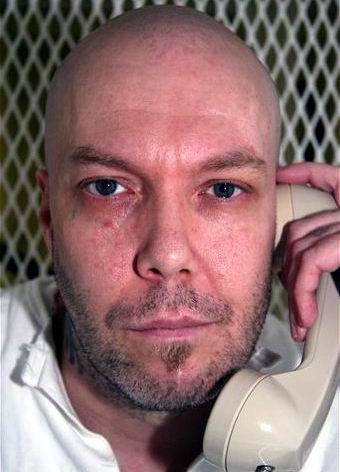
Samuel Clark Gallamore was executed by lethal injection in Texas on January 14, 2003. He was convicted of capital murder for participating in the beating and stabbing deaths of an elderly couple and their daughter during a robbery at their home in Kerr County, Texas.
The offence
On March 29, 1992, Samuel Clark Gallamore and his accomplice, James John Steiner, drove to the private residence of Verle Clayton Kenney, his wife Julianna Kenney, and their daughter Adrienne Arnot, in Kerr County, Texas, for the purpose of robbing them.
On their way to the Kenney residence, Gallamore and Steiner discussed the proposed robbery and decided that if any occupant tried to stop them, they would kill them. When Gallamore and Steiner arrived, they parked away from the house and walked to the door. Gallamore picked up a cedar branch and handed it to Steiner. Steiner carried a tire iron. Steiner hid out of sight while Gallamore knocked on the front door.
Adrienne Arnot opened the door. The two men forced their way inside, knocking Arnot down. Gallamore and Steiner began beating Arnot and Verle Clayton Kenney with a tire iron and a wooden club/cedar branch. Arnot struggled for her life and sustained 12 blunt force blows to her head and face and 14 blunt force blows to her upper extremities, back, and right thigh. Mr. Kenney sustained six blunt force injuries to his head, and the injuries were sufficient to cause the deaths of the two victims.
Gallamore then grabbed a knife from the Kenney kitchen and began stabbing Arnot and Mr. Kenney. Arnot sustained a stab wound to her right, middle finger, consistent with a defensive laceration. Gallamore stabbed Arnot twice in the neck, creating a three-inch wound.
Gallamore proceeded further into the house and discovered Mrs. Kenney, partially paralyzed and immobile in a chair, and unable to defend herself. Gallamore, wielding the kitchen knife, stabbed Mrs. Kenney in the neck. The knife wound was sufficient to cause Mrs. Kenney’s death. Gallamore continued to beat Mrs. Kenney, hitting her at least five times with a blunt object. The blows were so powerful that they created a gaping hole in Mrs. Kenney’s skull measuring 7 inches long by 2 inches wide. All three victims died.
After stabbing and beating all three residents, Gallamore and Steiner took spoons, cash from Arnot’s purse, and various small items on display in the house. They buried most of the items taken from the Kenney residence on property owned by Gallamore’s parents. Much of the detailed and graphic description of the events came from Gallamore himself, in two tape-recorded confessions that were produced for the jury, and from Gallamore’s testimony at trial.
Investigation
Police were able to track down Gallamore and Steiner about 18 months after the murders.
Sheriff Rusty Hierholzer described the case’s investigation and said a maid discovered the gruesome scene at the family’s home. Hierholzer said that investigators might not have suspected Gallamore without a bloody cedar stick found in the brush outside the Kenneys’ home bearing a partial fingerprint from Gallamore.
Arrest
Gallamore moved to Chicago after the murders and was arrested there about 18 months later.
After his arrest, Gallamore led law enforcement officers to the location where he had buried the property taken from the Kenney home.
Trial
Gallamore was indicted on July 22, 1993, by a Kerr County grand jury for the capital offense of murdering Julianna Kenney, Verle Clayton Kenney, and Adrienne Arnot in the same criminal transaction on March 29, 1992.
Venue for Gallamore’s trial was transferred to the 22nd Judicial District Court of Comal County, Texas. Gallamore was tried before a jury upon a plea of not guilty.
Guilt-innocence phase
On February 1, 1994, after deliberating for less than two hours, the jury found Gallamore guilty of the capital offense.
Punishment phase and sentencing
During the punishment phase, the state argued Gallamore’s future dangerousness and presented testimony from three law enforcement officers about Gallamore’s reputation in the community for unlawfulness and violence. The state also presented Gallamore’s prior criminal history, including evidence of a prior arrest for assaulting his own sister. The state further presented evidence indicating that Gallamore threatened to escape if convicted.
Gallamore’s counsel offered testimony of friends and family members to rebut the state’s evidence on future dangerousness. Gallamore’s counsel also offered testimony of Dr. Wendell Dickerson, a forensic psychologist, concerning Gallamore’s mental health and potential future dangerousness.
The jury determined that Gallamore posed a threat of future violence, that Gallamore had intended to kill the deceased, and that there were not sufficient mitigating circumstances to warrant a life sentence. Based on these findings, the trial court sentenced Gallamore to death in accordance with Texas law.
On February 3, 1994, following a separate punishment hearing, the jury answered special issues one and two affirmatively and special issue number three negatively, and the trial court sentenced Gallamore to death.
Post-trial motions
On March 2, 1994, Gallamore filed a motion for new trial. A hearing on the motion was held on April 15, 1994, and the trial court denied the motion.
Appeals
Gallamore appealed his conviction and sentence to the Court of Criminal Appeals of Texas, which affirmed in an unpublished opinion. Gallamore appealed and the Court of Criminal Appeals denied his motion for rehearing on February 8, 1996.
Gallamore did not petition for certiorari in the United States Supreme Court.
State habeas corpus
On December 2, 1997, Gallamore filed his original application for writ of habeas corpus in the state trial court raising five grounds for relief. The state trial court issued findings of fact and conclusions of law recommending that relief be denied. The Texas Court of Criminal Appeals deemed the trial court’s findings and conclusions supported by the record and denied habeas corpus relief in an unpublished order.
On July 10, 2002, Gallamore filed a second application for writ of habeas corpus in the Texas Court of Criminal Appeals raising a single ground for relief. It was dismissed as an abuse of the writ.
Federal habeas corpus
On July 13, 1998, Gallamore filed a petition for writ of habeas corpus in the United States District Court for the Western District of Texas, San Antonio Division. The district court denied relief in a 94-page opinion but granted Gallamore’s request for a Certificate of Appealability as to all four issues.
On January 18, 2001, Gallamore filed his appeal from the district court’s denial of federal habeas corpus relief with the Fifth Circuit Court of Appeals raising only two of the four issues for which he had been granted COA.
On October 4, 2001, the Fifth Circuit affirmed the district court’s denial of federal habeas corpus relief.
On November 13, 2001, Gallamore filed a petition for rehearing, and it was denied the same day.
On January 31, 2002, Gallamore filed a petition for writ of certiorari in the United States Supreme Court. The Supreme Court denied the petition.
Fifth Circuit ruling details
The Fifth Circuit case involved Samuel Clark Gallamore v. Janie Cockrell, Director, Texas Department of Criminal Justice, Institutional Division. The Fifth Circuit stated that it affirmed the judgment of the district court denying federal habeas relief.
The Fifth Circuit addressed:
- A Simmons v. South Carolina due process argument concerning whether the jury should have been informed about parole ineligibility for a life sentence.
- An ineffective assistance of counsel argument, including challenges related to mental health strategy, appointment of co-counsel, and counsel’s failure to bring Jackson v. State to the trial court’s attention.
The Fifth Circuit concluded that it would affirm the judgment of the district court denying federal habeas relief.
Sentencing
On February 3, 1994, the trial court sentenced Gallamore to death in accordance with Texas law after the jury answered special issues one and two affirmatively and special issue number three negatively.
Outcome
After exhausting state and federal appeals, Gallamore was executed by lethal injection in Texas on January 14, 2003.
Aftermath
Gallamore requested no last meal.
He declined to make a final statement from the death chamber gurney.
Gallamore made handwritten statements, including the following:
“I would like to apologize and say I'm sorry but words seem so hollow and cheap,” Gallamore said in a handwritten statement distributed after his execution.
“Their death should not have happened, but it did. I'm so sorry that all of this took place.”
A separate handwritten statement also included:
“If I could change things I would, not for my sake but for all those who have loved me over the years and for those who have forgiven me.”
The Texas Attorney General’s information described Gallamore as scheduled to be executed on Tuesday, Jan. 14, 2003, after sentencing on Feb. 3, 1994.
Timeline
- March 29, 1992 — Gallamore and Steiner drove to the Kenney residence in Kerr County for the purpose of robbing the home; the three residents were beaten and stabbed; all three victims died.
- July 22, 1993 — Gallamore was indicted by a Kerr County grand jury for capital murder of Julianna Kenney, Verle Clayton Kenney and Adrienne Arnot.
- February 1, 1994 — The jury found Gallamore guilty of the capital offense.
- February 3, 1994 — The trial court sentenced Gallamore to death.
- March 2, 1994 — Gallamore filed a motion for new trial.
- April 15, 1994 — The trial court denied the motion for new trial.
- February 8, 1996 — The Court of Criminal Appeals denied Gallamore’s motion for rehearing.
- December 2, 1997 — Gallamore filed his original state application for writ of habeas corpus raising five grounds for relief.
- July 13, 1998 — Gallamore filed his petition for writ of habeas corpus in federal district court.
- January 18, 2001 — Gallamore filed his federal habeas appeal with the Fifth Circuit raising two of the issues for which a COA was granted.
- October 4, 2001 — The Fifth Circuit affirmed denial of federal habeas relief.
- November 13, 2001 — The petition for rehearing was filed and denied the same day.
- January 31, 2002 — Gallamore filed a petition for writ of certiorari in the United States Supreme Court.
- July 10, 2002 — Gallamore filed a second state habeas application, dismissed as an abuse of the writ.
- January 14, 2003 — Gallamore was executed by lethal injection in Texas.
Other details
Victims and their ages
- Verle Clayton Kenney, 83
- Julianna Kenney, 74
- Adrienne Arnot, 44
Confessions and jury evidence
Two taped confessions by Gallamore detailing the crime were admitted at trial. Gallamore also testified at trial.
Content of Gallamore’s handwritten statements and reported remarks
Gallamore declined to make a final statement from the death chamber gurney but distributed a handwritten statement after his execution. In addition, he wrote:
And:
“Thank you. You have given me more hope than I have had in a long time … If I could change things I would, not for my sake but for all those who have loved me over the years and for those who have forgiven me.”
Prior criminal history mentioned at trial and in federal proceedings
Gallamore had prior misdemeanor convictions and a prior arrest history described in the record:
- On October 31, 1991, Gallamore was convicted of misdemeanor assault (family violence), fined, and sentenced to four months in jail.
- On October 29, 1992, Gallamore was convicted of possession of marijuana and sentenced to 14 days in jail and 30 days drug counseling.
- On September 3, 1992, Gallamore was convicted of interfering with the duties of a police officer (resisting arrest) and sentenced to five months in jail. The federal appeals discussion also referenced a prior arrest for assaulting his own sister.
Co-defendant outcome
James John Steiner was convicted and sentenced to life imprisonment. The record also described that Steiner had previously cared for Mrs. Kenney at a nursing home.
Execution timing details described in the record
Lethal dose chemicals began at 6:07 p.m., and Gallamore was declared dead at 6:14 p.m. Gallamore was described as requesting no last meal and being pronounced dead seven minutes after the lethal drugs began.
Spotted an error, or have more information about this case?