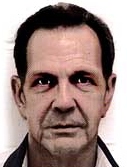
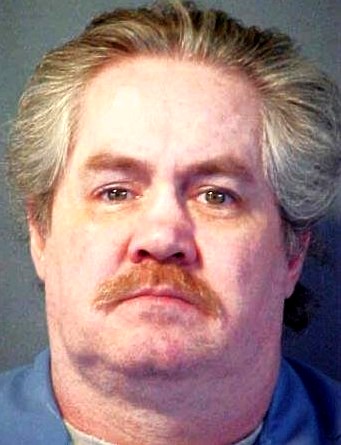
Fred Marion Gilreath
Murderer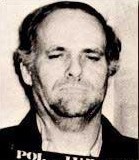 Ervil LeBaron
Murderer · USA · 1972
Ervil Morrell LeBaron (1925 to August 16, 1981) was the leader of a polygamous…
35 victims
Ervil LeBaron
Murderer · USA · 1972
Ervil Morrell LeBaron (1925 to August 16, 1981) was the leader of a polygamous…
35 victims
 Brian Kevin Rosenfeld
Murderer · USA · 1985
Brian Kevin Rosenfeld Brian Kevin Rosenfeld was sentenced to three concurrent l…
23 victims
Brian Kevin Rosenfeld
Murderer · USA · 1985
Brian Kevin Rosenfeld Brian Kevin Rosenfeld was sentenced to three concurrent l…
23 victims
 Marvin Gray
Murderer · USA · 1975
Marvin Gray was convicted killer who claimed responsibility for 23 slayings and…
23 victims
Marvin Gray
Murderer · USA · 1975
Marvin Gray was convicted killer who claimed responsibility for 23 slayings and…
23 victims
 Yahweh ben Yahweh
Murderer · USA · 1980
Yahweh ben Yahweh was born and legally named Hulon Mitchell Jr. (October 27, 19…
23 victims
Yahweh ben Yahweh
Murderer · USA · 1980
Yahweh ben Yahweh was born and legally named Hulon Mitchell Jr. (October 27, 19…
23 victims
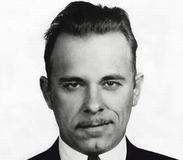 John Dillinger
Murderer? · USA · 1933
John Dillinger (John Herbert Dillinger, Jr.; June 22, 1903 – July 22, 1934) · J…
1 victim
John Dillinger
Murderer? · USA · 1933
John Dillinger (John Herbert Dillinger, Jr.; June 22, 1903 – July 22, 1934) · J…
1 victim
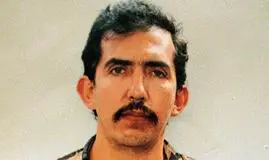 Luis Alfredo Garavito
Serial killer · Colombia/Ecuador · 1992
Luis Alfredo Garavito Cubillos, also known as "La Bestia" ("The Beast") or "Tri…
192 victims
Luis Alfredo Garavito
Serial killer · Colombia/Ecuador · 1992
Luis Alfredo Garavito Cubillos, also known as "La Bestia" ("The Beast") or "Tri…
192 victims
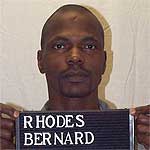 Bernard Rhodes
Murderer · USA · 1997
Bernard Rhodes was convicted of first degree murder and first degree robbery. T…
1 victim
Bernard Rhodes
Murderer · USA · 1997
Bernard Rhodes was convicted of first degree murder and first degree robbery. T…
1 victim
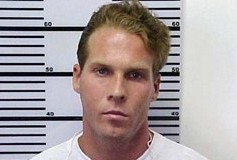 Jesse James Hollywood
Murderer · USA · 2000
Jesse James Hollywood, also known as Sean Michaels, was born January 28, 1980,…
1 victim
Jesse James Hollywood
Murderer · USA · 2000
Jesse James Hollywood, also known as Sean Michaels, was born January 28, 1980,…
1 victim
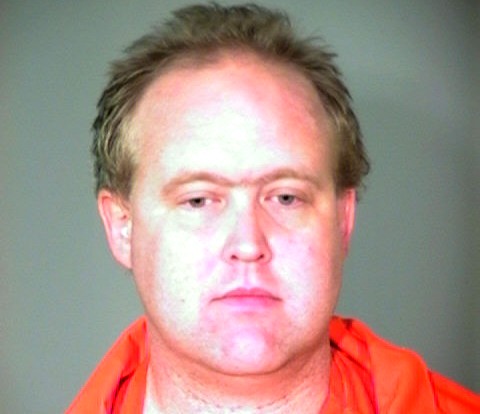 Pete Carl Rogovich
Spree killer · USA · 1992
Pete Carl Rogovich was tried in Maricopa County in connection with the March 15…
4 victims
Pete Carl Rogovich
Spree killer · USA · 1992
Pete Carl Rogovich was tried in Maricopa County in connection with the March 15…
4 victims
- Gender
- male
- Country
- USA
- Location
- Cobb County, Georgia, USA
- Date of birth
- January 19, 1938
- Age at first offence
- 41
- Characteristics
- parricide
- Victim profile
- His wife, Linda Gilreath, and her father, Gerrit Van Leeuwen
- Method of murder
- Shooting
- Date(s) of murder
- May 11, 1979
- Years active
- 1979
- Date of arrest
- Same day
- Status
-
Executed
Executed by lethal injection in Georgia on November 15, 2001
Case record: Fred Marion Gilreath
Timeline
- May 11, 1979 — Linda Gilreath and her father, Gerrit Van Leeuwen, returned to the Gilreath home to pick up Linda's personal belongings.
- May 11, 1979 — Linda Gilreath and Gerrit Van Leeuwen were shot dead at the Gilreath home; gasoline was poured on and around the victims and on the kitchen floor.
- May 11, 1979 — Dempsey Wolfenbarger went to the police station and told an officer that he was concerned for the safety of his stepdaughter, Linda Gilreath.
- May 11, 1979 — Fred Gilreath was located at his brother’s home in North Carolina, where he arrived driving Linda's car intoxicated and took a shower with his clothes on.
- May 14, 1979 — Police searched Fred Gilreath’s North Carolina cabin again pursuant to a warrant and recovered a partial box of .22 caliber short ammunition.
- February 25, 1980 — A jury trial began in the Superior Court of Cobb County.
- March 3, 1980 — The jury convicted Fred Gilreath and sentenced him to death for both murders.
- April 23, 1986 — The state habeas corpus court denied relief on an unpublished order following an evidentiary hearing.
- January 8, 1987 — Fred Gilreath filed his first federal habeas corpus petition in the United States District Court for the Northern District of Georgia, Atlanta Division.
- August 23, 1990 — A second state habeas corpus petition was denied.
- March 29, 1996 — The district court denied relief in the second federal habeas corpus case.
- March 7, 1997 — The district court denied a motion to alter or amend the judgment and denied a request for reconsideration.
- September 3, 1997 — The district court granted permission to appeal certain issues.
- April 29, 1998 — Oral argument was held in the United States Court of Appeals for the Eleventh Circuit.
- December 15, 1999 — A hearing or proceeding is referenced as occurring on this date in relation to the federal appeal.
- December 1, 2000 — A three-judge panel issued its opinion affirming the district court’s denial of relief on all grounds.
- April 17, 2001 — Rehearing was denied.
- October 1, 2001 — The United States Supreme Court denied Gilreath’s petition for a writ of certiorari to review the Eleventh Circuit’s decision.
- October 10, 2001 — The mandate of the Eleventh Circuit was issued.
- November 10, 2001 — A motion was filed contending the capital sentence should be overturned as disproportionate.
- November 13, 2001 — The state Board of Pardons and Paroles refused to save Fred Gilreath from the scheduled execution.
- November 14, 2001 — An execution stay was granted while considering a Motion for Stay and Temporary Restraining Order; later, following denial of the motion, the execution proceeded under the later appellate schedule.
- November 15, 2001 — The 11th Circuit Court of Appeals denied Gilreath’s appeal; the Commissioner scheduled the execution to take place at or after 3:01 p.m.
- November 15, 2001 — The execution was carried out at approximately 3:53 p.m.
Background
Fred Marion Gilreath, Jr. and Linda Gilreath had been married for about 11 years. They separated after an argument in which Linda moved out a few days before the killings and later returned with her father, Gerrit Van Leeuwen, to pick up some of her personal belongings. Linda had been in the process of obtaining a divorce from Fred Gilreath.
The offence
On May 11, 1979, police discovered both victims inside the Gilreath home. Linda Gilreath’s body was found in the house with a towel covering her face near a suitcase. She had been shot five times along her right side with a .30-30 lever action rifle from approximately two to three feet away, and she had been shot in the face from approximately five to six feet away with a .12 gauge shotgun. Matter was splattered across the love seat, the carpet and the walls.
Gerrit Van Leeuwen’s body was found a short distance away. He had been shot with a .30-30 wound to his right thigh, a shotgun wound to his left chest, and two .22 caliber wounds to his head. Police found a shotgun and a shell lying on the floor. Police found and recovered firearms and shell casings including a .22 caliber rifle, a .12 gauge shotgun, and shell casings from .22 and .30-30 caliber weapons and from a shotgun. Gasoline had been poured on and around both victims as well as on the kitchen floor.
Police found no signs of forcible entry into the house. A green military-type gas can was sitting by the door to the screened-in porch.
Investigation
After a lookout was placed on Fred Gilreath and on the blue Duster, police in North Carolina contacted his brother, who lived nearby. The brother was asked to let the sheriff’s department know if Gilreath showed up. Fred Gilreath arrived at his brother’s office driving a blue Duster at approximately 7:30 p.m. that evening. When Cobb County police arrived around 8 p.m., they found Fred Gilreath having showered with his clothes on and still wearing his wet cutoffs.
Police arrested Gilreath, explaining he was wanted for questioning in relation to a double homicide in Georgia, and he asked if he could call his wife.
A Cobb County detective arrived in North Carolina the next day, searched the Duster pursuant to a warrant, and recovered part of a box of .22 caliber bullets. The detective also traveled to a cabin purportedly belonging to Fred Gilreath and found empty shotgun shell cases, .30/.30 caliber cases and .22 caliber cases lying in the drive. The shotgun and the .22 rifle found at the crime scene were identified as the murder weapons. The firearms examiner determined that the same .30-30 gun used to shoot the victims had fired the empty shells found at the North Carolina cabin.
At the crime scene, officers had first gone to the Gilreath residence after receiving a concern for Linda’s safety. One officer saw a man's body inside the house and then saw Linda’s body after stepping into the porch area through the sliding glass door. Officers later checked other rooms looking for the two children and found no one inside. The detectives then conducted the investigation, including locating evidence, taking measurements and making drawings.
A detective testified that he discerned no signs of forcible entry into the house.
Forensic evidence included testimony from a forensic serologist who examined Gilreath’s shorts and found a stain which could have been blood; because the sample was inadequate, it could not be positively identified.
Shell casings were also recovered after additional search activity at the cabin, including an additional .22 caliber shell casing recovered two days after the first scene examination and a partial box of .22 caliber short ammunition recovered in a later cabin search.
Arrest
Fred Gilreath was located in North Carolina at his brother’s home and arrested after police arrived and recognized him as the person they wanted for questioning in relation to the double homicide in Georgia.
Trial
A jury trial began on February 25, 1980, in the Superior Court of Cobb County.
The jury convicted Fred Gilreath of malice murders of his wife, Linda Gilreath, and her father-in-law, Gerrit Van Leeuwen, and sentenced him to death for both murders on March 3, 1980.
During the guilt phase, the jury found three O.C.G.A. § 17-10-30 statutory aggravating circumstances supporting the two death sentences:
- Each murder was “outrageously vile and wantonly vile, horrible and inhuman in that it involved torture, depravity of mind and aggravated battery,” § 17-10-30(b)(7).
- The murder of Gerrit Van Leeuwen was committed while the offender was engaged in the murder of Linda Gilreath, § 17-10-30(b)(2).
Fred Gilreath testified at trial that he did not kill anyone and that he intended to return to the house after going to the liquor store, but drove to North Carolina instead. Gilreath identified the .22 caliber rifle, the shotgun and the gas can as his. He denied having killed his wife or his father-in-law.
In the sentencing-related proceedings described, Petitioner instructed trial counsel to present no mitigating evidence at sentencing, and trial counsel presented no mitigating evidence at the sentencing phase.
Sentencing
Fred Gilreath received death sentences for the murders of Linda Gilreath and Gerrit Van Leeuwen.
Appeals
The convictions and sentences were affirmed on direct appeal. Gilreath v. State, 247 Ga. 814, 279 S.E.2d 650 (1981), cert. denied, 456 U.S. 984, reh’g denied, 458 U.S. 1116 (1982).
First state habeas corpus petition:
- In 1983, a first state habeas corpus petition was filed in the Superior Court of Butts County alleging constitutional errors.
- Relief was denied by the state habeas court on April 23, 1986, in an unpublished order.
- The Georgia Supreme Court denied an application for a certificate of probable cause to appeal.
- The United States Supreme Court declined to review the state habeas decision. Gilreath v. Kemp, 479 U.S. 890, reh’g denied, 479 U.S. 999 (1986).
First federal habeas corpus case:
- On January 8, 1987, Gilreath filed his first federal habeas corpus petition in the United States District Court for the Northern District of Georgia, Atlanta Division.
- The petition was dismissed without prejudice so he could return to state court.
Second state habeas corpus case:
- In August 1987, a second state habeas corpus petition was filed and denied on August 23, 1990.
- On March 1, 1991, the Georgia Supreme Court denied an application for a certificate of probable cause to appeal.
- The United States Supreme Court denied review. Gilreath v. Zant, 502 U.S. 885, reh’g denied, 502 U.S. 1001 (1991).
Second federal habeas corpus case:
- On September 23, 1992, a second federal habeas corpus petition was filed in the Northern District of Georgia.
- Relief was denied on March 29, 1996.
- On March 7, 1997, the district court denied a motion to alter or amend the judgment and denied a request for reconsideration.
- On September 3, 1997, permission to appeal certain issues was granted.
- Oral argument was held on April 29, 1998, and on December 15, 1999.
- On December 1, 2000, the Eleventh Circuit issued an opinion affirming the district court’s denial on all grounds. Gilreath v. Head, 234 F.3d 547 (11th Cir. 2000).
- Rehearing was denied on April 17, 2001.
- On October 1, 2001, the United States Supreme Court denied Gilreath’s petition for a writ of certiorari to review the Eleventh Circuit’s decision.
- The Eleventh Circuit mandate was issued on October 10, 2001.
Additional court proceedings described around clemency and execution scheduling:
- An execution order set a seven-day window beginning at 12:00 p.m. on November 13, 2001 and ending at 12:00 p.m. on November 20, 2001.
- The Commissioner of the Department of Corrections scheduled execution for 7:00 p.m. on November 14, 2001.
- On November 14, 2001, the United States District Court for the Northern District of Georgia granted a stay in connection with a Motion for Stay and Temporary Restraining Order, until 9:00 p.m. on November 14, 2001.
- After denial of the motion for stay, Gilreath appealed to the Eleventh Circuit.
- The Eleventh Circuit issued a stay until 3:00 p.m. on November 15, 2001 during consideration of Gilreath’s appeal.
- On November 15, 2001, the Eleventh Circuit denied Gilreath’s appeal.
- The Commissioner scheduled the execution at or after 3:01 p.m. on November 15, 2001.
Outcome
Fred Marion Gilreath, Jr. was executed by lethal injection in Georgia on November 15, 2001. The execution was carried out at approximately 3:53 p.m. on Thursday, November 15, 2001.
Aftermath
Accounts of the final statement attributed to Gilreath were included, including:
“My God has forgiven me for all my sins. I have forgiven the people who have done me wrong,”

Spotted an error, or have more information about this case?