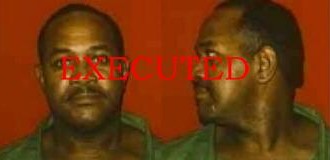
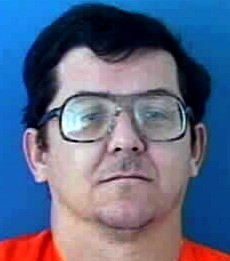
J. D. Gleaton
Murderer Ervil LeBaron
Murderer · USA · 1972
Ervil Morrell LeBaron (1925 to August 16, 1981) was the leader of a polygamous…
35 victims
Ervil LeBaron
Murderer · USA · 1972
Ervil Morrell LeBaron (1925 to August 16, 1981) was the leader of a polygamous…
35 victims
 Brian Kevin Rosenfeld
Murderer · USA · 1985
Brian Kevin Rosenfeld Brian Kevin Rosenfeld was sentenced to three concurrent l…
23 victims
Brian Kevin Rosenfeld
Murderer · USA · 1985
Brian Kevin Rosenfeld Brian Kevin Rosenfeld was sentenced to three concurrent l…
23 victims
 Marvin Gray
Murderer · USA · 1975
Marvin Gray was convicted killer who claimed responsibility for 23 slayings and…
23 victims
Marvin Gray
Murderer · USA · 1975
Marvin Gray was convicted killer who claimed responsibility for 23 slayings and…
23 victims
 Yahweh ben Yahweh
Murderer · USA · 1980
Yahweh ben Yahweh was born and legally named Hulon Mitchell Jr. (October 27, 19…
23 victims
Yahweh ben Yahweh
Murderer · USA · 1980
Yahweh ben Yahweh was born and legally named Hulon Mitchell Jr. (October 27, 19…
23 victims
 Ken Eldon Lott
Murderer · USA · 1994
Defendant: Ken Eldon Lott Date of birth: 02/14/53 Jurisdiction: Ninth Judicial…
1 victim
Ken Eldon Lott
Murderer · USA · 1994
Defendant: Ken Eldon Lott Date of birth: 02/14/53 Jurisdiction: Ninth Judicial…
1 victim
 William K. Taylor
Murderer · USA · 2001
Name: William K. Taylor · Date of birth: 09/08/58 · DC#: 111640 · Thirteenth Ju…
1 victim
William K. Taylor
Murderer · USA · 2001
Name: William K. Taylor · Date of birth: 09/08/58 · DC#: 111640 · Thirteenth Ju…
1 victim
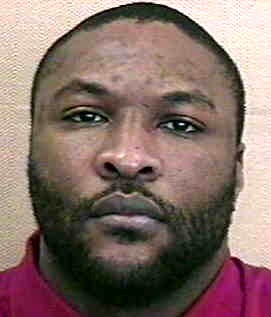 Willie Ervin Fisher
Murderer · USA · 1992
Willie Ervin Fisher was convicted of the capital murder of Angela Johnson and r…
1 victim
Willie Ervin Fisher
Murderer · USA · 1992
Willie Ervin Fisher was convicted of the capital murder of Angela Johnson and r…
1 victim
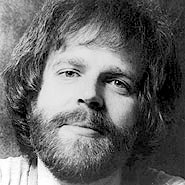 Jerry Harvey
Murderer · USA · 1988
Jerry Harvey (October 28, 1949 – April 9, 1988) was an American screenwriter an…
1 victim
Jerry Harvey
Murderer · USA · 1988
Jerry Harvey (October 28, 1949 – April 9, 1988) was an American screenwriter an…
1 victim
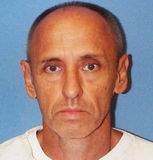 Thomas Whisenhant
Serial killer · USA · 1975
Name: Thomas Warren Whisenhant Gender: M Race: W DOB: 1/29/1947 Inmate: WHISENH…
3 victims
Thomas Whisenhant
Serial killer · USA · 1975
Name: Thomas Warren Whisenhant Gender: M Race: W DOB: 1/29/1947 Inmate: WHISENH…
3 victims
- Gender
- male
- Country
- USA
- Location
- Lexington County, South Carolina, USA
- Date of birth
- 1945
- Age at first offence
- 32
- Characteristics
- robbery, torture
- Victim profile
- Ralph Stoudemire, 44 (gas station owner)
- Method of murder
- St abbing with knife and shooting
- Date(s) of murder
- July 12, 1977
- Years active
- 1977
- Date of arrest
- Next day
- Status
-
Executed
Executed by lethal injection in South Carolina on December 4, 1998
Case overview
J. D. Gleaton was executed by lethal injection in South Carolina on December 4, 1998. He was 53 years old.
Gleaton was half-brother of Larry Gilbert. Together, they were put to death for the stabbing and shooting death of Ralph Stoudemire.
People
- J. D. Gleaton, 53
- Larry Gilbert, 43
- Ralph Stoudemire, 44, service station owner
- Betty Slusher, widow of Ralph Stoudemire (married to Stoudemire for 25 years)
- Jose Ceja, referenced in discussion of death row length before execution
- Richard Dieter, executive director of the Death Penalty Information Center
- Rick Halperin
- David Voisin, Gleaton’s lawyer
- Charlie Condon, Attorney General
- Donnie Myers, 11th Circuit Solicitor
- Michael W. Moore, Director of the South Carolina Department of Corrections (in his official capacity)
- C. Weston Houck, US District Judge
- Rodney Peeples, Circuit Judge
- William W. Wilkins Jr., judge who wrote opinion (as referenced)
- Judge Russell, wrote the opinion in the habeas appeal
- Judge Murnaghan, joined the opinion
- Judge Motz, joined the opinion
- RUSSELL, MURNAGHAN, and MOTZ, Circuit Judges (as referenced in the appellate decision)
Timeline
- July 12, 1977 — Half-brothers Gilbert and Gleaton drove around Cayce, South Carolina intending to purchase drugs; after unsuccessful inquiries, they went toward South Congaree and decided to rob Ralph Stoudemire at his service station. Gleaton entered first with a hunting knife, told Stoudemire it was a robbery, stabbed him during a scuffle, and Gilbert entered with a gun and shot Stoudemire once; the men ran.
- July 13, 1977 — Police arrested Gilbert and Gleaton the next day.
- October 1977 — Gilbert and Gleaton were jointly tried and convicted for the murder and armed robbery of Stoudemire.
- February 1980 — A resentencing trial was held; both men received death sentences again.
- June 1988 — The federal district court granted the State’s motion for summary judgment on all claims raised in the Petitioners’ PCR applications.
- August 26, 1996 — The federal district court granted the Petitioners’ habeas corpus petitions; the district court found the implied malice instruction unconstitutional and harmful error.
- December — Oral arguments were heard (as referenced in connection with a federal appellate decision).
- March 5, 1997 — Oral arguments were held before the United States Court of Appeals for the Fourth Circuit.
- July 29, 1997 — The federal appeals court affirmed by published opinion the district court’s grant of habeas relief.
- January 23, 1998 — A federal appellate court overturned a lower court ruling granting a new trial to Larry Gilbert and J.D. Gleaton, setting the case for a final appeal (as referenced).
- January 30, 1998 — A federal appeals court reinstated death sentences (as referenced).
- December 4, 1998 — Gleaton was executed by lethal injection in South Carolina.
The offence
Gilbert and Gleaton intended to purchase drugs and drove around Cayce, South Carolina. After several unsuccessful inquiries in Cayce, they drove toward South Congaree. As they traveled along Highway 51, they noticed a lone attendant, Ralph Stoudemire, in a service station, and decided to rob him.
Gleaton entered the station first. After requesting some cigarettes, he pulled out a hunting knife and told Stoudemire that it was a robbery. As Stoudemire reached into his pocket, Gleaton made a stabbing motion and a scuffle ensued. Gleaton inflicted Stoudemire with slash and stab wounds to his torso and wrists.
Gilbert entered the station with a gun and shot Stoudemire once during the scuffle. Gilbert then grabbed a nearby pocketbook left in the station by Stoudemire’s wife. Gilbert and Gleaton ran out of the station.
Stoudemire’s son witnessed the men drive off and saw his father stagger out of the service station pointing at the car. Stoudemire died approximately forty-five minutes later.
An autopsy established that Gilbert and Gleaton had collectively inflicted Stoudemire with one superficial gunshot wound to the chest, two superficial slash wounds to the wrists, and five stab wounds to the torso, with one stab wound piercing Stoudemire’s heart and causing his death.
Authorities later said both men were “high on drugs” when they entered Stoudemire’s gas station on July 12, 1977, to rob it. Gleaton stabbed the 44-year-old Stoudemire 5 times, including once in the heart. Gilbert shot him.
Investigation and arrest
The police arrested Gilbert and Gleaton the next day. While in custody, each man admitted driving around looking for a business to rob so they would have money to purchase drugs.
Gilbert confessed to shooting Stoudemire with the gun. Gleaton confessed to assaulting Stoudemire with the knife.
Trial
In October 1977, Gilbert and Gleaton were jointly tried and convicted for the murder and armed robbery of Stoudemire. At their sentencing trial, both men received death sentences.
On direct appeal, the Supreme Court of South Carolina affirmed the convictions but reversed the sentences because of the solicitor’s improper closing argument during the sentencing phase of the trial. At the resentencing trial in February 1980, both men received death sentences again, and the Supreme Court of South Carolina affirmed the new sentences.
A later federal ruling addressed jury instructions connected to implied malice and the burden of proof. The district court found the implied malice instruction, which was presented to the jury in the 1977 guilt phase, contained unconstitutional rebuttable presumptions and was not harmless error.
The trial court instructed the jury that murder was “the killing of any person with malice aforethought, either expressed or implied.” The trial court explained that “malice may be expressed as where previous threats of vengeance or lying in wait or other circumstances show directly that an intent to kill was really entertained.” Malice could be implied from “the facts and circumstances of the case which are proven.” The instruction also stated that the “willful, deliberate and intentional doing of any unlawful act without just cause” or the “conduct of the defendant in the use or handling of a deadly weapon” created a rebuttable presumption of malice.
The federal appellate opinion discussed how the jurors were reminded to base their determination of malice on all the evidence presented, that any malice presumption was rebuttable, and that the State must establish malice beyond a reasonable doubt.
The district court found that the instruction improperly shifted the burden of proof regarding malice. The instruction meant the State did not have to prove the men intended to use deadly force while robbing Stoudemire.
Sentencing
Both Gilbert and Gleaton received death sentences in 1977. After the solicitor’s improper closing argument resulted in reversal of sentences, both men were resentenced to death in February 1980, and the Supreme Court of South Carolina affirmed.
They spent more than two decades on death row. Their 21 years, 1 month and 27 days on death row was among the longest waits discussed before execution.
Appeals and habeas corpus
A state-supreme-court order in 1979 ordered a new sentencing trial because of a prosecutor’s remarks. In 1996, a federal judge said they deserved a new trial because of improper jury instructions, but an appeals court overturned that ruling.
The federal case consolidated appeals and cross-appeals into a single opinion. The State appealed the district court’s grant of habeas corpus relief, and the Petitioners cross-appealed the denial of writs on remaining issues.
Habeas petitions and district court ruling
In June 1988, the district court granted summary judgment on all claims raised in the PCR applications. Three years later, in August 1991, the district court vacated its order and remanded to a magistrate judge with instructions to hold the pleadings in abeyance for sixty days while the Petitioners pursued additional remedies in state court.
The Petitioners filed second PCR applications in state court. In March 1994, the judge who presided over the joint hearing declined to grant relief. The Supreme Court of South Carolina denied certiorari review. The Petitioners did not petition the United States Supreme Court for writs of certiorari.
In late July 1992, the district court granted the State’s motion to expedite, and on August 26, 1996, the district court granted the Petitioners’ habeas corpus petitions. The district court found the implied malice instruction contained unconstitutional rebuttable presumptions and was not harmless error. It also found remaining grounds either unsubstantiated or not of constitutional magnitude.
Fourth Circuit decision (appeals court)
The federal appellate court addressed the key issue of the implied malice instruction and affirmed the district court’s order granting habeas relief. The opinion stated that the reviewing court must determine whether the error “had substantial and injurious effect or influence in determining the jury’s verdict” and that the Petitioners had to establish actual prejudice to obtain habeas relief.
The appellate opinion discussed Yates v. Evatt and Arnold v. Evatt and applied analysis requiring the court to determine whether the error was unimportant in relation to other evidence considered by the jury independently of the erroneous presumption, including:
- asking what evidence the jury actually considered in reaching its verdict; and
- weighing the probative force of that evidence against the probative force of the erroneous presumption standing alone.
The appellate opinion concluded that, unlike the defendant in Arnold, the Petitioners had tipped the scales sufficiently in their favor and that a reasonable jury might have inferred malice from weapons, wounds, and Stoudemire’s death, but the presumptions in the implied malice instruction were prejudicial given the absence of overwhelming evidence of express malice. The appellate opinion stated: “Accordingly, we affirm the district court’s order granting habeasrelief to the Petitioners.” The court found “agrave doubt as to [the] harmlessness” of the implied malice instruction.
The opinion did not consider other issues raised by the Petitioners on cross-appeal, while noting that ineffective assistance of counsel claims could provide an independent ground for habeas relief.
1998 reinstatement and new trial discussion (as referenced)
A federal appellate court later overturned a lower court ruling that the two killers should receive a new trial, setting the state for a final appeal. The full 4th U.S. Circuit Court of Appeals unanimously overturned an earlier decision by a 3-judge panel upholding a lower court ruling granting a new trial.
A federal appellate opinion quoted Judge William W. Wilkins Jr.:
“Considering the totality of the overpowering evidence of malice that the jury had before it, there can be no doubt that the erroneous instruction had no effect whatsoever on the verdicts,”
It also quoted the opinion:
“It is now well-established that not all errors of constitutional dimension warrant a federal court to overturn a state conviction or sentence,”
The appellate ruling referenced testimony that the men had been awake for 2 days using stimulants and marijuana.
Outcome
On December 4, 1998, J. D. Gleaton was executed by lethal injection in South Carolina in Columbia. Larry Gilbert and J.D. Gleaton were executed by injection for killing Ralph Stoudemire during a robbery; Gilbert died 1st.
The execution was described as the first time since the Supreme Court reinstated the death penalty in 1976 that 2 brothers were executed on the same day. Richard Dieter said that their 21 years, 1 month and 27 days on death row was among the longest waits. Jose Ceja was referenced as having spent 23 years and a month on death row before execution.
Aftermath and statements
Betty Slusher, Stoudemire’s widow, said:
“I thought when this day came that I wouldn't be sad, that I would be happy, but I am,”
She also said:
“Let's face it, we're taking two men's lives.”
Slusher later said she received the phone call with the news and stated:
“it was the attorney general's office, and I started screaming and crying and said, 'Thank you, God.' I still haven't come down to earth yet.”
She added:
“Ralph Stoudemire's justice is going to come. I have hope that the execution dates are getting closer now.”
David Voisin said:
“I am disappointed because we thought we had several compelling issues in the case. The instructions went to the key issue of guilt or innocence...It can't be reduced to the category of a technicality.”
Charlie Condon and others hailed a ruling, with Condon stating:
“I think this sends a strong message to the US Supreme Court. I hope it is a watershed for use since this was our oldest case.”
Donnie Myers said:
“it was total elation and total surprise to have a unanimous decision. It's amazing. Thank God some common sense has finally come into play in this situation. We're back where we were 21 years ago.”
Other details
- Gleaton and Gilbert were described as 1/2 brothers who lived in Salley, S.C.
- The crime location was discussed as a gas station, a service station, and at the South Congaree, S.C. station, along Highway 51.
- Gleaton pulled a knife on Ralph Stoudemire, threatened to rob him, then stabbed him several times and ran.
- Gilbert shot Stoudemire once before he also fled.
- Gilbert and Gleaton were described as both high on drugs at the time of the robbery.
- Gilbert and Gleaton were described as having been awake for 2 days using stimulants and marijuana.

Spotted an error, or have more information about this case?