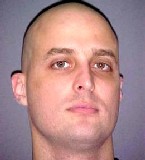
Michael Edward Hooper
Murderer Brian Kevin Rosenfeld
Murderer · USA · 1985
Brian Kevin Rosenfeld Brian Kevin Rosenfeld was sentenced to three concurrent l…
23 victims
Brian Kevin Rosenfeld
Murderer · USA · 1985
Brian Kevin Rosenfeld Brian Kevin Rosenfeld was sentenced to three concurrent l…
23 victims
 Russell Ellwood
Murderer · USA · 1991
Russell Ellwood was a former taxi driver. Authorities suspected him of killing…
20 victims
Russell Ellwood
Murderer · USA · 1991
Russell Ellwood was a former taxi driver. Authorities suspected him of killing…
20 victims
 Robert Martines Perez
Murderer · USA · 1994
Name: Robert Martines Perez · Other name used in proceedings: Robert Martinez P…
15 victims
Robert Martines Perez
Murderer · USA · 1994
Name: Robert Martines Perez · Other name used in proceedings: Robert Martinez P…
15 victims
 Billy Frank Vickers
Murderer · USA · 1993
Billy Frank Vickers Vickers was executed by lethal injection in Texas on Januar…
14 victims
Billy Frank Vickers
Murderer · USA · 1993
Billy Frank Vickers Vickers was executed by lethal injection in Texas on Januar…
14 victims
 Alex Wiens
Murderer · Germany · 2009
Alex Wiens (also known as Alexander Weins) was tried in Dresden, Germany, for t…
1 victim
Alex Wiens
Murderer · Germany · 2009
Alex Wiens (also known as Alexander Weins) was tried in Dresden, Germany, for t…
1 victim
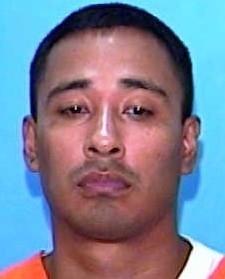 Joel Diaz
Murderer · USA · 1997
Name: Joel Diaz · Date of birth: 06/13/73 · Case citation / opinion: Supreme Co…
1 victim
Joel Diaz
Murderer · USA · 1997
Name: Joel Diaz · Date of birth: 06/13/73 · Case citation / opinion: Supreme Co…
1 victim
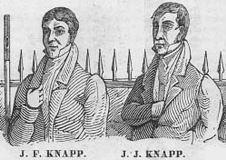 Francis & Joseph Knapp
Murderers · USA · 1930
Francis Knapp and Joseph Jenkins Knapp were the brothers known as the Knapps. T…
1 victim
Francis & Joseph Knapp
Murderers · USA · 1930
Francis Knapp and Joseph Jenkins Knapp were the brothers known as the Knapps. T…
1 victim
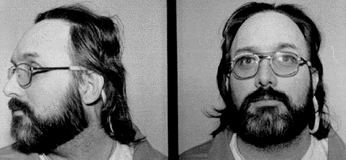 John Albert Taylor
Murderer · USA · 1988
John Albert Taylor (c. 1960) was executed by firing squad in Utah on January 26…
1 victim
John Albert Taylor
Murderer · USA · 1988
John Albert Taylor (c. 1960) was executed by firing squad in Utah on January 26…
1 victim
- Gender
- male
- Country
- USA
- Location
- Canadian County, Oklahoma, USA
- Date of birth
- July 9, 1972
- Age at first offence
- 21
- Characteristics
- revenge
- Victim profile
- His ex-girlfriend, Cynthia Lynn Jarman, 23, and her two children, Tonya Kay Jarman, 5, and Timmy Glen Jarman, 3
- Method of murder
- Shooting ( Smith & Wesson 9mm pistol)
- Date(s) of murder
- December 7, 1993
- Years active
- 1993
- Date of arrest
- 4 days after
- Status
-
Executed
Executed by lethal injection in Oklahoma on August 14, 2012
Overview
Michael Edward Hooper was an Oklahoma State Penitentiary death row inmate. He was convicted of three counts of murder in the first degree and was sentenced to death.
Status
Hooper was sentenced to death on July 25, 1995. He was resentenced on October 27, 2004. He was executed by lethal injection in Oklahoma on August 14, 2012.
The offence
Hooper was convicted of three counts of murder in the first degree for the 1993 shooting murders of his ex-girlfriend, Cynthia Lynn Jarman, age 23, and her two children, Tanya Kay Jarman, age 5, and Timmy Glen Jarman, age 3.
At trial, prosecutors argued that the victims were with Hooper in a pickup in a mowed field when he placed a 9 mm pistol under Cynthia Jarman’s chin and shot her, then shot the children to prevent them from being witnesses.
Each of the victims was shot twice in the head. After the shootings, the bodies were buried in a shallow grave in a field northwest of Oklahoma City. Police reports indicated that their bodies were discovered three days later.
Investigation
Police reports showed that Hooper and Jarman previously had been in a physically violent relationship.
Investigators reported that Hooper and Jarman began dating in early 1992 and dated through the summer of 1993, and that their relationship involved physical violence and threats.
Police later attempted to interview Hooper after Cynthia and the children were reported missing on December 9. Hooper failed to come to the station and denied seeing Cindy for the past six months. Police reported that Hooper appeared nervous and had a fresh scratch on his arm.
An area rancher noticed damage to a gate leading to a northwest Oklahoma City field on December 9. Inside the field the rancher found broken glass, tire tracks, a bloody sock and a pool of blood. After the missing persons report, the rancher contacted police. The next day police searched the field and found broken glass, tire tracks, a footprint, shell casings, a child’s bloody sock, a pool of blood near a tree with a freshly broken branch, a blue fiber near the tree, and a grave site covered by limbs, leaves and debris. The grave appeared to be soaked with gasoline. Police stated that Tonya, Timmy and Cindy were buried atop one another.
Investigators reported that each victim had been shot twice in the head or face. Police described evidence including a hole in the hood of Tonya’s blue and purple jacket, and white fiber lining protruding. A 9 mm bullet was described as pinning a white fiber to a branch on the grave. The branch appeared to have been broken from the tree near the pool of blood. The fibers were described as consistent with the white fibers in Tonya’s jacket. Police reported that although investigators never recovered the bullets, the wounds were consistent with nine millimeter ammunition.
Arrest and search
Police arrested Hooper and searched his parents’ home. Police recovered a nine millimeter weapon Hooper had purchased several months prior to the murders, along with two shovels with soil consistent with soil from the grave site, two gas cans, and broken glass consistent with glass found in Tonya’s coat and near the gate at the field. Police reported that a 9 mm bullet was found in Hooper’s pocket. Police officers also seized Hooper’s tennis shoes, and officers reported that the shoes made prints similar to those found at the murder scene. DNA tests revealed blood consistent with Cynthia’s blood on the shoes.
At trial, a ballistics expert testified that shell casings from the crime scene matched casings fired from Hooper’s weapon.
Background and relationship history
Hooper met Cynthia Jarman in early 1992 and dated through the summer of 1993. Police reports indicated their relationship was physically violent, and Hooper threatened to kill Cindy on several occasions.
At one point each had a victim’s protective order against the other. Cynthia called police during fights on more than one occasion.
In July 1993, Cynthia began dating Hooper’s friend, Bill Stremlow. Police described that Hooper bought a Smith & Wesson 9mm pistol on July 15, 1993. During a traffic stop the next day the Oklahoma City Police Department confiscated the gun; the OCPD returned the gun on October 23, 1993, but kept the ammunition. Police reported that Hooper went target shooting with friends in fields northwest of Oklahoma City the day he bought the gun and after it was returned. Hooper took the gun when he worked out-of-state in late October and November and refused a co-worker’s offer to buy it. Police also reported that a day or two before the murders Hooper showed a 9mm pistol to a neighbor.
Police reported that in November, three weeks before the murders, Cindy and her children began living with Stremlow, who told Cindy that Hooper was not welcome in their home. Police described that before moving in with Stremlow, Cindy told a friend that Hooper had previously threatened to kill her if she ever lived with another man.
On December 6, 1993, police described that Cindy confided in a friend that she wanted to be with Hooper one last time and then stop seeing him.
Events on and around the day of the murders
On the morning of December 7, 1993, Cindy and her children dropped Stremlow off at work and Cindy borrowed his truck for the rest of the day. Cindy picked up her daughter, Tonya, at school at 3:30 p.m. At that time, Tonya’s teacher saw Tonya get into Stremlow’s truck next to a white man who was not Stremlow. Police described that Cindy failed to pick up Stremlow from work that evening as planned, and Stremlow never saw Cindy again.
Police described that Stremlow’s truck was found burning in a field in northwest Oklahoma City the night of December 7. Police reported that the truck’s windows were broken out and that an accelerant had been used to set the truck on fire. Police reported that Stremlow recovered the vehicle the next day. When Stremlow returned to his house, police reported that although there were no signs of forced entry, a dresser drawer was disturbed, a Jim Beam whiskey bottle was on the dresser, and ten dollars in cash was missing. Police described Hooper’s fingerprints as later found on the Jim Beam bottle, and other evidence was described as showing Hooper and Cindy drank that brand of whiskey.
Police described that Cindy and her children were reported missing on December 9. Police reported that police attempted to interview Hooper, and Hooper denied seeing Cindy for the past six months while appearing nervous and having a fresh scratch on his arm.
Trial
Hooper was tried by a jury in the District Court of Canadian County. Hooper was convicted of three counts of Murder in the First Degree in violation of 21 O.S.1991, § 701.7(A), in District Court of Canadian County, Case No. CF–93–601.
The jury found that:
- On Counts I and III, Hooper knowingly created a great risk of death to more than one person and probably would commit criminal acts of violence that would constitute a continuing threat to society.
- On Count II, Hooper knowingly created a great risk of death to more than one person, probably would commit criminal acts of violence that would constitute a continuing threat to society, and committed the murder in order to avoid or prevent a lawful arrest or prosecution.
On Counts I and III, the jury found aggravating circumstances including “great risk of death to more than one person” and “continuing threat to society.” On Count II, the jury additionally found the aggravating circumstance of avoiding or preventing a lawful arrest or prosecution.
In accordance with the jury’s recommendation, the Honorable Edward C. Cunningham sentenced Hooper to death on each count.
Evidence and aggravating factors
During the capital sentencing proceeding, the jury found two aggravating factors existed with respect to all three victims:
- Hooper created a great risk of death to more than one person; and
- Hooper was a continuing threat to society.
Additionally, the jury found a third aggravating factor existed with respect to Tonya Jarman: Hooper committed the murder to avoid arrest or prosecution for the murder of Cynthia Jarman. After considering mitigating evidence, the jury imposed the death sentence for each count.
Appeals and post-conviction
Hooper filed an appeal and raised sixteen propositions of error. The Oklahoma Court of Criminal Appeals affirmed Hooper’s judgments and sentences, stating that neither reversal nor modification was required.
Direct appeal (affirmance)
The Court of Criminal Appeals affirmed the judgments and sentences. It held, among other things, that:
- police officer’s affidavits were sufficient to support arrest and search warrants;
- evidence regarding a prior traffic stop of Hooper was admissible;
- evidence regarding Hooper’s fight with Cynthia and his threats was admissible under a state of mind exception to hearsay;
- evidence was sufficient to support conviction;
- victim impact evidence was properly admitted;
- the “great risk of death to more than one person” aggravating circumstance could apply to multiple murders;
- evidence supported avoiding or preventing lawful arrest or prosecution;
- Hooper was not denied effective assistance of counsel; and
- the death sentences were appropriate.
The Court of Criminal Appeals affirmed and found no error warranting reversal or modification.
Post-conviction relief
After the Court of Criminal Appeals affirmed direct appeal decisions and denied post-conviction relief, Hooper sought federal habeas relief.
Federal habeas
The federal district court granted relief from Hooper’s death sentences based on constitutionally ineffective assistance of counsel during the capital sentencing proceeding. The federal Court of Appeals affirmed the district court’s order.
Remand and resentencing
On remand for resentencing, Hooper filed a pro se pleading described as a “Motion for Negotiated Plea and Waiver of Rights” asking that the sentence of death be upheld. The trial court treated this as a waiver of Hooper’s rights to a jury trial on resentencing and to present mitigating evidence.
The District Court ordered an independent competency evaluation. At a hearing on July 24, 2004, Hooper waived his right to a jury trial on the issue of competency. The trial court found Hooper competent. A sentencing hearing was held on September 8 and September 30, 2004, and the trial court imposed the death penalty on all three counts.
At the formal sentencing hearing on October 27, 2004, Hooper waived his right to direct appellate review.
Resentencing competency and waivers
The appellate court described strict procedures applied when a defendant essentially volunteered for the death penalty by waiving rights to jury trial, presentation of mitigating evidence, and direct appellate review.
The trial court conducted competency-related inquiries and found Hooper competent to waive his rights to jury trial and to present mitigating evidence, and found that he knowingly and intelligently waived the rights. The trial court found Hooper understood the importance of aggravating and mitigating evidence and understood the effects of failing to present mitigating evidence. Hooper was found to have made knowing and intelligent waivers, including of direct appellate review.
Last meal and execution
Hooper was executed on August 14, 2012, in the prison’s execution chamber. Witnesses were seated and able to see Hooper on the execution gurney. Hooper turned his head and smiled at his family.
At approximately noon on execution day, Hooper was served his last meal described as: a small cranberry juice, a small coffee, a small portion of blackberries, a small portion of cherries, strawberries, a peach, an apricot, a plum, a pear, an apple, a banana and an orange.
The Oklahoma State Penitentiary acting warden, Art Lightle, asked Hooper if he had any last words. Hooper said: “I just want to thank God for such an exuberant sendoff,” Hooper said. “Also my family for standing by me throughout all this. I appreciate them being there for me through the hardships. “I’d like to ask forgiveness for all those who need it — you know who you are. “I ask that my spirit be released directly into the hands of Jesus and I’m ready to go. “I love you all.”
Hooper’s mother said, “Amen.”
Later Lightle said, “Let the execution begin.” Witnesses reported the witness room was silent as Hooper was administered the lethal injections.
At 6:09 p.m., Hooper looked over at his family and said, “I love you all,” as his eyes fluttered and then shut. At 6:14 p.m. the attending physician pronounced Hooper’s time of death.
A clergy member sitting next to Hooper’s mother turned to her and said: “He’s at peace. When you have the assurance that Michael had, he was ready to go.”
The execution was witnessed by 15 members of the victim’s family, including Hooper’s mother, brother and two clergy representatives, four law enforcement representatives and two media witnesses, and employees from the Oklahoma Department of Corrections.
After the execution, members of the victims’ family released a written statement: “We would like to offer our sincerest condolences to the family of Mr. Hooper. This has been a long and arduous journey for all of the families. We hope to close this chapter in our lives. Tonya, Timmy and Cindy will always be in our hearts and in our minds. They will forever be missed and loved deeply.”
The executions in Oklahoma were described as including that Hooper was the 183rd death row inmate to be executed in Oklahoma.
Other details
People referenced in the record
- Cynthia Lynn Jarman (age 23), ex-girlfriend; victim.
- Tanya Kay Jarman (age 5), victim.
- Timmy Glen Jarman (age 3), victim.
- Bill Stremlow, referenced as the boyfriend Cynthia began dating.
- Art Lightle, Acting Warden.
- Jim Drummond, Hooper’s attorney referenced during federal proceedings about the lethal injection protocol challenge.
- Stefanie Duncan, referenced as Hooper’s ex-wife and as a witness in prior proceedings; the appellate decision describes her testimony about Hooper’s relationship with her.
- Edward C. Cunningham, J., referenced as the judge who sentenced Hooper to death on each count.
- Brett Blanton, referenced as a work associate of Hooper.
- Dr. Adams (Russell Adams, Ph.D.), neuropsychologist whose report was referenced.
- Dr. Murphy (Philip Murphy, Ph.D.), psychologist whose summary report was referenced.
- Dr. Roberson and Dr. Russell are referenced in later competency-related habeas background; Dr. Russell was described as finding no evidence that Hooper was incompetent.
- Jerry Massie and other prison spokespersons referenced in reporting about the execution protocol.

Spotted an error, or have more information about this case?