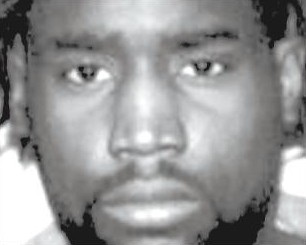
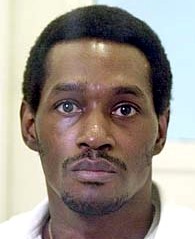
Andre Graham
Murderer Brian Kevin Rosenfeld
Murderer · USA · 1985
Brian Kevin Rosenfeld Brian Kevin Rosenfeld was sentenced to three concurrent l…
23 victims
Brian Kevin Rosenfeld
Murderer · USA · 1985
Brian Kevin Rosenfeld Brian Kevin Rosenfeld was sentenced to three concurrent l…
23 victims
 Russell Ellwood
Murderer · USA · 1991
Russell Ellwood was a former taxi driver. Authorities suspected him of killing…
20 victims
Russell Ellwood
Murderer · USA · 1991
Russell Ellwood was a former taxi driver. Authorities suspected him of killing…
20 victims
 Robert Martines Perez
Murderer · USA · 1994
Name: Robert Martines Perez · Other name used in proceedings: Robert Martinez P…
15 victims
Robert Martines Perez
Murderer · USA · 1994
Name: Robert Martines Perez · Other name used in proceedings: Robert Martinez P…
15 victims
 Billy Frank Vickers
Murderer · USA · 1993
Billy Frank Vickers Vickers was executed by lethal injection in Texas on Januar…
14 victims
Billy Frank Vickers
Murderer · USA · 1993
Billy Frank Vickers Vickers was executed by lethal injection in Texas on Januar…
14 victims
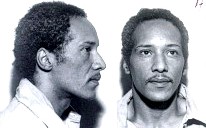 William Bracy
Murderer · USA · 1980
William Bracy was convicted, in a joint trial with Murray Hooper and in related…
5 victims
William Bracy
Murderer · USA · 1980
William Bracy was convicted, in a joint trial with Murray Hooper and in related…
5 victims
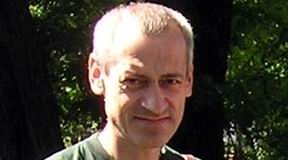 L'ubomír Harman
Mass murderer · Slovakia · 2010
Ľubomír Harman (31 March 1962 – 30 August 2010) was a Slovak spree killer. He a…
7 victims
L'ubomír Harman
Mass murderer · Slovakia · 2010
Ľubomír Harman (31 March 1962 – 30 August 2010) was a Slovak spree killer. He a…
7 victims
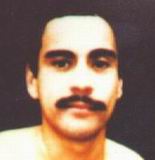 Robert Jurado
Murderer · USA · 1991
Robert Jurado Jr. was sentenced to death on October 13, 1994. · May 15, 1991 —…
1 victim
Robert Jurado
Murderer · USA · 1991
Robert Jurado Jr. was sentenced to death on October 13, 1994. · May 15, 1991 —…
1 victim
 Robert Jackson
Murderer · USA · 1992
Robert W. Jackson, III — defendant; male; white · Elizabeth Girardi — victim ·…
1 victim
Robert Jackson
Murderer · USA · 1992
Robert W. Jackson, III — defendant; male; white · Elizabeth Girardi — victim ·…
1 victim
 Henrietta Radbourne
Murderer · United Kingdom · 1787
Henrietta Radbourne, also known as Henrietta Gibbons, was indicted for the murd…
1 victim
Henrietta Radbourne
Murderer · United Kingdom · 1787
Henrietta Radbourne, also known as Henrietta Gibbons, was indicted for the murd…
1 victim
 Andrea Volpe
Murderer · Italy · 2004
The Beasts of Satan were a suspected satanic cult in Italy. Members of this gro…
3 victims
Andrea Volpe
Murderer · Italy · 2004
The Beasts of Satan were a suspected satanic cult in Italy. Members of this gro…
3 victims
- Gender
- male
- Country
- USA
- Location
- Virginia, USA
- Date of birth
- 1970
- Age at first offence
- 23
- Characteristics
- robbery, drugs, rape
- Victim profile
- Richard Rosenbluth, 40, and his wife Rebecca, 35 / Sheryl L. Stack, 20
- Method of murder
- Shooting
- Date(s) of murder
- October /November 1993
- Years active
- 1993
- Date of arrest
- —
- Status
-
Executed
Executed by lethal injection in Virginia on December 9, 1999
Names and identifiers
- Andre Graham
- Andre L. Graham
STATUS / outcome
Andre Graham was executed by lethal injection in Virginia on December 9, 1999.
The offence
Rosenbluth double murders (Chesterfield County, Virginia)
Mark Arlo Sheppard and Andre Graham shot and killed Richard Rosenbluth and Rebecca Rosenbluth in their home in Chesterfield County, Virginia. Their bodies were found in the den of their home. Richard Rosenbluth, 40, had been shot twice in the head. Rebecca Rosenbluth, 35, had been shot four times in the head and neck from close range. The murders occurred on November 28, 1993. The Rosenbluths had been buying cocaine from Sheppard and Graham. Sheppard and Graham stole the couple’s vehicles and some personal items before fleeing the house. The bodies were discovered several days later by police when Rebecca’s employer, alerted by a concerned Rosenbluth, went to check on the couple at their home.
Sheppard was 22 at the time of the murders and had a history of violence reaching back to when he was nine years old. Sheppard admitted being at the scene of the murders, with fingerprints found in 61 spots, but said Graham killed the couple. Sheppard was also a suspect in about ten other murders.
Murder of Sheryl L. Stack (Steak & Ale parking lot)
Andre Graham was sentenced to die for the shotgun murder of Sheryl L. Stack, 20, on 10/8/93. Stack was a waitress at a Steak & Ale. Stack was shot in the parking lot for her car. She died two days later. Andre Graham also shot a 23-year-old man (Edward Martin), who survived his injuries but lost an eye and most of the use of one arm and leg and suffered brain damage. Graham was convicted of a maiming charge in this case.
Investigation
Authorities suspected Mark Sheppard to be Graham’s accomplice, and Graham also asserted that Sheppard was his accomplice. The Commonwealth suggested during summation at the close of the guilt phase of trial that Sheppard was the other assailant. The two had a history of violent crime together.
Background
Richard Rosenbluth and Rebecca Rosenbluth
Richard grew up in Northern Virginia. He started college at East Carolina University and then attended the Berklee College of Music in Boston. He was a musician and a percussionist. Richard met Rebecca when he was playing with a band in Myrtle Beach, S.C., and they married in 1987.
Rebecca went to high school in West Virginia and was living in Myrtle Beach when she met Richard. Rebecca was a secretary at Air Distribution Sales Inc. Richard worked in the coffee service business, including sweeping floors in a warehouse for The Coffee Butler, moving up management, and eventually winding up in Richmond as a regional manager.
The Rosenbluths said they had no hint either had a drug habit, and that finding out about it and having it aired publicly in the trial was difficult. They said the couple were trying to have a baby. They last saw Richard and Rebecca on Thanksgiving. The couple had to return to Richmond on Friday, and they spoke on the phone. Mrs. Rosenbluth remembered chatting over the phone with Rebecca on Saturday morning; it was the last contact they had. The Rosenbluths could not get an answer at their son’s house on Sunday or Monday, so on Tuesday morning he called Rebecca’s employer. When he called, “It’s like a quarter to one and the doorbell rings. There are 3 Arlington County police officers and...they came in and they told us,” Mr. Rosenbluth said.
Mrs. Rosenbluth said, “You're in a state of shock... You don't even have the time to mourn” because there are funeral arrangements to make, police investigators to meet with and media questions to answer. She said, “I try and answer honestly. Looking back, everything is a blur, it's one big blur. You've got a big ache in your heart. That's all you can feel.”
Witnesses to the murders / related testimony
Witnessing relatives were Stanley and Phyllis Rosenbluth of Arlington County. Mr. Rosenbluth was 72 years old. Mrs. Rosenbluth was 68 years old.
Mr. Rosenbluth said, “People have asked me, 'Why do you want to go? Why do you want to witness?'" He also stated:
- “Watching Sheppard die is not about retribution, he said.”
- “You (take) someone's life, and you pay the consequences. It's not as if you didn't know what you were doing. There's no revenge. There's no vengeance," he said.
- “Watching Sheppard die is not about forgiveness. His wife, Louise Dillon of Montgomery, W.Va., asked, "Why would I forgive someone who, first of all never asked to be forgiven? At no time during the trial at I hear anyone ever say that they were sorry...or asked for forgiveness."
- “Watching Sheppard die is not some vain attempt at closure.”
- “Don't use that word with me. I hate that word. I don't know who made that word up," she said.
- “There is no closure. So many people don't seem to understand that: There is no closure," she said.
- Mr. Rosenbluth asked, “How can there be closure on a life sentence? We're both serving a life sentence.”
- “Instead, watching Sheppard die is a duty, of sorts, they said.”
- “To people who ask why he wants to watch the execution, "I say, 'I really don't. But when somebody wrongs your child you're going to do everything to right that wrong as much as you can do,'" he said.”
- “I feel this way, I've done, up to this point, everything that I can humanly do to right the wrong for my child. The last act is coming up. "What it is, is my obligation...as a parent to my child," he said. "This is the last thing I can do for him to right that wrong."
- Mrs. Rosenbluth said, “You have to understand, it's not a big thing in my life to go to this execution. It's just that sometimes you have to stand up for what you believe in.”
Drug-related background mentioned in trial evidence
A Virginia Supreme Court summary of the trial evidence stated: “The victims' personal records showed that, during the several months immediately preceding their deaths, the couple made substantial cash withdrawals and credit card charges averaging hundreds of dollars per day, apparently to support their addiction to the drug.”
Stanley said: “There was no reason for it. They were starting to make it, the typical American couple. What would make you think? There were no signs, there were no signs.” She said: “I still find it hard to believe about the drugs. I'm not disputing it, but I can't find a reason. Why? They had everything they wanted, except a child.”
Timeline
- November 28, 1993 — Mark Arlo Sheppard and Andre Graham shot and killed Richard Rosenbluth, 40, and Rebecca Rosenbluth, 35, in their Chesterfield County home.
- 10/8/93 — Sheryl L. Stack, 20, was shot in the Steak & Ale parking lot.
- October 7, 1993 (night) — After finishing their work at the Steak and Ale Restaurant in south Richmond, Stack drove her Volvo sedan and Martin drove his red sports car to another restaurant, where they ate.
- October 8, 1993 (after 2:00 a.m.) — James Jones saw Stack and Martin return to the Steak and Ale parking lot area and noticed them standing beside one of the two cars talking and kissing.
- October 8, 1993 (20 to 25 minutes later) — James Jones heard two loud noises and saw a third car being driven from the area; he noticed the Volvo’s engine running and its lights on but the red sports car was gone.
- October 8, 1993 — Stack and Martin were found shot in the head in a pool of blood with their hands touching; Stack was taken to hospital comatose and later died.
- December 9, 1993 (during incarceration on another charge) — Andre Graham made a telephone call to Booker in the presence of Gary McGregor, instructing her to get rid of a bag containing contents.
- December 1994 — Mark Arlo Sheppard was sentenced to death.
- January 1999 — Mark Sheppard was executed for an unrelated double slaying.
- 9 December 1999 — Andre Graham was executed by lethal injection in Virginia.
- December 9, 1999 (evening) — Graham was pronounced dead at 9:04 p.m.
- November 30, 1999 — Amnesty.org listed Andre Graham as scheduled to be executed on 9 December 1999 in Virginia.
Trial
Rosenbluth double murders (described outcomes for Sheppard and Graham)
The jury convicted Sheppard and sentenced him to death for the Rosenbluth murders. The appellate court denied Sheppard’s appeal, stating that conflicting testimony on whether Sheppard was the actual perpetrator presented a credibility question for the jury to resolve.
In these murders, Graham received a life sentence plus 23 years.
Stack murder and related shooting (capital murder and maiming)
Graham was convicted of killing Sheryl Stack (capital murder) and sentenced to death. Graham also shot Edward Martin, who survived but suffered extensive brain injuries and major impairments; Graham was convicted of a maiming charge in this case.
Graham maintained that his accomplice, Mark Sheppard, shot Stack and Martin.
Evidence and key witness testimony regarding the Stack/Martin shooting
James Jones, the night auditor of a motel adjacent to the Steak and Ale Restaurant parking lot, observed Stack and Martin return after 2:00 a.m. on October 8, then heard two loud noises and saw a third car being driven from the area. Jones called police after noticing a body lying on the ground. Harold Giles, a Richmond Police officer, received Jones’s call and found Stack and Martin shot in the head, lying face down in a pool of blood with their hands touching. Giles testified, “they were trying to communicate to each other, but I couldn't make out what they were saying.” Detective Thomas R. Searles arrived at the scene at “approximately” 6:00 a.m. Stack and Martin had been taken to the hospital.
A photograph showed Stack’s car had been ransacked, with Stack’s personal property and purse in disarray in the front seat. Searles found a .45 caliber cartridge case and two .45 caliber bullets approximately one foot apart. Stack was comatose when she arrived at the hospital and died some time later without regaining consciousness.
Martin testified that he and Stack were seated in her car in the parking lot when a man Martin later identified from a photographic spread as Graham approached the car. Graham had a gun and told them to get out of the car. After Stack and Martin got out of the car, Graham told Martin to hand over his wallet and car keys to another man who was with him, but unarmed. As Graham held “the gun on [Stack and Martin],” the other man first got in Stack’s car and started it, then got in Martin’s car, where the other man “saw” Martin’s compact disc recordings (CDs). While the other man was in Martin’s car, Graham told Stack and Martin that if they would lie down on the parking lot and close their eyes, he would not hurt them. Even though both did as directed, they were each shot in the head as they lay on the ground with their eyes closed.
Martin stated that after he was shot, he saw his “car was being started and the car was coming at [him] so[he] quickly rolled over to get out of the way of the car.” After they were shot, Stack and Martin were holding hands and he was trying to talk to her. Martin testified that Graham was the last person he saw with a gun before he closed his eyes.
Dr. William Broaddus testified that the bullet “damaged the left side of his brain,” resulting in Martin’s loss of his left eye, a partial paralysis on the right side of his body, and an impairment in his ability to generate language. He also said that Martin’s comprehension, memory, and intelligence were perfectly normal.
Priscilla Booker and disposal of evidence
Priscilla Booker testified that she had been living with Graham since early July 1993. She testified that on the morning of Stack’s murder, she saw Graham in the same red car as shown in a police photograph of Martin’s car. Later that morning, as Booker watched the news, she mentioned to Graham the reports of the shooting; Graham responded, “why do [you] worry about other people.” When Booker continued to watch, Graham became upset. When Booker asked why she should not watch the news, he replied that “he knew who did it[,] but he didn't.”
Two or three days after the Stack murder, Booker found Martin’s box of over 200 CDs in the trunk of her car. Graham told her he had bought these CDs for $10, and Booker put them in storage.
Police recovered Martin’s car a few days after the crimes but were unable to obtain any useful fingerprint evidence from it. Police found Martin’s CDs in a storage locker rented by Booker’s mother. Leland W. Kennedy, a fingerprint expert, testified that 31 of the 48 identifiable fingerprints found on the CDs were those of Graham.
On the morning of December 3, 1993, Graham, incarcerated in the Chesterfield County jail on another charge, made a telephone call to Booker in the presence of Gary McGregor, a Chesterfield County deputy sheriff. During the conversation, Graham told Booker several times to “go into the closet, get the bag with the contents and get rid of it.” McGregor reported the conversation to his superiors. Shortly thereafter, Detective W.F. Showalter went to Booker’s apartment and found a .45 caliber pistol in a plastic bag in a linen closet. The gun was heavily oiled, and police were unable to recover any fingerprints from it. Booker testified that she saw the transaction in which Graham had obtained the gun in September 1993 and that since that time Graham had kept it in his constant possession, and that Graham slept with it.
Ann Davis Jones, a firearms identification expert, testified that Graham’s gun was the weapon from which the bullets and the cartridge case found at the scene had been fired and ejected.
Sentencing
Rosenbluth double murders
- Mark Arlo Sheppard was sentenced to death in December 1994 for the murders of Richard and Rebecca Rosenbluth.
- Andre Graham received a life sentence plus 23 years for the Rosenbluth murders.
Stack murder and related shooting
Stack, 20 on 10/8/93. He was executed by lethal injection in Virginia on December 9, 1999.
Less than an hour before the execution, Gov. Jim Gilmore rejected Graham’s clemency petition, noting that Ms. Stack was killed execution-style. The U.S. Supreme Court denied a stay late in the day. Graham was pronounced dead at 9:04 p.m. Graham shook his head no when asked if he had a final statement.
Appeals / post-conviction
For Sheryl Stack and Edward Martin case: post-conviction appeals on the grounds that defense lawyers should have immediately called for a postponement of proceedings were unsuccessful. The defence also failed to tell the jury that Andre Graham had a constitutional right not to testify, and that his decision not to testify should not be used against him. Graham’s appeal courts ruled that letters sent to him on death row from Sheppard did not meet the standard of reliability required for a successful appeal.
For the Rosenbluth murders: the appellate court denied Sheppard’s appeal because the conflicting testimony on whether he was the actual perpetrator presented a credibility question for the jury to resolve.
Other details
Cleared and contested accomplice assertions
- Graham maintained Sheppard shot Stack and Martin.
- Authorities suspected Sheppard to be Graham’s accomplice, and the Commonwealth suggested Sheppard was the other assailant.
- Sheppard was not charged in connection with the murder of Sheryl Stack, but was convicted of capital murder and sentenced to death for the murders of Richard and Rebecca Rosenbluth; Sheppard was executed in January for an unrelated double slaying.
Victims and survivor details (Stack/ Martin)
- Stack was killed.
- Edward Martin survived and testified at trial.
- Martin’s injuries included loss of his left eye, partial paralysis on the right side of his body, impairment in his ability to generate language, and extensive brain injuries, along with loss of most of the use of one arm and leg and suffering brain damage.
Death row inmate accounts and advocacy quotations
A death row inmate speaking on condition of anonymity said he overheard Sheppard say Graham was innocent. The inmate said he heard Sheppard, nickname “Rock,” talk to another inmate about Graham, known as “Panama.” The inmate said, “Rock said, 'You know, Panama shouldn't even be here. Panama didn't even pull the trigger. He was just there.'” Federal death row inmate James Henry Roane, Jr., who spent time on Virginia’s death row, said Sheppard told him the same story one day when they were in the prison yard.
David Botkins, a spokesman for Virginia Attorney General Mark Earley, said: “Death row inmates have nothing better to do than perpetuate lies and myths about 3rd-party killers, last-minute evidence and a host of other smoke screens to try to avoid the death penalty,'' “Rather than trying to tie the legal system in knots at the last minute, they should be seeking forgiveness and apologizing to the victim's family.''
Graham’s attorney, Jeff Stredler, said: “they have a letter from Sheppard to Graham in which Sheppard concedes that Graham didn't shoot the couple.”
Public execution context
Andre Graham was executed at the Greensville Correctional Center. Outside the rural prison’s main gate, about a half dozen death penalty opponents held candles as the execution hour approached. Gov. Jim Gilmore rejected Graham’s clemency petition less than an hour before the execution. The execution was after the U.S.
Amnesty International opposed the death penalty in all cases, irrespective of issues of guilt or innocence. The statement included: “Every death sentence is an affront to human dignity; every execution serves to deepen a culture of violence.” It also said: “An execution is likewise a cold-blooded killing of a human being who has been captured and rendered defenceless.” The material also described the shooting of Sheryl Stack and Edward Martin as “a shocking crime.”
A background editorial quote was included: “What has been gained by these deaths? Perhaps, a measure of solace for some of those who've lost loved ones in terrible brutal ways. It is tempting to say their comfort is justification enough. But punishment meted out by the state must be more than a substitute for individual revenge. It is a measure of a society's moral code, of its regard for justice, mercy, and the rule of law. It is not from sympathy for the predators who have committed atrocities that the death penalty should be abolished, but from a profound aspiration to elevate society above the killers' baseness and depravity. When the state kills in the name of justice, it makes murderers of those on whose behalf it acts.”
Numbers and scheduling statements about executions
The record included multiple statements that Andre Graham was the 14th condemned inmate to be put to death in Virginia that year and that Virginia had executed 14 condemned inmates in that year, and 73 overall since the state resumed capital punishment in 1982. It also said the execution was the highest annual total since the state resumed executions in 1982 and that Virginia trails only Texas in the number of condemned inmates put to death in the USA since 1977. It further stated that the 14 executions were the most in any year in Virginia since the death penalty was re-legalized in 1976.
Federal and state court identifiers mentioned
- “United States Court of Appeals For the Fourth Circuit opinion 99-4”
- “Commonwealth of Virginia opinion 942189 & 942192”
- “opinion 950948”
- “clemency petition”
- “Sheppard v. Commonwealth, 464 S.E.2d 131 (Va. 1995)”
- “Graham v. Commonwealth, 464 S.E.2d 128 (Va. 1995)”
- “Graham v. Commonwealth, 459 S.E.2d 97, 98-100 (Va. 1995)”
Spotted an error, or have more information about this case?