
Henrietta Radbourne
Murderer Margaret Waters
Murderer · United Kingdom · 1866
Margaret Waters was an English murderess who was hanged by executioner William…
19 victims
Margaret Waters
Murderer · United Kingdom · 1866
Margaret Waters was an English murderess who was hanged by executioner William…
19 victims
 Catherine Wilson
Murderer · United Kingdom · 1854
Catherine Wilson was a British nurse who poisoned victims after befriending the…
7 victims
Catherine Wilson
Murderer · United Kingdom · 1854
Catherine Wilson was a British nurse who poisoned victims after befriending the…
7 victims
 Florence Ransom
Murderer · United Kingdom · 1940
Florence Ransom was a middle-aged woman who was described as physically beautif…
3 victims
Florence Ransom
Murderer · United Kingdom · 1940
Florence Ransom was a middle-aged woman who was described as physically beautif…
3 victims
 Joanna Dennehy
Murderer · United Kingdom · 2013
Name: Joanna Dennehy · March 2013 — Three murders were carried out in the Unite…
3 victims
Joanna Dennehy
Murderer · United Kingdom · 2013
Name: Joanna Dennehy · March 2013 — Three murders were carried out in the Unite…
3 victims
 Sarah Dazley
Murderer · United Kingdom · 1842
Sarah Dazley was born in 1819 as Sarah Reynolds. Her date of execution was 5 Au…
3 victims
Sarah Dazley
Murderer · United Kingdom · 1842
Sarah Dazley was born in 1819 as Sarah Reynolds. Her date of execution was 5 Au…
3 victims
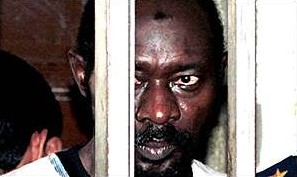 Mohammed Adam Omar
Murderer · Yemen · 1995
Mohammed Adam Omar was a morgue assistant at Sanaa University’s medical faculty…
16 victims
Mohammed Adam Omar
Murderer · Yemen · 1995
Mohammed Adam Omar was a morgue assistant at Sanaa University’s medical faculty…
16 victims
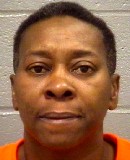 Yvette Taylor
Murderer · USA · 2012
Yvette Taylor was a Martinez, Georgia woman. She was the roommate of Theodore C…
1 victim
Yvette Taylor
Murderer · USA · 2012
Yvette Taylor was a Martinez, Georgia woman. She was the roommate of Theodore C…
1 victim
 Gregory Rouster
Murderer · USA · 1986
John and Henrietta Rease, an elderly couple who lived in Gary, Indiana, cared f…
2 victims
Gregory Rouster
Murderer · USA · 1986
John and Henrietta Rease, an elderly couple who lived in Gary, Indiana, cared f…
2 victims
 Jeffrey Wayne Gorton
Murderer · USA · 1986
Jeffrey Wayne Gorton Jeffrey Wayne Gorton was sentenced to 40-80 years in priso…
2 victims
Jeffrey Wayne Gorton
Murderer · USA · 1986
Jeffrey Wayne Gorton Jeffrey Wayne Gorton was sentenced to 40-80 years in priso…
2 victims
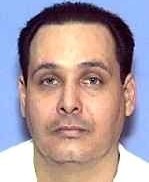 Richard Hinojosa
Murderer · USA · 1986
Richard Hinojosa was convicted and sentenced to death for the capital murder of…
2 victims
Richard Hinojosa
Murderer · USA · 1986
Richard Hinojosa was convicted and sentenced to death for the capital murder of…
2 victims
 Chad Alan Lee
Murderer · USA · 1992
Chad Alan Lee was convicted in two separate proceedings involving kidnapping, s…
3 victims
Chad Alan Lee
Murderer · USA · 1992
Chad Alan Lee was convicted in two separate proceedings involving kidnapping, s…
3 victims
- Gender
- female
- Country
- United Kingdom
- Location
- London, England, United Kingdom
- Date of birth
- ???
- Characteristics
- revenge
- Victim profile
- Her septuagenarian mistress Hannah Morgan
- Method of murder
- Stabbing with a bayonet
- Date(s) of murder
- May 31, 1787
- Years active
- 1787
- Date of arrest
- Same day
- Status
-
Executed
Executed by hanging at Newgate on December 14, 1787
Case information
Henrietta Radbourne, also known as Henrietta Gibbons, was indicted for the murder of her mistress Hannah Morgan, widow.
Other names and relationships
- Henrietta Radbourne was also known as Henrietta Gibbons.
- Hannah Morgan lived alone in Little George Street, Marylebone, and usually employed one live-in domestic servant.
- Hannah Morgan was a septuagenarian.
- Henrietta Radbourne was employed as a domestic servant in Hannah Morgan’s household.
- Henrietta Radbourne had cohabited with a man named Radbourne and had a child by him; the child died and the man left her.
- A written character under the name Radbourne for seeking service was described as being from a man of the name of Gibbons, stated to be her master, but described as her own father.
- Henrietta Radbourne was alleged to have had an uncle and aunt who were both dead, with expectations of money, gowns, and household furniture.
Timeline
- around 17 May 1787 — Henrietta Radbourne gained a position with wealthy widow Hannah Morgan.
- 30 May 1787 (evening) — Hannah Morgan went to bed between twelve and one.
- 31 May 1787 (evening/early morning) — Hannah Morgan was alarmed by violent beating and stabbing on her head.
- 31 May 1787 (about 3.30am) — She woke to find someone stabbing her in the face and felt blood gushing around her.
- 11 July 1787 — Hannah Morgan died.
- 14 July 1787 — Hannah Morgan’s trial was held at the Old Bailey.
- 21 July 1787 — Provincial coverage of the case noted she had been “capitally convicted” and that judgment on her was respited for the consideration of the judges.
- 9 June 1787 — Hannah Morgan’s information was taken and sworn before Mr. Crofts.
- 12 December 1787 — Sessions took place when Henrietta Radbourne was formally sentenced to death.
- 14 December 1787 — Henrietta Radbourne was hanged at Newgate.
Background
London in the eighteenth century had high competition for women’s service positions, with turnover often high. Pressure existed for servants to find and keep jobs to prevent sliding into vagrancy and poverty.
Henrietta Radbourne gained a position with Hannah Morgan, a wealthy widow who lived alone in Little George Street, Marylebone. Hannah Morgan soon realised there was something “unpleasant” in Henrietta’s disposition and told her she would need to find another place to work.
Henrietta Radbourne had been examined by local magistrates at the Rotation Office at Litchfield Street, Soho.
Henrietta Radbourne’s earlier relationship to Radbourne and her family circumstances were central to the prosecution’s explanation of motive. It was stated that before coming into service with Hannah Morgan, Henrietta Radbourne had cohabited with Radbourne, a labourer, and had a child by him, which died; Radbourne then left her. After they were parted, she sought service again. She was said to have obtained that service under the name of Radbourne by a written character from a man named Gibbons, stated to be her master but described as her father.
The offence
Initial entry and exchange
As Hannah Morgan went to bed on the night of Thursday 31 May, she tried to bolt her bedroom door but did not do it correctly.
Henrietta Radbourne walked in and said to her: “I hope, Ma’am, you have not neglected to say your prayers?”
Hannah Morgan told her off and forced her out of the room.
Before the prisoner went to bed that night, she came into Hannah Morgan’s bed-room. When Hannah Morgan asked if she had said her prayers, Hannah Morgan said Henrietta had never before done it; Hannah Morgan desired her to go about her business and say her own prayers.
Attack
About 3.30am, Hannah Morgan woke to find someone stabbing her in the face, with blood gushing around her.
She ran to the window, pulled the sash up, and called for help. Neighbours came to the house.
During the assault, Hannah Morgan was said to have been stabbed and to have suffered an attack in which she received:
- “one mortal wound” on “the top of the head” described as of the length of one inch and the depth of half an inch,
- multiple wounds and contusions described by the witnesses.
The prosecution’s indictment charged that on the 31st day of May last, Henrietta Radbourne “feloniously assault[ed]” Hannah Morgan in her dwelling house in Mary-le-Bone, and that Hannah Morgan “did traiterously… kill and murder.”
Weapon and scene findings
A weapon was discovered in the bedroom described as a “javelin-type instrument” like those used by “Sheriffs’ men…during the assizes.”
At trial, the evidence included:
- A “tuck stick with a bayonet at the end of it,” described as belonging to her husband and always kept there.
- Grey hairs found on the point of the instrument.
- Marks on the instrument described as including blood.
- Grey hairs on the point and flannel sheathing tied around the bayonet part described as to prevent rusting.
A hatchet was also described as found in the kitchen area, though witnesses said it “does not appear to have been used on the occasion.”
The bolt and socket of Hannah Morgan’s door were examined. The socket was described as filled up with paper, making it impossible for the socket to receive the bolt in the state it was found.
The prosecution argued that no other person had access unless someone concealed themselves in the room and left the socket in that state.
Response and access
Neighbours broke open the back-door after Hannah Morgan called out “fire and murder.”
Witnesses described the house as found secure on the outside and that there was no person found in the house with any weapon of offence.
Witness accounts included that no one escaped from the house, and that the prisoner was found on the stairs when the neighbours entered.
Investigation
Information recorded by magistrate
The written information included:
- Hannah Morgan’s statements about hiring Henrietta Radbourne as a servant, the dissatisfaction after days in service, and being told she would need to quit.
- The timing of Hannah Morgan’s retiring to rest between twelve and one and attempts to fasten the night bolt.
- Hannah Morgan’s belief that the house was secure on the inside.
- The alarm at half after one, followed by violent beating and stabbing on her head.
- Hannah Morgan’s account that she got up and ran into the back room and cried “murder and fire.”
Verbatim content from the information, as read by Mr. Crofts, included the following:
“Middex, the information of Hannah Morgan , Rebecca Holmes and Henry Holmes , taken before me one of his Majesty's justices of the peace for the said country: First Mrs Morgan says she lives in George Street, St. Mary-le bone, that about the latter end of May last, she hired the person now present, who calls herself Henrietta Radbourne, as a servant; that after she had been in her service some days, this deponent observed a strange manner in the conduct of the same Henrietta, and told her she would not do for her; that on the night of the 30th of May between twelve and one o'clock, this deponent desired her to go to bed, and verily believes the house was secure on the inside; that at half after one, this deponent went into bed, and on going into her bed room, and endeavouring to fasten her night bolt, thought it went very hard, but not suspecting any thing, supposed she had fastened the bolt and went to bed, and soon after fell in sleep; that between two and three this deponent was alarmed by some persons violently beating her and stabbing her on the head; says further, that she got up and ran into the back room, and cried murder and fire; says that before the prisoner went to bed that night, she came into the bed-room of this informant, when she asked her if she had said her prayers, which she had never before done, when this informant desired her to go about her business, and say her own prayers; and this informant further on her oath says, she verily believes no other person was in her house but the person now present who calls herself Henrietta Radbourne ; and this informant says that she did maliciously assault her in her dwelling house as aforesaid, with intent to kill and murder her, and her goods and chattels being in the said dwelling house, feloniously to steal, take and carry away. Taken and sworn before Mr. Crofts on the 9th day of June 1787.”
The information was said to have been heard by the prisoner, read over to her in the presence of Mrs. Morgan, and signed by Mr. Crofts, with Mrs. Morgan also signing.
Medical evidence
A surgeon, John Heavyside, testified that:
- he found Hannah Morgan with five large wounds on her head,
- described wounds as made by “an instrument that had stabbed, a sharp instrument,” with two wounds on the top in which “the scull was bare,”
- reported large effusion of blood, so much so that “the stones of the yard were covered with blood where she had looked out at the window to cry out murder.”
- he observed additional injuries described as a wound on the right hand, bruises on the left elbow and left hip, and contusions being consistent with a heavy instrument.
He said he removed scalp and skull covering to see if there was fracture and found no fracture. He reported formation of matter in the brain, and that Hannah Morgan became paralitick on Saturday following the Monday symptoms, then declined rapidly and died on “Wednesday morning.”
He testified:
“Any other observation? - No other than this, that I am clearly of opinion that her death was occasioned by the wounds she received. You have no doubt of it? - Not the smallest; Mr. Davison was the apothecary.”
He also testified about danger:
“You do not consider the person as in actual danger till the matter is formed? - Certainly not. Mr. Garrow to Brown. Have you seen this woman since she has been in custody? - This morning I desired to speak to her.”
Arrest
Henrietta Radbourne was taken into custody following the attack and was present at the scene when assistance was called. The constable and watchmen searched the house and found nobody else.
Trial
Charges and indictment details
Initially, Henrietta Radbourne was charged with assault with intent to murder, and also with intent to steal, take and carry away her effects.
After Hannah Morgan “lingering” for six weeks, her death occurred on 11 July, and the charge was altered to murder and killing and murder.
At the Old Bailey, Henrietta Radbourne was tried for petit treason and murder as the servant of Hannah Morgan, with the court noting that the declaration of Hannah Morgan was witnessed only by one witness, while two witnesses were necessary in cases of petit treason.
The court directed the jury to acquit her of petty treason while reserving the question of whether the jury could acquit of petty treason but convict of murder under the same indictment.
In the indictment described for the murder, it was asserted that Henrietta Radbourne feloniously and traiterously assaulted Hannah Morgan with a stick having a bayonet fixed at the end, valued “2 s.” and that she struck, cut, stab, and penetrated the top of Hannah Morgan’s head, giving a mortal wound, after which Hannah Morgan languished and died.
Quotations and courtroom dialogue
The prosecution opening by Mr. Garrow included discussion of the offence being an aggravated offence of murder and treason, including:
“Gentlemen this is not a killing in consequence of any quarrel, in consequence of any ungovernable passion of the mind… but it is the most aggravated of all cases of murder, inasmuch as it has been committed deliberately… from a person against a person, from whom she had a right to expect protection and guardianship against the attacks of others…”
The opening also contained:
“Now that is a remarkable circumstance…”
Mr. Garrow also stated:
“Now was he dead? Has she an uncle living from whom she had any such expectancies?”
Mr. Garrow’s summation included:
“Guilty of the murder . Death . Also guilty on the Coroner's Inquisition. Not Guilty of the Petty Treason.”
Defence
Henrietta Radbourne’s defence was stated as:
“I am innocent of it all, for it was not me that did it, I have no witnesses at all here or elsewhere, but here are two people that is here that did it, at this present time, and they persuaded me not to say any thing; and when I was at Litchfield-street, they told me not to say any thing, for if I did I should be done as well as them, and I, ignorant of the affair, never said a word about it.”
Witness evidence
Witness testimony included the actions of neighbours and watchmen at the time of alarm and entry into the house.
William Cranfield testified about hearing “the cry of murder and fire” about half past three in the morning, seeing the watchman at the door, and entering via the window after the door was double locked. Cranfield testified that he met the maid coming down and that she said:
“for God's sake, come, and help my mistress, she is murdered”
He said she also told him:
“she is murdered; and I said do not frighten yourself, I will open the back door, and let some people in; that was all that passed between the prisoner and me at that time”
Constable William Brown testified that when he was speaking to the injured lady, he told the prisoner to go out before he spoke to the lady and that he suspected the prisoner due to her confusion. He testified about finding the weapon described with grey hairs.
John Heavyside testified that when questioned that morning after she was in custody, Henrietta Radbourne said:
“I let Holmes and his wife in, they were in the house and they were the persons that did it; says I, where did you let them in? says she, I let them in at the window; upon that I went away immediately; and as Holmes and his wife were here as evidences, I desired the watchman to take them into custody immediately; this was this morning.”
Earlier conversations and alleged motive
Several witnesses testified about message exchanges involving Radbourne and promises of money and goods.
Rebecca Holmes testified that Henrietta Radbourne asked her to let her husband tell Radbourne that Henrietta’s “uncle and aunt were both dead” and had left:
- “sixteen or seventeen pounds, and eighteen gowns, and part of their houshold furniture,”
- and that her father would sell a horse for “twelve guineas,” giving her half of that.
Rebecca Holmes also testified that Henrietta said:
“she knew if Radbourne knew she had any money, he would marry her”
and that Henrietta said:
“I am going to have a bit of fun;”
Margaret Fletcher testified she heard Henrietta say she should have money in a few days for her uncle and aunt’s death and described:
- “sixteen or seventeen guineas, or more,”
- “some gowns and houshold furniture,”
- and that her father was to sell a horse for “twelve guineas.”
Fletcher testified Henrietta said on Sunday she was to have “a bit of fun with some young woman that lived in the next house, that was to be dressed in men's clothes, and to be let into Mrs. Morgan's at five o'clock in the morning.”
Sentencing
The jury verdict included:
- guilty of murder and death as the verdict,
- also guilty on the Coroner’s Inquisition,
- not guilty of petty treason.
The court directed acquittal of petty treason due to evidentiary requirements for that offence. The murder conviction was sustained; the case was reserved for opinion of the twelve Judges regarding the relationship between acquittal of petty treason and conviction of murder under the same indictment.
Provincial coverage noted that although she had been “capitally convicted”, judgement was respited for consideration of the judges.
Sessions on 12 December 1787 took place, at which Henrietta Radbourne was formally sentenced to death.
Appeals
No appeal outcome or appeal decision was stated beyond the judgement being respited “for the consideration of the judges.”
Outcome
Henrietta Radbourne was hanged at Newgate on 14 December 1787.
Aftermath
The case attracted public and newspaper attention. Coverage was associated with references including:
- “the Morning Chronicle of 7 June 1787,”
- “the World And Fashionable Advertiser of 16 July 1787,”
- “Felix Farley’s Bristol Journal, 21 July 1787.”


Spotted an error, or have more information about this case?