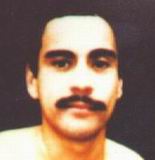
Robert Jurado
Murderer Brian Kevin Rosenfeld
Murderer · USA · 1985
Brian Kevin Rosenfeld Brian Kevin Rosenfeld was sentenced to three concurrent l…
23 victims
Brian Kevin Rosenfeld
Murderer · USA · 1985
Brian Kevin Rosenfeld Brian Kevin Rosenfeld was sentenced to three concurrent l…
23 victims
 Russell Ellwood
Murderer · USA · 1991
Russell Ellwood was a former taxi driver. Authorities suspected him of killing…
20 victims
Russell Ellwood
Murderer · USA · 1991
Russell Ellwood was a former taxi driver. Authorities suspected him of killing…
20 victims
 Robert Martines Perez
Murderer · USA · 1994
Name: Robert Martines Perez · Other name used in proceedings: Robert Martinez P…
15 victims
Robert Martines Perez
Murderer · USA · 1994
Name: Robert Martines Perez · Other name used in proceedings: Robert Martinez P…
15 victims
 Billy Frank Vickers
Murderer · USA · 1993
Billy Frank Vickers Vickers was executed by lethal injection in Texas on Januar…
14 victims
Billy Frank Vickers
Murderer · USA · 1993
Billy Frank Vickers Vickers was executed by lethal injection in Texas on Januar…
14 victims
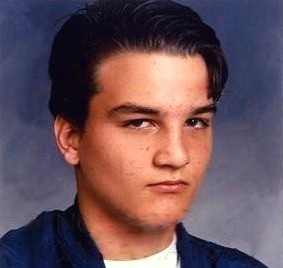 Eric Borel
Spree killer · France · 1995
Eric Borel (11 December 1978 – 24 September 1995) was a French student. At the…
5 victims
Eric Borel
Spree killer · France · 1995
Eric Borel (11 December 1978 – 24 September 1995) was a French student. At the…
5 victims
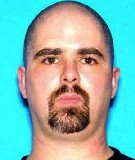 Wade Michael Page
Mass murderer · USA · 2012
Wade Michael Page was an American white supremacist and a United States Army ve…
6 victims
Wade Michael Page
Mass murderer · USA · 2012
Wade Michael Page was an American white supremacist and a United States Army ve…
6 victims
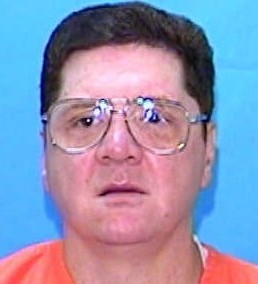 Richard Wallace Rhodes
Murderer · USA · 1984
Richard Wallace Rhodes (date of birth: 10/03/53) was tried in the Six Judicial…
1 victim
Richard Wallace Rhodes
Murderer · USA · 1984
Richard Wallace Rhodes (date of birth: 10/03/53) was tried in the Six Judicial…
1 victim
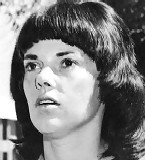 Lindy Chamberlain
Murderer? · Australia · 1980
Alice Lynne “Lindy” Chamberlain-Creighton was born on 4 March 1948. She was kno…
1 victim
Lindy Chamberlain
Murderer? · Australia · 1980
Alice Lynne “Lindy” Chamberlain-Creighton was born on 4 March 1948. She was kno…
1 victim
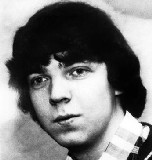 Gundolf Köhler
Mass murderer · Germany · 1980
Gundolf Köhler (August 27, 1959 – September 26, 1980) was a German right-wing e…
12 victims
Gundolf Köhler
Mass murderer · Germany · 1980
Gundolf Köhler (August 27, 1959 – September 26, 1980) was a German right-wing e…
12 victims
- Gender
- male
- Country
- USA
- Location
- San Diego County, California, USA
- Date of birth
- 1970
- Age at first offence
- 21
- Characteristics
- rape, convicted rapist
- Victim profile
- Teresa Holloway, 26 (pregnant)
- Method of murder
- Strangulation
- Date(s) of murder
- May 15, 1991
- Years active
- 1991
- Date of arrest
- 3 days after
- Status
-
Sentenced to death
Sentenced to death on October 13, 1994
Case details
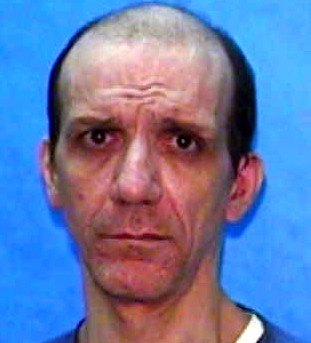
Robert Jurado Jr. was sentenced to death on October 13, 1994.
Timeline
- May 15, 1991 — Teresa Holloway, 26, was strangled and beaten to death.
- May 17, 1991 — Teresa Holloway’s body was found in a culvert beneath Highway 163 in San Diego County.
- April 7, 2006 — The Supreme Court of California upheld the death sentence imposed on Robert Jurado Jr.
Background
The California Supreme Court considered The People v. Robert Jurado Jr.
The case involved the murder of pregnant woman Teresa Holloway, in connection with an alleged plan to kill a drug dealer, Doug Mynatt.
The offence
Teresa Holloway was murdered by strangling and being beaten to death.
Prosecutors alleged that Robert Jurado Jr.; his girlfriend Anna Humiston; and Denise Shigemura killed Holloway after she learned of their plan to kill Doug Mynatt.
It was alleged that Doug Mynatt sold methamphetamine and that his customers included Jurado and Brian Johnsen, who had been living with Holloway up until about a month before Holloway was killed.
Investigation
Witness testimony was admitted at Jurado’s trial for the murder of Teresa Holloway from an earlier proceeding involving Brian Johnsen.
Prosecutors alleged that the plan to kill Mynatt came about after the drug dealer supposedly stole Shigemura’s purse.
The plan was discussed with Johnsen, who was in custody on drug charges at the time Jurado allegedly shared details of the plot with him.
Trial
Charges and special circumstance
Prosecutors charged Robert Jurado Jr. with first degree murder with the special circumstance of lying in wait.
Prosecutors initially said they would not seek the death penalty, but later added the conspiracy charge and changed their position about seeking the death penalty.
Preliminary proceedings and conditional examination
After a preliminary hearing, the defense moved to dismiss the special-circumstance allegation under Penal Code Sec. 995.
The prosecution moved to have Johnsen testify at a conditional examination, stating he was in fear of his life.
San Diego Superior Court Judge David Gill Gill granted the prosecution’s motion.
Johnsen testified that he and the defendant had discussed a plan to kill Mynatt and that Jurado later admitted killing Holloway because “it had to be done.”
Dismissal and guilty plea
Later, the judge dismissed the special circumstance allegation and the defendant pled guilty to the remaining charges.
Writ of mandate and reinstatement of special-circumstance allegation
Before sentencing, the prosecution petitioned the Court of Appeal for a writ of mandate.
The Court of Appeal reinstated the special-circumstance allegation and rejected Jurado’s argument that his guilty plea barred a trial on that allegation under double jeopardy principles.
Withdrawal of guilty plea and denial of lying-in-wait
Jurado withdrew his guilty plea, pled not guilty, and denied the lying-in-wait allegation.
When prosecutors announced they had changed their mind about seeking the death penalty, the judge rejected a defense bid to bar them from doing so.
Verdict and penalty phase
Jurors found the defendant guilty, determined the special allegation to be true, and returned a death penalty verdict at the end of the penalty phase.
Sentencing
Jurors returned a death penalty verdict at the end of the penalty phase, and Robert Jurado Jr.
Appeals
State Public Defender Michael Hersek represented Jurado on appeal.
Hersek argued that a conditional examination cannot be taken by the prosecution in a death penalty case.
Deputy Attorney General Marvin Mizell responded that the examination was proper and that, in any event, the prosecution was not seeking the death penalty at the time of the examination.
Justice Joyce L. Kennard rejected Hersek’s arguments, reasoning that Penal Code Sec. 1335(a), which allows a conditional examination in any case but bars the prosecution from seeking one in a capital case, does not apply when the examination is sought under Sec. 1336(b).
Justice Kennard stated that Sec. 1336(b) applies only to serious felony cases and only when there is reason to believe the life of the witness is in danger.
Justice Kennard wrote: “Because of the evidence that defendant, Shigemura, and Humiston had killed Holloway to prevent her from exposing a plot to kill Mynatt, the trial court...could justifiably conclude that defendant and the persons with whom he associated would be likely to use deadly force against anyone perceived as a threat, and that the substance of Johnsen’s proposed testimony made him an actual or potential threat to defendant and his codefendants....”
Justice Kennard also rejected the argument that the prosecution had impermissibly changed its position and asked for the death penalty in retaliation for the defendant challenging the special-circumstance allegation.
Justice Kennard stated that, while that may have been a factor, it was not improper for the prosecution to consider it.
Justice Kennard wrote: “Besides, Kennard said, it cannot be assumed that this was the only reason for the prosecution’s shift.”
Justice Kennard noted that between the time the prosecution announced its original position and the time it changed it, the prosecution case had been bolstered by Johnsen’s testimony at the conditional examination and by the presentation of evidence at Humiston’s trial.
The Supreme Court of California upheld the death sentence imposed on Robert Jurado Jr. in an opinion by Justice Joyce L. Kennard.
The case was People v. Jurado, 06 S.O.S. 1732.
Other details
Teresa Holloway was described as a pregnant woman.
Humiston became a suspect after she bragged to her friends at school that she held the victim while Jurado strangled her.
Anna Humiston was sentenced to 25 years to life in state prison.
Denise Shigemura was sentenced to 25 years to life in state prison.
Shigemura shared an apartment with Jurado.
Doug Mynatt was characterized as a drug dealer.
Spotted an error, or have more information about this case?