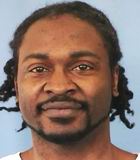
Rodney Gray
Murderer Brian Kevin Rosenfeld
Murderer · USA · 1985
Brian Kevin Rosenfeld Brian Kevin Rosenfeld was sentenced to three concurrent l…
23 victims
Brian Kevin Rosenfeld
Murderer · USA · 1985
Brian Kevin Rosenfeld Brian Kevin Rosenfeld was sentenced to three concurrent l…
23 victims
 Russell Ellwood
Murderer · USA · 1991
Russell Ellwood was a former taxi driver. Authorities suspected him of killing…
20 victims
Russell Ellwood
Murderer · USA · 1991
Russell Ellwood was a former taxi driver. Authorities suspected him of killing…
20 victims
 Robert Martines Perez
Murderer · USA · 1994
Name: Robert Martines Perez · Other name used in proceedings: Robert Martinez P…
15 victims
Robert Martines Perez
Murderer · USA · 1994
Name: Robert Martines Perez · Other name used in proceedings: Robert Martinez P…
15 victims
 Billy Frank Vickers
Murderer · USA · 1993
Billy Frank Vickers Vickers was executed by lethal injection in Texas on Januar…
14 victims
Billy Frank Vickers
Murderer · USA · 1993
Billy Frank Vickers Vickers was executed by lethal injection in Texas on Januar…
14 victims
 Israel Lipski
Murderer · United Kingdom · 1887
Israel Lipski Israel Lipski (1865 - 1888) was born Israel Lobulsk. He was of Po…
1 victim
Israel Lipski
Murderer · United Kingdom · 1887
Israel Lipski Israel Lipski (1865 - 1888) was born Israel Lobulsk. He was of Po…
1 victim
 Zhao Zhihong
Serial killer · China · 1996
Zhao Zhihong received a death sentence in February 2015 for crimes including ra…
10 victims
Zhao Zhihong
Serial killer · China · 1996
Zhao Zhihong received a death sentence in February 2015 for crimes including ra…
10 victims
 Matthew Beck
Mass murderer · USA · 1998
On March 6, 1998, Matthew Beck killed four of his supervisors at the Connecticu…
4 victims
Matthew Beck
Mass murderer · USA · 1998
On March 6, 1998, Matthew Beck killed four of his supervisors at the Connecticu…
4 victims
 James Davis Richardson
Murderer · USA · 1986
James Davis Richardson Richardson was executed by lethal injection in Texas on…
1 victim
James Davis Richardson
Murderer · USA · 1986
James Davis Richardson Richardson was executed by lethal injection in Texas on…
1 victim
 Renee King
Murderer · USA · 2010
Renee King was sentenced in Macomb Circuit Court for the 2010 murder of her ste…
1 victim
Renee King
Murderer · USA · 2010
Renee King was sentenced in Macomb Circuit Court for the 2010 murder of her ste…
1 victim
- Gender
- male
- Country
- USA
- Location
- Newton County, Mississippi, USA
- Date of birth
- July 17, 1972
- Age at first offence
- 22
- Characteristics
- rape, robbery
- Victim profile
- Grace Blackwell, 79
- Method of murder
- Shooting
- Date(s) of murder
- August 15, 1994
- Years active
- 1994
- Date of arrest
- Same day
- Status
-
Executed
Executed by lethal injection in Mississippi on May 17, 2011
Case overview
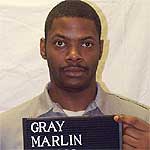
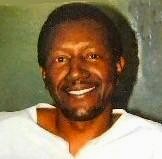
Rodney Gray was convicted of capital murder for killing Grace Blackwell, a 79-year-old woman. The jury found that the capital murder occurred while Gray was engaged in kidnapping and/or rape, and the jury sentenced Gray to death. Gray was executed by lethal injection in Mississippi on May 17, 2011.
Status / execution
On May 17, 2011, Rodney Gray died by lethal injection at 6:12 p.m. at the state penitentiary at Parchman.
Gray was witnessed by Blackwell’s son-in-law, Billy Martin, and Blackwell’s granddaughter, Amber Arnold. Gray shook his head to affirm he did not want to make a statement. Strapped to the gurney, Gray took three deep breaths before he appeared to die immediately. Eight minutes passed before he was officially pronounced dead.
Gray had previously stated that he would have no last statement. Gray dressed in a red prison jumpsuit, white sneakers, and glasses. Gray had requested that his body be turned over to Holifield Funeral Home in Forest. He requested that the Mississippi Department of Corrections Chaplain Willie Bays witness his execution after his spiritual adviser did not make it to Parchman.
Gray’s mother, Annie Tatum, visited him for two hours. Gray requested no family members view his execution. Two members of Blackwell’s family attended. Blackwell’s family issued a statement describing “the scars of this cruel and senseless attack” and stating that they would live with “the knowledge of those terrifying last hours of her life.” The family also said they would “take comfort in knowing Gray can no longer harm anyone.”
Timeline
- August 15, 1994 — Grace Blackwell went to the drive-through teller window of her bank in Jasper County and asked the teller to fill out a blank check in the amount of $1200; witnesses later saw her car being driven by a young black male identified as Rodney Gray; police found Grace Blackwell’s front door open and the phone disconnected; investigators questioned Gray and arrested him the same day.
- 1:40 p.m., August 15, 1994 — Grace Blackwell’s body was found at the end of a bridge in Newton County; her car was found elsewhere in Newton County.
- August 15, 1994 — While in jail, Gray phoned his girlfriend, Mildred Curry, telling her that he had hidden money in a bathroom vent.
- September 6, 1995 — Gray pled guilty to two burglaries and one attempted burglary in Jasper County.
- October 10, 1995 — Gray filed a motion to quash the indictment claiming he had been denied a speedy trial.
- October 30, 1995 — A hearing was held on Gray’s motion to quash the indictment; the lower court overruled the motion.
- November 17, 1995 — Gray’s attorneys filed a motion for continuance; the lower court granted it and scheduled the trial for January 22, 1996.
- January 22, 1996 — A jury was impaneled and found Gray guilty on January 24, 1996.
- January 24, 1996 — The jury found Rodney Gray guilty of the capital murder of Grace Blackwell.
- January 25, 1996 — The jury sentenced Gray to death.
- February 20, 1996 — Gray’s motion for new trial was overruled.
- 1998 — The Mississippi Legislature amended the manner of execution by removing lethal gas as a form of execution and specifying lethal injection.
- May 10, 2011 — Benny Joe Stevens was executed.
- May 17, 2011 — Rodney Gray was executed by lethal injection.
Background
Grace Blackwell drove to the drive-through teller window of her bank in Jasper County. She presented a blank check and asked the teller to fill the check out in the amount of $1200. The teller’s view of the car’s back seat was blocked by hanging clothes.
After giving her the money, the teller heard Blackwell say, “I'm hurrying, I'm hurrying.” The teller notified the police, and police went to Blackwell’s home to find the front door open and the phone disconnected.
Witnesses testified that they saw Blackwell’s car around noontime being driven by a young black male, and one witness identified the driver as Rodney Gray.
The offence
Victim
Grace Blackwell was 79 years old.
Actions and injuries described
Investigators determined that Blackwell had been killed by a shotgun blast to the mouth. Later, an autopsy revealed that Blackwell had also been raped and that her body had been run over by a car.
The trial evidence described multiple injuries including lacerations on her leg and facial area, severe wounds to her mouth and back side of her head, and a gash to the back of her head. The lethal injury was a contact shotgun wound to the mouth. Additional gunshot wounds included a non-lethal shotgun wound to the left side of her face, chest, and left arm, with multiple small entrance wounds indicating secondary missile pattern injury. The victim also had multiple injuries on her right side described as large scrapes of skin as if she slid on a hard object, bruises over her chest wall and right lower leg, and an abrasion or scrape measuring approximately one inch to the labia majora or vaginal vault indicating forceful sexual penetration.
Investigation
Police found Blackwell’s body at the end of a bridge in Newton County at 1:40 p.m. Her car was found elsewhere in Newton County.
An autopsy revealed that she had been raped and that her body had been run over by a car.
Investigators questioned Rodney Gray on August 15 regarding Blackwell’s disappearance and arrested him that same day.
Shoe prints were found in the front yard, and a plaster cast was made and sent to the crime lab.
A Newton County grand jury indicted Gray for the capital murder of Grace Blackwell in violation of Miss. Code Ann. § 97-3-19(2)(e) (murder while engaged in the commission of the crime of kidnapping/and/or rape).
Arrest and pretrial matters
Gray turned himself in and was arrested on August 15, 1994. On August 15, 1994, he was arrested and charged with burglary of Blackwell’s residence based on statements he made to police. He was incarcerated in Jasper County and bond was set, but he never made bond.
Gray was transported to Newton County and charged with capital murder on March 15, 1995.
Counsel was appointed on March 22, 1995. Gray’s preliminary hearing was held on June 5, 1995. Gray was indicted by the Grand Jury of Newton County on August 2, 1995.
Evidence at trial
Bank teller testimony and identified statements
Arlene McCree, a bank teller who usually waited on Blackwell, testified that Blackwell presented a blank check for $1200. McCree could not see into the backseat because clothes blocked her view. McCree filled out the check and returned it for Blackwell to sign. McCree testified that after giving her the money, she heard Blackwell say, “I'm hurrying, I'm hurrying.” McCree then notified the Jasper County Sheriff’s office.
A transcript colloquy included the following:
BY MR. LEE: Wait just a minute now. I am going to object to what she heard over the speaker, Your Honor.
BY THE COURT: Did you recognize the voice of Mrs. Blackwell?
A: Yes, sir. It was Mrs. Blackwell saying, “I'm hurrying, I'm hurrying.”
BY THE COURT: Objection overruled.
Q: (Turner) What was Mrs. Blackwell saying as she was pulling away?
A: “I'm hurrying, I'm hurrying.”
Q: Was she speaking to you?
A: I have no idea. She was looking out. I didn't think she was speaking to me, and that's when I thought I was right.
Physical evidence described
Investigators found broken glass, several blood stains, and tissue on the bridge. Blackwell’s billfold, checkbook, and contents of her purse were found near the bridge. Investigators found a plastic wadding from a shotgun shell.
Blackwell’s car was found later behind a service station in Decatur. Large amounts of blood were found all over the passenger side of the car, both inside and outside. A pair of gloves was located in a dumpster near the car. The car had been damaged on the front of the passenger side. Blood and tissue were found on the front across the hood, windshield, and down the passenger side of the vehicle. The interior contained a great deal of blood and glass particles on the door paneling and seat.
A rape kit was taken from Blackwell, and the kit and her clothes were sent to the crime lab.
Clothing and money in girlfriend’s trailer
Gray phoned his girlfriend, Mildred Curry, and told her that he had hidden money in a bathroom vent. Curry’s trailer was searched and $1,123 was found hidden in an air conditioner duct in a bathroom.
The clothes and boots which Gray had been wearing on the day of the murder were found in a bucket behind Curry’s trailer.
Witness statements about the car
Harry Jones testified that on August 15, at around noon, he saw a brown Chrysler stopped in the road with a guy wrestling with a lady in the car. Jones stated the car belonged to Mrs. Blackwell and identified the driver as Rodney Gray.
Richard Weir testified that during his lunch break on August 15, he saw a maroon colored Chrysler pass by his truck and that it appeared a black male and a white female were in the car.
Derrick Beasley testified that on the afternoon of August 15, near the courthouse in Decatur, Gray approached him, pulled out and showed him a wad of money consisting of one hundred dollar bills, and Gray was wearing the striped shirt later recovered behind Curry’s trailer.
Cellmates’ testimony about admissions
Russell Saunders testified that while incarcerated with Gray in the Jasper County jail in August and September of 1994, Gray asked whether they could tell if he had sex with a woman. Saunders testified Gray told him that he had sex with the lady he was supposed to have killed, that he had accidentally shot her, and that he ran over her. Saunders testified Gray said he was not worried about police finding the gun because he had smashed the gun and thrown it into the woods. Saunders also testified he heard Gray talking about money supposed to be in a vent.
Cleveland McCall testified that in October or November of 1995, Gray told him he took Mrs. Blackwell to the bank to get some money, raped her, and shot her with a .410 shotgun.
Expert testimony
Lora Aria, an expert in serology, testified that she identified four stains on the shirt Gray wore the day of the murder that could have been blood; she determined two were human blood. She testified glass fragments recovered from the shirt found by the dog pen were optically indistinguishable from glass from Mrs. Blackwell’s car. Aria testified there were blood stains found on gloves recovered from the dumpster, and the gloves contained glass fragments optically indistinguishable from the glass from Mrs. Blackwell’s car. Aria testified the shirt worn by Gray at arrest contained glass fragments optically indistinguishable from the glass from Mrs. Blackwell’s car.
David Wilson, a Special Agent to the FBI assigned to the Hairs and Fibers unit, testified he examined hair found in Blackwell’s panties with hair samples from Gray and opined the pubic hair found in the panties had the same microscopic characteristics as Gray’s pubic hairs.
Gary Kanaskie, employed by the FBI for shoe print and tire tread examinations, compared Gray’s boots to boot prints found at the home and testified the prints made at Mrs. Blackwell’s home were made by the boots worn by Gray. Kanaskie testified no other boot could have made the prints found at Mrs. Blackwell’s home due to three distinctive markings.
Melissa Smrz, assigned to the DNA analysis unit of the FBI, testified she conducted DNA tests on semen stains found on Mrs. Blackwell’s panties and compared them with blood samples from Gray. Smrz concluded the probability that someone other than Gray left DNA in the panties was less than 1 in 446,000,000 in Black, Caucasian, and Hispanic populations.
Jury findings on guilt
After closing arguments, the jury retired at 3:11 p.m. and returned at 3:21 p.m. ready to report its verdict. The jury unanimously found Gray guilty of the capital murder of Mrs. Grace Blackwell.
Trial and sentencing
Sentencing verdict form and aggravating circumstances
The jury sentenced Gray to death on January 25, 1996. The death sentence was in the following form pursuant to Miss. Code Ann. § 99-19-101(5) and (7) (1994):
(1) We, the Jury, unanimously find from the evidence beyond a reasonable doubt that the following facts existed at the time of the commission of the capital murder:
- That the Defendant actually killed Grace Blackwell.
- That the Defendant attempted to kill Grace Blackwell.
- That the Defendant intended that the killing of Grace Blackwell take place.
- That the Defendant contemplated that lethal force would be employed.
We, the Jury, unanimously find that the aggravating circumstances of;- The capital offense was committed while the Defendant was engaged in the commission of kidnapping.
- The Capital offense was committed while the Defendant was engaged in the commission of or an attempt to commit the crime of rape; are sufficient to impose the death penalty and that there are insufficient mitigating circumstances to outweigh the aggravating circumstances, and we further find unanimously that the Defendant should suffer death. /s/ Allen B. Perry /s/ Foreman of the Jury
The trial judge sentenced Gray to death by lethal injection. Gray’s motion for new trial was overruled on February 20, 1996.
Defense representation and counsel in trial court
Attorneys Thomas D. Lee and B. Jackson Thames, Jr. represented Gray in the trial court.
Appeals
Direct appeal
In Gray v. State, 728 So.2d 36 (Miss. 1998), the Mississippi Supreme Court affirmed Gray’s conviction for capital murder and the imposition of the death sentence.
The opinion described the procedural and appellate posture as follows: Gray was convicted in the Circuit Court, Newton County, Marcus D. Gordon, J., of capital murder and sentenced to death. Gray appealed. The Supreme Court (James L. Roberts, Jr., Justice) held that:
- defendant’s speedy trial rights were not violated;
- jury did not exhibit bias or passion by deliberating only ten minutes before returning conviction and one hour before returning sentence of death;
- defendant was not entitled to change of venue;
- evidence supported finding that defendant kidnapped victim; and
- death penalty was not disproportionate.
The Supreme Court stated that it held “there is no reversible error in this case” and therefore affirmed.
The appeal identified and addressed issues including hearsay evidence, prosecutorial misconduct, closing arguments, DNA expert testimony, admissibility of gruesome photographs and video tape, instruction on rape, deliberation timing, change of venue, in-court identification, indictment defects, admission of jail-house confessions, denial of counsel, sufficiency of evidence for the sentence, circumstantial evidence instructions, kidnapping instruction, verdict weight, and proportionality review.
Proportionality review during direct appeal
The Supreme Court described a proportionality review under Miss. Code Ann. § 99-19-105(3)(c) (1994). The Court concluded the death penalty was not excessive or disproportionate as applied to Gray.
PCR / post-conviction proceedings
In Gray v. Epps (616 F.3d 436 (5th Cir. 2010)), the Fifth Circuit affirmed the denial of federal habeas relief by the district court.
In the Mississippi post-conviction proceedings referenced as Gray v. State, 887 So.2d 158 (Miss. 2004), the Mississippi Supreme Court affirmed the denial of post-conviction relief. The Court held inter alia:
- defendant was procedurally barred by res judicata from relitigating issues already decided on direct appeal;
- ineffective assistance claims were not supported as required;
- the application for leave was facially insufficient regarding whether he was mentally retarded;
- the death penalty statute did not violate the right against cruel and unusual punishment;
- the sentencing verdict was not defective for failure to include written confirmation that aggravating factors were found beyond a reasonable doubt; and
- the defendant was not denied a fair trial based on alleged cumulative errors.
The Mississippi Supreme Court denied the application for leave to file a petition for post-conviction relief and stated: “APPLICATION FOR LEAVE TO SEEK POST-CONVICTION RELIEF, DENIED.”
Outcome
Rodney Gray was convicted of capital murder and sentenced to death. The Mississippi Supreme Court affirmed on direct appeal in Gray v. State, 728 So.2d 36 (Miss. 1998), and the sentence was not overturned on subsequent proceedings described.
Other details
Execution-related claims and surrounding death row context described
A description in the case materials stated that Gray was the first black inmate executed by lethal injection since the state began using the method in 1998, and it described other death row demographics.
It also stated that Gray’s execution was assured after the U.S. Supreme Court denied his emergency appeal, and that Gov. Haley Barbour denied his clemency request. It described that Gray did not order a special last meal and did not want a sedative.
Supplements about lethal injection method and execution practice
The materials described the Mississippi Legislature’s amendment in 1998 for the manner of inflicting the punishment of death by continuous intravenous administration of a lethal quantity of an ultra short-acting barbiturate or other similar drug in combination with a chemical paralytic agent until death is pronounced.
The materials also included a description of lethal injection history and a chronological sequence of events around executions including holding cell transfer, institution lockdown, media center openings, attorney and chaplain visits, last meal, witnesses transported, escort to execution room, observation room entry, and post-execution briefing.
Spotted an error, or have more information about this case?