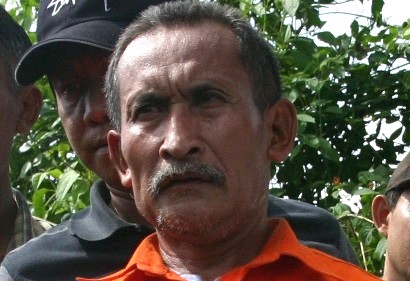
Baekuni
Serial killer Verry Henyansyah
Serial killer · Indonesia · 2006
Verry Idham Henyansyah, also known as “Ryan,” was an Indonesian convicted seria…
11 victims
Verry Henyansyah
Serial killer · Indonesia · 2006
Verry Idham Henyansyah, also known as “Ryan,” was an Indonesian convicted seria…
11 victims
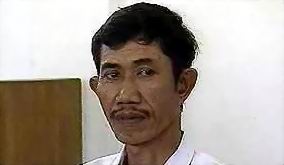 Ahmad Suradji
Serial killer · Indonesia · 1986
Ahmad Suradji (born 10 January 1949) was a serial killer in Indonesia. He was a…
42 victims
Ahmad Suradji
Serial killer · Indonesia · 1986
Ahmad Suradji (born 10 January 1949) was a serial killer in Indonesia. He was a…
42 victims
 Siswanto
Serial killer · Indonesia · 1994
Siswanto, also known as Robot Gedek, was a homeless Indonesian man. Siswanto mu…
12 victims
Siswanto
Serial killer · Indonesia · 1994
Siswanto, also known as Robot Gedek, was a homeless Indonesian man. Siswanto mu…
12 victims
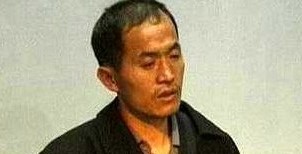 Yang Xinhai
Serial killer · China · 2000
Yang Xinhai (simplified Chinese: 杨新海; pinyin: Yáng Xīnhǎi; 17 July 1968–14 Febr…
67 victims
Yang Xinhai
Serial killer · China · 2000
Yang Xinhai (simplified Chinese: 杨新海; pinyin: Yáng Xīnhǎi; 17 July 1968–14 Febr…
67 victims
 Yang Xinhai
Serial killer · China · 2000
Yang Xinhai (simplified Chinese: 杨新海; pinyin: Yáng Xīnhǎi; 17 July 1968–14 Febr…
67 victims
Yang Xinhai
Serial killer · China · 2000
Yang Xinhai (simplified Chinese: 杨新海; pinyin: Yáng Xīnhǎi; 17 July 1968–14 Febr…
67 victims
 Jerry Lee Hogue
Murderer · USA · 1979
Jerry Lee Hogue was executed by lethal injection in Texas on March 11, 1998. He…
1 victim
Jerry Lee Hogue
Murderer · USA · 1979
Jerry Lee Hogue was executed by lethal injection in Texas on March 11, 1998. He…
1 victim
 Eleazar Paula Mendez
Murderer · USA · 2006
Eleazar Paula Mendez pleaded guilty to three counts of capital murder. She was…
3 victims
Eleazar Paula Mendez
Murderer · USA · 2006
Eleazar Paula Mendez pleaded guilty to three counts of capital murder. She was…
3 victims
 John Thomas Satterwhite
Murderer · USA · 1979
John Thomas Satterwhite was convicted and sentenced to death for the March 1979…
1 victim
John Thomas Satterwhite
Murderer · USA · 1979
John Thomas Satterwhite was convicted and sentenced to death for the March 1979…
1 victim
 Troy Burkhart
Murderer · USA · 1997
Troy Alan Burkhart was convicted of three counts of murder and three counts of…
3 victims
Troy Burkhart
Murderer · USA · 1997
Troy Alan Burkhart was convicted of three counts of murder and three counts of…
3 victims
 Thomas McIlvane
Mass murderer · USA · 1991
Thomas McIlvane was a former postal worker who committed suicide by shooting hi…
4 victims
Thomas McIlvane
Mass murderer · USA · 1991
Thomas McIlvane was a former postal worker who committed suicide by shooting hi…
4 victims
- Gender
- male
- Country
- Indonesia
- Location
- Jakarta, Indonesia
- Date of birth
- 1961
- Age at first offence
- 49
- Characteristics
- rape, pedophile, sexual abuse, mutilation
- Victim profile
- Boys aged between 7 and 12 years
- Method of murder
- Strangulation
- Date(s) of murder
- 1 993 - 2010
- Years active
- 2010
- Date of arrest
- January 8, 2010
- Status
-
Life imprisonment
Sentenced to life in prison on October 5, 2010
Background
Baekuni was a street vendor who sheltered street children at a rented house.
He was arrested and confessed to sodomizing, killing and mutilating several boys.
Baekuni was 49 years old.
The offence
Baekuni was convicted of sexual abuse and the premeditated murder of four street children.
He confessed to killing and mutilating several boys and claimed he killed 14 street children.
Baekuni’s actions were described as premeditated murder and criminal violence in the form of sodomy against four boys.
Victims identified in the verdict
Chief Judge Mahfud Saifullah stated that the defendant was legally and convincingly guilty of premeditated murder and criminal violence in the form of sodomy against four boys:
- Ardiansyah, 2010
- Adi, January 2008
- Rio, April 2008
- Arif small, July 2007
Mahfud also stated that, of the four victims named in the indictment, only one victim was sodomized and mutilated through evidence presented at trial: Ardiansyah.
Mahfud stated that Ardiansyah was the natural child of Indra and Nur Hamida.
Investigation
Jakarta Metro police investigators were developing a case file for prosecutors.
Jakarta Metro police investigators of the Criminal Investigation Directorate would file the dossier of the suspected murderer of 14 street children, Baekuni alias Babe, to public prosecutors.
Head of Crime and Violence Unit of the general criminal investigation directorate of Jakarta Metro police, Adjunct Senior Commissioner Nico Afinta, stated that investigators had nearly completed the investigation dossier after the case reconstruction was implemented.
Police said Baekuni allegedly killed and mutilated a total of 14 street children over the last five years in Jakarta and West Java. The victims were between nine and 12 years old, and the alleged killer’s last victim was Ardiansyah whose body was dumped in the Cakung area, East Jakarta.
A University of Indonesia psychologist, Sarlito Wirawan, stated that Baekuni was caught because he broke his own procedures, which he had followed before.
Sarlito explained that Baekuni’s earlier victims had been street children not under his care, and that his decision to murder nine-year-old Ardiansyah, who lived with him, led police to uncover previous crimes. Sarlito stated that Ardiansyah had lived with him for six months and that the boy’s mother knew Babe (Baekuni).
Sarlito stated that Baekuni’s victims were handsome, with fair, smooth skin.
Sarlito stated that Baekuni was a homosexual pedophile and a probable serial killer, but was mentally fit to stand for trial.
Police said Baekuni admitted to killing 14 street children since 1993.
Jakarta Metro Police Chief Insp. Gen. Wahyono said that “Fourteen victims have been found. The murders were traced back to 1993, though with long intervals in between.”
Adj. Sr. Comr. Nico Afinta described the case development as starting with confession to one victim, Ardiansyah, and expanding to further victims after “extra patient” questioning due to deteriorating memory.
Afinta stated that further questioning revealed three more victims and that the number kept increasing.
Separately, Wahyono denied that police had launched an operation to conduct rectal examinations of street children after Baekuni’s arrest, stating:
“There was no anal [examination] operation. Only a survey of street children,” Wahyono said.
Police also planned to release names after additional confessions.
A psychologist who questioned Baekuni in prison, Sarlito Wirawan Sarwono, told reporters that Baekuni was caught because he violated his own procedure of luring victims who were strangers from outside his neighborhood:
“Why was Babe caught? Because he violated his own procedure of luring victims who were strangers from outside his neighborhood,” a psychologist who questioned Baikuni in prison, Sarlito Wirawan Sarwono, told reporters.
Alleged methods and evolution described during investigation coverage
Police investigator Lt. Col. Nico Afinta said:
“In the beginning, he just lured them to his home, sodomized them, then dumped the bodies.”
Later, starting in 2007, police said Baekuni decapitated and mutilated victims after strangling them with rope.
Police said Baekuni claimed to kill victims because they refused to be sodomized.
Police said Baekuni’s earlier pattern included killing victims by strangling them with a rope before he sodomized them and disposed of their bodies. Police said he later changed his pattern by chopping victims in two after strangling and sodomizing them, and later by carving victims into four parts.
A City police spokesperson, Sr. Comr. Boy Rafli Amar, stated that investigators were still reviewing other unsolved child murder cases for a possible connection to Baekuni.
Boy Rafli Amar also stated that Baekuni only remembered victims when shown their photos:
“So it’s rather tricky, because on the one hand we have to unravel this case, but on the other hand we have to immediately complete the dossier,” Boy said.
Arrest
Baekuni was arrested on Jan. 8.
He was arrested in his rented house in January.
Baekuni was taken into custody after the mutilated body of a 9-year-old boy was found in East Jakarta.
Police said severed head and several body parts of 9-year-old Ardiansyah were found in a black plastic bag in a nearby river in a time described as “days after” the discovery.
Ardiansyah was identified as the 9-year-old boy whose body was found in Cakung.
Trial
The East Jakarta District Court sentenced Baekuni after he was convicted.
Chief Judge Mahfud Saifullah read the verdict at the East Jakarta District Court.
Mahfud stated that the verdict was decided after seeing the evidence, testimony of several witnesses, a statement vise Kramat Jati Police Hospital, and details some expert witnesses, and the facts at trial.
Mahfud stated:
“Because the primary charges proven, then the subsidiary charge is not needed,” said Mahfud.
Mahfud stated that burdensome punishment for a defendant who was killed with four other street shredding and throw to a certain place was cruel and sadistic, and that the actions disturbed the public, causing many victims trauma and children under age.
During the trial, Baekuni was polite and cooperative to questions by the panel of judges, prosecutors, and legal counsel.
Baekuni regretted and apologized to the families of the victims in particular and society in general.
Charges and sentencing reasoning described
The defendant was found to have violated Article 340 of the Penal Code in conjunction with Article 65 Paragraph 1 of the Criminal Code on charges of Murder Planned on the primer with maximum demands death penalty.
Verdict inconsistency with the demands of the public prosecutor in a previous session existed, because the prosecutor demanded the death penalty in a previous session on Tuesday (28/09/2010).
The public prosecutor had asked the court to sentence Baekuni to death.
Baekuni’s conviction related to sodomy and premeditated murder.
Sentencing
Baekuni was sentenced to life in prison on October 5, 2010.
The East Jakarta District Court sentenced him to life imprisonment.
Baekuni was sentenced to life imprisonment for killing 14 children, including coverage describing Baekuni aka Babeh (50) being sentenced to life imprisonment.
Other allegations and contextual material included in coverage
Relationship to Robot Gedek case discussed in coverage
Indonesians drew parallels to Robot Gedek, who died of a heart attack in 2007 while on death row for raping and killing 12 boys in the mid-1990s.
In both cases, most victims were homeless.
Baekuni was alleged to possibly have been a witness in the case against Gedek, but police and Baekuni’s lawyers denied that.
Gedek’s former lawyer, Febri Irmansyah, told reporters he believed Baekuni testified under another name in 1997, telling a court that he saw Gedek carry a young victim into bushes in central Jakarta in 1995:
“The witness saw it from 20 meters away and he only saw movements in the bush,” Febry said.
Febry also insisted that Bayquni, who went by the name Sunarto at the time, was the key witness in the trial of Siswanto, sentenced to death in 1997:
“I’m 100 percent sure that Sunarto was a dead ringer for Bayquni,” Febry said.
A lawyer for Baekuni, Rangga Beri Rikuser, denied the claims.
Rangga acknowledged that Baekuni had changed names but denied Febry’s claims:
“Babe often changed his name,” said his lawyer, Rangga Beri Rikuser, referring to Bayquni’s current nickname.
Rangga said Baekuni was born as a twin in the 1960s, with parents naming him Hasan and his twin brother named Husein, and that Husein died during childhood; parents changed the remaining twin’s name to Bayquni.
Rangga stated that little Bayquni was nicknamed Bungkih and his official name on his ID card was Bayquni.
Rangga stated that Baekuni changed his name to Agus after moving to Kuningan, West Java, in 1993, and was also alleged to use the name Sunarto in 1995.
Rangga insisted that Babe had never testified in any of Siswanto’s hearings:
“That’s another Babe, not this Babe [Bayquni]. Babe is a common nickname for older men who shelter street children,” Rangga said.
Jakarta Police’s Spokesman Sr. Comr. Boy Rafli Amar denied Baekuni was a witness:
“Not this one; it was another Babe,” said Jakarta Police’s Spokesman Sr. Comr. Boy Rafli Amar.
Boy Rafli Amar also said:
“Don’t link Robot Gedek’s case to Babe’s. Robot Gedek’s case ended a long time ago.”
Febry said he was convinced Baekuni was the same Babe and that police had arrested Babe first before they finally detained Siswanto:
“When Babe was arrested, he said it was Robot Gedek who did it,” Febry said.
Febry described similarities between Robot Gedek and Babe patterns, stating:
“Robot Gedek would take his victims to play video games, feed them and sodomize them before strangling them with a rope and disposing of their bodies,” Febry said.
Febry stated:
“Babe shared a similar pattern but he would kill his victims before sodomizing them.”
Febry described motives:
“Robot Gedek killed because he was afraid people would know that he sodomized children,” Febry said.
Febry stated that Baekuni said he killed victims because they refused to be sodomized:
“The difference was their motives. Babe has said he killed his victims because they refused to be sodomized.”
Additional claims about number of victims
A National Commission for Child Protection, Komnas Anak chairman Seto Mulyaqdi, said reports of sexual abuse and missing children suggest there were more victims of Baekuni and other killers in Jakarta and the cities of Makassar and Medan.
Seto Mulyaqdi said:
“I think there are more people like Babe. This is the tip of an iceberg,” he said.
Andreas Harsono, an Indonesian adviser to Human Rights Watch, said most street kids had been sexually abused based on interviews with children, and said:
“When you are seven or eight, you are already being abused. It’s a big problem in a place as crowded as Java,” he said.
Frans Hendra Winarta said police priority was tackling corruption, not child abuse or murder, and stated:
“Whether you’re rich or poor, you have to pay the police, otherwise they won’t notice you,” Winarta said.
Winarta also said that police lack money and resources to tackle all crime and that victims who were wealthy enough to pay for police investigation, including “bonuses” for investigators, could get their crimes investigated:
“Police lack the money and resources to tackle all the nation’s crime,” he said, adding that victims who were wealthy enough to pay for a police investigation, including “bonuses” for investigators, could get their crimes investigated.
Komnas Anak Secretary General Arist Merdeka Sirait said the true number of victims could be as high as 15, and stated:
“According to the street kids looked after by Babe, the ones in the pictures were his favorites. He could have more than 15 victims,” Komnas Anak Secretary General Arist Merdeka Sirait said.
Jakarta police said Baekuni’s admitted killings brought the number of alleged victims to 14.
City police spokesperson Boy Rafli Amar stated the number of victims may continue to rise and that police were reviewing other unsolved child murder cases for connection.
Descriptions from additional reporting about Baekuni’s life and victims (as included in the provided text)
Coverage described Baekuni as known for having a soft heart for street kids and having taken some home and given temporary shelter.
Coverage described victims being strangled with rope, then sodomized sometimes before and sometimes after sodomizing, with decapitation and mutilation after strangling.
Coverage described Ardiansyah’s mother suspecting Baekuni after knowing her son had been spending time at Baekuni’s house.
Timeline
- 1993 — Coverage said police said Baekuni admitted to killing 14 street children since 1993.
- January 2007 — Coverage described Arif being killed and his head being buried into a river (year given as 1999 in that segment); no further dated timeline entry used from that inconsistent segment beyond other stated dates.
- July 2007 — Arif small was identified in the verdict as one of four sodomy and premeditated murder victims.
- April 2008 — Rio was identified in the verdict as one of four victims.
- January 2008 — Adi was identified in the verdict as one of four victims.
- May 15, 2008 — Coverage described a victim’s body being found in pieces after discovery (the segment described Arif’s details but included this date).
- January 8, 2010 — Baekuni was arrested after the discovery of the mutilated body of 9-year-old Ardiansyah in Cakung; coverage also said severed head and several body parts of Ardiansyah were found in a nearby river days earlier.
- February 2, 2010 — University of Indonesia psychologist Sarlito Wirawan stated during a news conference that Baekuni was caught because he broke his own procedures.
- February 8, 2010 — A lawyer insisted in court coverage that Baekuni’s crimes were linked to those of Robot Gedek; the account discussed alleged testimony under another name.
- February 23, 2010 — Jakarta Metro police investigators said they would file Baekuni’s dossier to the prosecutor’s office the next week.
- March 19, 2010 — Reporting reiterated that Baekuni confessed to sexual abuse and murders of 14 boys and discussed patterns and possible connections to other cases.
- March 20, 2010 — Coverage discussed Baekuni’s confession and parallels to Robot Gedek.
- October 6, 2010 — Chief Judge Mahfud Saifullah read the verdict in East Jakarta District Court on Wednesday (10/06/2010).
- October 5, 2010 — Sentencing status given as sentenced to life in prison on October 5, 2010.
Outcome
Baekuni received a life prison sentence after conviction for sexual abuse and the premeditated murder of four street children.
The prosecutors had previously asked for the death penalty, but the court imposed life imprisonment.
Aftermath
Coverage discussed activists’ concerns about sexual abuse of poor children in Indonesia and stated there were likely more victims suggested by reports of sexual abuse and missing children.
The National Commission on Child Protection said there were reports suggesting more victims in Jakarta and the cities of Makassar and Medan.
Human Rights Watch adviser Andreas Harsono said most street kids had been sexually abused.
Frans Hendra Winarta said the police priority was tackling corruption rather than child abuse or murder and that victims who could pay could get investigations.
Police and other parties continued to deny or contest claims about whether Baekuni testified as a witness in the case against Robot Gedek.


Spotted an error, or have more information about this case?