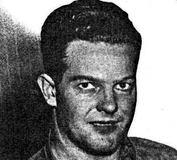
James Waybern Hall
Serial killer Richard Kuklinski
Serial killer · USA · 1949
Richard “Iceman” Kuklinski was sentenced to life in prison in 1988. He died in…
100 victims
Richard Kuklinski
Serial killer · USA · 1949
Richard “Iceman” Kuklinski was sentenced to life in prison in 1988. He died in…
100 victims
 Raymond Fernandez
Serial killer · USA · 1947
Raymond Martinez Fernandez was executed by electrocution at Sing Sing prison in…
17 victims
Raymond Fernandez
Serial killer · USA · 1947
Raymond Martinez Fernandez was executed by electrocution at Sing Sing prison in…
17 victims
 Carroll Edward Cole
Serial killer · USA · 1948
Carroll Edward Cole, also known as “Eddie,” was born in Sioux City, Iowa on May…
15 victims
Carroll Edward Cole
Serial killer · USA · 1948
Carroll Edward Cole, also known as “Eddie,” was born in Sioux City, Iowa on May…
15 victims
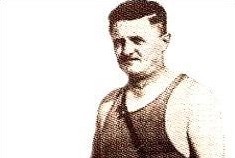 Joe Ball
Serial killer · USA · 1936
Joe Ball (January 6, 1896 – September 24, 1938) was an American serial killer.…
14 victims
Joe Ball
Serial killer · USA · 1936
Joe Ball (January 6, 1896 – September 24, 1938) was an American serial killer.…
14 victims
 Nicholas Yarris
Justice miscarriage · USA · 1981
Nicholas Yarris Nicholas Yarris was sentenced to death on January 23, 1983. His…
0 victims
Nicholas Yarris
Justice miscarriage · USA · 1981
Nicholas Yarris Nicholas Yarris was sentenced to death on January 23, 1983. His…
0 victims
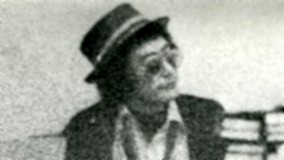 Akiyoshi Umekawa
Murderer · Japan · 1963
Akiyoshi Umekawa ( 梅川 昭美 , Umekawa Akiyoshi , March 1, 1948 - January 28, 1979)…
5 victims
Akiyoshi Umekawa
Murderer · Japan · 1963
Akiyoshi Umekawa ( 梅川 昭美 , Umekawa Akiyoshi , March 1, 1948 - January 28, 1979)…
5 victims
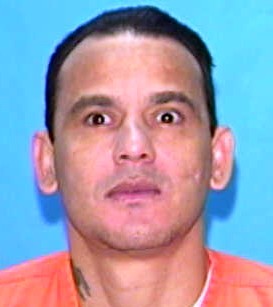 Norberto Pietri
Murderer · USA · 1988
Norberto Pietri was at Lantana Community Correctional Work Release Center await…
1 victim
Norberto Pietri
Murderer · USA · 1988
Norberto Pietri was at Lantana Community Correctional Work Release Center await…
1 victim
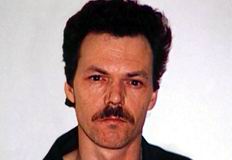 Douglas Beamish
Murderer · Canada · 1994
Shirley Duguay lived on Prince Edward Island, Canada. In 1994, she went missing…
1 victim
Douglas Beamish
Murderer · Canada · 1994
Shirley Duguay lived on Prince Edward Island, Canada. In 1994, she went missing…
1 victim
- Gender
- male
- Country
- USA
- Location
- Pulaski County, Arkansas, USA
- Date of birth
- January 28, 1921
- Age at first offence
- 23
- Characteristics
- parricide, robbery, mentally ill
- Victim profile
- Fayrene Clemmons, 19 (his wife) / Carl Hamilton / E.C. Adams / Doyle Mulherin
- Method of murder
- Shooting
- Date(s) of murder
- 1944 - 1945
- Years active
- 1944–1945
- Date of arrest
- March 15, 1945
- Status
-
Executed
Executed by electrocution in Arkansas on January 4, 1946
Case record: James Waybern Hall
Background
James Waybern Hall (1921–1946) was executed by electrocution in Arkansas on January 4, 1946.
Hall drafted by the navy in 1943, despite his best efforts to escape military service. Hall was dishonorably discharged after eight weeks of training.
Back home in Little Rock, Hall married 19-year-old Fayrene Clemmons on March 14, 1944. Their relationship was described as stormy, and it included a brief separation in June.
Hall was called “Big Jim” for his size and “Red” for his wavy red hair. He took offense at suggestions that he was mentally ill. The defense attorneys ultimately chose mental illness for the two-day trial that ended in his death sentence.
A person identified as Janie Jones, 65, wrote two Arkansas travel books and several true crime magazine articles, including one on Hall. Jones wrote that Hall was one of 10 children born to strict parents, including a father who was a preacher and farmer. Jones also wrote that Hall suffered a brain injury as a boy, possibly the result of a beating from his father. Jones said Hall walked at a fast pace and leaned toward the left when he walked, and “All the hair on one of his legs was gray.” Jones said she thought Hall sustained a head injury when he was 12 years old and that brain injuries could “really mess you up.”
The offence
Hall killed four people, including his wife, in Arkansas between 1944 and 1945.
Hall was convicted of murder after a two-day trial, and in May 1945 he was sentenced to death for killing his 19-year-old wife and three other men around Little Rock, Arkansas.
Investigation
Police were notified after Hall reported to his father-in-law that Fayrene had deserted him three days earlier. Police logged reports of Fayrene’s promiscuous behavior and closed their investigation after a week, declaring Fayrene a probable runaway.
Two months later, relatives received a Christmas card with Fayrene’s signature, postmarked from Bakersfield, California. Jim Hall “borrowed” the card and envelope before officers had a chance to examine it, and it was subsequently “lost.”
On January 29, 1945, loggers discovered an abandoned car in Ouachita County, southwest of Little Rock. A dead man was found slumped behind the wheel, with a bullet in his heart. The man was identified from fingerprints as Camden barber Carl Hamilton. The victim had been dead for several days when found, and homicide detectives had no reason to connect his murder with the disappearance of a wayward spouse in Little Rock.
On February 1, E.C. Adams vanished en route to his job at a Little Rock war plant. His car was found outside of Fordyce, northwest of Camden in Dallas County. Searchers located his body in nearby brush with a single bullet in his brain.
On February 1, trucker Doyle Mulherin was reported long overdue on a scheduled meat delivery. His vehicle was found hours later near Stuttgart, 40-odd miles to the southeast of Little Rock, in Arkansas County. Police found his body in a sweep of the area, with one shot through the head. Police said his pockets were emptied of $125 in company cash.
Authorities were still without a suspect on March 2, when Hall was arrested in a Little Rock bar fight and fined $106.90 on his plea of guilty to simple assault.
Authorities became more interested in Hall after an acquaintance said the acquaintance had loaned Hall a car on January 28. The acquaintance reported that there was a loaded pistol in the glove compartment, and a single round was missing from the clip when Hall returned the car on January 29. Ballistics tests revealed the gun had been employed to kill Carl Hamilton.
On March 9, 1945, a burned-out car was found near Heber Springs, in Cleburne County. An incinerated body was recovered from the back seat and identified from dental charts as J.D. Newcomb, Jr., late of Little Rock.
A search of Hall’s lodgings revealed substantial quantities of ammunition and shaving gear stolen from Hamilton.
Jones wrote that investigators from Kansas traveled to Arkansas to question Hall on the killings of Nipper and Jones but Jones said he was never charged.
Jones said that when he was traveling around with detectives they said, “So you’ve killed about a dozen people,” and he said, “It was more like 24 than 12.”
Jones said that when Hall was arrested and word got out about what he had confessed to, lawmen from other states would come down and talk to him about their unsolved killings. Jones also said Hall would talk freely about certain killings. Jones said he confessed to killing a woman in Salinas, Kansas, in 1938, a man in San Marcos, Texas, in 1944, and 10 migrant workers from 1938 to 1944 in Arizona. Jones said that on others he offered clues and then declined to talk.
Arrest
Hall was arrested in a Little Rock bar fight on March 2, 1945. He was fined $106.90 on his plea of guilty to simple assault.
Hall was picked up near Little Rock on March 15. He readily confessed to the series of holdup-murders that had earned him less than $300 overall.
Trial
Hall was convicted of murder after a two-day trial in May 1945.
Sentencing
In May 1945, Hall was sentenced to death.
Appeals
No appeal information was provided.
Outcome
Hall was executed by electrocution in Arkansas on January 4, 1946. Hall was escorted to the chair on January 4, 1946. He was described as all smiles and laughing and joking with his guards.
Hall told the guards as they strapped him in and fastened the electrodes:
“Boys, I'm not afraid.”
“I can take it.”
A later report included the following quote attributed to Hall “as they fastened the electrodes to his clean-shaven head”:
Aftermath
After confessing, Hall led detectives to the site where his wife was buried. Detectives were surprised to learn a farmer had retrieved the skull months earlier. Fayrene was identified from crooked teeth and finally laid to rest.
A person named Mark Malick, described as a senior special agent and spokesman for the Kansas Bureau of Investigation, wrote that a check with Kansas Bureau of Investigation records system failed to come up with any names or investigations associated with the date of Nipper’s and Lambert’s death. Malick wrote:
“I know the KBI was founded in 1939, but in the early days the bureau was primarily formed to work bank robberies and cattle thefts,” Malick wrote in an email.
Janie Jones wrote that law enforcement agencies in McPherson County, Kansas said their records do not go back as far as the Nipper and Lambert slayings.
Other details
Hall’s wife was Fayrene Clemmons.
Carl Hamilton was described as a Camden barber.
J.D. Newcomb, Jr. was described as late of Little Rock.
E.C. Adams was en route to his job at a Little Rock war plant when he vanished.
Doyle Mulherin was a trucker on a scheduled meat delivery.
Fayrene’s disappearance was reported with her described probable runaway status after police closed their investigation after a week.
Hall “borrowed” the Christmas card and envelope signed by Fayrene before officers had a chance to examine it, and it was subsequently “lost.”
At the time Hall returned the loaned car on January 29, authorities said a single round was missing from the pistol clip.
Hall’s confession was described as covering the “series of holdup-murders.”
Hall’s confession was described as earning him less than $300 overall.
Spotted an error, or have more information about this case?