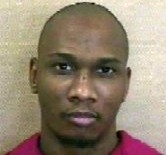
Harvey Lee Green
Murderer Brian Kevin Rosenfeld
Murderer · USA · 1985
Brian Kevin Rosenfeld Brian Kevin Rosenfeld was sentenced to three concurrent l…
23 victims
Brian Kevin Rosenfeld
Murderer · USA · 1985
Brian Kevin Rosenfeld Brian Kevin Rosenfeld was sentenced to three concurrent l…
23 victims
 Marvin Gray
Murderer · USA · 1975
Marvin Gray was convicted killer who claimed responsibility for 23 slayings and…
23 victims
Marvin Gray
Murderer · USA · 1975
Marvin Gray was convicted killer who claimed responsibility for 23 slayings and…
23 victims
 Yahweh ben Yahweh
Murderer · USA · 1980
Yahweh ben Yahweh was born and legally named Hulon Mitchell Jr. (October 27, 19…
23 victims
Yahweh ben Yahweh
Murderer · USA · 1980
Yahweh ben Yahweh was born and legally named Hulon Mitchell Jr. (October 27, 19…
23 victims
 Russell Ellwood
Murderer · USA · 1991
Russell Ellwood was a former taxi driver. Authorities suspected him of killing…
20 victims
Russell Ellwood
Murderer · USA · 1991
Russell Ellwood was a former taxi driver. Authorities suspected him of killing…
20 victims
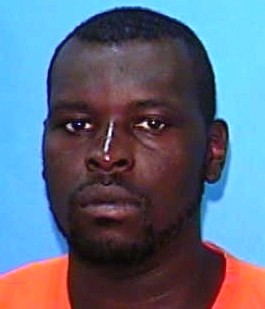 Timothy Lee Hurst
Murderer · USA · 1998
Name: Timothy Lee Hurst · Date of birth: 12/12/78 · Jurisdiction: First Judicia…
1 victim
Timothy Lee Hurst
Murderer · USA · 1998
Name: Timothy Lee Hurst · Date of birth: 12/12/78 · Jurisdiction: First Judicia…
1 victim
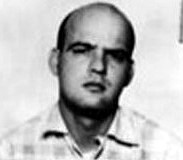 Richard Eberling
Serial killer · USA · 1946
Richard George Eberling (December 8, 1929 - July 25, 1998) was a petty thief an…
5 victims
Richard Eberling
Serial killer · USA · 1946
Richard George Eberling (December 8, 1929 - July 25, 1998) was a petty thief an…
5 victims
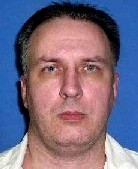 Patrick Henry Murphy
Murderer · USA · 2000
Patrick Henry Murphy, Jr. TDCJ Number: 999461 Date of birth: 10/03/1961 Educati…
1 victim
Patrick Henry Murphy
Murderer · USA · 2000
Patrick Henry Murphy, Jr. TDCJ Number: 999461 Date of birth: 10/03/1961 Educati…
1 victim
 Jeremiah Berry
Murderer · USA · 2008
Jeremiah Berry was convicted after pleading guilty to the second-degree murder…
1 victim
Jeremiah Berry
Murderer · USA · 2008
Jeremiah Berry was convicted after pleading guilty to the second-degree murder…
1 victim
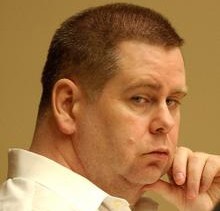 Thomas Huskey
Serial killer ? · USA · 1991
Thomas Huskey, also known as “Zoo Man,” was a former zoo elephant trainer. Loca…
4 victims
Thomas Huskey
Serial killer ? · USA · 1991
Thomas Huskey, also known as “Zoo Man,” was a former zoo elephant trainer. Loca…
4 victims
- Gender
- male
- Country
- USA
- Location
- Pitt County, North Carolina, USA
- Date of birth
- October 9, 1960
- Age at first offence
- 23
- Characteristics
- robbery, abuse
- Victim profile
- Sheila M. Bland, 17 (store cashier) and John Edmondson , 33 (customer)
- Method of murder
- Beating
- Date(s) of murder
- December 19, 1983
- Years active
- 1983
- Date of arrest
- —
- Status
-
Executed
Executed by lethal injection in North Carolina on September 24, 1999
Case record: Harvey Lee Green
Background
Harvey Lee Green was a death row inmate in North Carolina. He was executed by lethal injection on September 24, 1999.
Green had been scheduled for execution in March but received a stay. The execution occurred after clemency was refused and after the U.S. Supreme Court declined to intervene in the case.
Supporters contended that Green was a victim of racism during his trial because only one black person was on the jury that recommended the death penalty. The text also stated that 12 people, all white, had been executed in North Carolina since 1977.
A clemency request was denied by Gov. Jim Hunt. The statement attributed to Hunt said:
“Counsel for the defendant and his advocates in the community have raised questions with regard to issues of fairness in Mr. Green's case,” Hunt said in the statement. “However, I believe that the courts have carried out a thorough review of this case, removing any question as to whether Mr. Green received a fair and impartial trial.”
Central Prison officials said Green did not want a last meal when asked.
The offence
On December 19, 1983, while committing a robbery at Young's Cleaners in Bethel, North Carolina, Harvey Lee Green bludgeoned to death Sheila Marlene Bland and John Michael Edmondson.
Sheila Marlene Bland was a seventeen-year-old high school student working as the store cashier. John Michael Edmondson was a thirty-three-year-old church organist who was a store customer at the time.
Green pleaded guilty to the murders connected to the robbery of the dry cleaning store in Pitt County in 1983. A matter of weeks after the killings, Green confessed to the crimes to police, showed the police where he hid the murder weapon, and turned over a pair of blood-splattered pants he wore at the time of the killings. The murder weapon tested positively for blood and the victims’ hair.
Investigation
Within a matter of weeks after the killings, Green confessed to the police. He showed police where he hid the murder weapon. The weapon tested positively for blood and the victims’ hair. Green also turned over the pair of blood-splattered pants he wore at the time of the killings.
Arrest
Green was indicted and later pleaded guilty to both counts of first-degree felony murder.
Trial
Indictment and guilty pleas
On January 16, 1984, the grand jury of Pitt County, North Carolina, returned an indictment of Green on two counts of first-degree felony murder.
Green subsequently pled guilty to both counts. Pursuant to North Carolina law, a capital sentencing proceeding was conducted at which the jury recommended the death penalty for each murder, and the trial court entered judgment accordingly.
Racial-discrimination hearings and remands
On appeal, the North Carolina Supreme Court remanded the case for a hearing to determine whether Green’s death sentences were unconstitutionally tainted by racial discrimination in jury selection in violation of Batson v. Kentucky. A Batson hearing was held, and the lower court determined that there had been no racial discrimination in the selection of Green’s jury.
The North Carolina Supreme Court remanded for a second Batson hearing, where the trial court made more detailed findings of fact and again found no Batson error.
The text also described a supporters’ contention that Green was a victim of racism during his trial because only one black person was on the jury that recommended the death penalty.
Changes related to McKoy v. North Carolina
While Green’s sentence was being appealed for the third time, the North Carolina Supreme Court remanded for resentencing in light of McKoy v. North Carolina, which held that it violated the Eighth Amendment for North Carolina to instruct a capital sentencing jury that it must unanimously find the existence of any mitigating circumstances.
At Green’s second capital sentencing hearing, the jury found three statutory aggravating circumstances:
- that Green had been previously convicted of a felony involving the use or threat of violence,
- that the murders of Sheila Bland and Michael Edmondson were for pecuniary gain,
- that those murders were part of a course of conduct in which Green committed another crime of violence against another person.
The jury also found seven mitigating circumstances, and it ultimately recommended death sentences for each of the two first-degree felony murders. Judgment was entered accordingly.
Direct appeal
The North Carolina Supreme Court affirmed Green’s death sentences in State v. Green. The text stated the decision was 58 pages and affirmed against various assignments of error.
The U.S. Supreme Court denied certiorari on December 5, 1994.
Federal habeas corpus litigation
Green filed a petition in federal district court for a writ of habeas corpus pursuant to 28 U.S.C. § 2254 on October 3, 1996. The district court dismissed Green’s habeas petition in Green v. French (E.D.N.C. July 16, 1997), and Green appealed.
The appellate decision was in United States Court of Appeals, Fourth Circuit. The case caption included: Harvey Lee Green, Jr., Plaintiff-appellant, v. James B. French, Warden, Central Prison, Defendant-appellee. Argued January 29, 1998, decided May 13, 1998. The decision stated it was affirmed by published opinion. Judge LUTTIG wrote the opinion, and Judge BUTZNER joined. Judge ERVIN concurred separately.
Sentencing
Capital sentencing progression
After Green pleaded guilty, the capital sentencing proceeding occurred at which the jury recommended the death penalty for each murder and the trial court entered judgment accordingly.
Later, the case underwent resentencing after remand under Batson considerations and then under McKoy. At the second capital sentencing hearing, statutory aggravating circumstances were found, mitigating circumstances were also found, and the jury recommended death sentences for each murder.
The text stated that Pitt Superior Court sentenced Green to death on Sept. 3, 1992 for the murder of Michael Edmondson and Sheila Bland.
Appeals
North Carolina Supreme Court
The text described multiple rounds of remand and resentencing, including Batson hearings and a resentencing required by McKoy. It also stated the North Carolina Supreme Court affirmed Green’s death sentences in 1994.
U.S. Supreme Court
The U.S. Later, it declined to stay the execution on September 24, 1999, denying appeals without comment.
Federal courts (Fourth Circuit)
The Fourth Circuit affirmed the district court’s dismissal of Green’s habeas corpus petition. The text reported the court’s analysis of claims including the denial of allocution, alleged jury coercion under Lowenfield v. Phelps, alleged coercion related to McKoy, and claims regarding ineffective assistance of counsel and jury instructions on non-statutory mitigating circumstances, along with Batson and McCleskey-related contentions being procedurally barred or rejected.
Outcome
Harvey Lee Green was executed by lethal injection in North Carolina on September 24, 1999.
The text stated the execution took place early Friday. It also stated that Green was pronounced dead at 2:16 a.m. after receiving a lethal injection at Central Prison.
The text stated that Green was the first black person executed by North Carolina since the state restored the death penalty in 1977.
Aftermath
Central Prison officials said Green did not want a last meal.
Green entered the execution chamber at 1:50 a.m. on September 24, 1999. Lethal drugs were administered at 2:01 a.m. The body was transported to the Medical Examiner’s Office at Wake Medical Center.
Green made a final statement on September 24, 1999:
“I'd like to let the public know that the wrong they're doing now, it compounded the wrong I did years ago. It ain't no justification. Ain't no fairness. That's all I got to say, and they know it's right.”
Green was moved to the death watch area of Central Prison on September 22, 1999 at 6:00 p.m., adjacent to the execution chamber and located in the prison’s custody control building.
Other details
Witness selection for execution
Raleigh—Central Prison Warden R.C. Lee named six official witnesses and five media witnesses for the September 24 execution of Harvey Lee Green.
The official witnesses selected by the District Attorney’s office were:
- Margaret Barnhill of Bethel,
- Clayton Barnhill of Bethel,
- Judy Bland of Stokes,
- Bruce Bland of Stokes.
The two witnesses from the County Sheriff’s Department were:
- Bruce Bland, Jr. of Rocky Mount,
- Bill Godley of Greenville.
Media witnesses were:
- Nichole Monroe of The Daily Reflector in Greenville,
- Cash Michaels of The Carolinian in Raleigh,
- Channa Brooks from WCTI-TV in New Bern,
- Mitch Kokai from WPTF Radio in Raleigh,
- Estes Thompson from the Associated Press.
Under Department of Correction policy, the district attorney and sheriff in the county of conviction nominated the six official witnesses. These witnesses may include members of the victim’s family.
The text stated that a 1997 amendment to the state statute ensured the crime victim’s family the right to witness the execution.
The Radio Television News Directors Association of the Carolinas selected the broadcast reporters, and the N.C. Press Association selected the two print reporters. The Associated Press selected its own wire service representative. After the execution, the media witnesses were required to relate their experience to other reporters immediately in Central Prison’s visitor center.
Scheduled time
Green was scheduled to be executed at Central Prison at 2 a.m. on Friday, September 24 by lethal injection.
Habeas procedural and substantive content (Fourth Circuit)
The Fourth Circuit affirmed dismissal of Green’s habeas petition. The text included discussion of:
- allocution during a second capital sentencing proceeding,
- alleged jury coercion during deliberations using Lowenfield v. Phelps,
- a related argument under McKoy v. North Carolina,
- ineffective assistance of counsel under Strickland v. Washington,
- harmlessness of jury instruction errors regarding non-statutory mitigating circumstances under Chapman v. California and Brecht v. Abrahamson,
- Batson-based claims and McCleskey-based claims being procedurally barred during state post-conviction review and not showing cause and prejudice or miscarriage of justice to excuse procedural default.
The text also included a separate concurrence by ERVIN, Circuit Judge, stating:
“I concur in the result reached by the majority. I am not convinced that much of the discussion in Part II A through C of the majority opinion is either necessary or appropriate given the manner in which the parties addressed and developed those issues.”
Spotted an error, or have more information about this case?