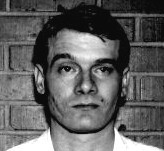
Ricky Lee Green
Serial killer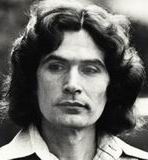 Rodney Alcala
Serial killer · USA · 1977
Rodney James Alcala (born August 23, 1943) was also known as Rodrigo Jacques Al…
100 victims
Rodney Alcala
Serial killer · USA · 1977
Rodney James Alcala (born August 23, 1943) was also known as Rodrigo Jacques Al…
100 victims
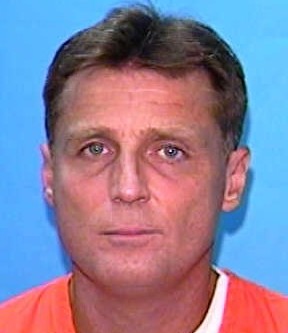 Glen Edward Rogers
Serial killer · USA · 1993
Glen Edward Rogers was a spree killer whose cross-country rampage in 1994-95 le…
70 victims
Glen Edward Rogers
Serial killer · USA · 1993
Glen Edward Rogers was a spree killer whose cross-country rampage in 1994-95 le…
70 victims
 Donald Leroy Evans
Serial killer · USA · 1975
Donald Leroy Evans (born July 5, 1957) was an American serial killer who murder…
60 victims
Donald Leroy Evans
Serial killer · USA · 1975
Donald Leroy Evans (born July 5, 1957) was an American serial killer who murder…
60 victims
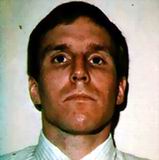 Michael Swango
Serial killer · USA · 1981
Michael Swango (Joseph Michael Swango) was a physician and American serial kill…
60 victims
Michael Swango
Serial killer · USA · 1981
Michael Swango (Joseph Michael Swango) was a physician and American serial kill…
60 victims
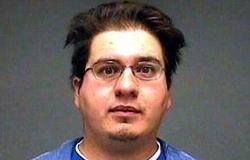 Efren Saldivar
Serial killer · USA · 1989
Efren Saldivar (born 30 September 1969) was an American serial killer who murde…
50 victims
Efren Saldivar
Serial killer · USA · 1989
Efren Saldivar (born 30 September 1969) was an American serial killer who murde…
50 victims
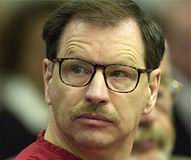 Gary Ridgway
Serial killer · USA · 1982
Gary Leon Ridgway Ridgway was born 18-February-1949 in Salt Lake City, UT. He w…
49 victims
Gary Ridgway
Serial killer · USA · 1982
Gary Leon Ridgway Ridgway was born 18-February-1949 in Salt Lake City, UT. He w…
49 victims
 Josh Gilchrist
Homicide · USA · 2007
26 January 2007 — Police responded to the family home in Huron, South Dakota an…
1 victim
Josh Gilchrist
Homicide · USA · 2007
26 January 2007 — Police responded to the family home in Huron, South Dakota an…
1 victim
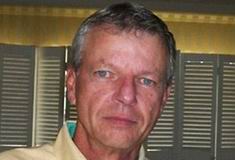 John Houser
Murderer · USA · 2015
John Russell “Rusty” Houser was born on November 22, 1955, and died on July 23,…
2 victims
John Houser
Murderer · USA · 2015
John Russell “Rusty” Houser was born on November 22, 1955, and died on July 23,…
2 victims
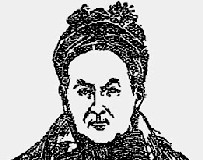 Annie Walters
Murderer · United Kingdom · 1900
Annie Walters (1869 - 3 February 1903) was a British serial killer known as a “…
Annie Walters
Murderer · United Kingdom · 1900
Annie Walters (1869 - 3 February 1903) was a British serial killer known as a “…
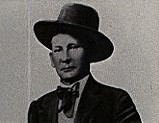 Gregorio Cortez Lira
Murderer · USA · 1901
Gregorio Cortez Lira — defendant; Mexican American folk hero; tenant maize farm…
1 victim
Gregorio Cortez Lira
Murderer · USA · 1901
Gregorio Cortez Lira — defendant; Mexican American folk hero; tenant maize farm…
1 victim
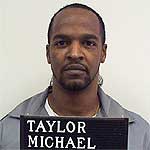 Michael Anthony Taylor
Murderer · USA · 1995
Defendant: Michael Anthony Taylor · Co-defendant: Roderick Nunley · Victim: Ann…
1 victim
Michael Anthony Taylor
Murderer · USA · 1995
Defendant: Michael Anthony Taylor · Co-defendant: Roderick Nunley · Victim: Ann…
1 victim
- Gender
- male
- Country
- USA
- Location
- Tarrant County, Texas, USA
- Date of birth
- December 27, 1960
- Age at first offence
- 25
- Characteristics
- rape, sexual mutilation
- Victim profile
- Jeffrey Davis, 16 / Steven Fefferman, 28 / Sandra Bailey, 27 / Betty Jo Monroe, 28
- Method of murder
- St abbing with knife / Beating with a hammer
- Date(s) of murder
- 1985 - 1986
- Years active
- 1985–1986
- Date of arrest
- —
- Status
-
Executed
Executed by lethal injection in Texas on October 9, 1997
Case record: Ricky Lee Green
Identifiers
- Offender: Ricky Lee Green (#984)
Timeline
- October 8, 1997 — Scheduled execution date.
- October 9, 1997 — Ricky Lee Green was pronounced dead after being lethally injected by prison authorities in Huntsville, Texas.
- October 9, 1997 — Execution occurred at 6:31 P.M., central daylight time, seven minutes after a dose of lethal drugs was released into his right arm.
Background
Ricky Lee Green was 36 years old at the time he was pronounced dead on October 9, 1997.
Green was described as a one-eyed radiator repairman.
He had been in prison for 8½ years and on Death Row for 7 years.
He delivered a final statement in which he thanked “the Lord above,” said his “punishment is over,” and addressed four relatives of his victims, stating:
“I want to thank the Lord for giving me this opportunity to get to know Him. He has shown me a lot and He has changed me in the past two months. I have been in prison 8½ years and on Death Row for 7, and I have not gotten into any trouble. I feel like I am not a threat to society anymore. I feel like my punishment is over, but my friends are now being punished. I thank the Lord for all He has done for me. I do want to tell the…”
Green also stated in an interview at the execution and in other quoted accounts:
“Now we can go on and not have to worry about him getting out and hurting anyone else,” said Shirley Bailey, the sister of one of his known victims.
“This to me is another killing and it's not going to solve nothing. I feel my punishment is over and now my friends and family are being punished.”
In one final-statement account, Green said:
“I feel I'm not a threat to society no more,”
“I feel my punishment is over and now my friends and family are being punished.”
In another final-statement account, Green said:
“really sorry, but this to me is another killing and it's not going to solve nothing.”
Executioners had trouble finding “a suitable vein” because of Green’s “fondness for intravenous drugs.”
Only one needle was used instead of the customary two.
Green gasped several times before he stopped breathing.
Before dying, Green said that he had been a model prisoner while on Death Row.
A quote attributed to him also stated:
“This to me is another killing and it's not going to solve nothin’. I feel my punishment is over and now my friends and family have to suffer.”
The offence
Green was condemned for the December 27, 1986 murder of Steven Fefferman, described as an advertising executive for a Fort Worth television station, including reference to KXAS.
Fefferman, 28, was castrated and repeatedly stabbed with a butcher knife at his home.
Green’s actions were also described as including sexual activity with Fefferman followed by sexual mutilation.
Green was also described as having confessed to other killings.
The account of other murders included:
- Jeffrey Davis (16), castrated and stabbed in April 1985; his “nearly decapitated body” was found in a swamp at the Fort Worth Nature Center.
- Sandra Bailey (27), who died from stab wounds and hammer blows to the head; her body was dumped in a ditch. Green met her at a club he frequented.
- Betty Jo Monroe (28), described as a topless dancer from Amarillo; she was hitchhiking in Fort Worth in October 1985 when Green picked her up. She was stabbed, mutilated, and beaten in the head with a hammer.
Police detective testimony in the record also referenced a reply to the question of why Green killed, attributed to Detective Danny LaRue:
“When I finally got through with the confessions and asked him why he killed these people, his reply was: “They all deserved it. They were kind of the dregs of society.””
Another attributed description of the reply stated:
“When I finally got through with the confessions and asked him why he killed these people, his reply was: "They all deserved it. They were kind of the drugs of society."”
Detective Danny LaRue believed that eight other unsolved murders in North Texas bore Green’s trademarks.
Green was described as having been suspected in at least 12 other murder cases throughout Texas.
A quoted statement attributed to Detective Daniel LaRue included:
“He left his mark all over the state,” Detective Daniel LaRue said.
Another quoted statement attributed to Detective LaRue included:
“There were approximately 50 stab wounds to each victim. Some of the victim’s throats were cut. The male victim’s genitals were cut off and put in their mouths,” LaRue said.
A quoted statement attributed to a prosecutor, Marc Barta, included:
“The brutality of these crimes was is impossible to describe,” Prosecuting Attorney Marc Barta said.
A quoted statement attributed to the defense attorney, David Bays, included:
“In order to receive the death penalty, Green had to kill his victim in the commission of another act,” Defense Attorney David Bays said.
A quoted statement attributed to Defense Attorney David Bays also included:
“Ricky didn’t kill Fefferman just so he could rob or rape him, he killed because it was something he liked to do.”
A quoted statement attributed to Prosecuting Attorney Marc Barta included:
“With confessions, bloodstained knives and photographs, the likelihood of an acquittal was minimal.”
A quoted statement attributed to Defense Attorney David Bays included:
“A lot of what happened was a product of excess drinking and smoking dope. Almost everything he did was in an alcoholic haze,” Bays said.
Green and Steven Fefferman were described as meeting at a park close to a beach near Fort Worth in one account, where Green took Fefferman to his house, tied him up, mutilated, castrated him, and then left in Fefferman’s car.
Investigation
Detective Danny LaRue investigated and later commented on the case.
LaRue believed additional unsolved murders bore Green’s trademarks.
Arrest
Green was arrested for capital murder for the death of Steven Fefferman.
Trial
In April 1986, Green was charged with the capital murder of Steven Fefferman.
Green was indicted in 1989 in Criminal District Court No. 4 of Tarrant County, Texas, with the capital murder of Steven Fefferman.
Following jury selection began, the state withdrew its objection to Green’s motion for change of venue, and the trial court granted it, transferring the case to Travis County, Texas, for trial in the 167th Judicial District Court.
A jury trial occurred following the change of venue.
Green was found guilty of capital murder in 1990 and was sentenced to death.
After sentencing, venue was transferred back to the Tarrant County court.
Green’s conviction and sentence were affirmed on direct appeal by the Texas Court of Criminal Appeals, referenced as:
- Green v. State, No. 71,170 (Tex. Crim. App. Dec. 9, 1992) (unpublished).
Green later filed state habeas applications, which were denied as referenced below.
Defendants’ representation and defense issues
Green’s pre-trial representation included court-appointed counsel:
- Jeff Kearney
- Suzie Johnson
After the change of venue, Kearney withdrew and was replaced by David Bays.
A third attorney, Kenneth Houp, was appointed to assist in pre-trial proceedings, and his role ended with completion of jury selection.
During the trial, Green was represented throughout by Bays and Johnson.
Green’s innocence or culpability defense included, as described in the federal appellate opinion, a defense that he lacked the requisite mens rea to commit the underlying felony.
The defense considered an insanity defense, including retaining Dr. Richard Rappaport, but the insanity defense was abandoned.
An expert, Robert Ressler, testified as a state witness during the punishment phase regarding serial killers and described Green as an “organized serial killer.”
The record included claims about counsel’s decision to cross-examine Ressler.
A quoted exchange of notes between Johnson and Green during jury selection included:
- Green: “"[T]ell me something Ms. Johnson, did you drop the insanity plea just to save the state money or did ya'll have something against Mr. Rappaport or is there something else"?”
- Johnson: “"We dropped it because Rappaport's testimony would let the jury know you said you killed Wendy Robinson, some woman in Florida, and 15 other people. That proves the 'future dangerousness' question # 2. I will not prove my client's future dangerousness. I will not prove up a murder (Wendy) where my client is a suspect. # 2 Rappaport's conclusion that you were insane is too shallow. # 3 if Rappaport testified you are 100% guaranteed D.P."”
In one account, it was stated that evidence included three other murders Green confessed to, involving beatings and mutilation of genitalia similar to the Fefferman murder, plus stalking a seventeen-year-old girl and assaulting two teenage boys.
Sentencing
Green was sentenced to death by lethal injection for the capital murder of Steven Fefferman.
During sentencing, the court admitted evidence of three other murders to which Green confessed.
Green received life prison terms for two other murders.
The record also included:
- A death sentence in September 1990, in the federal appellate opinion.
The record described Sharon Green’s disposition as “10 years probation for her part in the crimes.”
Appeals
State appeal
- Green v. State, No. 71,170 (Tex. Crim. App. Dec. 9, 1992) (en banc) (unpublished), affirmed conviction and sentence.
- Ex parte Green, No. 26,331-01 (Tex. Crim. App. Apr. 19, 1994) (en banc) (per curiam), denied first state habeas relief.
- Ex parte Green, No. 26,331-02 (Tex. Crim. App. Oct. 3, 1994) (en banc) (per curiam), denied second state habeas petition referenced in federal jurisdiction proceedings.
Federal proceedings
In the United States Court of Appeals for the Fifth Circuit decision referenced as:
- In the Matter of Ricky Lee Green, Petitioner-appellee v. Gary L. Johnson, Director, Texas Department of Criminal Justice, Institutional Division, Respondent-appellee
- June 27, 1997
The Fifth Circuit denied a certificate of probable cause (“CPC”) and vacated the stay of execution.
The opinion also addressed jurisdiction for federal habeas petitions, concluding:
- jurisdiction lay in the Western District of Texas and not in the Northern District of Texas,
- petitions for writs of mandamus were denied without prejudice.
The Fifth Circuit’s decision referenced:
- In re Green, 39 F.3d 582 (5th Cir. 1994).
- Gosch v. Collins, 20 F.3d 1170 (5th Cir.) (per curiam).
- Dobard v. Johnson, 749 F.2d 1503 (11th Cir. 1985).
Federal habeas proceedings described in the record included:
- September 19, 1994 — motion for appointment of counsel and stay of execution filed in the Northern District of Texas.
- September 21, 1994 — attorney appointed from the Texas Resource Center as Green’s counsel; request for stay denied without prejudice.
- September 27, 1994 — Green filed notice of intent not to file a federal habeas petition.
- September 30, 1994 — Green filed a second state habeas petition in the Tarrant County trial court.
- October 3, 1994 — Court of Criminal Appeals adopted the trial court’s recommendation and denied relief on the procedural ground that it would not consider the petition while Green’s case was pending in federal court; on the same date Green filed a notice of voluntary dismissal of the Northern District habeas proceeding; also on October 3 around 3:30 p.m., Green filed a federal habeas petition and motion for stay in the Western District of Texas; the Western District transferred to the Northern District at approximately 5:00 p.m. that same day.
- October 4, 1994 — Northern District concluded under Dobard that the Western, Northern, and Southern Districts of Texas had concurrent jurisdiction; transfer from Western to Northern was proper; state instructed to respond.
The record included statements from the Fifth Circuit that it was unnecessary to issue a writ of mandamus at that time and that it denied the petitions without prejudice.
Outcome
Ricky Lee Green was executed by lethal injection in Texas on October 9, 1997.
He was pronounced dead at 6:31 P.M., central daylight time, seven minutes after a dose of lethal drugs was released into his right arm.
Only one needle was used because prison officials were unable to locate a suitable vein in the left arm.
Green delivered his final statement before dying and addressed four relatives of his victims.
Aftermath
Shirley Bailey, the sister of one of Green’s known victims, said:
“Now we can go on and not have to worry about him getting out and hurting anyone else,”
The record described media attention in Fort Worth and that the trial had to change venue to Austin, Texas, in one account.
The record also included that evidence was described as disturbing, and that some jurors reportedly had to leave the room and one excused herself to vomit.
Reports of jury members seeking psychiatric care following the trial were also included in one account.
Spotted an error, or have more information about this case?