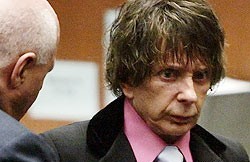
Phil Spector
Murderer Robert Martines Perez
Murderer · USA · 1994
Name: Robert Martines Perez · Other name used in proceedings: Robert Martinez P…
15 victims
Robert Martines Perez
Murderer · USA · 1994
Name: Robert Martines Perez · Other name used in proceedings: Robert Martinez P…
15 victims
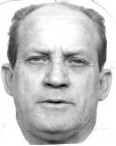 Billy Frank Vickers
Murderer · USA · 1993
Billy Frank Vickers Vickers was executed by lethal injection in Texas on Januar…
14 victims
Billy Frank Vickers
Murderer · USA · 1993
Billy Frank Vickers Vickers was executed by lethal injection in Texas on Januar…
14 victims
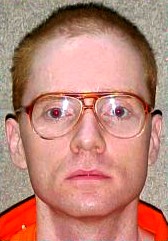 Robert Glen Jones
Murderer · USA · 1996
Defendant: Robert Glenn Jones (ADC#070566) · Co-defendant: Scott Nordstrom (ADC…
7 victims
Robert Glen Jones
Murderer · USA · 1996
Defendant: Robert Glenn Jones (ADC#070566) · Co-defendant: Scott Nordstrom (ADC…
7 victims
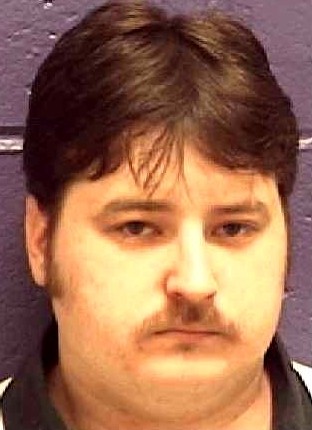 Gary Chad Thomason
Murderer · USA · 1992
Gary Chad Thomason was convicted following a three-day bench trial and was sent…
1 victim
Gary Chad Thomason
Murderer · USA · 1992
Gary Chad Thomason was convicted following a three-day bench trial and was sent…
1 victim
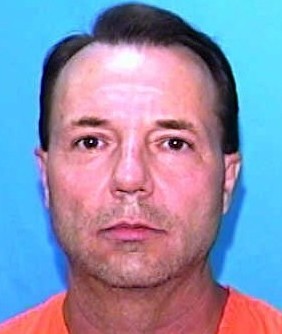 Milford Byrd
Murderer · 1981
Milford Byrd was sentenced to death for the murder of his wife, Debra Byrd. Deb…
1 victim
Milford Byrd
Murderer · 1981
Milford Byrd was sentenced to death for the murder of his wife, Debra Byrd. Deb…
1 victim
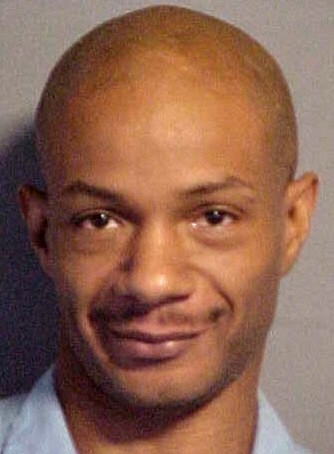 Tyrone Darks
Murderer · USA · 1994
Tyrone Peter Darks was convicted of the first degree murder of his former wife,…
1 victim
Tyrone Darks
Murderer · USA · 1994
Tyrone Peter Darks was convicted of the first degree murder of his former wife,…
1 victim
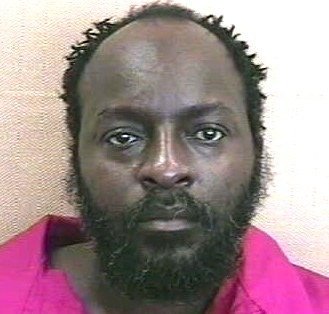 Sammy Crystal Perkins
Murderer · USA · 1992
Sammy Crystal Perkins was a Black male born on 10/01/1953. He was sentenced to…
1 victim
Sammy Crystal Perkins
Murderer · USA · 1992
Sammy Crystal Perkins was a Black male born on 10/01/1953. He was sentenced to…
1 victim
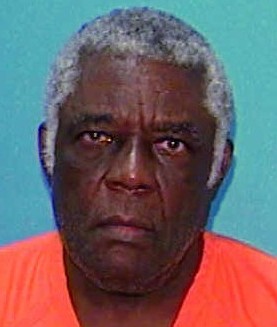 Seburt Nelson Connor
Murderer · USA · 1992
Seburt Nelson Connor was charged and tried in the Eleventh Judicial Circuit, Da…
2 victims
Seburt Nelson Connor
Murderer · USA · 1992
Seburt Nelson Connor was charged and tried in the Eleventh Judicial Circuit, Da…
2 victims
 Coy Wesbrook
Mass murderer · USA · 1997
Coy Wayne Wesbrook was the appellant in a Texas capital murder case. He had sep…
4 victims
Coy Wesbrook
Mass murderer · USA · 1997
Coy Wayne Wesbrook was the appellant in a Texas capital murder case. He had sep…
4 victims
- Gender
- male
- Country
- USA
- Location
- Alhambra, Los Angeles County, California, USA
- Date of birth
- December 26, 1939
- Age at first offence
- 64
- Characteristics
- alcoholic, history of mental illness, rape, convicted rapist, abuse
- Victim profile
- Lana Jean Clarkson, 40 (actress and fashion model)
- Method of murder
- Shooting (.38 Colt revolver)
- Date(s) of murder
- February 3, 2003
- Years active
- 2003
- Date of arrest
- Same day
- Status
-
Life imprisonment
Sentenced to 19 years to life in prison on May 29, 2009 after a conviction for second-degree murder; first trial ended in mistrial on September 26, 2007
Background
Harvey Phillip Spector (born December 26, 1939) was an American record producer and songwriter whose fame reached its height in the early 1960s. He was the originator of the “Wall of Sound” production technique and a pioneer of the 1960s girl group sound. Between 1960 and 1965, he clocked in over twenty-five Top 40 hits.
Spector was described as having a temperamental and quirky personality with strong and unconventional ideas about musical and recording techniques. He was also described as being a bully in the studio. His relationship with music industry figures included conflicts with artists, songwriters, and promoters.
Spector worked with artists including The Beatles, Ike and Tina Turner, John Lennon, George Harrison, and the Ramones. His productions included “Let It Be” and “Concert for Bangladesh” soundtracks.
Spector was inducted into the Rock and Roll Hall of Fame in 1989 as a non-performer. In 2004, Rolling Stone Magazine ranked him #63 on their list of the 100 Greatest Artists of All Time.
Spector was born into a Jewish family in the Bronx, New York. After his father’s death by suicide in 1949, Spector and his mother and sister moved to Los Angeles, California in 1953. He became involved with music and learned the guitar. At 16, he performed Leadbelly’s “Rock Island Line” at a talent show at Fairfax High School.
While at Fairfax, he joined a loosely knit community of young aspirants that included Lou Adler, Bruce Johnston, and Sandy Nelson, who played drums on Spector’s first record release, “To Know Him Is To Love Him.”
The offence
On February 3, 2003, Spector was arrested on suspicion of murder after the body of 40-year-old nightclub hostess and actress Lana Clarkson of Los Angeles was found at his mansion, Pyrenees Castle, in Alhambra, California. Police responded to a 9-1-1 phone call from Spector’s driver and discovered Clarkson with injuries consistent with a gun being placed in her mouth and fired. She was pronounced dead at the scene.
Spector’s death was later treated as second-degree murder. The jury also found Spector guilty of using a firearm in the commission of a crime. Spector stated that Clarkson’s death was an “accidental suicide”.
Two verbatim statements attributed to Spector in relation to the police included:
- “I think I killed somebody.”
- “I think my boss killed somebody”
Clarkson had been working as a hostess at the House of Blues venue in Los Angeles and went home with Spector on the night of her death. A holster that matched the snub-nosed Colt Cobra revolver that Spector used to kill her was found in a drawer in the foyer.
Spector’s Brazilian chauffeur, Adriano De Souza, said Spector appeared to be intoxicated and that Clarkson was initially reluctant to go home with the music producer. De Souza called the emergency services after Spector emerged from his home with a gun.
After appearing in cult 1980s films including “Barbarian Queen” and “Fast Times at Ridgemont High,” Clarkson’s acting career had hit the rocks.
Spector had arrived at the club with waitress Kathy Sullivan before setting his sights on Ms Clarkson. Clarkson was found dead in the foyer of his house in the early hours of the morning.
The defense argued that the death was a suicide and appealed to jurors not to judge the star on his eccentric appearance. The defense argued that Spector’s statement had been misheard as to what he had said.
Officers subdued Spector using a stun gun. He was taken into custody about 40 minutes after the shooting.
Investigation
A judge ruled on October 28, 2005 that potentially damning statements Spector allegedly made to police could be used against him at trial. Spector’s lawyers sought to suppress an apparent statement Spector made after Clarkson was found dead, including the alleged statement: “I think I killed somebody.” His lawyer argued that comments attributed to the music producer should be thrown out because he was suffering from prescription-drug withdrawal symptoms at the time.
The judge also ruled that transcripts from a deposition Spector made several months before Clarkson’s death could also be introduced by the prosecution at trial.
Two months before the night of the crime in question, Spector stated in an interview with the British Daily Telegraph that he had bipolar disorder and that he considered himself “relatively insane”.
Spector’s pre- and during-trial legal representation included multiple sets of attorneys. Defense attorney Robert Shapiro was first to represent Spector at his arraignment and early pre-trial hearings and arranged for Spector’s release on $1 million bail. Spector later fired Shapiro, entered a civil suit against Shapiro to re-claim a $1 million retainer, and dropped all claims against Shapiro in December 2005.
Shapiro was replaced by Leslie Abramson and Marcia Morrissey, who were later replaced by Bruce Cutler. Cutler left the defense on August 27, 2007, citing “a difference of opinion between Mr. Spector and me on strategy.” Attorney Linda Kenney Baden then became lead lawyer for closing arguments.
Arrest
On February 3, 2003, Spector was arrested on suspicion of murder after Clarkson’s body was found at Pyrenees Castle in Alhambra, California.
Trial
First trial
Spector remained free on $1 million bail while awaiting trial.
The trial had been scheduled to begin on April 24, 2006, but was postponed several times, first to January 16, 2007, then to March 5, and finally to March 19.
On February 16, 2007, Los Angeles Superior Court Judge Larry Paul Fidler stated that he would allow Spector’s trial to be televised, while also indicating he would reverse course if the media abused the access.
Jury selection began on Monday, March 19, 2007 at the Clara Shortridge Foltz Criminal Justice Center in downtown Los Angeles. Three hundred prospective jurors were screened over two days. Those not granted hardship exemptions by Fidler completed 18-page questionnaires that included queries about whether celebrities are entitled to act as they please and whether police treat celebrities with greater leniency.
Voir dire began April 16, 2007. A jury of nine men and three women (along with four male and three female alternate jurors) was sworn in on April 19, 2007. A list of possible witnesses shown to prospective jurors included Hal Blaine and Nino Tempo, limo driver Adriano de Souza, and writer Anne Beatts.
Opening statements began April 25, 2007 in Los Angeles. The trial was surrounded by controversy from its start. Henry Lee, a forensic expert who provided key evidence in the O. J. Simpson trial, was accused of hiding crucial evidence that the District Attorney’s office claimed could prove Spector’s guilt. A coroner examining Clarkson’s body concluded that bruising on her tongue indicated that the gun was shoved in her mouth.
On June 12, 2007, the Los Angeles Sheriff’s criminalist DNA expert stated that only Clarkson’s DNA was found on the handgun. The DNA expert also found none of Spector’s DNA on Clarkson’s fingernails.
On September 18, 2007, the jury reported that they had “reached an impasse” and Judge Fidler adjourned the case for attorneys to review the position. The jury was split 7-5, with no indication given as to which side was which. Judge Fidler considered whether the charge of involuntary manslaughter would fit but decided against adding the lesser included charge because he considered it tantamount to an instruction to convict.
On September 20, 2007, the jury resumed deliberations. Prior to deliberations, Fidler removed “Special Instruction 3,” which he characterized as a misstatement of the law.
On September 26, 2007 at 1:45pm PST, the jury stated that it could not reach a verdict. The jurors announced a deadlock of ten for guilty and two for not guilty. Judge Fidler declared a mistrial in the murder case against Phil Spector.
Second trial
In early December 2007, it was announced that San Francisco lawyer Doron Weinberg agreed to serve as Spector’s attorney and proposed that the retrial begin in September 2008. Christopher Plourd was the only remaining member of Spector’s defense team and was not available until the autumn of 2008. The remaining members of Spector’s previous defense team had resigned or been dismissed after the mistrial.
Spector sued former attorney Robert Shapiro again for a one million dollar retainer paid before the first trial. Spector also claimed that Shapiro inadequately prepared the trial and may have been responsible for the prosecution filing charges in the first place.
On April 11, 2008, Spector lost a bid to disqualify the judge presiding at his murder retrial. A state appellate panel refused to order the appointment of a neutral judge to determine whether Judge Fidler should be removed from the retrial. Fidler previously refused to remove himself from the retrial.
Jury selection in the murder retrial began on October 20, 2008, with Judge Fidler again presiding.
On February 19, 2009, the trial visited Spector’s home for an hour, where the jury inspected the scene and submitted 9 questions to the judge.
The case went to the jury on March 27, 2009. On April 13, 2009, the jury returned a guilty verdict convicting Spector of second-degree murder. In addition, the jury found him guilty of using a firearm in the commission of a crime. Spector was immediately taken into custody and was formally sentenced on May 29, 2009 to 19 years to life in the California state prison system.
The jury’s unanimous guilty verdict came after about 30 hours of deliberation. As the verdict was read out, Spector remained quiet and his wife Rachelle sobbed. The jurors had the option of returning a verdict of involuntary manslaughter but chose not to do so. Second degree murder was described as falling between first degree murder, which requires proof of pre-meditation, and manslaughter.
Prosecution and defense positions included: the defense said Clarkson’s death was a suicide; the defence also said jurors should not judge Spector on eccentric appearance; Spector opted not to give evidence.
Spector’s lawyer said he intended to appeal. Doron Weinberg said: “I don’t think justice was done today”
An unnamed juror speaking after the trial said the jury had a “complete picture” from the evidence and they had “gone through all the information and that's what the conclusion was”.
Sentencing
Spector was sentenced on May 29, 2009 to 19 years to life in the California state prison system.
He would be 88 years old before becoming eligible for parole.
Appeals
Weinberg argued that there were legal errors and that “the nature of the legal errors” made in the trial were “so significant and so clear that there is every likelihood that this case will be set aside on appeal”.
Outcome
Spector was convicted of second-degree murder after a retrial following a mistrial in 2007.
Family
Spector married Veronica “Ronnie” Bennett, former lead singer of The Ronettes, from 1968 to 1974. They adopted three children:
- Louis Phillip — Born May 12, 1966 (Adopted: age 5)
- Gary Phillip — Born May 12, 1966 (Adopted: age 5)
- Donte Phillip — Born March 23, 1969 (Adopted: age 8 Months)
They had other children:
- Nicole — Born 1982
- Phillip — Born 1982 (died Dec. 25, 1991)
Spector married aspiring singer and actress Rachelle Short on September 1, 2006. It was stated that she had appeared in Playboy magazine before her marriage to Spector, with a single black & white topless photo of Short in the magazine’s “Grapevine” section. It was stated that she was a music major at Lenoir-Rhyne College in Hickory, NC near Charlotte, sang and modeled in the Charlotte area, and was a member of a short-lived group of promotional swimsuit models.
Timeline
- February 3, 2003 — Spector was arrested on suspicion of murder after Lana Clarkson’s body was found at Pyrenees Castle in Alhambra, California.
- November 20, 2003 — Spector was indicted for Clarkson’s murder.
- September 26, 2007 — The first trial ended in a mistrial after the jury deadlocked.
- May 29, 2009 — Spector was formally sentenced to 19 years to life in the California state prison system.
Other details
Spector’s chauffeur was described as Adriano De Souza. A waitress at the club with Spector before Clarkson was identified as Kathy Sullivan.
Spector’s firearms included a snub-nosed Colt Cobra revolver.
Spector’s legal proceedings involved multiple attorney changes, including Robert Shapiro, Leslie Abramson, Marcia Morrissey, Bruce Cutler, and Linda Kenney Baden.
Spector’s wife Rachelle sobbed as the guilty verdict was read.
Spector’s trial location and procedure included the Clara Shortridge Foltz Criminal Justice Center in downtown Los Angeles for jury selection and a return to Spector’s home during the second trial for jury inspection.
Spector had attempted to work with Céline Dion on her album Falling Into You, but it fell through. His most recent released project mentioned was “Silence Is Easy” by Starsailor, released in 2003. Plans to work with The Vines were halted due to his murder trial.
Spector’s later-life collaboration included producing a track by singer-songwriter Hargo, “Crying For John Lennon.” It was stated that Spector and former Paul McCartney drummer Graham Ward produced the track in the classic wall of sound style on nights after his murder trial.
Spotted an error, or have more information about this case?