
Glen Burton Ake
Homicide Edward Charles Allaway
Homicide · USA · 1976
Edward Charles Allaway Edward Charles Allaway was found not guilty by reason of…
7 victims
Edward Charles Allaway
Homicide · USA · 1976
Edward Charles Allaway Edward Charles Allaway was found not guilty by reason of…
7 victims
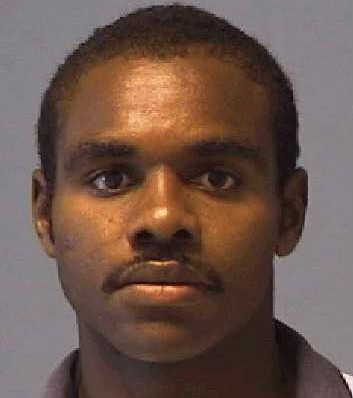 Clinton Bankston
Homicide · USA · 1987
15 August 1987 — Ann Morris (63), her sister Sally Nicholson (59), and Sally’s…
5 victims
Clinton Bankston
Homicide · USA · 1987
15 August 1987 — Ann Morris (63), her sister Sally Nicholson (59), and Sally’s…
5 victims
 David Francis Brom
Homicide · USA · 1988
David Francis Brom (born October 3, 1971) killed his parents, brother, and sist…
4 victims
David Francis Brom
Homicide · USA · 1988
David Francis Brom (born October 3, 1971) killed his parents, brother, and sist…
4 victims
 Leonard Drane
Murderer · USA · 1990
Leonard Maurice Drane was convicted in a capital case involving the killing of…
1 victim
Leonard Drane
Murderer · USA · 1990
Leonard Maurice Drane was convicted in a capital case involving the killing of…
1 victim
 Stephen Hugueley
Murderer · USA · 1986
Name: Stephen Lynn Hugueley Stephen Lynn Hugueley was sentenced to death on Sep…
3 victims
Stephen Hugueley
Murderer · USA · 1986
Name: Stephen Lynn Hugueley Stephen Lynn Hugueley was sentenced to death on Sep…
3 victims
 Jeffery Daugherty
Serial killer · USA · 1976
Jeffrey Joseph Daugherty was executed by electrocution in Florida on November 7…
5 victims
Jeffery Daugherty
Serial killer · USA · 1976
Jeffrey Joseph Daugherty was executed by electrocution in Florida on November 7…
5 victims
 Francisca Ballesteros
Serial killer · Spain · 1990
Francisca Ballesteros was born in 1969 and was a Spanish serial killer. She was…
3 victims
Francisca Ballesteros
Serial killer · Spain · 1990
Francisca Ballesteros was born in 1969 and was a Spanish serial killer. She was…
3 victims
 James Allyson Lee
Murderer · USA · 1994
James Allyson Lee was 22 years old at the time he was sentenced to death on Jun…
1 victim
James Allyson Lee
Murderer · USA · 1994
James Allyson Lee was 22 years old at the time he was sentenced to death on Jun…
1 victim
- Gender
- male
- Country
- USA
- Location
- Canadian County, Oklahoma, USA
- Date of birth
- September 8, 1955
- Age at first offence
- 24
- Characteristics
- robbery, history of mental illness
- Victim profile
- Rev. Richard B. Douglass and his wife, Marilyn
- Method of murder
- Shooting ( .357 magnum pistol )
- Date(s) of murder
- October 15, 1979
- Years active
- 1979
- Date of arrest
- March 23, 1980
- Status
-
Life imprisonment
Sentence to death was overturned; sentenced to life imprisonment on February 28, 1986
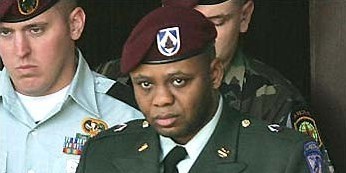
Glen Burton Ake
Status / procedural history
Glen Burton Ake was sentenced to death and later had that death sentence overturned. He was sentenced to life imprisonment on February 28, 1986. Ake v. Oklahoma, 470 U.S. 68 (1985) was a Supreme Court case in which the United States held that an indigent defendant in a murder case where the death penalty could be assessed had a right to have the state provide a psychiatric evaluation to be used in the defendant's behalf.
Background
Glen Burton Ake was also known as Johnny Vandenover. At issue in the proceedings was his mental condition and whether he was able to prepare and present an insanity defense and related psychiatric evidence. His behavior at arraignment prompted a court-ordered psychiatric evaluation.
At his arraignment in February 1980, his behavior was so bizarre that the judge ordered him to be examined by a psychiatrist sua sponte. The examining psychiatrist reported that Ake appeared to be “frankly delusional” and “claims to be the ‘sword of vengeance’ of the Lord and that he will sit at the left hand of God in heaven.” The psychiatrist diagnosed Ake as a probable paranoid schizophrenic and recommended a prolonged psychiatric evaluation to determine whether Ake was competent to stand trial.
Ake was confined to a state hospital for observation and treatment. A special sanity hearing on April 10, 1980 found him mentally ill and resulted in his commitment to Eastern State Mental Hospital for observation and treatment. Later, Ake was adjudged competent to stand trial, and the proceedings against him were reinstated.
During the ensuing proceedings, medication was administered pursuant to doctors’ orders while he was treated at Eastern State Hospital in Vinita. Dr. R.D. Garcia informed Judge Martin by letter dated May 22, 1980 that Ake was competent to stand trial and could assist his attorney provided he continued taking the prescribed medication. Ake remained on his prescribed Thorazine and refused to converse with his attorneys during trial.
The offence
On the evening of October 15, 1979, in search of a suitable house to burgle, Ake and his accomplice, Steven Keith Hatch, a/k/a Steve Lisenbee, drove their borrowed car to the rural home of Reverend Richard Douglass and Mrs. Richard Douglass.
Ake gained entrance into the Douglass home under the pretense that he was lost and needed help finding his way. After an initial conversation with sixteen-year-old Brooks Douglass in the entrance way of the Douglass home, Ake returned to the car to supposedly get a telephone number. He then re-entered the house, produced a firearm, and was joined shortly afterward by his accomplice who also was armed.
The two men ransacked the Douglass home while holding the family at gunpoint. They bound and gagged Reverend Douglass, Mrs. Douglass, and Brooks Douglass, and forced them to lie in the living room floor.
Ake and his accomplice took turns attempting to rape twelve-year-old Leslie Douglass in a nearby bedroom. After failed attempts, Leslie was bound and gagged and forced to lie in the living room floor with the other members of her family.
Throughout the episode, Ake and his accomplice repeatedly threatened to kill all the members of the Douglass family, covered their heads with articles of clothing, and instructed Brooks and Leslie and the others to comply with their demands, including forcing Leslie to show “secret hiding places.” Ake tore the phones from their connections and demanded Leslie undress. Ake attempted unsuccessfully a second time to rape Leslie.
Ake instructed his accomplice to go outside, turn the car around, and “listen for the sound.” After the accomplice left as told, Ake shot Reverend Douglass and Leslie each twice with a .357 magnum pistol, Mrs. Douglass once, and Brooks once, and fled. He later sent Hatch to the car and told the family he did not want to shoot them but did not know if they could be trusted; after saying, “I’m sorry but dead men don’t talk,” he shot the victims and fled.
Mrs. Douglass died almost immediately from the gunshot wound. Reverend Douglass’s death was caused by a combination of the gunshots he received and strangulation from the manner in which he was bound. Leslie and Brooks managed to untie themselves and drive to the nearby home of a doctor.
Investigation and arrest
The appellant and his accomplice were apprehended in Colorado following a month-long crime spree that took them through Arkansas, Louisiana, Texas, and much of the Western half of the United States. Subsequent to extradition to Oklahoma, Leslie Douglass identified Ake in a lineup. Ake confessed to the shootings and gave a detailed statement to police.
Ake was arrested and charged with murdering a couple and wounding their two children in 1979. Prior to his arraignment, he indicated to Officers Stedman and Shields that he wished to talk about the Douglass case and then agreed to talk after being advised of constitutional rights. The transcribed conversation showed that Ake was aware the conversation was being taped and that the conversation lasted approximately one hour and forty-five minutes. He narrated the events leading up to the episode at the Douglass home, explained his involvement in the murders, and revealed the events following the murders.
Physical evidence included:
- A palm print of Ake found in the Douglass home.
- Bullets recovered from the Douglass home were identical to those found at the site where Ake practiced shooting earlier in the day.
- Hatch was wearing the wedding ring of Richard Douglass when arrested.
- Ake was using a Visa credit card belonging to Marilyn Douglass.
- Mrs. Douglass’s wedding ring was recovered.
Timeline
- October 15, 1979 — Ake and Steven Keith Hatch drove to the Douglass home, gained entrance, bound and gagged family members, attempted to rape Leslie Douglass, shot the Douglass family members, and fled.
- March, 1980 — Ake was committed to a state hospital to be examined with respect to his present sanity (competency to stand trial).
- April 10, 1980 — A special sanity hearing was held; Ake was found mentally ill and ordered committed to Eastern State Mental Hospital for observation and treatment.
- May 22, 1980 — Dr. R.D. Garcia informed Judge Martin by letter that Ake was competent to stand trial and could assist his attorney if he continued taking prescribed medication.
- May 27, 1980 — Proceedings against Ake were reinstated after he was adjudged competent to stand trial.
- June 23, 1980 — The murder trial began (as referenced in later appellate discussion).
- February 14, 1986 — After a new trial, a jury returned a sentence of life inprisonment for Ake in the slayings of Reverend Richard B. Douglass and Marilyn Douglass.
- February 28, 1986 — Ake was sentenced to life imprisonment.
- November 7, 1984 — Ake v. Oklahoma was argued in the United States Supreme Court.
- February 26, 1985 — Ake v. Oklahoma was decided by the United States Supreme Court.
- July 13, 1989 — An Oklahoma Court of Criminal Appeals decision in Ake v. State (1989 OK CR 30) was decided.
Trial
Charges and convictions (Canadian County, Oklahoma)
Ake was convicted in Canadian County, Oklahoma, by a jury of:
- Two counts of Murder in the First Degree.
- Two counts of Shooting with Intent to Kill.
The trial court sentenced Ake to death for each murder count and to 500 years’ imprisonment for each shooting with intent to kill count. In later Oklahoma appellate references, the jury set punishment during the second stage at life imprisonment for each count of First Degree Murder and two hundred (200) years imprisonment for each count of Shooting with Intent to Kill, and judgment and sentence was imposed accordingly.
Venue and procedural issues on appeal
Ake argued on appeal that the trial court wrongfully refused to grant a change of venue due to pre-trial publicity, including that his accomplice had earlier been found guilty and sentenced to death. The appellate court concluded Ake failed to comply with the statutory procedure for change of venue mandated by 22 O.S. 1981 § 561 and that the motion was not properly before the trial court.
Ake also alleged error for not granting a second preliminary hearing. His preliminary hearing was held conjointly with Hatch on January 21, 1980. Ake was ejected from his February 14, 1980 arraignment for disruptive behavior. One week later the judge ordered psychiatric evaluation on his own motion. On April 10, 1980, a special sanity hearing was held; Ake was found mentally ill and committed for observation and treatment. He was later adjudged competent to stand trial, and the proceedings were reinstated on May 27, 1980. The appellate court held that the issue was not preserved and found no prejudice.
Ake argued dismissal of a prospective juror in violation of Witherspoon v. Illinois. The appellate court found no error and noted that Ake did not examine the prospective juror, did not object when she was excused, and did not preserve the error.
Ake alleged as an indigent defendant he should have been provided court-appointed psychiatrist and court-appointed investigator as incident to constitutional rights to effective assistance of counsel and compulsory process. The appellate court held that the State had no responsibility to provide such services to indigents charged with capital crimes and found the argument waived for lack of preservation.
Medication, competency, and ability to participate
Ake was sustained on 600 milligrams of Thorazine per day throughout his trial. Ake remained mute and refused to converse with his attorneys, stared straight ahead during both stages of proceedings, and argued he was not actually present at trial and thereby denied statutory and constitutional rights. He also argued the trial court should have halted proceedings and impaneled a jury to evaluate his present sanity.
Dr. Garcia testified that he diagnosed Ake’s condition as schizophrenia of the paranoid type, which necessitated maintenance on Thorazine to stabilize his personality. Dr. Garcia further testified that while the dosage would sedate a normal individual, it had a therapeutic effect of eliminating symptoms of the condition and that without medication Ake could revert to a violent and dangerous state. In the letter to Judge Martin, Dr. Garcia stated Ake was competent with the benefit of medication and that no evidence showed any change in competency between release from Vinita and trial. The appellate court concluded there was no reason to believe Ake’s behavior was caused by any factor other than Ake’s own volition.
Confession and evidentiary rulings
Ake argued he was insane when he made a confession and therefore involuntary. The appellate court concluded he failed to establish any doubt of his sanity at the time of the crime. The sheriff taking the confession testified Ake understood his rights and voluntarily waived them; the confession was lucid and detailed; Ake read and corrected the typewritten copy, corrected spelling errors and filled missing details. The appellate court also noted that later psychologists could not offer an opinion of his mental condition prior to their observation and concluded the confession was knowingly and voluntarily given.
Ake argued parts of his confession were deleted because it contained information of other crimes committed after the Douglass shootings. The appellate court held the allegation was not preserved for appeal.
On photographs, the appellate court found most photographs complained of were excluded, and the single admitted photograph portrayed the nature in which a victim’s feet were bound. The court concluded it was not gruesome and did not unfairly prejudice Ake.
On testimony concerning the attempted rape, the appellate court held Ake failed to object and failed to include the issue in a motion for new trial. The appellate court concluded any error was harmless given overwhelming evidence in both stages.
Prosecutor’s closing arguments and jury note
Ake alleged improper arguments by the prosecutor in both stages. The appellate court held that statements in closing argument that there was “no doubt” Ake was guilty were permissibly arguing the State’s conclusions based on evidence. It also addressed a prosecutor statement: “If we hadn't had these charges pending, he [the appellant] would have gone out on the street a free man.” The appellate court noted the statement was made in response to the insanity defense argument and the prosecutor’s argument that Ake would be set free if found insane. The appellate court found the argument not of such magnitude to mandate reversal.
Ake also complained about remarks during the second stage but admitted no objections were made and the appellate court found no fundamental error.
A jury note asked for the testimony of Dr. R.D. Garcia, a psychologist who testified for the defense, to be repeated. The trial court declined to send a transcript. The appellate court held Ake failed to object to the jury’s absence during discussion of the note and failed to properly preserve arguments, but it also noted the trial court replied to the request in writing and counsel had opportunity to object. The appellate court concluded the decision to allow or disallow the jury’s request lay within the trial court’s discretion.
Ake argued lack of air conditioning forced the jury to return verdict without proper deliberation. The appellate court found no evidence in the record supporting this contention and held it without merit.
Sanity verdict and arguments on weight of evidence
Ake argued the verdict was against the clear weight of evidence and that the jury should have returned a verdict of not guilty by reason of insanity. The appellate court described the presumption of sanity and the need for sufficient evidence raising reasonable doubt as to sanity at the time of the crime. It noted that Ake had no history of mental illness. It stated that doctors asked whether they had an opinion about Ake’s ability to distinguish right from wrong at the time of shootings answered in the negative and could only testify Ake was mentally ill several months after the crimes. The appellate court concluded he failed to establish any reasonable doubt as to sanity at the time of the crimes and affirmed.
The appellate court also addressed claims about the accumulation of errors, rejecting them where prior assigned errors were without merit. It further addressed constitutional challenges to the felony-murder doctrine and statutory schemes, rejecting certain issues for preservation and discussing others as not shifting mitigation burdens in a way warranting reversal based on the court’s analysis.
Aggravating circumstances and sentencing review
The appellate court stated it found the sentences were not imposed under passion, prejudice, or any other arbitrary factor and that the evidence justified the penalty. It concluded aggravating circumstances supported imposition of the death penalty:
- that the murder was especially heinous, atrocious or cruel;
- that murders were committed to avoid or prevent a lawful arrest or prosecution;
- that a probability existed that Ake would commit criminal acts of violence constituting a continuing threat to society.
The appellate court also stated the sentences of death were not excessive or disproportionate to those imposed in other cases and compared the case to other capital cases where sentences were modified to life or reversed for other reasons. It concluded judgments and sentences were affirmed.
Supreme Court decision: Ake v. Oklahoma
In Ake v. Oklahoma, 470 U.S. 68 (1985), the United States Supreme Court held that when a defendant makes a preliminary showing that sanity at the time of the offense is likely to be a significant factor at trial, the Constitution requires the state to provide access to a psychiatrist’s assistance on this issue if the defendant cannot otherwise afford one.
The Supreme Court recounted that Ake was arrested and charged with murdering a couple and wounding their two children. At arraignment in Oklahoma, his behavior was so bizarre that the trial judge ordered him to be examined by a psychiatrist. The examining psychiatrist found Ake to be incompetent to stand trial and suggested commitment. After about six weeks in a state mental hospital, Ake was found competent on the condition he continue to be sedated with an antipsychotic drug.
The Supreme Court noted that at a pretrial conference Ake’s attorney intended to raise an insanity defense and requested a psychiatric evaluation at state expense to determine Ake’s mental state at the time of the offense, claiming entitlement under the Federal Constitution. The trial court denied the motion based on United States ex rel. Smith v. Baldi. At the guilt phase, the examining psychiatrists testified that Ake was dangerous but there was no testimony as to sanity at the time of the offense. The jury rejected the insanity defense and Ake was convicted. At sentencing, the state sought death and relied on testimony about dangerousness; the Supreme Court described Ake’s lack of expert witness to rebut the future dangerousness testimony or to introduce evidence in mitigation. The jury sentenced Ake to death on each of the two murder counts.
The Supreme Court reversed and remanded, holding that due process required access to a psychiatrist for examination and assistance when sanity at the time of the offense was likely to be a significant factor, and similarly required access in the capital sentencing context when future dangerousness was a significant factor under Oklahoma’s capital sentencing scheme.
Justice Marshall delivered the opinion of the Court. Chief Justice Burger concurred in the judgment. Justice Rehnquist dissented.
Retrial and later Oklahoma appeals
New trial and outcome in 1986
The Supreme Court’s decision resulted in a new trial for Ake. After further testimony, Canadian County jurors returned a sentence of life imprisonment for Ake. The New York Times account described that the jury could have called for a death penalty and described sentencing as life imprisonment in the slayings of Reverend Richard B. Douglass and his wife Marilyn, with conviction also for shooting their children Brooks and Leslie with intent to kill. It described deliberation of four hours before bringing a guilty verdict in the slayings on October 15, 1979. The account also described the defense lawyer Irven Box and the district attorney Cathy Stocker and their comments about reversal and insanity defenses. Formal sentencing was described as scheduled for Feb. 21, and the later status statement indicates sentencing to life imprisonment on February 28, 1986.
Speedy trial and competency in 1989 OK CR 30
In Ake v. State, 1989 OK CR 30, 778 P.2d 460 (Oklahoma Court of Criminal Appeals), Ake appealed his convictions of two counts of First Degree Murder and two counts of Shooting with Intent to Kill and the resulting sentences.
The appellate court described that Ake’s first convictions occurred in 1980 and his direct appeal was affirmed, but the United States Supreme Court in Ake v. Oklahoma reversed and remanded for a new trial. The second trial and convictions were discussed as being held in February 1986.
Ake raised a speedy trial claim due to a six-year delay between his first and second trial. The court applied the Barker v. Wingo test and concluded no violation occurred because delay largely stemmed from Ake’s mental condition and hospitalization for competency testing, and prejudice was not shown because Ake had been found competent and was able to function mentally due to medication. It held that Ake was able to present the defense of insanity and that the defense was not hampered by the delay.
Ake argued he was incompetent to stand trial. The court recounted that under Oklahoma law the defendant is presumed competent and must prove incompetence by clear and convincing evidence. It noted that a competency hearing was held with evidence from multiple witnesses including three psychiatrists. The jury found Ake competent. It concluded Ake failed to meet his burden of proof because the doctors testified he understood the nature and consequences of his crime, understood the importance of defense counsel, and realized the need to cooperate, and understood the duties of the judge, jury, and attorneys.
Ake argued that the trial court refused to appoint a psychiatrist to assist in his post-examination competency hearing. The Oklahoma Court of Criminal Appeals noted it had not yet determined whether Ake extended to competency hearings, but assumed it could and found no due process violation because he had access to several competent psychiatrists before the hearing, including three competent psychiatrists.
Ake argued for a continuance so a defense psychiatrist could examine him while he was not under the influence of medication and described needing weeks to remove and restore medication dosage. The Oklahoma Court of Criminal Appeals held denial was within discretion and found no abuse of discretion because the defense psychiatrist testified multiple times and did not indicate the examination was hindered by medication.
Ake argued shackling during trial indicated incompetency and claimed error in trial court decision. The appellate court found that Ake affirmatively waived the right to be free of shackles, and that defense counsel agreed shackles should remain but asked for precautions to ensure the jurors did not view them. It stated no juror reported seeing leg shackles and concluded no error.
Ake argued the trial court refused to allow certain voir dire questions about retrospective diagnoses. The appellate court upheld the trial court’s discretion, describing that the court allowed asking generally whether jurors would listen to the psychiatrist and give full weight but would not allow pinpoint questions.
Ake argued the trial court refused to allow Dr. Von Brauchitsch to state diagnoses of other physicians relied upon. The appellate court discussed Oklahoma evidentiary rules on expert opinion and facts or data underlying expert opinions and concluded the trial court did not abuse discretion in refusing the challenged evidence. It also described that defense counsel was able to elicit that appellant had been repeatedly diagnosed as mentally ill in 1980 and that the trial judge ruled other diagnoses could be introduced by calling the doctors.
Ake argued suppression of his confession as a violation of his sixth amendment right to counsel. The Oklahoma Court of Criminal Appeals described that prior to arraignment he asked to speak to Officers Stedman and Shields and preferred to wait; after counsel was appointed, he asked to speak to Officer Stedman about the Douglass case because he wanted to get things off his chest. It stated he was advised of rights and he initiated the contact, and concluded the exceptions identified in Maine v. Moulton and Michigan v. Jackson did not apply because officers were not covert agents and because Ake initiated the conversation. The court held Ake waived the right to counsel present during questioning and denied the suppression argument.
Ake also challenged jury instructions concerning the burden of proof on sanity, arguing the state’s burden was shifted improperly by instructions presuming him sane. The Oklahoma Court of Criminal Appeals reaffirmed its reasoning in Brewer v. State, approving the rebuttable presumption of sanity and concluding the challenged assignment lacked merit. It affirmed the judgment and sentence.
Sentencing (as described across proceedings)
In the 1980 trial, Ake was sentenced to death for each of two murder counts and to 500 years’ imprisonment for each of two shooting with intent to kill counts.
In the second trial described in 1986, the jury set punishment during the second stage at life imprisonment for each count of First Degree Murder and two hundred (200) years imprisonment for each count of Shooting with Intent to Kill, and judgment and sentence was imposed accordingly. The status line indicates he was sentenced to life imprisonment on February 28, 1986.
Outcome
Ake’s initial convictions and sentences were affirmed by Oklahoma’s Court of Criminal Appeals in the appeal referenced by 1983 OK CR 48 and later described as being overturned by the United States Supreme Court in Ake v. Oklahoma, 470 U.S. 68 (1985), which reversed and remanded for a new trial. After the new trial, Ake was convicted again and sentenced to life imprisonment and terms of imprisonment for shooting with intent to kill. The Oklahoma Court of Criminal Appeals affirmed the convictions in 1989 OK CR 30.
Spotted an error, or have more information about this case?