
James Allyson Lee
Murderer Brian Kevin Rosenfeld
Murderer · USA · 1985
Brian Kevin Rosenfeld Brian Kevin Rosenfeld was sentenced to three concurrent l…
23 victims
Brian Kevin Rosenfeld
Murderer · USA · 1985
Brian Kevin Rosenfeld Brian Kevin Rosenfeld was sentenced to three concurrent l…
23 victims
 Russell Ellwood
Murderer · USA · 1991
Russell Ellwood was a former taxi driver. Authorities suspected him of killing…
20 victims
Russell Ellwood
Murderer · USA · 1991
Russell Ellwood was a former taxi driver. Authorities suspected him of killing…
20 victims
 Robert Martines Perez
Murderer · USA · 1994
Name: Robert Martines Perez · Other name used in proceedings: Robert Martinez P…
15 victims
Robert Martines Perez
Murderer · USA · 1994
Name: Robert Martines Perez · Other name used in proceedings: Robert Martinez P…
15 victims
 Billy Frank Vickers
Murderer · USA · 1993
Billy Frank Vickers Vickers was executed by lethal injection in Texas on Januar…
14 victims
Billy Frank Vickers
Murderer · USA · 1993
Billy Frank Vickers Vickers was executed by lethal injection in Texas on Januar…
14 victims
 Marie Alexandrine Becker
Serial killer · Belgium · 1932
Marie Alexandrine Becker was born in 1877 and was from Liege, Belgium. She spen…
10 victims
Marie Alexandrine Becker
Serial killer · Belgium · 1932
Marie Alexandrine Becker was born in 1877 and was from Liege, Belgium. She spen…
10 victims
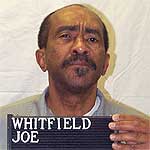 Joseph Whitfield
Murderer · USA · 1988
State of Missouri v. Joseph Whitfield, 939 S.W.2d 361 (Mo. banc 1997) · January…
1 victim
Joseph Whitfield
Murderer · USA · 1988
State of Missouri v. Joseph Whitfield, 939 S.W.2d 361 (Mo. banc 1997) · January…
1 victim
 Joel Diaz
Murderer · USA · 1997
Name: Joel Diaz · Date of birth: 06/13/73 · Case citation / opinion: Supreme Co…
1 victim
Joel Diaz
Murderer · USA · 1997
Name: Joel Diaz · Date of birth: 06/13/73 · Case citation / opinion: Supreme Co…
1 victim
 Shaun Thrower
Murderer · United Kingdom · 1994
Shaun Thrower was convicted of the murder of 17-year-old Amanda Wagg and was se…
1 victim
Shaun Thrower
Murderer · United Kingdom · 1994
Shaun Thrower was convicted of the murder of 17-year-old Amanda Wagg and was se…
1 victim
 Joe Elton Nixon
Murderer · USA · 1984
Joe Elton Nixon (born August 23, 1961) was an American convicted murderer on De…
1 victim
Joe Elton Nixon
Murderer · USA · 1984
Joe Elton Nixon (born August 23, 1961) was an American convicted murderer on De…
1 victim
- Gender
- male
- Country
- USA
- Location
- Charlton County, Georgia, USA
- Date of birth
- 1974
- Age at first offence
- 20
- Characteristics
- armed robbery, kidnapping, drugs, rape, robbery
- Victim profile
- Sharon Varnadore Chancey, 43 (his stepmother)
- Method of murder
- Shooting
- Date(s) of murder
- May 26, 1994
- Years active
- 1994
- Date of arrest
- Next day
- Status
-
Sentenced to death
Sentenced to death on June 23, 1997
Case record: James Allyson Lee
Background
James Allyson Lee was 22 years old at the time he was sentenced to death on June 23, 1997. His case involved a killing of his stepmother, Sharon Varnadore Chancey, and later proceedings that included additional conduct while awaiting trial.
While awaiting trial, Lee escaped from jail on July 25, 1995. He stole a Lincoln Town Car and drove to Florida, picking up a hitchhiker on the way.
The offence
Lee and an accomplice broke into a gun store on May 25, 1994, and stole several guns, including a ten millimeter Glock pistol.
Afterwards, Lee and his girl friend decided to drive to Pierce County to kill Lee’s father and steal his father’s Chevrolet Silverado pickup truck. When Lee learned that his father was not home, he decided to kill his father’s live-in girl friend, Sharon Chancey.
In the early morning hours of May 26, 1994, Lee’s girl friend lured the victim from the house by claiming that her Toyota had broken down nearby. When Ms. Chancey pulled up to the Toyota in the Silverado and got out, Lee shot her in the face and threw her in the back of the pickup. Lee then drove the truck to a secluded area in Charlton County.
After dragging Ms. Chancey into the woods, Lee reached down to strip two rings from her. She was still alive and grabbed his arm. Lee responded by shooting her two more times and killing her.
After swapping the Silverado and Toyota license plates, Lee and his girl friend drove to Florida in the pickup truck.
While in Florida, Lee made several incriminating remarks to friends and his girl friend’s sister.
Investigation
Lee was stopped at about 11:30 p.m. on May 26, 1994, for a broken taillight. After a check revealed that the Silverado was stolen, he was arrested. The ten millimeter Glock pistol was recovered from the Silverado, and this gun was determined by a firearms expert to be the murder weapon.
The police also found Ms. Chancey’s purse and identification in the Silverado.
Lee gave several incriminating statements to various law enforcement officials in Florida and Georgia, including a videotaped confession at the crime scenes in Charlton and Pierce counties.
When first questioned by police, Lee said killing was “so easy it would be easy to do again.”
Although Lee pleaded with the jury to spare him because he wasn’t the same man who committed murder, his plea was presented in the context of his statement to police.
Arrest
At about 11:30 p.m. on May 26, 1994, Lee was arrested after being stopped for a broken taillight and a check revealed that the Silverado was stolen.
While awaiting trial, Lee escaped from jail on July 25, 1995, and drove to Florida in a stolen Lincoln Town Car with a hitchhiker.
At about 5:00 a.m. on July 26, Lee was involved in events in Boynton Beach, where Boynton Beach Police Officer Jerry Rodriguez observed the Lincoln exiting a gravel road leading to a marina and business center. No businesses were open at that time and there were no residences in the vicinity. Officer Rodriguez attempted an investigatory stop. When the officer turned on emergency lights, the Lincoln “jumped and accelerated.” After a pursuit of about 800 yards, the Lincoln came to a stop and Lee and the hitchhiker bailed out and fled on foot.
Officer Rodriguez pursued Lee, who eventually fell to the ground. The officer approached Lee and asked, “Where is the other guy?” Lee responded, “I don’t know who he is, but I’ll tell you who I am; I’m wanted for murder in Georgia, my name is James Lee.”
Lee was arrested and subsequently gave a statement that was used by the State as non-statutory aggravating evidence in the sentencing phase.
Trial
The trial occurred May 28–June 6, 1997. A Charlton Superior Court jury found James Allyson Lee guilty of malice murder, felony murder, armed robbery, and possession of a firearm during the commission of a crime.
For the murder, the jury recommended a death sentence, finding aggravating circumstances under OCGA 17-10-30 (b) (2), (4), and (7):
- Lee had committed the murder while engaged in the commission of armed robbery and kidnapping with bodily injury.
- Lee had committed the murder for himself or another for the purpose of receiving money or any other thing of monetary value.
- The offense of murder was outrageously or wantonly vile, horrible or inhuman, in that it involved an aggravated battery to the victim before death.
At trial, the trial court directed verdicts of acquittal for kidnapping with bodily injury and theft by taking. The State nol prossed the charge of possession of a firearm by a convicted felon.
Lee was convicted of the remaining counts and, in addition to the death sentence for malice murder, the trial court imposed a life sentence for armed robbery and a consecutive five-year sentence for possession of a firearm during the commission of a felony.
Guilt-innocence phase issues raised on appeal
Lee complained that incriminating statements he made to police on May 26–27, 1994, were not voluntary. The appellate discussion addressed the admissibility standard for confessions and considered the totality of the circumstances.
Lee was 19 years old, in police custody only a short time, not under the influence of drugs or alcohol, and not subjected to any physical or psychological coercion. He was informed of and waived his Miranda rights on several occasions.
After Lee admitted to killing his father’s girl friend and stealing the truck, a police officer asked him if he would make another statement on audiotape. Lee agreed, but when the recording began Lee asked the officer, “What should I do? Should I talk?” The officer replied, “That’s up to you, man. All you’re going to do is help yourself out.”
The appellate analysis concluded that the officer’s comment was not a “hope of benefit” that would render Lee’s statement involuntary under OCGA 24-3-50.
Lee also contended that the State failed to prove the identity of the victim or that Charlton County was the proper venue for the murder conviction. The appellate discussion addressed that Sharon Chancey was the murder victim and that Ms. Chancey was still alive in Charlton County when she was fatally shot two more times.
After the State rested its case in the guilt-innocence phase, the trial court directed a verdict of acquittal on kidnapping with bodily injury. Lee argued error in the trial court’s refusal to direct a verdict of acquittal on felony murder, and the appellate discussion held that the murder was within the res gestae of the kidnapping with bodily injury.
Lee contended the evidence was insufficient to support his conviction for armed robbery because he did not take the victim’s rings until after she was dead. The appellate discussion stated that a robbery can be committed if the defendant kills the victim first and then takes the victim’s property, and it also relied on the evidence supporting that Ms. Chancey was alive when the robbery took place.
Lee requested a charge in the guilt-innocence phase that a corpse is not a person. The trial court declined to give the instruction, and the appellate discussion concluded it was not an accurate statement of the law.
Sentencing
The jury recommended a death sentence and found aggravating circumstances under OCGA 17-10-30 (b) (2), (4), and (7).
The trial court directed a verdict of acquittal of kidnapping with bodily injury even though the jury was authorized to find the statutory aggravating circumstance that the murder was committed while Lee was engaged in kidnapping with bodily injury. The appellate discussion addressed that the kidnapping with bodily injury was sufficiently part of the same criminal transaction to be considered as and found to be a (b) (2) aggravating circumstance of the murder.
The appellate discussion also addressed the sufficiency of evidence for OCGA 17-10-30 (b) (7) based on an aggravated battery to the victim, including the sequence where Lee shot the victim in the face, threw her in the back of the pickup, she lingered for about an hour, and he killed her in Charlton County.
The appellate discussion stated that the death sentence in this case was not imposed under the influence of passion, prejudice, or any other arbitrary factor, and that the death sentence was not excessive or disproportionate considering similar cases listed in an Appendix.
At sentencing, a statement made after Lee’s escape was used by the State as non-statutory aggravating evidence. Lee asserted it should have been suppressed as the fruit of an illegal investigatory stop. The appellate discussion rejected the suppression argument.
Appeals
Lee filed a motion for new trial on July 3, 1997, amended on February 19, 1998. The motion was denied on April 15, 1998.
Lee filed his notice of appeal on May 14, 1998, and the case was orally argued on September 15, 1998.
The appellate decision was “DECIDED MARCH 1, 1999 — RECONSIDERATION DENIED APRIL 2, 1999.” The appellate decision referenced LEE v. THE STATE S98P1498 and cited (270 Ga. 798) (514 SE2d 1) (1999) (CARLEY, Justice).
The appellate discussion included analysis of:
- Voluntariness and admissibility of incriminating statements.
- Identity of the victim and venue for the murder conviction.
- Directed verdicts and the felony murder theory as within the res gestae of kidnapping with bodily injury.
- Sufficiency for armed robbery.
- Refusal to give the “corpse is not a person” instruction.
- Sufficiency for aggravating circumstances and related legal standards.
- Allegations concerning passion, prejudice, arbitrariness, and proportionality.
Felony murder conviction vacated
The felony murder conviction was vacated by operation of law, Malcolm v. State, 263 Ga. 369 (4) (434 SE2d 479) (1993). Since the jury returned a verdict specifying that it found the defendant guilty of “malice murder,” any issue of felony murder was moot.
Outcome
James Allyson Lee was sentenced to death on June 23, 1997.
The appellate court affirmed the judgment and denied reconsideration, with the appellate decision being decided March 1, 1999, and reconsideration denied April 2, 1999.
Other details
The appellate discussion included citations and legal standards, including references to Jackson v. Virginia, OCGA 17-10-30 and OCGA 17-10-35, and OCGA 24-3-50, as well as various case citations.
Individuals identified in connection with the case included:
- Sharon Varnadore Chancey, the victim.
- Lee’s girl friend, who lured Ms. Chancey to the Toyota.
- Lee’s father, whose live-in girl friend was Ms. Chancey.
- Boynton Beach Police Officer Jerry Rodriguez, who pursued Lee after Lee’s escape.
- Lee’s friends and his girl friend’s sister, to whom Lee made several incriminating remarks while in Florida.
- Richard E. Currie, District Attorney.
- Thurbert E. Baker, Attorney General.
- Susan V. Boleyn, Senior Assistant Attorney General.
- Christopher L. Phillips, Assistant Attorney General.
- John B. Adams and James K. Brooks, for appellant.
- Judge Jackson, before whom the case was tried.
The appellate decision referenced the grand jury indictments and procedural steps:
- The Charlton County grand jury indicted Lee on September 2, 1994, for malice murder, felony murder, kidnapping with bodily injury, armed robbery, theft by taking, possession of a firearm during the commission of a felony, and possession of a firearm by a convicted felon.
- The State filed its notice of intent to seek the death penalty on November 2, 1994.
Spotted an error, or have more information about this case?