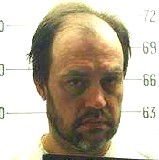
Leroy Hall
Murderer Brian Kevin Rosenfeld
Murderer · USA · 1985
Brian Kevin Rosenfeld Brian Kevin Rosenfeld was sentenced to three concurrent l…
23 victims
Brian Kevin Rosenfeld
Murderer · USA · 1985
Brian Kevin Rosenfeld Brian Kevin Rosenfeld was sentenced to three concurrent l…
23 victims
 Russell Ellwood
Murderer · USA · 1991
Russell Ellwood was a former taxi driver. Authorities suspected him of killing…
20 victims
Russell Ellwood
Murderer · USA · 1991
Russell Ellwood was a former taxi driver. Authorities suspected him of killing…
20 victims
 Robert Martines Perez
Murderer · USA · 1994
Name: Robert Martines Perez · Other name used in proceedings: Robert Martinez P…
15 victims
Robert Martines Perez
Murderer · USA · 1994
Name: Robert Martines Perez · Other name used in proceedings: Robert Martinez P…
15 victims
 Billy Frank Vickers
Murderer · USA · 1993
Billy Frank Vickers Vickers was executed by lethal injection in Texas on Januar…
14 victims
Billy Frank Vickers
Murderer · USA · 1993
Billy Frank Vickers Vickers was executed by lethal injection in Texas on Januar…
14 victims
 Eleanor Jarman
Murderer · USA · 1933
Eleanor Jarman was born in 1904. She was the youngest of eight children born to…
1 victim
Eleanor Jarman
Murderer · USA · 1933
Eleanor Jarman was born in 1904. She was the youngest of eight children born to…
1 victim
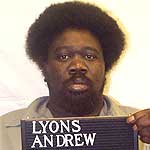 Andrew Lyons
Murderer · USA · 1992
Andrew Lyons (defendant) As of September 1992, Andrew Lyons and Bridgette Harri…
3 victims
Andrew Lyons
Murderer · USA · 1992
Andrew Lyons (defendant) As of September 1992, Andrew Lyons and Bridgette Harri…
3 victims
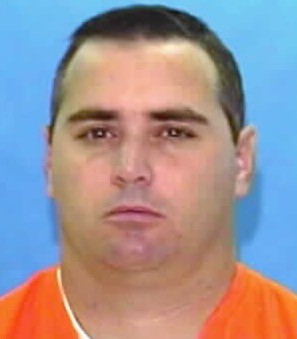 Robert Alan Knight
Murderer · USA · 1993
Robert Alan Knight (DOB: 06/26/68) was convicted in a nonjury trial in the Fift…
1 victim
Robert Alan Knight
Murderer · USA · 1993
Robert Alan Knight (DOB: 06/26/68) was convicted in a nonjury trial in the Fift…
1 victim
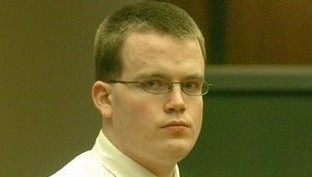 Jason Rose
Homicide · USA · 2005
Jason Allen Rose was 21 at the time of sentencing and was convicted of setting…
3 victims
Jason Rose
Homicide · USA · 2005
Jason Allen Rose was 21 at the time of sentencing and was convicted of setting…
3 victims
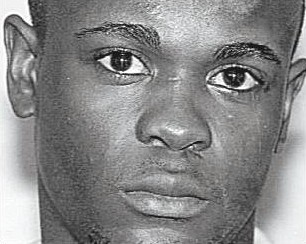 Carlton Jerome Pope
Murderer · USA · 1986
Carlton Jerome Pope was convicted of capital murder in the commission of robber…
1 victim
Carlton Jerome Pope
Murderer · USA · 1986
Carlton Jerome Pope was convicted of capital murder in the commission of robber…
1 victim
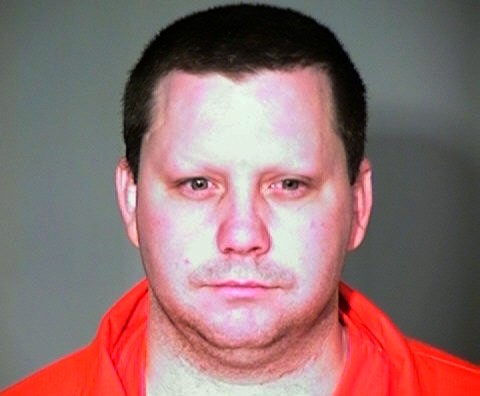 Chad Alan Lee
Murderer · USA · 1992
Chad Alan Lee was convicted in two separate proceedings involving kidnapping, s…
3 victims
Chad Alan Lee
Murderer · USA · 1992
Chad Alan Lee was convicted in two separate proceedings involving kidnapping, s…
3 victims
- Gender
- male
- Country
- USA
- Location
- Hamilton County, Tennessee, USA
- Date of birth
- October 28, 1966
- Age at first offence
- 25
- Characteristics
- arson, drugs, drug addict, alcohol
- Victim profile
- Traci Crozier, 22 ( his ex-girlfriend)
- Method of murder
- Threw gasoline on the victim and then set her on fire
- Date(s) of murder
- April 17, 1991
- Years active
- 1991
- Date of arrest
- Same day
- Status
-
Sentenced to death
Sentenced to death by electrocution; sentence of death affirmed on appeal
Case overview
Leroy Hall, Jr. was convicted of first degree premeditated murder and aggravated arson for the death of his ex-girlfriend, Traci Crozier. Hall was sentenced to death by electrocution.
Timeline
- April 16, 1991 — Hall threw gasoline on Traci Crozier as she sat in the front seat of her automobile and then set her on fire.
- April 17, 1991 — At 12:06 a.m., Commander Earl Atchley of the Chattanooga Fire Department received the 911 call and arrived to find Crozier’s car fully involved in fire and Crozier badly burned.
- December 15, 1997 — The Tennessee Supreme Court affirmed the judgment upholding Hall’s first degree murder conviction and sentence of death by electrocution.
- August 27, 1997 — The Tennessee Supreme Court entered an Order limiting review at oral argument to four issues and setting the cause for the September 1997 term in Knoxville.
- Dec 30, 1996 — The opinion of the Court of Criminal Appeals in Hamilton County affirmed Hall’s conviction and death sentence.
- March 11, 1992 — Hall was sentenced to death.
- April 22, 1998 — The death sentence was ordered to be carried out as provided by law on the 22nd day of April, 1998, unless otherwise ordered by the Court or other proper authorities.
- 1993 — The Court of Criminal Appeals of Tennessee affirmed Hall’s conviction for first degree premeditated murder and aggravated arson.
- 1991 — The offense occurred in 1991, resulting in Crozier’s death.
Background
The victim, Traci Crozier, met Leroy Hall, Jr. in December of 1984. Hall and Crozier began living together in January of 1986 and continuously resided together until about three weeks prior to her murder.
Three weeks before the murder, Crozier left and moved into the house with her grandmother, Gloria Mathis, and her uncle, Chris Mathis. After the separation, Hall frequently, often late at night, called the Mathis home in search of Crozier.
The offence
Hall threw gasoline on Crozier as she sat in the front seat of her automobile and then set her on fire. Crozier suffered third degree burns to more than ninety percent of her body and died several hours later in the hospital.
Hall initially denied involvement when questioned by police. He later admitted responsibility but claimed he did not intend to kill Crozier; he intended to burn her car.
Hall testified that he and the victim began living together in January of 1986, when he was eighteen and she was sixteen years old. Although Crozier moved out in March of 1991, Hall said they continued to see one another after the separation. Hall said he was upset by the separation, and as a result had been drinking and smoking crack cocaine.
Hall described procurement and preparation of materials: he obtained a hammer at a pawn shop at one point, destroyed some of Crozier’s possessions because he was angry with her for not coming home, and took with him a two-quart tea jug he intended to use to burn Crozier’s car. He searched for Crozier and her car by driving by her work place, her grandmother’s house, and several bars, but did not find her. He was threatened by Crozier’s uncle and a second man he did not know when he drove by the grandmother’s house.
Hall then stopped at a service station, filled the tea jug with gasoline, and purchased a cigarette lighter. He removed paper towels from a dispenser near the gas pumps, placed them in the opening of the tea jug, put the container in his car, and returned near the grandmother’s house.
Hall said he encountered Crozier as she drove up in her car. He left his car and entered Crozier’s car on the driver’s side to talk. He asked her to move back in with him and told her that he was drunk and needed her. He asked if she was pregnant and told her she could not have another abortion. He also questioned why he had been blamed for earlier burnings of her car. Hall testified that an argument ensued; Crozier called him a “crazy S.O.B.” and told him to turn himself into the authorities. Hall said he got out of her car, told Crozier to do the same, and stated that he was going to burn the car. When Crozier tried to lock the door, Hall reached inside the car, grabbed the keys, threw them toward his car, and ordered Crozier to get out of the car. Hall then ran to his car, grabbed the gasoline jug, ignited the paper towels, and threw the jug into the driver’s side of Crozier’s car.
Hall admitted he knew Crozier was lying in the front seat crying when he threw the gas bomb into the car. Hall testified that Crozier came running out of the burning car and caught him on fire. He extinguished the flame on himself, watched Crozier run toward the passenger side of the car and roll on the ground, and then drove away from the scene. He said he believed the fire on Crozier was almost extinguished. Hall testified he returned two or three minutes later, but did not see Crozier, and fled again when a black shadowy figure ran toward him.
During cross-examination, Hall denied pouring gasoline onto Crozier, claiming it splattered on her when he threw the jug into the car. He denied breaking the glass on the driver’s window, saying the door was open. He maintained he loved Crozier and intended only to burn her car. Hall admitted he initially denied the offense when questioned by police.
Investigation
Commander Earl Atchley of the Chattanooga Fire Department received the 911 call at 12:06 a.m. on April 17, 1991. When he arrived, Crozier’s car was “fully involved” in fire and Crozier was badly burned.
Atchley did not recognize Crozier, but Crozier remembered him as the person who had investigated the burning of her car on April 6, 1991. Crozier told Atchley that the same person was responsible for both incidents. Atchley recovered a melted plastic container next to the driver’s side of Crozier’s car and a tupperware lid near the car.
Crozier was taken to Erlanger Hospital, where she was treated by Dr. Sonya Merriman, a plastic surgeon and burn specialist. Dr. Merriman testified:
“She had a 95 percent, what we call a total body surface area burn, 95 percent of her body was burned, and all but about two to three percent of that was third degree burns.”
Dr. Merriman stated that based upon the consistency and uniformity of the burns over Crozier’s entire body except the soles of her feet, she opined Crozier’s body had been doused with gasoline rather than splattered or splashed. Dr. Merriman testified she had treated nearly one hundred burn cases and had never seen a worse or more uniform pattern of burning on an individual. Dr. Merriman testified that intravenous fluids and incisions designed to allow tissue expansion were used, but Crozier’s condition deteriorated. She stated that Crozier’s tongue swelled until it protruded from her mouth and her eyelids became inverted from swelling. Dr. Merriman testified that despite the gravity and extent of the injuries, Crozier remained conscious and in constant pain. Dr. Merriman opined Crozier sustained an unsurvivable burn and there was never any chance of recovery.
Ed Forester, a Chattanooga Police Department investigator in the Arson Division, examined Crozier’s car after both the April 6 and April 16 fires. His investigation of the April 6 fire revealed an accelerant was poured around the exterior edges of the car, melting the fenders and bumpers. A yellow plastic jug found at that scene tested positive for gasoline.
Forester obtained an arrest warrant for Hall based, in part, upon statements from Crozier’s uncle. Forester testified the vehicle burned on April 6 was the same automobile involved on April 16, 1991. Forester testified about the most extensive damage from the April 16 fire, including discolored metal, sagging roof, and weakened seat springs. He testified that passenger side glass was fire and carbon stained, but glass on the driver’s side had no such markings, indicating the glass on the driver’s side had been broken out before the fire was started. A melted plastic container was found near the open driver’s door. Crozier’s socks, shoes, and clothing remains were recovered and later tested positive for gasoline. Car keys were found some thirty feet away from Crozier’s car.
Mike Donnelly, an arson investigator with the State of Tennessee Fire Marshall’s Office, examined Crozier’s car and found evidence of three separate fires. Donnelly testified the April 16 fire was started on the driver’s side and that gasoline had been poured directly onto Crozier based on his examination and his review of photographs of Crozier’s burns.
The victim’s prior statements were also part of the investigation:
- Crozier told Viola Wylene Price that she had been set on fire and identified “Lee Hall.”
- Crozier told Price that Hall twice previously had set fire to her car.
- Crozier told Wilson that Hall “threw gas on me, gas bomb,” and repeated “it was gas, gas bomb. He set me on fire.”
- Commander Atchley testified Crozier told him the same person was responsible for both the April 6 and the April 16 incidents.
Arrest
Forester obtained an arrest warrant for Hall based, in part, upon statements of the victim’s uncle.
People and statements
Victim
Traci Crozier, age 22, was Hall’s ex-girlfriend. Crozier died after suffering third degree burns to more than ninety percent of her body.
Witnesses
- Viola Wylene Price observed a “ball of fire” in the middle of the street and saw a black car later identified as being similar to Hall’s.
- Billy Ray Wilson, Price’s son, assisted Crozier, pulled her from the car, removed her burning shoes and clothes, helped extinguish flames on her body, and assisted her to a safe distance from the burning car in the event of an explosion.
- Gloria Mathis, Crozier’s grandmother, testified about earlier burnings of Crozier’s car.
- Chris Mathis, Crozier’s uncle, was an eyewitness to the April 6 burning and connected Hall to the April 6 fire.
- Earl Atchley, Commander of the Chattanooga Fire Department, testified about his arrival and Crozier’s statements.
- Ed Forester and Mike Donnelly testified as arson investigators.
Verbatim quotes
- Hall told the Mathis household uncle after a threat:
- “If I can't have her, nobody can't.” [sic]
- Crozier told Wilson:
- “Lee Hall.”
- “threw gas on me, gas bomb.”
- “it was gas, gas bomb. He set me on fire.”
- Crozier told Price that Hall had previously set her car on fire twice.
- Wilson heard Crozier screaming for help.
- Hall threatened Price during his interactions according to the sentencing discussion:
Trial
Guilt phase
Hall was tried on charges resulting in a conviction for first degree premeditated murder and aggravated arson.
The Court of Criminal Appeals stated that first degree murder required proof of an intentional, premeditated and deliberate killing and described “premeditated” as “one done after the exercise of reflection and judgment,” and “deliberate” as “one performed with a cool purpose.”
The appellate court concluded the evidence was sufficient for a rational trier of fact to find premeditation and deliberation. It described evidence that:
- Hall and Crozier had a troubled relationship and were separated.
- Hall made threats toward Crozier, including telling Chris Mathis that “no one could have her if he could not.”
- Hall procured materials used to commit the offense, including a tea jug filled with gasoline, a cigarette lighter, and paper towels in the opening.
- Hall searched for Crozier by driving to her place of employment and her grandmother’s house and driving through parking lots of bars and nightclubs, with testimony describing the names of establishments, roads traveled, and his actions.
- When Hall located Crozier, he told her he was going to burn her car, but he prevented her from leaving the scene or locking herself inside the car by taking her car keys.
- An argument ensued; Hall returned to his car to retrieve the gasoline jug and was aware Crozier was lying prone on the front seat when he lit the gasoline jug and threw it into the car.
- Hall fled the scene and later denied to police that he committed the offense.
Hall presented evidence and testimony including his claims that he intended only to burn Crozier’s car and that he was emotionally disturbed during the relationship.
The Court of Criminal Appeals addressed issues including the sufficiency of evidence for premeditation and deliberation, admission of evidence about earlier fires, admission of an autopsy photograph, opinion testimony about gasoline use, and jury instructions.
Admission of prior fires evidence
The Court of Criminal Appeals described trial testimony relating to fires to Crozier’s car on April 1, 1991 and April 6, 1991. The trial court sustained objections to Ms. Mathis’ statement that the car had been burned twice before and instructed the jury to disregard it. The trial court later allowed testimony regarding the April 6 fire after it was connected to Hall by Chris Mathis.
The appellate court discussed evidentiary issues under Tenn. R. Evid. 404(b) and stated that the record indicated relevance of prior fire evidence to motive and intent and concluded its probative value was not outweighed by danger of unfair prejudice.
Autopsy photograph
The Court of Criminal Appeals described a trial ruling admitting one photograph depicting Crozier’s back as she lay on her side and excluding other photographs more graphically depicting her head, torso, face, and extremities. The appellate court concluded the trial court did not abuse discretion in admitting the one photograph.
Expert opinion on accelerant application
The Court of Criminal Appeals addressed Donnelly’s opinion that gasoline had been “poured rather than thrown” onto Crozier. The appellate court described that Donnelly was accepted without objection as an expert and concluded the testimony was not improperly speculative or otherwise inadmissible.
Jury instructions on premeditation and deliberation
The Court of Criminal Appeals stated the trial court’s instructions included language that premeditation could be conceived and deliberately formed in an instant, contrary to the guidance in State v. Brown. The Court of Criminal Appeals discussed that Brown was decided in June 1992 and addressed retroactivity and harmlessness concerns. It concluded no reversible error occurred and that the trial court did not err in its instructions.
Sentencing phase
The State presented Detective Ed Forester as the only witness during sentencing. Forester testified Hall was aware he was a suspect in the April 1 and 6 incidents at the time of Crozier’s murder. Forester also testified that Crozier gave a statement after the April 6 fire that Hall had previously threatened to kill her and to “total” her car and that Hall on one prior occasion had tried to force her off the road.
The defense presented expert testimony from Dr. Roger Meyer, a clinical psychologist, who evaluated Hall after his arrest. Dr. Meyer interviewed Hall for three hours and reviewed tests administered to Hall by one of Dr. Meyer’s associates. Dr. Meyer testified:
- A mental status examination revealed Hall was not insane or psychotic.
- A Slosson Intelligence test indicated Hall’s IQ was eighty-seven and his mental age was thirteen years, eleven months.
- A Wide Range Achievement test showed a grade level of 6 to 9 in reading, spelling, and arithmetic.
- A neuropsychological exam did not reveal evidence of significant neurological trauma to Hall’s brain.
- A sixteen-factor personality test indicated Hall was introverted, emotionally unstable, easily influenced, and had low self-esteem.
- Dr. Meyer testified the test reflected Hall had little self-control and was not rule abiding or moralistic and had problems controlling rage and anger.
- A Rorschach ink blot test showed Hall had difficulty reacting appropriately to stressful situations.
- Dr. Meyer described the Hall-Crozier relationship as an “emotional tug of war” and said it would have created tension and frustration consistent with Hall’s psychological makeup.
- Some test results indicated Hall was “faking bad” or malingering, and Dr. Meyer testified such results can reflect overemphasis of stress and emotional problems.
- Dr. Meyer diagnosed Hall with borderline personality disorder.
- Dr. Meyer concluded Hall also suffered from post-traumatic stress disorder but admitted it may have resulted from the circumstances of Crozier’s death.
On cross-examination, Dr. Meyer testified Hall was not mentally retarded and conceded his conclusions were based in part on a typographical error indicating Hall’s IQ was seventy-eight rather than eighty-seven. Dr. Meyer restated his diagnosis after discussing the error and testified he did not discuss the facts of the murder with Hall, considering only events before and after the killing. Dr. Meyer also did not reconsider his diagnosis after receiving an investigator’s report about Hall’s childhood behavior. Dr. Meyer admitted the behavior described would support a diagnosis of antisocial personality disorder.
The defense also presented testimony and evidence about Hall’s relationship with Crozier and drug and alcohol use, including:
- Green testified the relationship was “rocky” and that Hall abused alcohol, marijuana, and crack cocaine.
- Hall’s cousin testified Hall came to live with him in Oklahoma in December 1990 seeking employment and recovery from drug abuse, but Hall returned to Tennessee after the victim telephoned.
- Christie Griffin, Hall’s step-sister, testified Hall was very sad when he and Crozier were at odds but believed they could work through problems; she testified the two went out together several times after their separation and, on cross-examination, testified she observed Hall hiding his shirt when he returned to his mother’s home on the night of the victim’s murder and that she told police where the shirt was hidden.
- David Hall, Hall’s brother, testified the defendant and the victim argued once a week and the victim would address Hall in abusive and vulgar language; he testified Hall abused crack cocaine during the time period of the murder, and had been doing so for some time, borrowing money and pawning property.
- Hall’s mother, Sarah Griffin, testified her family moved several times when Hall was young; when Hall’s family moved to Alabama, he was fourteen years old and resided with another family for three years in the Chattanooga area until the family returned. She recalled the victim and Hall began having problems two years before the murder; she testified the couple separated and reconciled several times, and that in December 1990 Hall moved to Oklahoma planning to find employment and help for his drug problem and returned in early January 1991 to reconcile.
The defense introduced medical records and insurance forms establishing that Crozier underwent two abortions in 1985 and one abortion in 1990. In rebuttal, the prosecution presented testimony from a friend of the victim that Hall was aware of one 1985 abortion and had encouraged the victim to undergo the procedure.
Aggravating circumstances and sentence
During sentencing, the jury found two aggravating circumstances:
- “the murder was especially heinous, atrocious or cruel in that it involved torture or serious physical abuse beyond that necessary to produce death;”
- “the murder was committed while the defendant was engaged in committing or was attempting to commit, arson.”
The Court of Criminal Appeals and Tennessee Supreme Court described that the jury found the two aggravating circumstances outweighed mitigating circumstances beyond a reasonable doubt. The jury sentenced Hall to death by electrocution.
Appeals
Direct appeal to the Court of Criminal Appeals
The Court of Criminal Appeals affirmed the trial court’s judgment, including Hall’s conviction for first degree murder and death sentence.
The Court of Criminal Appeals opinion filed Dec 30 1996 included analysis of guilt phase issues and sentencing phase issues and affirmed.
Appeal to the Tennessee Supreme Court
The Tennessee Supreme Court affirmed the judgment of the Court of Criminal Appeals and upheld the death sentence. It concluded that none of the alleged errors required reversal and that the evidence supported the jury’s findings of aggravating and mitigating circumstances, and that the sentence of death was not arbitrary or disproportionate.
The Tennessee Supreme Court addressed Hall’s contentions including:
- Exclusion of Dr. Roger Meyer’s expert testimony during the guilt phase, discussing diminished capacity and concluding the trial court did not err in excluding the testimony.
- Validity of aggravating circumstances, rejecting claims of unconstitutional double counting and rejecting claims of inconsistency between premeditated murder verdict and the felony murder aggravating circumstance.
- Harmlessness regarding jury instructions on nonstatutory mitigating circumstances.
- Comparative proportionality review and conclusion that the sentence of death was not disproportionate.
Outcome
The Tennessee Supreme Court affirmed Hall’s conviction for first degree premeditated murder and aggravated arson and affirmed his sentence of death by electrocution. The Court ordered execution “as provided by law on the 22nd day of April, 1998, unless otherwise ordered by this Court or other proper authorities.”
Other details
Prior conduct referenced in sentencing/mental health evidence
An investigator’s report described Hall’s childhood behavior, which Dr. Meyer acknowledged would support a diagnosis of antisocial personality disorder. The report included: Hall burning his own bed in 1972, setting fire to his mother’s boyfriend’s car seat in 1973, setting fire to a wooded area in 1975, driving under the influence of an intoxicant, fighting, sneaking up on his mother’s boyfriend with a knife, and truancy.
Spotted an error, or have more information about this case?