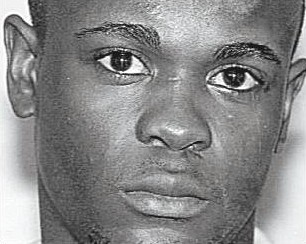
Carlton Jerome Pope
Murderer Brian Kevin Rosenfeld
Murderer · USA · 1985
Brian Kevin Rosenfeld Brian Kevin Rosenfeld was sentenced to three concurrent l…
23 victims
Brian Kevin Rosenfeld
Murderer · USA · 1985
Brian Kevin Rosenfeld Brian Kevin Rosenfeld was sentenced to three concurrent l…
23 victims
 Yahweh ben Yahweh
Murderer · USA · 1980
Yahweh ben Yahweh was born and legally named Hulon Mitchell Jr. (October 27, 19…
23 victims
Yahweh ben Yahweh
Murderer · USA · 1980
Yahweh ben Yahweh was born and legally named Hulon Mitchell Jr. (October 27, 19…
23 victims
 Russell Ellwood
Murderer · USA · 1991
Russell Ellwood was a former taxi driver. Authorities suspected him of killing…
20 victims
Russell Ellwood
Murderer · USA · 1991
Russell Ellwood was a former taxi driver. Authorities suspected him of killing…
20 victims
 Scott Mansfield
Murderer · USA · 1995
Scott Mansfield was sentenced to death. · 10/14/95 — Jesus Alfonso and Sara Rob…
1 victim
Scott Mansfield
Murderer · USA · 1995
Scott Mansfield was sentenced to death. · 10/14/95 — Jesus Alfonso and Sara Rob…
1 victim
 Todd Rizzo
Murderer · USA · 1997
Todd Rizzo was a former U.S. Marine. He murdered Stanley G. Edwards, a thirteen…
1 victim
Todd Rizzo
Murderer · USA · 1997
Todd Rizzo was a former U.S. Marine. He murdered Stanley G. Edwards, a thirteen…
1 victim
 Alfred Dewayne Brown
Murderer · USA · 2003
Alfred Dewayne Brown was convicted of capital murder committed on April 3, 2003…
2 victims
Alfred Dewayne Brown
Murderer · USA · 2003
Alfred Dewayne Brown was convicted of capital murder committed on April 3, 2003…
2 victims
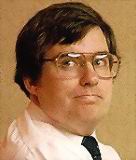 Mark William Hofmann
Murderer · USA · 1985
Mark William Hofmann (born December 7, 1954) was an American counterfeiter, for…
2 victims
Mark William Hofmann
Murderer · USA · 1985
Mark William Hofmann (born December 7, 1954) was an American counterfeiter, for…
2 victims
 Daniel Pelosi
Murderer · USA · 2001
Daniel Pelosi (born 2 August 1963 in Center Moriches, New York) was convicted o…
1 victim
Daniel Pelosi
Murderer · USA · 2001
Daniel Pelosi (born 2 August 1963 in Center Moriches, New York) was convicted o…
1 victim
- Gender
- male
- Country
- USA
- Location
- City of Portsmouth, Virginia, USA
- Date of birth
- 1962
- Age at first offence
- 24
- Characteristics
- robbery
- Victim profile
- Cynthia Gray (female, 24)
- Method of murder
- Shooting
- Date(s) of murder
- January 12, 1986
- Years active
- 1986
- Date of arrest
- —
- Status
-
Executed
Executed by lethal injection in Virginia on August 19, 1997
Overview
Carlton Jerome Pope was convicted of capital murder in the commission of robbery under Va. Code § 18.2-31(4). He was executed by lethal injection in Virginia on August 19, 1997.
Timeline
- August 19, 1997 — Pope was executed by lethal injection in Virginia.
- August 18, 1997 — A report stated that clemency from Gov. George F. Allen or a last-minute stay by the U.S. Supreme Court was unlikely.
- May 22, 1997 — The United States Court of Appeals for the Fourth Circuit decided appeals involving Pope, including reversal in part and affirmation in part.
- March 3, 1997 — The case was argued in the United States Court of Appeals for the Fourth Circuit.
- June 1986 — Pope’s conviction and sentence to death were described as having occurred in 1986.
- Jan. 12, 1986 — Cynthia Gray was killed during the events involving Pope and Marcie Ann Kirchheimer.
- January 1996 — A U.S. District Judge vacated Pope’s death sentence and ordered a new trial.
- May 1996 — The 4th U.S. Circuit Court of Appeals reversed the decision vacating Pope’s death sentence.
- May 1997 — The 4th U.S. Circuit Court of Appeals reversed Merhige’s decision and there was no new trial.
- August 22, 1989 — Pope’s petition for habeas corpus relief in the City of Portsmouth Circuit Court was dismissed.
- September 6, 1991 — The Virginia Supreme Court dismissed Pope’s second habeas petition filed pursuant to its original jurisdiction.
- December 1992 — A family member died of cancer, as described in the narrative.
- 1987 — The Virginia Supreme Court affirmed Pope’s conviction (Pope v. Commonwealth, 234 Va. 114, 360 S.E.2d 352 (1987)).
- 1988 — The United States Supreme Court denied certiorari (Pope v. Virginia, 485 U.S. 1015 (1988)).
- 1990 — The United States Supreme Court again denied Pope’s petition for a writ of certiorari (Pope v. Thompson, 498 U.S. 908 (1990)).
- 1991 — A psychological evaluation described Pope’s ability to write the alphabet.
- Friday (before August 19, 1997) — Pope’s lawyers submitted a clemency petition to Gov. George F. Allen.
The offence
On the evening of January 12, 1986, Marcie Ann Kirchheimer was a passenger in the front seat of a two-door “little Sunbird” owned and driven by her sister, Cynthia Gray. Cynthia drove to “Nick’s Pool Hall” in downtown Portsmouth in search of a man named James Taylor. When they arrived, Marcie left the car and knocked on the door of the pool hall, but found the establishment closed. Pope, who was across the street, called to them to ask if they were looking for Taylor.
Pope identified himself as “Carl” and told them that Taylor had left the pool hall. Pope asked Cynthia if she would give him a ride home. Cynthia agreed. Pope got into the back seat of the car, behind Marcie. During the drive, Cynthia was drinking from a bottle of wine and passed the bottle back to Pope, who also drank from it. Pope directed Cynthia to Bagley Street. Upon arriving at Bagley Street, Pope told Cynthia to stop on the left side, “the wrong side of the road as [they] were travelling.”
Marcie opened the passenger door and pulled the seat forward to let Pope out. Immediately after emerging from the car, Pope turned toward the women, pointed a pistol at them, and said, “give me all your money.” Startled, the women made no immediate response and Pope fired a shot into Cynthia’s head. Marcie grappled with Pope for the gun. Pope “pulled free” and “started to run off, and took two or three steps off, and turned around.” Pope then shot Marcie in the back of the head and “took off running.”
Cynthia was bleeding from the head and was slumped over the steering wheel. Marcie drove as fast as she could to Portsmouth General Hospital, using emergency blinkers, and attempted to enter the emergency entrance, but found the door locked and that entrance no longer in use. She ran into the front lobby where she encountered two police officers, William Mutter and George Vick. The officers heard Marcie’s screams and followed her as she ran back to the car. They found Cynthia dead from a gunshot wound to the right temple; the bullet passed through the brain and exited in front of the left ear. Marcie was admitted to the hospital. She had a bullet wound behind the right ear, and the same bullet subsequently passed through her left shoulder and exited under her left arm. Later, in court, Marcie positively identified Pope as the assailant.
Alleged robbery and missing purse/checkbook
The Virginia Supreme Court findings described a dispute and factual issues regarding taking property. Marcie had had no purse and testified that Pope had taken nothing from her. Cynthia’s purse was missing after the shooting. Cynthia had been carrying a clutch-type purse with a zipper closure which she left open. The purse was lying “right in between the bucket seats” as the women drove to Nick’s Pool Hall. During that drive, Cynthia took her check-book out of the purse momentarily and then replaced it in the purse, which remained between the bucket seats.
After the shooting, the police found the checkbook on the floor of the car between the passenger seat and the door on the passenger side, through which Pope had left the car. Marcie testified that it was not Cynthia’s practice to leave the checkbook on the floor or to leave “things like that strewn about the car.” Marcie last saw the purse between the bucket seats and did not see it after the shooting. While she did not see Pope remove it, she testified that it was in his view and that he had ample opportunity “to grab it without me seeing him.”
Arrest
William Mutter and George Vick were the police officers who encountered Marcie and then followed her to the car. They heard her screams, found Cynthia dead, and preserved the condition of the car until it could be examined. Upon arriving at the car, the police officers called for assistance and preserved the condition of the car until it could be examined.
Investigation
A fingerprint examiner found that the wine bottle bore a print that positively matched a fingerprint taken from Carlton Pope.
Trial
Pope was convicted of capital murder in the commission of robbery in violation of Va. Code § 18.2-31(4). The Virginia Supreme Court affirmed Pope’s conviction. Pope v. Commonwealth, 234 Va. 114, 360 S.E.2d 352 (1987). It denied Pope’s petition for rehearing, and the United States Supreme Court denied certiorari. Pope v. Virginia, 485 U.S. 1015 (1988).
Marcie Kirchheimer testified at trial about the sequence of events and identified Pope as the assailant. The narrative described that, according to testimony at Pope’s trial, the sisters agreed to give Pope a ride home and shared a bottle of wine with him on the way. Upon being delivered to his doorstep, Pope shot Gray in the face, struggled with Kirchheimer and then shot her. Kirchheimer, who was shot in the neck, survived.
Cynthia Gray died on the way to Portsmouth General Hospital. The narrative also described that Cynthia’s sister Marcie Ann Kirchheimer was wounded in the attack and survived.
Challenge to sufficiency of evidence (direct appeal)
On direct appeal Pope claimed that the evidence was insufficient on two grounds. First, the Virginia Supreme Court ruled that an argument that someone else took Gray’s purse while Marcie ran for help was a factual issue rejected by the jury when it found Pope guilty of robbery. Second, Pope argued that if he removed the purse before the shooting and concealed it, he would be guilty of larceny, not robbery, and hence would not be guilty of capital murder. The Supreme Court recognized the second ground as involving a matter of law and rejected it, stating that where a killing and a taking of property are so closely related in time, place, and causal connection as to make them parts of the same criminal enterprise, the predicates for capital murder were established.
The Virginia Supreme Court’s due process issue was later addressed in federal habeas proceedings.
Sentencing
The jury, after consideration of Pope’s history and background, unanimously fixed his punishment at death. The narrative described that Pope was pronounced dead at 9:10 p.m. on the execution night.
Appeals and habeas corpus
Federal habeas in the Eastern District of Virginia and appeal to the Fourth Circuit
The Commonwealth, acting through a warden, J. D. Netherland, appealed a judgment of the district court granting a writ of habeas corpus to Pope who had been sentenced to death.
The district court reasoned that the Virginia Supreme Court violated the due process clause of the Fourteenth Amendment by applying an unforeseeable novel interpretation of robbery retroactively to the facts of Pope’s case. The Fourth Circuit concluded that the Supreme Court applied law that had long been settled before Pope’s crime. On this issue the Fourth Circuit reversed the district court’s grant of a writ of habeas corpus. The Fourth Circuit affirmed the district court’s judgment on Pope’s cross-appeal.
The Fourth Circuit stated that it denied Pope’s petition for habeas corpus with respect to the due process issue and reversed in part; it affirmed in part. The opinion noted reversal in part and affirmation in part, with Senior Judge Butzner writing the opinion.
State habeas timeline referenced in federal appeal
Pope filed a petition for habeas corpus relief in the City of Portsmouth Circuit Court, and it was dismissed on August 22, 1989. The Virginia Supreme Court affirmed the dismissal and denied rehearing. The United States Supreme Court denied a further petition for certiorari, and later Pope filed a second habeas petition in the Virginia Supreme Court pursuant to its original jurisdiction. The Virginia Supreme Court dismissed that petition on September 6, 1991.
Issues raised in habeas and cross-appeal
In his cross-appeal Pope alleged error in denial of habeas claims including: false testimony at trial, exculpatory evidence withheld, ineffective assistance of counsel at trial and on appeal, ineffective assistance of counsel at sentencing, denial of an independent fingerprint expert, and that the death penalty was imposed arbitrarily.
The district court dismissed these claims as either procedurally defaulted or lacking merit. The Fourth Circuit considered them in turn and affirmed the district court’s denial on these issues.
Legal reasoning in the Fourth Circuit opinion (habeas)
The Fourth Circuit addressed Pope’s due process claim. It discussed Bouie v. City of Columbia, 378 U.S. 347 (1964), and held that Virginia’s interpretation of capital murder consistent with felony-murder doctrine was not novel or retroactively applied in a manner that violated due process. It also referenced Virginia’s felony-murder doctrine and prior cases including Haskell, Briley, and Edmonds, as well as comparison to State v. Gunning and Flanders v. Meachum.
The Fourth Circuit reversed the district court’s habeas grant on this due process issue and denied Pope’s petition with respect to this issue.
Claims about false testimony and exculpatory evidence (Brady)
Pope’s claims included that false testimony was admitted at trial and that exculpatory evidence was withheld in violation of Brady v. Maryland, 373 U.S. 83, 87 (1963).
Checkbook evidence
At trial Marcie testified that Cynthia wrote a check from a check-book in her purse, then put the checkbook back in her purse, and cashed the check. A police officer testified that the checkbook was recovered on the floor between the passenger seat and the passenger door. The Commonwealth theorized that after killing Gray, Pope took the purse during the struggle with Marcie and the checkbook fell out of the purse.
During proceedings on Pope’s second state habeas petition, the Commonwealth turned over copies of Gray’s checks. Pope claimed that because the check Cynthia wrote in the car did not come from the checkbook offered into evidence, Marcie’s trial testimony was false. Pope also claimed a police detective falsely testified about photographs of the checkbook and that the detective committed perjury based on alleged inconsistency. The detective testified in a deposition years later that the photographs were probably taken the next day when the car was impounded, but he could not remember.
The Fourth Circuit described that the district court’s ruling held that claims relating to the checkbook were procedurally barred because Pope failed to raise them in state trial or first habeas proceedings. The Fourth Circuit further described that Pope had not established cause or prejudice, and it discussed that he could have investigated Gray’s bank records earlier.
Alcohol and drug-related testimony
Pope also claimed that Marcie lied about her level of intoxication and whether she and her sister were looking for drugs. The trial record described that Marcie testified she drank as many as four beers that night. Pope reviewed documents including prosecutor’s handwritten notes that indicated Marcie drank “a couple of beers--5 maybe 6” and that one police characterizations described Marcie as drunk and confused. The opinion described that a police officer suspected the women were looking for drugs due to Nick’s Pool Hall being a known drug location and James Taylor, the man they were looking for, being a known dealer.
The Fourth Circuit described that the discovery of potentially false testimony about the extent of Marcie’s involvement with alcohol and drugs had little effect on the jury because evidence of her drinking and drug involvement was presented at trial, including her arrest record for drugs and prostitution, and testimony that syringes were found in the car. The Fourth Circuit described that the discrepancies discovered by Pope were immaterial because there was not a reasonable likelihood the false testimony could have affected the judgment of the jury.
Ineffective assistance of counsel claims
The Fourth Circuit addressed claims of ineffective assistance of trial and appellate counsel. It described that the crux involved trial counsel’s investigation of the robbery, including failure to subpoena Gray’s bank records to raise Brady claims, and investigation of Marcie’s connections to the Portsmouth drug community. The Fourth Circuit described that the allegations did not rise to the level of a constitutional violation and that Pope could not show counsel’s performance prejudiced him in a material manner under Strickland v. Washington.
Defaulted sentencing-instruction related claim in state habeas
The Fourth Circuit also discussed that among claims defaulted in Pope’s second state habeas proceeding was the failure of trial counsel to ask for a larceny instruction. It stated that the dismissal was based on adequate state grounds: Va. Code § 8.01-654(B)(2), requiring that no writ be granted on the basis of allegations the facts of which petitioner had knowledge at the time of filing any previous petition.
Ineffective assistance at sentencing
The Fourth Circuit discussed claims about ineffective assistance at sentencing. It described that Pope argued it could not be presented to the Virginia Supreme Court on direct appeal. The Fourth Circuit stated there was no bar to raising counsel’s deficiencies in the first habeas corpus proceeding and that deficiencies were raised at that time. It described the first state habeas allegations about future dangerousness, including that counsel failed to properly address or argue to the jury whether the Commonwealth met its burden on future dangerousness, failed to challenge imposition of death sentence without jury finding future dangerousness beyond a reasonable doubt and without finding essential elements, and failed to challenge the trial court’s consideration of mitigating factors without noting it.
It further described that Pope’s second state habeas petition separated his sentencing counsel allegations into three central allegations: failure to conduct a reasonable investigation into background and develop mitigating evidence; failure to obtain an adequate mental evaluation; and inadequate performance at the sentencing phase, including failure to argue insufficiency of evidence of future dangerousness. The Fourth Circuit described that the Supreme Court dismissed all these claims because they could have been presented in the first habeas proceeding, citing Va. Code § 8.01-654(B), and it described that the specific future dangerousness claim was denied based on Hawks v. Cox.
Fingerprint expert claim
The Fourth Circuit described Pope’s claim that he was denied an independent fingerprinting expert. Pope argued that fingerprints on the wine bottle linking him to the car were a material source of evidence and that analysis required technical expertise. He argued defense counsel needed access to an independent fingerprint expert to cross-examine the state’s expert testimony. The Fourth Circuit described that Pope never raised the issue until the second habeas proceeding and that it was procedurally barred under Va. Code § 8.01-654(B)(2) and Slayton v. Parrigan.
Penalty issue: arbitrariness and future dangerousness
On the penalty issue, the opinion described that the jury found a probability that Pope would commit criminal acts of violence constituting a continuing serious threat to society and, unanimously, fixed punishment at death after considering mitigating evidence.
Pope claimed the verdict was arbitrarily imposed in violation of the Eighth Amendment, based primarily on insufficiency of evidence to prove future dangerousness. The Fourth Circuit addressed this argument by describing Virginia’s law that the crime of conviction itself can satisfy the element of future dangerousness. It also described Pope’s prior conviction of armed assault and four misdemeanor offenses, and that he had been released on parole for his armed assault conviction when he murdered Gray. It described the Virginia Supreme Court’s notes about increasing violence after earlier crimes and escalating tendency toward violence.
Outcome
The Fourth Circuit reversed in part and affirmed in part. It reversed the district court’s grant of the writ of habeas corpus related to Pope’s due process argument and denied Pope’s petition with respect to that issue. It affirmed denial of Pope’s other claims raised in his cross-appeal.
Execution
Pope was executed by lethal injection in Virginia on August 19, 1997. He was pronounced dead at 9:10 p.m.
In a final statement, he said: “I thank God for giving me peace. I love my mother. I thank God that Jesus Christ died for my sins.'”
Clemency proceedings and Governor’s denial
Pope’s lawyers sought clemency. They contended that there was no robbery the night of the killing, which was the basis for seeking the death penalty, and contended that a crucial witness had lied.
The Fourth Circuit narrative and the clemency account described that the Supreme Court voted 7 to 2 to deny Pope’s request for an emergency stay, and that Gov. George Allen refused to grant clemency. Gov. George F. Allen denied Pope’s clemency plea about 2 p.m. Tuesday.
Allen stated: “I find no reason to overturn the decision rendered by the jury and upheld by the courts, and consequently I shall not intervene,” he said in a statement.
Pope’s lawyers submitted a clemency petition to Gov. George F. Allen. The lawyers wrote: “When no jury has had the opportunity to consider the true facts, and when the true facts raise a serious and reasonable doubt as to the defendant's guilt of capital murder, justice requires that clemency be granted,” the lawyers wrote in a clemency petition.
People and relationships described in the narrative
- Cynthia Gray — a 24-year-old Virginia Beach woman; she was shot in the face and died from gunshot wounds.
- Marcie Ann Kirchheimer — Cynthia Gray’s sister; she was shot in the neck and survived.
- Mark Gray — Cynthia Gray’s younger brother; he drove to the Greensville Correctional Center with a friend Tuesday to watch Pope die and said:
- “A lot of persons might say this about their sister, but she was one of the nicest persons I ever knew, sister or no sister”
- “She thought of other people before herself.”
- “Maybe now we can get some closure. If there is any.”
- Marie Gray — Cynthia Gray’s mother; she said her family was devastated and expressed views about the impact of the murder and the execution.
- Richard L. Gray — Cynthia’s older brother; he contracted a rare virus and died two months after the murder; he was 26.
- Richard P. Gray — Cynthia’s father; he “swept the garage for two years and hardly talked,” and died of cancer in 1992.
- John Parry — a lawyer described as of the Washington, D.C.-based law firm Williams & Connolly; he said:
- “There really is no proof that anything was taken at all,”
- “All we have to back that up is Marcie Kirchheimer's statement. But we know she was drunk and we know that she lied. She was in no way a reliable or a credible witness.”
- Ronald Reel — an assistant Portsmouth commonwealth’s attorney; he called Pope’s arguments:
- “gross speculation,”
- “The accusations they make are cut from whole cloth,”
- “They're just grasping at straws. There's no proof any of this happened.”
- William Mutter and George Vick — police officers who heard Marcie’s screams, followed her back to the car, and found Cynthia dead.
Other details: identity, background, and evaluations
Pope’s background and health-related details were described in the narrative. He was 35 at the time of execution; he was 23 when he met Gray and her sister Marcie Kirchheimer outside a Portsmouth pool hall on the night of Jan. 12, 1986. The narrative described he was a seventh-grade dropout with an IQ of 79. A 1991 psychological evaluation described that he was “unable to write the alphabet without errors.”
The narrative described Pope’s family history. It said he grew up in Portsmouth, the child of an alcoholic “inconsistent, erratic and verbally and physically abusive” father. By age 9, according to the psychological evaluation, Pope had become an alcoholic. It described that “On average, during the summers, he would drink a case of beer or 24, 12-ounce cans, and a fifth of wine on a given evening,” said the evaluation.
The narrative also described:
- At 17, Pope suffered a head injury when he fell from a building while working at a construction site.
- At 20, he shot a friend in the toe during an argument and was convicted of malicious wounding; he was sentenced to 10 years and was paroled after serving two.
- He had been out of prison for only three months when Gray was killed.
The narrative described that Pope’s lawyers argued on appeals that the jury that sentenced Pope to death heard nothing about his background. It further described that the lawyers argued Portsmouth prosecutors “knowingly introduced” false testimony about robbery in the case, which was described as a key element of the capital murder charge, and withheld evidence favorable to Pope.
Missing facts not asserted
No additional offences or outcomes beyond those stated were included.
Spotted an error, or have more information about this case?