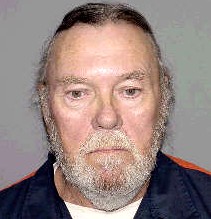
John Rodney McRae
Serial killer? Helmuth Schmidt
Serial killer? · USA · 1918
Helmuth Schmidt used a false name to place advertisements, which lured young, l…
30 victims
Helmuth Schmidt
Serial killer? · USA · 1918
Helmuth Schmidt used a false name to place advertisements, which lured young, l…
30 victims
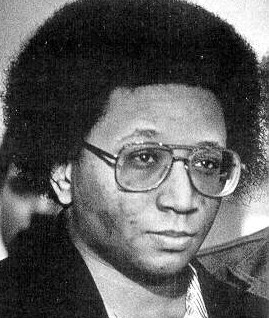 Wayne Williams
Serial killer? · USA · 1979
Wayne Bertram Williams was sentenced to two consecutive terms of life imprisonm…
24 victims
Wayne Williams
Serial killer? · USA · 1979
Wayne Bertram Williams was sentenced to two consecutive terms of life imprisonm…
24 victims
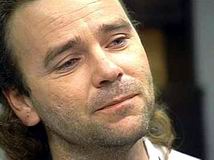 Tommy Lynn Sells
Serial killer? · USA · 1980
Tommy Lynn Sells was a white male. He was 35 at the time of the offence and 36…
13 victims
Tommy Lynn Sells
Serial killer? · USA · 1980
Tommy Lynn Sells was a white male. He was 35 at the time of the offence and 36…
13 victims
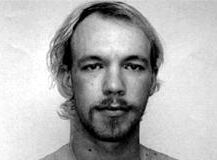 John Robert Williams
Serial killer? · USA · 2003
John Robert Williams was a long-haul trucker. He was held in a “supermax” unit…
12 victims
John Robert Williams
Serial killer? · USA · 2003
John Robert Williams was a long-haul trucker. He was held in a “supermax” unit…
12 victims
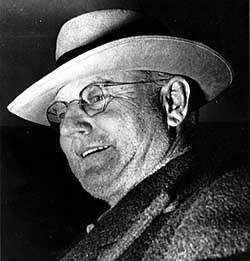 Alfred Cline
Serial killer? · USA · 1930
Alfred Cline was an American “Bluebeard” who was linked with at least nine homi…
9 victims
Alfred Cline
Serial killer? · USA · 1930
Alfred Cline was an American “Bluebeard” who was linked with at least nine homi…
9 victims
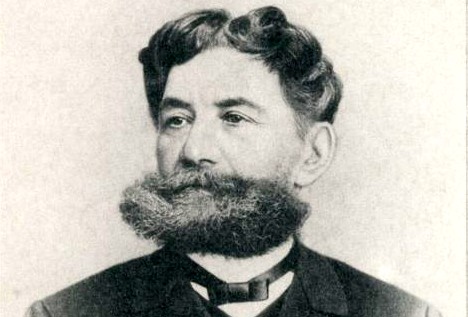 Alexander Sukhovo-Kobylin
Murderer? · Russia · 1850
Alexander Vasilyevich Sukhovo-Kobylin (Russian: Александр Васильевич Сухово-Коб…
1 victim
Alexander Sukhovo-Kobylin
Murderer? · Russia · 1850
Alexander Vasilyevich Sukhovo-Kobylin (Russian: Александр Васильевич Сухово-Коб…
1 victim
 Anthony Bell
Spree killer · 2006
Anthony Bell was convicted of killing his wife and four in-laws in a May 2006 s…
5 victims
Anthony Bell
Spree killer · 2006
Anthony Bell was convicted of killing his wife and four in-laws in a May 2006 s…
5 victims
 Peter James Knight
Murderer · Australia · 2001
Peter James Knight (born 1 January 1954) was an anti-abortion activist who shot…
1 victim
Peter James Knight
Murderer · Australia · 2001
Peter James Knight (born 1 January 1954) was an anti-abortion activist who shot…
1 victim
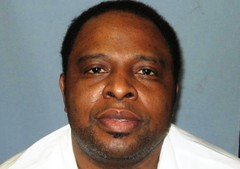 Willie McNair
Murderer · USA · 1990
Inmate name: MCNAIR, WILLIE · Gender: M · Race: B · Date of birth: 11/18/1964 ·…
1 victim
Willie McNair
Murderer · USA · 1990
Inmate name: MCNAIR, WILLIE · Gender: M · Race: B · Date of birth: 11/18/1964 ·…
1 victim
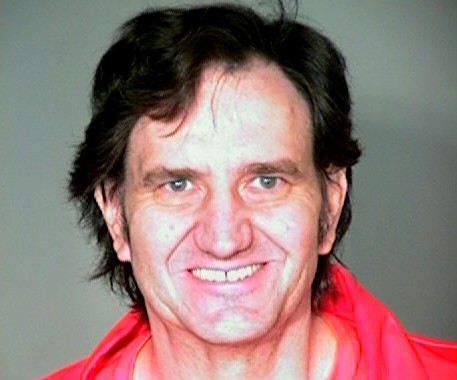 James Styers
Murderer · USA · 1989
James Styers filed a missing child report on December 2, 1989, advising police…
1 victim
James Styers
Murderer · USA · 1989
James Styers filed a missing child report on December 2, 1989, advising police…
1 victim
- Gender
- male
- Country
- USA
- Location
- Michigan/Florida, USA
- Date of birth
- 1935
- Age at first offence
- 15
- Characteristics
- pedophile, rape, sexual abuse
- Victim profile
- Joey Housey , 8 / Randy Laufer, 15 / Keith Fleming, 13 / Kip Hess, 12 / Charles Collingwood, 19
- Method of murder
- St abbing with knife
- Date(s) of murder
- 1950 / 1976 - 1987
- Years active
- 1950–1987
- Date of arrest
- October 1987
- Status
-
Died in custody
Died in prison on June 28, 2005
Case information
John Rodney McRae was a defendant in a first-degree murder case tried in 1998. He died in prison on June 28, 2005.
Background
John Rodney McRae was convicted of first-degree murder in a 1998 jury trial. He had previously been convicted of first-degree murder and sentenced to life in prison in 1951, and later received parole.
The victim in the 1998 trial was 15-year-old Randy Laufer, who was last seen on September 15, 1987.
In 1997, Laufer's bones were found buried on a property that had been McRae's family residence in Michigan before the family moved to Arizona.
The case included references to other missing children in Florida, including Joey Housey (Michigan), Kip Hess (Florida), Charles Collingwood (Florida), and Keith Fleming (Florida). Florida authorities decided not to charge McRae in the Florida cases.
The offence
Randy Laufer (Michigan)
Laufer was killed and his remains were buried near McRae's former home. Witnesses in the 1998 proceedings said knife gouges in Laufer's tailbone were from sexual torture.
Laufer vanished in 1987. He was later found dead in 1997.
Investigation
Evidence and conversation after arrest
One of the pieces of evidence linking McRae to the crime was a conversation he had after his arrest with a reserve police officer, Dean Heintzelman, who had been McRae's neighbor before McRae moved from Michigan.
Heintzelman testified that he visited McRae in jail after hearing that McRae had asked why Heintzelman had not visited him. Heintzelman testified that the request came from McRae's wife through Heintzelman's mother. During the visit, Heintzelman was in uniform with a badge.
Heintzelman testified later:
And then I said -- I asked John -- I said, 'John, did you do what you're charged with here?' And he didn't answer me. So we just went talkin' again about, well, more or less about Marty [McRae's son] again. And I said, 'Well, you know, they think Marty had something to do with that, you know, with Randy.' And he says, 'Well, if they try to pin it on Marty, I'll let'em fry my ass.' And that was his words. I said, 'John, did you do it?' And he just hung his head down and said, 'Dean, it was bad. It was bad.' That's -- we didn't discuss it any more.
Before the conversation, McRae had invoked his Fifth Amendment right not to answer questions. He had also requested and had received appointment of counsel at arraignment.
Florida missing children context
Authorities also investigated Florida disappearances attributed to McRae, including:
- Keith Fleming: disappeared from Cocoa Beach in 1977; dogs and ground probes found no traces; no charges were filed.
- Kip Hess: a 12-year-old Boy Scout who disappeared from Merritt Island in 1979.
- Charles Collingwood: disappeared after escaping from prison in December 1979.
Homicide agent Gary Harrell said he believed a “pretty strong case” existed against McRae for Collingwood and Hess.
Arrest
McRae was arrested in connection with the first-degree murder charge for Laufer. He was held in the county jail pending his first-degree murder trial. While in jail, McRae asked their old neighbor Dean Heintzelman to visit him.
Trial
1998 jury trial (Randy Laufer)
McRae was tried before a jury in 1998 and was convicted of first-degree murder.
Jurors heard Heintzelman's testimony during the four-day trial in 1998.
The Michigan Court of Appeals agreed that the testimony was proper and not unconstitutional police interrogation.
Related procedural discussion on appeals
On appeal, McRae challenged the admission of Heintzelman's testimony. In an unpublished opinion, the Court of Appeals concluded that any error in admission of the testimony was harmless beyond a reasonable doubt.
After the Supreme Court remanded to the Court of Appeals, the Court of Appeals again affirmed McRae's conviction, stating that Heintzelman was not acting as a police officer in interrogating McRae, but was acting as a friend and having a conversation. Accordingly, no Miranda warning was required because governmental action was not involved, the Court of Appeals stated.
Sentencing
1951 life sentence and parole
McRae was sentenced to life in prison in 1951.
He was later paroled in 1972.
1998 life sentence and later status
McRae was sentenced to life in prison in 1998.
Appeals
The Michigan Supreme Court ordered a new trial, ruling that McRae was denied his right to legal representation when he made incriminating statements to Heintzelman. The ruling described Heintzelman as having special access to McRae in a maximum security area late at night and persisting in trying to get him to talk about the case.
Outcome
McRae received a second conviction in May 2005, and he died in prison on June 28, 2005.
Other details
Mentions of other proceedings and individuals
- Kurt Hansen presided at the first trial; a new trial was ordered to occur outside Clare County in front of a different judge.
- Judge Kenneth W. Schmidt was named as presiding over the retrial beginning at 8:30 a.m. in Bay County Circuit Court.
- The United States Supreme Court asked for written arguments on McRae's case.
- Clare County Prosecutor Norm Gage said “What can I say? Essentially Randy Laufer was butchered after he was befriended by John Rodney McRae.”
- Defense lawyer Paul Pemberton argued that authorities were determined to demonize McRae and said investigators had “gone way off the top” to convict him using a half-century old crime and circumstantial evidence stitched together with innuendo.
- Defense attorney Paul J. Pemberton stated: “If they've got a case in Florida, damn it, charge him.”
- Clare County Prosecutor Norm Gage said: “I guess the court doesn't appreciate small town America yet.”
- Marla McCowan, from the State Appellate Defenders Office, asked:
- McCowan said:
People may say this is a terrible child killer trying to sneak through some loophole. I don't think the right to an attorney or the Miranda Rights is just a technicality. I don't like the idea of fudging on the Constitution. You can't just sort of comply with the rules.
Do you think that just regular old you or me would have had access to Mr. McRae at 11 p.m.? The man repeatedly questions him and then when he gets an answer, he told his supervisor.
Statements about Florida investigations and evidence
- Prosecutors and authorities described McRae as suspected in Florida disappearances, and Florida authorities decided not to charge McRae.
- Gary Harrell said:
- Harrell said McRae seemed to enjoy the sparring of police questioning and said McRae told him:
- Harrell also said:
I think he helped search for the kid and took pleasure in the parents' pain,
If you don't have a body, you don't have me.
we have a pretty strong case
Statements in later accounts after death
After McRae died, Cocoa Beach detective Bill Flack said:
This case file is as thick as the Chicago phone book, and: I can't imagine a mother losing a child and not having the answer to what happened. But everybody that has worked this case has done everything they could. It's just that there's acres and acres of empty land up there.
Florida State Attorney Norm Wolfinger described McRae as:
an evil man.
Wolfinger added:
When he died, he didn't pass Go, he went directly to hell,
Harrell said:
There's 20 to 30 percent of that skeleton missing, and we're talking big bones like femurs. And the last place to bury a victim would bein your front yard. How much crazy is that? (Associated statements were attributed in the narrative to counsel arguments about evidence.)
Harrell said he had seen McRae show pictures of the boys and cry, and said McRae told him:
I can't, I just can't.
Family and other related individuals in the narrative
- Barbara A. McRae was described as McRae's wife and as living in Sparks, Nev.
- Marty McRae was described as McRae's son, serving a prison term in Nevada for child molestation.
- James R. Housey and James R. Housey planned to attend McRae's trial.
- Kandy Laufer was described as Randy Laufer's older sister.
- Vicki Hudson and Clinton Goodenow were described in connection with 1997 discovery of Laufer's remains.
Other named victims and ages mentioned in narrative
The narrative included the following victims with ages:
- Joey Housey, 8-year-old, whose throat and genitals were described as slashed with a straight razor.
- Donald Housey, 12, who saw changes in his mother after the discovery.
- Kip Hess, 12, disappeared from Merritt Island in 1979.
- Keith Fleming, 13 (in later narrative) and described as 14 in one portion, disappeared from Cocoa Beach in 1977.
- Charles Collingwood, 19 (age given in narrative), disappeared after escape in December 1979.
- Randy Laufer, 15, vanished in 1987.
Trial outcome counts and custody references
- McRae was described as being in custody pending resolution and as remaining in custody during the appeals process.
- The narrative stated he was convicted in 1951, paroled in 1972, convicted again in 1998, convicted a second time in May 2005, and died in prison on June 28, 2005.
Spotted an error, or have more information about this case?