
Ronald James Hamilton
Murderer Russell Ellwood
Murderer · USA · 1991
Russell Ellwood was a former taxi driver. Authorities suspected him of killing…
20 victims
Russell Ellwood
Murderer · USA · 1991
Russell Ellwood was a former taxi driver. Authorities suspected him of killing…
20 victims
 Robert Martines Perez
Murderer · USA · 1994
Name: Robert Martines Perez · Other name used in proceedings: Robert Martinez P…
15 victims
Robert Martines Perez
Murderer · USA · 1994
Name: Robert Martines Perez · Other name used in proceedings: Robert Martinez P…
15 victims
 Billy Frank Vickers
Murderer · USA · 1993
Billy Frank Vickers Vickers was executed by lethal injection in Texas on Januar…
14 victims
Billy Frank Vickers
Murderer · USA · 1993
Billy Frank Vickers Vickers was executed by lethal injection in Texas on Januar…
14 victims
 Mia Gonzales
Homicide · USA · 2007
Mia Gonzales, age 36, was charged in connection with the Oct. 27, 2007 shooting…
1 victim
Mia Gonzales
Homicide · USA · 2007
Mia Gonzales, age 36, was charged in connection with the Oct. 27, 2007 shooting…
1 victim
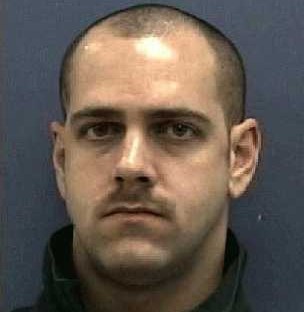 Ashley Jones
Murderer · USA · 1993
Ashley Lyndol Jones, 23, was sentenced to death on June 19, 1995. Jones was con…
1 victim
Ashley Jones
Murderer · USA · 1993
Ashley Lyndol Jones, 23, was sentenced to death on June 19, 1995. Jones was con…
1 victim
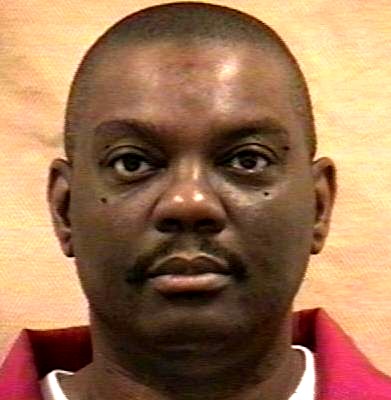 Henry Louis Wallace
Serial killer · USA · 1990
Henry Louis Wallace was sentenced to death on January 29, 1997. Wallace was fou…
9 victims
Henry Louis Wallace
Serial killer · USA · 1990
Henry Louis Wallace was sentenced to death on January 29, 1997. Wallace was fou…
9 victims
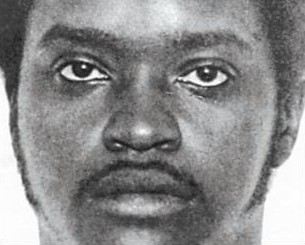 Syvasky Poyner
Spree killer · USA · 1984
Syvasky Lafayette Poyner challenged three Virginia state court judgments that s…
5 victims
Syvasky Poyner
Spree killer · USA · 1984
Syvasky Lafayette Poyner challenged three Virginia state court judgments that s…
5 victims
 Ronald Wayne Clark
Murderer · 1990
Ronald Wayne Clark was sentenced to death on February 22, 1991. · 01/12/90 — Ro…
2 victims
Ronald Wayne Clark
Murderer · 1990
Ronald Wayne Clark was sentenced to death on February 22, 1991. · 01/12/90 — Ro…
2 victims
- Gender
- male
- Country
- USA
- Location
- Harris County, Texas, USA
- Date of birth
- April 21, 1977
- Age at first offence
- 24
- Characteristics
- robbery
- Victim profile
- A 36-year old Iranian male (convenience store clerk)
- Method of murder
- Shooting (handgun)
- Date(s) of murder
- November 7, 2001
- Years active
- 2001
- Date of arrest
- —
- Status
-
Sentenced to death
Sentenced to death on November 19, 2002
Case details
Ronald James Hamilton, Jr. was sentenced to death in Texas.
Timeline
- 11/07/2001 — Hamilton and one co-defendant murdered a store clerk during a robbery in Houston.
- 11/19/2002 — A trial judge sentenced Hamilton to death.
- 10/13/2004 — The Court of Criminal Appeals of Texas delivered its judgment affirming the trial court.
Background
Hamilton, Jr., Ronald James had a date of birth of 04/21/1977. Hamilton was received on 11/19/2002 and was 25 years old at receipt. Hamilton received an education level of 7.
Hamilton was assigned the county Harris. Hamilton’s race was Native and his gender was male. His hair color was black. His height was 5 ft 11 in, his weight was 196, and his eye color was brown. Hamilton’s prior occupation was painter, construction, laborer.
Hamilton had a prior prison record: #844739, on a 2-year sentence from Harris County for 1 count of Possession of Cocaine. Hamilton was released on Mandatory Supervision on 10/12/1999. Hamilton was received on Mandatory Supervision Discharge on 09/12/2000.
The offence
On 11/07/2001, in Houston, Hamilton and one co-defendant murdered a store clerk during a robbery. Hamilton entered a convenience store armed with a handgun.
Hamilton fatally shot a 36-year old Iranian male and then shot a 38 year old Iranian male. Hamilton removed a cash register and left the store.
Investigation
The case record included that Hamilton’s co-defendant was Shawon Smith. Shawon Smith’s race and gender were not included beyond the name.
Trial
Ronald James Hamilton, Jr. pled guilty and was convicted in November 2002 of capital murder. The offense was committed on November 7, 2001.
The Court of Criminal Appeals of Texas was noted as: In the Court of Criminal Appeals of Texas No. 74,523 Ronald James Hamilton, Jr., Appellant, v. The State of Texas Appeal from Harris County. The disposition was per curiam.
After the jury’s answers to the special issues set forth in Code of Criminal Procedure Article 37.071, Sections 2(b) and 2(e), the trial judge sentenced the appellant to death. Direct appeal to the Court was automatic. The appellant raised eight points of error.
Points of error raised on appeal
Point of error one
The appellant claimed the trial court erred when it failed to admonish him of the applicable range of punishment, in violation of the Fifth and Fourteenth Amendments to the United States Constitution. After the appellant pled guilty to the charged offense of capital murder, the trial court proceeded to ask the appellant questions concerning the voluntariness of his plea. The trial court did not, however, on the record, inform or discuss with the appellant the punishment range for a capital offense.
The appellant urged the Court to reconsider its opinion in Aguirre-Mata v. State , 125 S.W.3d 473 (Tex. Cr. App. 2003), and to adopt the reasoning of Judge Johnson’s dissenting opinion in that case. The appellant contended that the Court’s opinion in Aguirre-Mata was at odds with Boykin v. Alabama , 395 U.S. 238 (1969), and that the complete failure of the trial court to admonish him of the applicable range of punishment amounted to “structural error” requiring reversal without a showing of harm.
The Court held in Aguirre-Mata that the trial court’s failure to show on the record that a defendant entering a plea of guilty was admonished on the range of punishment for the offense was nonconstitutional error subject to the harm analysis under Rule of Appellate Procedure 44.2(b).
The Court wrote:
" Boykin did not specifically set out what due process requires to be 'spread on the record'"
and
" Boykin clearly did not hold that due process requires the equivalent of the Article 26.13(a) admonishments or an admonishment on the range of punishment." Id. at 475.
The Court also wrote:
"admonishing a guilty-pleading defendant that the consequences of a guilty plea are the admission of the factual elements of the charged crime and a waiver of various constitutional rights without admonishing the defendant on the range of punishment literally satisfies this [ Boykin ] test." Id. at n.4.
The Court declined to revisit its holding in Aguirre-Mata. The appellant did not argue that he had no knowledge of the possible penalties for capital murder or that his plea was actually involuntary. The appellant complained only about the absence in the record of any admonishment on the range of punishment. The appellant failed to show that the absence of an admonishment on the range of punishment resulted in an involuntary plea or a violation of due process in this case. Point of error one was overruled.
Point of error two
The appellant claimed the trial court’s failure to admonish him of the range of punishment violated Article 26.13(a)(1). The State impliedly conceded the trial court erred in failing to expressly admonish the appellant according to Article 26.13. The trial court’s failure was error under Article 26.13. Burnett v. State, 88 S.W.3d 633, 635 (Tex. Cr. App. 2002).
The Court reviewed this statutory error under the harm analysis of Rule of Appellate Procedure 44.2(b). The appellant argued that harm should be found when there was no direct evidence that the guilty-pleading defendant understood the range of punishment. The Court stated it explicitly rejected that approach in Burnett and quoted the following:
[A] reviewing court must independently examine the record for indications that a defendant was or was not aware of the consequences of his plea and whether he was misled or harmed by the trial court's failure to admonish him of the punishment range.
The court of appeals . . . inverted the first part of the required [harm] analysis, stating essentially that the record must clearly show that appellant knew the consequences of his plea.
The correct test is just the opposite--to warrant a reversal on direct appeal, the record must support an inference that appellant did not know the consequences of his plea.
Reviewing courts must examine the entire record to determine whether, on its face, anything in that record suggests that a defendant did not know the consequences of his plea--here, the range of punishment.
Of course, a silent record would support such an inference.
The reviewing court also may simultaneously consider record facts from which one would reasonably infer that a defendant did know the consequences of his plea or, in this case, was actually aware of the range of punishment.
It is ultimately the responsibility of the reviewing court to determine whether the record supports or negates the defendant's assertion of harm.
If, after a conscientious examination of the record, the reviewing court is left with "grave doubt" on the matter, the error is not harmless. Id. at 638-39.
Accordingly, the Court examined the record for indications the appellant was not aware of the consequences of his plea and was misled or harmed by the trial judge’s failure to admonish him. The record did not support an inference that the appellant did not know the punishment range for his offense. Although the trial court did not explicitly admonish the appellant on the punishment range for his offense, the Court described that throughout jury selection, the parties openly discussed the punishment range at length in the appellant’s presence. At the beginning of voir dire, the trial court informed the panel that the State was seeking the death penalty. During individual voir dire, the prosecutor and defense counsel asked each venire member multiple questions concerning the death penalty, life imprisonment, and related issues. Therefore, the error was harmless. Point of error two was overruled.
Point of error three
The appellant argued the trial court erred in failing to admonish him of his right against compulsory self-incrimination, in violation of the Fifth and Fourteenth Amendments to the United States Constitution. The appellant argued that his plea of guilty before a jury was tantamount to testimony because, in entering such a plea, he admitted all the facts necessary to support a finding of guilt. He contended that the court’s failure to admonish him of his right not to incriminate himself by pleading guilty “impacted the voluntariness” of his plea and violated his due process rights.
The Court wrote that there was “no requirement that [the] appellant be informed of his right against self-incrimination at trial upon a plea of guilty.” The Court cited Williams v. State, 674 S.W.2d 315, 320 (Tex. Cr. App. 1984). The Court stated Boykin did not hold that the failure to admonish a guilty-pleading defendant of the privilege against self-incrimination violated due process. Point of error three was overruled.
Point of error four
The appellant contended that his guilty plea violated Article 1.13(a) which prohibits a defendant against whom the State is seeking the death penalty from waiving his right to a jury trial.
The Court cited Williams, holding that “a plea of guilty before a jury is a trial by jury and does not constitute a waiver of trial by jury.” The appellant conceded this holding, but argued Williams could not be squared with Boykin and should therefore be overruled. The appellant argued that language from Boykin was inconsistent with Williams, including these passages:
Several federal constitutional rights are involved in a waiver that takes place when a plea of guilty is entered in a state criminal trial. First, is the privilege against compulsory self-incrimination guaranteed by the Fifth Amendment and applicable to the States by reason of the Fourteenth. Malloy v. Hogan, 378 U.S. 1. Second, is the right to trial by jury. Duncan v. Louisiana, 391 U.S. 145. Third, is the right to confront one's accusers. Pointer v. Texas, 380 U.S. 400. We cannot presume a waiver of these three important federal rights from a silent record. Boykin , 395 U.S. at 243.
The Court explained that in noting that guilty pleas generally involve a waiver of three rights under the federal constitution, Boykin did not distinguish between pleas made to the court and those made before a jury. It added that it was not clear from the opinion whether the petitioner's guilty plea was made to the court or before the jury, referencing id. at 240.
The appellant argued that if a defendant who pleads guilty before a jury was having a jury trial under Texas law, then it made no sense to require any admonishments regarding the waiver of constitutional rights discussed in Boykin. The Court responded that these rights were never waived: “Williams , 674 S.W.2d at 319. Thus, there is no requirement that a defendant be informed of his right against self-incrimination, his right to confront and cross-examine witnesses, and his right to trial by jury at a plea of guilty before the jury. Id. , at 320.”
By entering a plea of guilty before a jury and having a jury return a verdict regarding special issues under Article 37.071, the appellant received a jury trial and did not waive his right to trial by jury. Point of error four was overruled.
Point of error five
The appellant claimed Article 37.071, Sections 2(d)(2) and 2(f)(2) affirmatively misled the jury regarding its role in the sentencing process, creating an unacceptable risk that the death penalty would be imposed in an arbitrary manner, in violation of the Fifth, Eighth, and Fourteenth Amendments to the United States Constitution.
More specifically, the appellant complained about the trial court’s failure to instruct the jury of the consequences of its failure to answer a special issue. He argued failing to inform the jury of the consequences of a failure to agree to a special issue was contrary to language in the Supreme Court’s opinion in Jones v. United States , 527 U.S. 373, 381-82 (1999), recognizing that “a jury cannot be 'affirmatively misled regarding its role in the sentencing process.'”
The Court stated Jones also recognized that jurors were not affirmatively misled when they were not informed of the consequence of their failure to agree because such an instruction had “no bearing on the jury's role in the sentencing process” but instead “speaks to what happens in the event that the jury is unable to fulfill its role.” Point of error five was overruled.
Point of error six
The appellant contended the trial court erred by refusing his requested instruction that, in answering the mitigating special issue, jurors were free to consider any evidence they believed to be true. The requested charge read: “In arriving at an answer to Instruction No. 5 (mitigation) . . . [e]ach juror may consider any evidence that the juror believes is true. No two jurors have to agree on the truth of the same mitigating evidence. A juror may answer Instruction No[.] 5 with a "yes" for any reason that justifies that response in the mind of the juror.”
The trial court denied the requested charge. The Court quoted Article 37.071, Section 2(e)(1) and related statutory instruction language. It stated Article 37.071, Section 2(e)(1) provided the mitigation issue as:
Whether, taking into consideration all of the evidence, including the circumstances of the offense, the defendant's character and background, and the personal moral culpability of the defendant, there is sufficient mitigating circumstance or circumstances to warrant that a sentence of life imprisonment rather than a death sentence be imposed.
The Court further described that the jury was instructed that it “shall consider mitigating evidence to be evidence that a juror might regard as reducing the defendant's moral blameworthiness.” Art. 37.071, § 2(f)(4).
The Court held the appellant was not entitled to a charge that differed from or expanded upon the language in Article 37.071. It found the trial court did not abuse its discretion in denying the requested charge.
The appellant also complained about the mitigation charge given, which instructed the jury that in answering the mitigation issue, it “shall consider mitigating evidence to be evidence that a juror might regard as reducing the defendant's moral blameworthiness, including evidence of the defendant's background, character, or the circumstances of the offense that mitigates against the imposition of the death penalty.”
The appellant argued the instruction unfairly limited what jurors might properly consider as mitigating evidence. The Court stated that at trial the appellant did not object on these grounds and that the record would need to show egregious harm for reversal, referencing Almanza v. State. The Court held that the appellant did not suffer egregious harm because the mitigation issue required taking into consideration all evidence including circumstances of the offense, the defendant’s character and background, and personal moral culpability. The Court stated the charge added nothing new to the definition because it listed items as a non-exclusive list indicated by “including.” Point of error six was overruled.
Point of error seven
The appellant contended he received ineffective assistance of counsel. During the State’s punishment case-in-chief, Ahmad Naimi, a co-worker of the victim, testified about the victim and his life. The appellant argued counsel was ineffective for failing to object to Naimi’s testimony on the ground “that mitigation was not yet an issue in the case.”
The appellant reasoned he had the option of affirmatively waiving reliance on and submission of the mitigation issue at the end of the State’s case, and thus Naimi’s testimony was not relevant until evidence on mitigation had been introduced.
The Court held the record on direct appeal was generally inadequate to show counsel’s conduct fell below an objectively reasonable standard of performance, citing Bone v. State and Thompson v. State. The Court quoted: “If counsel's reasons for his conduct do not appear in the record and there is at least the possibility that the conduct could have been legitimate trial strategy, we will defer to counsel's decisions and deny relief on an ineffective assistance claim on direct appeal.”
The Court also cited Ortiz v. State and cert. denied, then stated counsel’s reasons did not appear in the record. The Court said it was possible counsel had a strategic reason for not objecting. It deferred and denied relief. Point of error seven was overruled.
Point of error eight
The appellant complained the trial court erred by not defining “probability,” “criminal acts of violence,” and “a continuing threat to society,” in violation of the Sixth, Eighth, and Fourteenth Amendments to the United States Constitution. The Court stated it had repeatedly rejected such claims, citing Rayford v. State. Point of error eight was overruled.
Sentencing
The jury’s answers to special issues under Code of Criminal Procedure Article 37.071 Sections 2(b) and 2(e) were used for sentencing. The trial judge sentenced Hamilton to death.
Outcome
The judgment of the trial court was affirmed, en banc. The case was delivered on October 13, 2004.
Other details
- The legal authority included Tex. Penal Code § 19.03(a).
- Code Crim. P. art. 37.071 §2(g).
- The legal authority included Art. 37.071 §2(h).
- R. App. P. 44.2(b).
- The record noted that the trial court judgment was affirmed and that the case was delivered October 13, 2004.

Spotted an error, or have more information about this case?