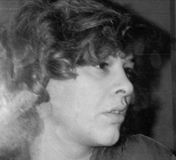
Tina Resch
Murderer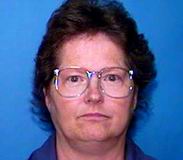 Bobbie Sue Terrell
Murderer · USA · 1984
Bobbie Sue Dudley Terrell was a Pinellas County nurse and worked as the night s…
12 victims
Bobbie Sue Terrell
Murderer · USA · 1984
Bobbie Sue Dudley Terrell was a Pinellas County nurse and worked as the night s…
12 victims
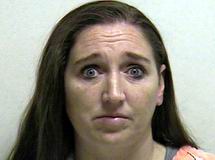 Megan Huntsman
Murderer · USA · 1996
Megan Huntsman was 40 at sentencing. She was a mother of three children who wer…
6 victims
Megan Huntsman
Murderer · USA · 1996
Megan Huntsman was 40 at sentencing. She was a mother of three children who wer…
6 victims
 Angela Johnson
Murderer · USA · 1993
Angela Jane Johnson was convicted in federal court of aiding and abetting the m…
5 victims
Angela Johnson
Murderer · USA · 1993
Angela Jane Johnson was convicted in federal court of aiding and abetting the m…
5 victims
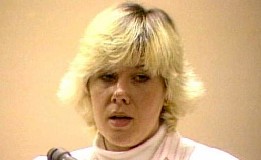 Catherine May Wood
Murderer · USA · 1987
Catherine May Wood was an American caregiver who worked at the Alpine Manor Nur…
5 victims
Catherine May Wood
Murderer · USA · 1987
Catherine May Wood was an American caregiver who worked at the Alpine Manor Nur…
5 victims
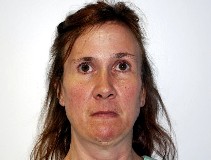 Michele Kalina
Murderer · USA · 1996
Michele Kalina pleaded guilty to murder for one of five infants she initially w…
5 victims
Michele Kalina
Murderer · USA · 1996
Michele Kalina pleaded guilty to murder for one of five infants she initially w…
5 victims
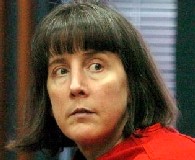 Amy Bishop
Murderer · USA · 1986
Amy Bishop — biology professor and perpetrator · James Anderson — Bishop’s husb…
4 victims
Amy Bishop
Murderer · USA · 1986
Amy Bishop — biology professor and perpetrator · James Anderson — Bishop’s husb…
4 victims
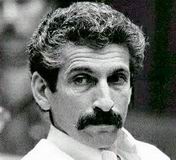 Angelo Buono
Serial killer · USA · 1977
Angelo Buono, Jr. (October 5, 1934 – September 21, 2002) was an American serial…
10 victims
Angelo Buono
Serial killer · USA · 1977
Angelo Buono, Jr. (October 5, 1934 – September 21, 2002) was an American serial…
10 victims
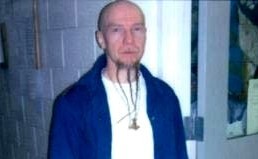 Richard Clarey
Murderer · USA · 1984
Richard Clarey was raised in West Germany by American parents working abroad. H…
3 victims
Richard Clarey
Murderer · USA · 1984
Richard Clarey was raised in West Germany by American parents working abroad. H…
3 victims
 Marko Bey
Homicide · USA · 1983
Marko Bey was formerly of Neptune. He was 17 and 18 years old when he committed…
2 victims
Marko Bey
Homicide · USA · 1983
Marko Bey was formerly of Neptune. He was 17 and 18 years old when he committed…
2 victims
- Gender
- female
- Country
- USA
- Location
- Carrollton, Carroll County, Georgia, USA
- Date of birth
- October 23, 1969
- Age at first offence
- 23
- Characteristics
- parricide, history of mental illness
- Victim profile
- Amber Gail Bennett, 3 (her daughter)
- Method of murder
- Beating
- Date(s) of murder
- April 13, 1992
- Years active
- 1992
- Date of arrest
- 2 days after
- Status
-
Life imprisonment
Pleaded guilty; sentenced to life plus 20 years in prison without parole on October 24, 1994
Background
Tina Resch (pronounced "Resh"), born October 23, 1969, achieved some fame during what the media called the Columbus Poltergeist case. In 1984, a series of unexplained events of alleged spontaneous telekinesis at her home were covered extensively by news media.
Her story, including a now-famous photograph, was featured on a 1993 episode of Unsolved Mysteries. In 1992, as an adult with the divorced name of Christina Boyer, she was jailed, along with a boyfriend of only a few months, for allegedly being responsible for the death of her three-year-old daughter, Amber, who was in the sole custody of the boyfriend at the time.
The offence
In 1992, Tina Resch, by the married/divorced name Christina Boyer, was charged for Amber’s murder.
Amber was three years old at the time of her death. Tina and her boyfriend, David Herrin, were arrested on April 15 for Amber’s murder. Tina’s story did not waver. Herrin’s story was erratic. He said he had never hit Amber, but said he saw Tina slap her, and that Tina must have hit the child too hard, as a result of which she died later that day. He later admitted he had sodomized the child twice and that he hit her during his final interview with the police.
The narrative included that there were internal injuries indicating Amber was sodomized, and that Amber had suffered physical injuries, some of which were old.
Tina and Herrin were held in jail for two years before the trial. The plea bargain avoided the possibility of a death penalty.
Investigation
Columbus Poltergeist case and media coverage (1984)
In March 1984, typical activity started in the Resch’s home. Lights and clocks were affected, and objects moved by their own volition. Mike Harden and Fred Shannon from the Columbus, Ohio Dispatch visited the home.
A series of color photographs were taken by newspaper photojournalist Fred Shannon of The Columbus Dispatch of Columbus, Ohio, which showed Tina sitting in an armchair with a telephone handset and flexible cable in flight in front of her from left to right. A video camera accidentally left on by a visiting television station crew revealed Tina knocking over a lamp, an event that had been ascribed to the poltergeist.
A series of journalists and television cameras circling the driveway occurred on 13 March during the ongoing investigation. The annual convention of the Parapsychological Association scheduled for August 1984 at Southern Methodist University in Dallas, Texas, was described as a platform to present the Resch case to a wider audience.
James Randi and related figures (CSICOP-linked investigation)
James Randi accused the Resches and parapsychologist William Roll of denying him a look at the phenomena.
In March 1984, Roll became involved in the case, and so did James Randi and scientists from Case Western University. The scientists were allowed in the house, but Randi was not. The account stated that the scientists would not investigate without Randi.
Randi was accompanied by astronomer-physicist Steve Shore and astronomer Nick Seduleak from Case Western Reserve University in Cleveland. Randi pulled out a check for ",000 from his cape and said he would give the Resches the money if they could show him an object that flew without human aid. Randi said that more than six hundred people had tried to collect the prize over the past twenty years, and none had succeeded.
Mike Harden stood outside with the group of reporters, and he thought Joan should have let Randi into the house. Harden said: “In a case like this, I think you’re almost obliged to have a second opinion. A magician possesses the skills to come in and show how these might be staged. If he can come in and by sleight of hand replicate them, that’s something the public needs to know.”
A direction in which the phone was pointed in Shannon’s now-famous photograph was said to violate the laws of physics because it did not show a “straight-line trajectory.” It was also said that Shore implied Tina had picked up the phone and thrown it.
Randi used technical critique including “transverse blurring” and said: “The cord, he said, displayed transverse blurring, which showed that Tina had picked up the phone and thrown it.”
The narrative also described that Randi directed ridicule toward Fred Shannon and dismissed Bruce Claggett, a local electrician and family friend who witnessed the lights turn on and the tape disappear when no one was near. The narrative said Randi said only that Bruce “gave strange and contradictory accounts of the wonders in the Resch household.”
The narrative included a statement that occurrences around Tina, if genuine, would amount to “a repeal of the basic laws of physics.”
Neurological discussion
Roll suggested Tina be tested by a neurologist for complex brain seizures. The result was described as showing she did not have these, but might have mild Tourette’s Syndrome.
Roll suggested Tina be tested by a neurologist, and later the account described testing including neurologist findings, Persinger analysis, and a neurological examination. It stated that her brain-wave record showed no epileptic spikes and that tests demonstrated occasional muscle jerks, blinking, twisting, and incessant finger movements.
Persinger was described as thinking Tina may have suffered from a mild form of Tourette’s syndrome. The narrative said that Tina had an urge to express herself that she could not suppress, and that this led to verbal explosions and at least one physical attack on Joan.
The narrative described other signs, including that her left eyelid twitched and that she was less sensitive on the left side of her body, and that Steve Baumann tested for anomalies in her upper brain stem with results described as indicating a faster than usual stream of electrical impulses in the pons region.
Arrest
Tina and David Herrin were arrested on April 15 for Amber’s murder.
Trial
Plea and avoidance of trial on murder charge
Tina did not have a trial. In October 1994 she accepted a plea bargain to avoid the possibility of a death penalty.
The narrative described that she passed a polygraph examination indicating her innocence less than 24 hours before her plea hearing, and questions had since been raised concerning her convictions on the two counts in her indictment, for which she was sentenced to life plus 20 years in prison.
The type of plea she entered was called an Alford plea, in which the defendant maintains their innocence but accepts a lesser sentence to avoid the possibility of a harsher one, described as death for her case.
Sentencing
On October 24, 1994, Tina Resch (Christina Boyer) was sentenced to life plus 20 years in prison without parole.
Appeals
No appeal details were provided.
Outcome
Tina Resch pleaded guilty and received life plus 20 years in prison without parole on October 24, 1994.
Aftermath
In 2004, a book about the case titled Unleashed - Of Poltergeists and Murder: The Curious Story of Tina Resch by Roll and writer Valerie Storey was published, described as shedding some light on the family’s and paranormal investigators’ side of events.
The Atlanta Journal-Constitution newspaper gave her the title "Telekinetic Mom" in some reporting on the legal issues in 1994.
Timeline
- March 1984 — Typical activity began in the Resch home; Mike Harden and Fred Shannon visited.
- 11 March 1984 — Roll’s account described arrival in Columbus with Kelly Powers and meeting the Resch family.
- 8 March 1984 — A blinding snowstorm swirled through Columbus on the day the Resches had been persuaded to meet reporters.
- 13 March 1984 — A commotion outside the house occurred as Randi and others continued their performance outside the Resch home.
- April 13, 1992 — Roll was informed Amber was dead.
- April 15, 1992 — Tina and Herrin were arrested for Amber’s murder.
- October 24, 1994 — Tina accepted the plea bargain and was sentenced to life plus 20 years in prison without parole.
- 2004 — Unleashed - Of Poltergeists and Murder: The Curious Story of Tina Resch was published.
Other details
Indictment and prosecuting official
The prosecutor representing the State of Georgia was District Attorney Peter J. Skandalakis of the Coweta Judicial District.
Named individuals and roles connected to the case narrative (non-exhaustive)
- Fred Shannon, newspaper photojournalist
- Mike Harden, reporter for the Columbus Dispatch
- James Randi, stage magician who accused the Resches and parapsychologist William Roll
- William Roll, parapsychologist
- Steve Shore, astronomer-physicist
- Nick Seduleak, astronomer
- Paul Kurtz, founder of the Committee for the Scientific Investigation of Claims of the Paranormal (CSICOP)
- Drew Hadwal of WTVN-TV, Columbus (camera and lamp incident described)
- Barry, who reached Randi in Dallas (named as Berry in the narrative)
- Captain Bradley and Deputy Culver, involved in Herrin’s final interview
- Detective Thomas, monitored Herrin’s final interview
- Jeanne Lagle, described as friend and therapist (visited during the events leading to Amber’s death)
- Jeanne Lagle was named in connection with Tina’s account of leaving Amber in Herrin’s care
- Jodi Gossage, a reporter with United Press International
- Bruce Claggett, local electrician and family friend
- Joan and John Resch, described as foster parents in the narrative
- Joan’s other married daughter, Peggy Covert, described as a nurse at Riverside Hospital
- Barbara Hughes and JP, described in a living-room incident described in the narrative
- Kelly Powers, Roll’s assistant
Detailed quoted statements
Mike Harden said: “It seemed to me that I was witnessing something which defied both my sceptical instincts as a journalist as well as all of the traditional laws of physics.”
Mike Harden told Roll: “She was in my line of vision when that happened,” and he added: “I did not see her aid its movements in any way.”
Tina told reporters: “I didn’t want to do this,” and she added: “If I say anything, people are going to think I’m crazy.”
On being asked about fear, Tina said: “No,” and added: “it’s a little scary when they’re flying. I wish they would stop. I still don’t believe things like this can happen.”
John Resch said: “I see it and I still don’t believe it. How a glass can fly at a ninety-degree angle through a doorway and around a corner, or the television can run with no electricity – I just turn my head away when it happens.”
Jodi Gossage said: “It would seem to have happened too fast for her to have touched it,” and she added: “but the full sequence was not observed.”
James Randi said: “I’ve never seen a bona fide paranormal event, but that doesn’t mean I won’t.”
Randi said: “I did not see her aid its movements in any way.” (This quote appears in the narrative as part of Harden’s quoted statement and is repeated there verbatim.)
Randi said: “Are you afraid when things move?” someone asked. (This fragment was present; the narrative also included the response attributed to Tina as quoted above.)
Randi said: “a repeal of the basic laws of physics.”
The narrator said Randi described his own observing abilities in such a way that: “Roll described his own observing abilities in such a way that we must place his performance in the paranormal category… he saw the tape machine fly away from a position directly behind him.”
The narrative stated: “Roll described his own observing abilities in such a way that we must place his performance in the paranormal category… he saw the tape machine fly away from a position directly behind him.”
The narrative included: “Something has got to happen,” and Tina was getting tired of the reporters, too—“they had been in the house for nearly eight hours.” (This line was present as a quoted sentence in the narrative.)
Randi said only that Bruce “gave strange and contradictory accounts of the wonders in the Resch household.”
Unsolved Mysteries and television coverage references
Tina’s story was featured on a 1993 episode of Unsolved Mysteries.
A video camera left on by a visiting television station crew revealed Tina knocking over a lamp, which had been ascribed to the poltergeist.
A WTVN technician caught Tina moving the kitchen table with her foot, and when he accused her of tricking him, she laughed.
Spotted an error, or have more information about this case?