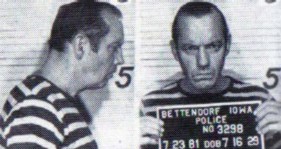
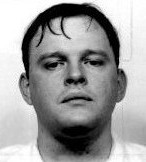
Charles Ray Hatcher
Serial killer Donald Henry Gaskins
Serial killer · USA · 1969
Donald Henry Gaskins, also known as Donald “Pee Wee” Gaskins, was a serial kill…
200 victims
Donald Henry Gaskins
Serial killer · USA · 1969
Donald Henry Gaskins, also known as Donald “Pee Wee” Gaskins, was a serial kill…
200 victims
 Carl Eugene Watts
Serial killer · USA · 1974
Carl Eugene Watts (born November 7, 1953; died September 21, 2007), also known…
100 victims
Carl Eugene Watts
Serial killer · USA · 1974
Carl Eugene Watts (born November 7, 1953; died September 21, 2007), also known…
100 victims
 Rodney Alcala
Serial killer · USA · 1977
Rodney James Alcala (born August 23, 1943) was also known as Rodrigo Jacques Al…
100 victims
Rodney Alcala
Serial killer · USA · 1977
Rodney James Alcala (born August 23, 1943) was also known as Rodrigo Jacques Al…
100 victims
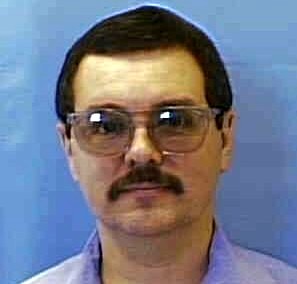 Donald Harvey
Serial killer · USA · 1970
Donald Harvey was known as an American serial killer and a self-professed “Ange…
87 victims
Donald Harvey
Serial killer · USA · 1970
Donald Harvey was known as an American serial killer and a self-professed “Ange…
87 victims
 Ottis Toole
Serial killer · USA · 1961
Ottis Elwood Toole (sometimes misspelled as “Otis”) was an American serial kill…
65 victims
Ottis Toole
Serial killer · USA · 1961
Ottis Elwood Toole (sometimes misspelled as “Otis”) was an American serial kill…
65 victims
 Donald Leroy Evans
Serial killer · USA · 1975
Donald Leroy Evans (born July 5, 1957) was an American serial killer who murder…
60 victims
Donald Leroy Evans
Serial killer · USA · 1975
Donald Leroy Evans (born July 5, 1957) was an American serial killer who murder…
60 victims
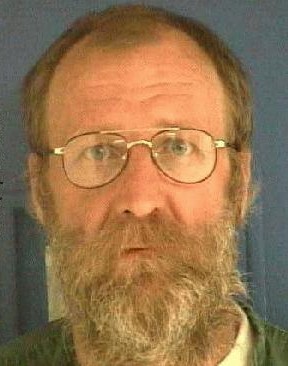 Devon Stuart Olson
Murderer · USA · 1986
Devon Stuart Olson was a transient. Texas authorities arrested California parol…
2 victims
Devon Stuart Olson
Murderer · USA · 1986
Devon Stuart Olson was a transient. Texas authorities arrested California parol…
2 victims
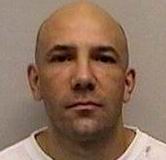 Lawrence Scott Dame
Mass murderer · USA · 2000
Lawrence Scott Dame was convicted in connection with the deaths of his sister,…
5 victims
Lawrence Scott Dame
Mass murderer · USA · 2000
Lawrence Scott Dame was convicted in connection with the deaths of his sister,…
5 victims
 Erik Hollie
Murderer · USA · 2009
Erik Hollie was sentenced to death on March 16, 2010, for a capital murder in W…
1 victim
Erik Hollie
Murderer · USA · 2009
Erik Hollie was sentenced to death on March 16, 2010, for a capital murder in W…
1 victim
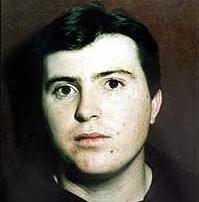 Paul Denyer
Serial killer · Australia · 1993
Paul Charles Denyer (b. 1972) was an Australian serial killer. He was serving l…
3 victims
Paul Denyer
Serial killer · Australia · 1993
Paul Charles Denyer (b. 1972) was an Australian serial killer. He was serving l…
3 victims
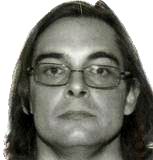 James Ritchie
Serial killer · USA · 2016
James Dale Ritchie (November 4, 1976 – November 12, 2016) was known in the medi…
5 victims
James Ritchie
Serial killer · USA · 2016
James Dale Ritchie (November 4, 1976 – November 12, 2016) was known in the medi…
5 victims
- Gender
- male
- Country
- USA
- Location
- Missouri/Illinois/California, USA
- Date of birth
- J uly 16, 1929
- Age at first offence
- 40
- Characteristics
- child molester
- Victim profile
- Eric Christgen, 4 / Michelle Steele, 11
- Method of murder
- Strangulation - St abbing with knife
- Date(s) of murder
- 1969 - 1982
- Years active
- 1969–1982
- Date of arrest
- August 3, 1982
- Status
-
Died in custody
Sentenced to 50 years to life in prison without parole in Missouri in 1984; committed suicide by hanging himself in his cell on December 7, 1984
Case record: Charles Ray Hatcher
Personal details
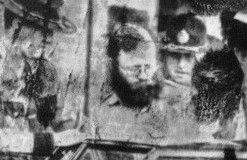
Charles Ray Hatcher (July 16, 1929 – December 7, 1984) was an American serial killer.
He was born on July 16, 1929 in Mound City, Missouri, a small town 34 miles north of St. Joseph. He was the youngest of Jesse and Lula Hatcher's four children. His father was an ex-convict and an abusive alcoholic. Hatcher was teased in school, and he would often inflict pain on his classmates.
Background
In the spring of 1935, Hatcher and his older brothers were flying a kite with copper wire they had found in an old Model T Ford. His oldest brother, Arthur Allen, was about to hand the kite to him when it hit a high-voltage power line and electrocuted him. Arthur was pronounced dead at the scene.
Soon afterward, his father left home and divorced his mother. His mother remarried several times, and in 1945, Hatcher moved with his mother and her third husband to St. Joseph.
The offence
Hatcher confessed to murdering 16 people between 1969 and 1982. His confessions included abduction, molestation, and murders involving young children.
Crimes involving children and convictions discussed
Hatcher attempted to abduct a 16-year-old St. Joseph newspaper boy named Steven Pellham while threatening him with a butcher knife. Hatcher was sentenced for attempted abduction and auto theft under the Habitual Criminal Act.
Hatcher confessed to abducting a twelve year old boy named William Freeman in Antioch, California, and claimed he had strangled him.
Hatcher was linked to the missing and later found victim Gilbert Martinez, who was reported missing in San Francisco at age six. Martinez was found by a man walking his dog as the boy was being beaten and sexually assaulted; Martinez survived the assault.
Hatcher was associated with the abduction and molestation of Martinez. He was tried and convicted of the abduction and molestation of Martinez.
On May 26, 1978, four-year-old Eric Christgen disappeared in downtown Saint Joseph, Missouri. His body later turned up along the Missouri River; he had been sexually abused and died of suffocation.
Hikers found the nude, ravaged body of 11-year-old Michelle Steele on July 29, beaten and strangled to death on a bank of the Missouri River near St. Joseph. Hatcher was arrested the next day while he tried to check in at the St. Joseph State Hospital, and he confessed to fifteen other child-murders dating from 1969.
Hatcher was also convicted of the Christgen homicide in October 1983, and he received a term of life imprisonment with no parole for at least 50 years.
Facing his second Missouri conviction a year later for the murder of Michelle Steele, Hatcher requested a death sentence but the jury refused and recommended life on December 3, 1984.
Investigation and related criminal proceedings
1947–1963: property offences, imprisonment, and prison incident
In 1947, Hatcher was convicted of auto theft in St. Joseph after stealing a logging truck from Iowa-Missouri Walnut Company, his employer of two weeks. He received a two-year suspended sentence.
In 1948, he was convicted of auto theft a second time for stealing a 1937 Buick in St. Joseph. Hatcher was sentenced to two years in Missouri State Penitentiary.
On June 8, 1949, Hatcher was released from prison after serving a little more than half of his time; however, he was back in prison in just a few months, after being convicted of forging a $10 check at a gas station in Maryville.
On March 18, 1951, Hatcher escaped from prison and attempted a burglary, but was caught and received an extra two years in prison.
After serving his additional time, Hatcher was released from prison on July 14, 1954. He stole a 1951 Ford in Orrick and was subsequently sentenced to four years in prison.
Before he was sentenced, Hatcher attempted to escape from the Ray County Jail in Richmond and received an additional two years.
On March 18, 1959, Hatcher was released from prison after the sixth prison sentence of his career.
On June 26, 1959, Hatcher attempted to abduct a 16-year-old St. Pellham reported the crime, and Hatcher was arrested when the police stopped him in a stolen vehicle. Hatcher was sentenced to five years in the Missouri State Penitentiary for the attempted abduction and auto theft under the Habitual Criminal Act.
While Hatcher was waiting to be transported to prison, he unsuccessfully attempted to break out of the Buchanan County Jail.
When Hatcher arrived at the Missouri State Penitentiary, he claimed to be the most notorious criminal in northwest Missouri since Jesse James.
On July 2, 1961, inmate Jerry Tharrington was found raped and stabbed to death on the prison’s kitchen loading dock. Hatcher was the only one missing from the kitchen crew at the time of the murder.
Hatcher was sent to solitary confinement for Tharrington’s murder, but there was not enough evidence to convict him in court.
While in solitary confinement for the murder, Hatcher wrote a note claiming that he needed psychiatric treatment; however, the prison psychologist felt that it was simply a scheme to get out of solitary and possibly out of prison early. Treatment was refused, and Hatcher was returned to the general population.
Hatcher’s sentence was reduced to three quarters the original time, and he was released on August 24, 1963.
1969–1977: California proceedings, mental evaluations, and escape attempt
On August 27, 1969, Hatcher confessed to abducting a twelve year old boy named William Freeman in Antioch, California. He claimed he had told the boy to come with him, taken him to a creek, and strangled him.
On August 29, 1969, six-year-old Gilbert Martinez was reported missing in San Francisco. According to the six-year-old girl with whom he was playing, Martinez walked away with a man who offered him ice cream. He was found by a man walking his dog as the boy was being beaten and sexually assaulted.
Police arrived and arrested the assailant, who identified himself as Albert Ralph Price, although he carried identification with the name Hobert Prater. Martinez survived the assault, and Federal Bureau of Investigation records later identified the man as Charles R. Hatcher.
Still going by the name Albert Price, Hatcher was charged with assault with attempt to commit sodomy and kidnapping. He was ordered to undergo competency evaluations to determine his competence to stand trial.
A complete Psychological evaluation was ordered when Hatcher was unresponsive during the preliminary evaluations.
During this time, he claimed to hear voices, and faked delusions and suicide attempts.
In December 1970, Hatcher was sent back and forth between the courts and hospital multiple times.
One psychiatrist diagnosed him as having a passive-aggressive personality with paraphilia and pedophilia. It was reported that the hospital staff felt Hatcher was fabricating or exaggerating the symptoms of his mental disorders.
He was examined by two psychiatrists in January 1971.
He was declared insane by the first one, who recommended vigorous treatment in a secure hospital.
The second psychiatrist declared him to be incompetent to stand trial and sent him back to the hospital.
On May 24, 1971, Hatcher was sent to trial and pleaded not guilty by reason of insanity.
He was sent to a different hospital for more evaluations, where it was determined that he was unfit to stand trial.
On June 2, Hatcher escaped from the hospital.
He was caught a week later in Colusa and arrested for suspected auto theft under the name Richard Lee Grady.
Hatcher was returned to the California State Hospital for a mental evaluation.
In April 1972, hospital staff determined that his treatment was unsuccessful and that he was a danger to other patients, after which he was sent to the prison state hospital in Vacaville.
In August 1972, Hatcher was transferred to San Quentin State Prison to stand trial, three years after the crime.
He was ordered to undergo two final examinations: one declared him competent to stand trial and the other determined him to be sane at the time of the crime.
In December 1972, Hatcher was tried for and convicted of the abduction and molestation of Martinez.
In January 1972, he was committed to the California State Hospital as a "mentally disordered sexual offender".
On March 28, 1973, security guards found Hatcher hiding in a cooler near the hospital's main courtyard with two sheets stuffed into his pants, after which he admitted to an escape attempt.
He was sent back to court for sentencing after doctors determined he was still a threat to society.
In April, Hatcher was sentenced to one year to life and sent to a medium security prison in Vacaville.
In May 1973, a psychologist found Hatcher to be a "manipulative institutionalized sociopath".
In June 1973, he attempted suicide by slashing his wrists after it was recommended that he be transferred to a maximum security prison.
A psychiatrist diagnosed him with paranoid schizophrenia, and he remained at Vacaville.
In August 1975, guards reported good behavior at Hatcher's parole review.
In June 1976, the California Parole Board found that Hatcher had improved dramatically through his time in prison and set a parole date of December 25, 1978.
As a result of the passage of a bill giving inmates credit for time spent in jails and mental hospitals, Hatcher received a modified parole date in January 1977.
He was released to a halfway house in San Francisco on May 20, 1977.
1978–1982: Missouri disappearances, interrogation of suspect, and subsequent confessions
The police questioned more than 100 possible suspects, including "every known pervert in town," to no avail.
One of them was Melvin Reynolds, a 25-year-old man of limited intelligence who had been sexually abused himself as a child and who had some homosexual episodes as an adolescent.
Reynolds, although extremely agitated by the investigation, cooperated through several interrogations over a period of months, including two polygraph examinations and one interrogation under hypnosis.
In December 1978, he was questioned under sodium amytal ("truth serum") and made an ambiguous remark that intensified police suspicion.
Two months later, in February 1979, the police brought the still cooperative Reynolds in for another round of interrogation -- 14 hours of questions, promises, and threats.
Finally, Reynolds gave in and said, "I'll say so if you want me to."
In the weeks that followed, Reynolds embellished this confession with details that were fed to him, deliberately or otherwise.
That was enough to convince the prosecutor to charge Reynolds, and to convince a jury to convict him of second-degree murder.
He was sentenced to life imprisonment.
Four years later, Reynolds was released when Charles Hatcher confessed to three murders, including that of Eric Christgen.
Arrest and trial context in Missouri for Michelle Steele and related confessions
On July 29, hikers found the nude, ravaged body of 11-year-old Michelle Steele, beaten and strangled to death on a bank of the Missouri River near St. Joseph.
Hatcher was arrested next day, as he tried to check in at the St. Joseph State Hospital.
While awaiting trial, he confessed to fifteen other child-murders dating from 1969.
The first victim, 12-year-old William Freeman, had disappeared from Antioch, California, in August of that year, one day before Hatcher was charged with child molestation in nearby San Francisco.
In another case, Hatcher penned a crude map that led searchers to the remains of James Churchill, buried on the grounds of the Rock Island Army Arsenal, near Davenport, Iowa.
It was then that he also confessed to the murder of Eric Christgen.
Hatcher was convicted of the Christgen homicide in October 1983, and drew a term of life imprisonment with no parole for at least 50 years.
Facing his second Missouri conviction a year later for the murder of Michelle Steele, Hatcher requested a death sentence but the jury refused, recommending life on December 3, 1984.
Four days later, Hatcher hanged himself in his cell, at the state prison in Jefferson City.
Sentencing
Hatcher received a two-year suspended sentence in 1947 for auto theft in St. Joseph.
In 1948, he was sentenced to two years in Missouri State Penitentiary for auto theft for stealing a 1937 Buick in St. Joseph.
After the 1951 escape and attempted burglary, he received an extra two years in prison.
After attempting to escape from the Ray County Jail in Richmond, he received an additional two years.
On June 26, 1959, he was sentenced to five years in the Missouri State Penitentiary for the attempted abduction and auto theft under the Habitual Criminal Act.
While serving prison time after the Tharrington case, his sentence was reduced to three quarters the original time, and he was released on August 24, 1963.
In California, after his December 1972 conviction for the abduction and molestation of Martinez, he received a sentence to one year to life in April following the court return for sentencing.
He set the California parole date of December 25, 1978, and he was released to a halfway house in San Francisco on May 20, 1977.
In Missouri for the Steele case, the jury refused Hatcher’s request for a death sentence and recommended life on December 3, 1984.
Hatcher was sentenced to 50 years to life in prison without parole in Missouri in 1984.
Appeals
No appeals were described.
Outcome
On July 29 hikers found the nude, ravaged body of 11-year-old Michelle Steele; Hatcher was arrested the next day.
Hatcher confessed to fifteen other child-murders dating from 1969 while awaiting trial.
Hatcher was convicted of the Christgen homicide in October 1983.
He was sentenced in Missouri in 1984 following the Michelle Steele murder.
On December 7, 1984, Hatcher committed suicide by hanging himself in his cell at the state prison in Jefferson City.
Timeline
- July 16, 1929 — Charles Ray Hatcher was born in Mound City, Missouri.
- 1935 (spring) — Arthur Allen was electrocuted by a high-voltage power line after the kite incident; Arthur was pronounced dead at the scene.
- 1945 — Hatcher moved with his mother and her third husband to St. Joseph.
- 1947 — Hatcher was convicted of auto theft in St. Joseph for stealing a logging truck from Iowa-Missouri Walnut Company; he received a two-year suspended sentence.
- 1948 — Hatcher was convicted of auto theft for stealing a 1937 Buick in St. Joseph; he was sentenced to two years in Missouri State Penitentiary.
- June 8, 1949 — Hatcher was released from prison after serving a little more than half of his time; he returned to prison after being convicted of forging a $10 check at a gas station in Maryville.
- March 18, 1951 — Hatcher escaped from prison and attempted a burglary; he was caught and received an extra two years in prison.
- July 14, 1954 — Hatcher was released from prison after serving his additional time.
- 1959 (June 26) — Hatcher attempted to abduct 16-year-old Steven Pellham with a butcher knife; he was sentenced to five years for attempted abduction and auto theft under the Habitual Criminal Act.
- July 2, 1961 — Inmate Jerry Tharrington was found raped and stabbed to death on the prison’s kitchen loading dock; Hatcher was the only one missing from the kitchen crew at the time of the murder.
- August 24, 1963 — Hatcher was released after his sentence was reduced to three quarters of the original time.
- August 27, 1969 — Hatcher confessed to abducting a twelve year old boy named William Freeman in Antioch, California; he claimed he strangled the boy.
- August 29, 1969 — Six-year-old Gilbert Martinez was reported missing in San Francisco.
- December 1970 — Hatcher was sent back and forth between the courts and hospital multiple times.
- January 1971 — Hatcher was examined by two psychiatrists; one declared him insane and the other declared him incompetent to stand trial.
- May 24, 1971 — Hatcher pleaded not guilty by reason of insanity at trial.
- June 2, 1971 — Hatcher escaped from the hospital.
- (One week later in) — Hatcher was caught a week after the escape in Colusa and arrested for suspected auto theft under the name Richard Lee Grady.
- April 1972 — Hospital staff determined Hatcher’s treatment was unsuccessful and that he was a danger to other patients; he was sent to the prison state hospital in Vacaville.
- August 1972 — Hatcher was transferred to San Quentin State Prison to stand trial.
- December 1972 — Hatcher was tried for and convicted of the abduction and molestation of Martinez.
- January 1972 — Hatcher was committed to the California State Hospital as a "mentally disordered sexual offender".
- March 28, 1973 — Security guards found Hatcher hiding in a cooler near the hospital's main courtyard with two sheets stuffed into his pants; he admitted to an escape attempt.
- April 1973 — Hatcher was sentenced to one year to life and sent to a medium security prison in Vacaville.
- May 1973 — A psychologist found Hatcher to be a "manipulative institutionalized sociopath".
- June 1973 — Hatcher attempted suicide by slashing his wrists.
- August 1975 — Guards reported good behavior at Hatcher's parole review.
- June 1976 — The California Parole Board set a parole date of December 25, 1978.
- January 1977 — Hatcher received a modified parole date due to a bill giving inmates credit for time spent in jails and mental hospitals.
- May 20, 1977 — Hatcher was released to a halfway house in San Francisco.
- May 26, 1978 — Four-year-old Eric Christgen disappeared in downtown Saint Joseph, Missouri.
- December 3, 1984 — The jury refused Hatcher’s request for a death sentence and recommended life in the Missouri Steele case.
- July 29, 1984 — Hikers found 11-year-old Michelle Steele’s body.
- December 7, 1984 — Hatcher committed suicide by hanging himself in his cell.
Other details
Hatcher was a seemingly average petty criminal who took a big step up to murder when he stabbed fellow prisoner Jerry Lee Tharrington to death in the kitchen of the Missourri State Penententary in 1961.
Hatcher turned his rage on children, and after release for a child abduction conviction in the mid-1960's, Hatcher began a crime spree of abductions, molestations, and murders involving young children.
Police questioned more than 100 possible suspects for the Christgen disappearance, including "every known pervert in town."
Reynolds was charged and convicted of second-degree murder and was sentenced to life imprisonment based on his confession after interrogation. Reynolds was released four years later when Hatcher confessed to three murders, including Eric Christgen.
Hatcher was arrested next day after Michelle Steele was found while he tried to check in at the St. Joseph State Hospital.
Hatcher was linked to the murder of James Churchill through a map he penned, with Churchill buried on the grounds of the Rock Island Army Arsenal, near Davenport, Iowa.
Hatcher was described as having paranoid schizophrenia and as having diagnoses including passive-aggressive personality with paraphilia and pedophilia in the mental health evaluations.
Hatcher escaped from a hospital on June 2, 1971 and was caught a week later in Colusa under the name Richard Lee Grady.
Hatcher was housed at Vacaville and San Quentin State Prison during the California proceedings.
A psychologist found Hatcher to be a "manipulative institutionalized sociopath".
A psychiatrist diagnosed Hatcher with paranoid schizophrenia.
Hatcher made an escape attempt on March 28, 1973 while he was in the California State Hospital area, and admitted it.
Hatcher was found hiding in a cooler with two sheets stuffed into his pants.
Hatcher claimed to need psychiatric treatment while in solitary confinement for the Tharrington case.
Treatment was refused by the prison psychologist.
Spotted an error, or have more information about this case?