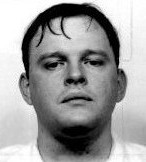
Gene Wilford Hathorn
Murderer Brian Kevin Rosenfeld
Murderer · USA · 1985
Brian Kevin Rosenfeld Brian Kevin Rosenfeld was sentenced to three concurrent l…
23 victims
Brian Kevin Rosenfeld
Murderer · USA · 1985
Brian Kevin Rosenfeld Brian Kevin Rosenfeld was sentenced to three concurrent l…
23 victims
 Marvin Gray
Murderer · USA · 1975
Marvin Gray was convicted killer who claimed responsibility for 23 slayings and…
23 victims
Marvin Gray
Murderer · USA · 1975
Marvin Gray was convicted killer who claimed responsibility for 23 slayings and…
23 victims
 Yahweh ben Yahweh
Murderer · USA · 1980
Yahweh ben Yahweh was born and legally named Hulon Mitchell Jr. (October 27, 19…
23 victims
Yahweh ben Yahweh
Murderer · USA · 1980
Yahweh ben Yahweh was born and legally named Hulon Mitchell Jr. (October 27, 19…
23 victims
 Russell Ellwood
Murderer · USA · 1991
Russell Ellwood was a former taxi driver. Authorities suspected him of killing…
20 victims
Russell Ellwood
Murderer · USA · 1991
Russell Ellwood was a former taxi driver. Authorities suspected him of killing…
20 victims
 Jean Harris
Murderer · USA · 1980
Jean S. Harris was born Jean Struven in 1923 in Cleveland, USA. Her mother, Mil…
1 victim
Jean Harris
Murderer · USA · 1980
Jean S. Harris was born Jean Struven in 1923 in Cleveland, USA. Her mother, Mil…
1 victim
 William Kendrick Burns
Murderer · USA · 1980
William Kendrick Burns was executed by lethal injection in Texas on April 11, 2…
2 victims
William Kendrick Burns
Murderer · USA · 1980
William Kendrick Burns was executed by lethal injection in Texas on April 11, 2…
2 victims
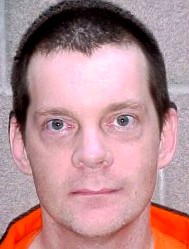 Milo Stanley
Murderer · USA · 1986
Milo Stanley was convicted in Yavapai County of fatally shooting his wife, Susa…
2 victims
Milo Stanley
Murderer · USA · 1986
Milo Stanley was convicted in Yavapai County of fatally shooting his wife, Susa…
2 victims
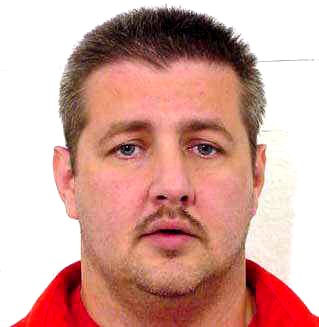 Marco Chapman
Murderer · USA · 2002
Marco Allen Chapman was executed by lethal injection in Kentucky on November 21…
2 victims
Marco Chapman
Murderer · USA · 2002
Marco Allen Chapman was executed by lethal injection in Kentucky on November 21…
2 victims
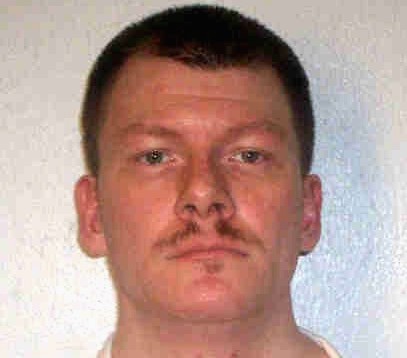 Billy Thessing
Murderer · USA · 2003
Billy Thessing was convicted of capital murder, residential burglary, and theft…
1 victim
Billy Thessing
Murderer · USA · 2003
Billy Thessing was convicted of capital murder, residential burglary, and theft…
1 victim
 Margaret Ann Allen
Murderer · USA · 2005
Margaret Ann Allen was born 1/23/66 and was referred to as 45 years old and as…
1 victim
Margaret Ann Allen
Murderer · USA · 2005
Margaret Ann Allen was born 1/23/66 and was referred to as 45 years old and as…
1 victim
- Gender
- male
- Country
- USA
- Location
- Trinity County, Texas, USA
- Date of birth
- September 17, 1960
- Age at first offence
- 24
- Characteristics
- parricide, inheritance, history of mental illness
- Victim profile
- Gene Hathorn Sr., 45 (his father) , Sue Hathor, 35 (his stepmother) and Marcus, 14 (his stepbrother)
- Method of murder
- Shooting
- Date(s) of murder
- October 9, 1984
- Years active
- 1984
- Date of arrest
- —
- Status
-
Sentenced to death
Remanded for a new punishment hearing; sentenced to death in 1985 and conviction and sentence affirmed on direct appeal; habeas relief dismissed as an abuse of the writ in a subsequent application but the Penry claim raised in the initial application was reconsidered and resulted in remand on 8 April 2009
Case identifiers
- Applicant: Gene Wilford Hathorn, Jr.
- Court of Criminal Appeals of Texas cause: No. AP-75,917 (Ex parte Gene Wilford Hathorn, Jr., Applicant)
- Habeas corpus cause number: 6958-B
- District court: 411th District Court
- County: Trinity County
- Opinion author: Meyers, J.
- Delivery date: April 8, 2009
STATUS and procedural history
- Gene Wilford Hathorn, Jr. was convicted of capital murder and sentenced to death in 1985.
- On direct appeal, his conviction and sentence were affirmed in Hathorn v. State, 848 S.W.2d 101 (Tex. Crim. App. 1992).
- While the direct appeal was pending before the Court of Criminal Appeals, the United States Supreme Court decided Penry v. Lynaugh, 492 U.S. 302 (1989).
- In an initial application for writ of habeas corpus, Hathorn argued that his jury was not instructed to consider mitigating circumstances in determining his sentence; relief was denied.
- In a subsequent writ, Hathorn claimed that the former Texas special issue questions operated to preclude meaningful consideration of mitigation evidence, in violation of the Eighth and Fourteenth Amendments and Penry v. Lynaugh (Penry I).
- Because this was his third subsequent application, the Court dismissed the application as an abuse of the writ under Code of Criminal Procedure Article 11.071, section 5.
- The Court then reconsidered, on its own initiative, the Penry claim raised in the initial application and ordered briefs on four issues.
- The Court concluded that the claim was not barred by procedural default and remanded the case to the trial court for new punishment hearing.
Timeline
- 1985 — Gene Wilford Hathorn, Jr. was convicted of capital murder and sentenced to death.
- 1992 — Direct appeal affirmed the conviction and sentence (Hathorn v. State, 848 S.W.2d 101).
- 1989 — The United States Supreme Court handed down Penry v. Lynaugh, 492 U.S. 302 (1989) while the direct appeal was pending.
- April 8, 2009 — The Court delivered the opinion reconsidering the Penry claim and ordered a remand for a new punishment hearing.
The issues considered on reconsideration
Issues one and two
- The Court asked:
- Did applicant object at trial that his jury was not given an adequate vehicle to give effect to mitigating evidence, and whether any other objection specifically pertaining to mitigating evidence was made when discussing the charge to be given the jury?
- If no objection was made, whether this made a difference regarding resolution of the allegation?
- There was no objection at trial pertaining to mitigating evidence.
- Hathorn did object to the trial court’s refusal to include a special issue related to provocation.
- The Court noted that the evidence supporting the provocation instruction was the same evidence now raised as mitigating evidence.
- The Court stated that the evidence was based on Hathorn’s trial testimony that he killed his father, step-mother, and half-brother and claimed the murders were provoked by childhood abuse at the hands of his father, resulting in a longstanding hatred for his family.
- Although Hathorn made no objection that the jury lacked a vehicle to give effect to mitigating evidence, the Court held that, in these circumstances, no objection was necessary.
- The Court cited Black v. State, 816 S.W.2d 350 (Tex. Crim. App. 1991).
- The Court stated that case law at the time of Black’s trial and Hathorn’s trial held that, regardless of whether the defendant objected to the charge or requested special mitigation instructions, the defendant was not entitled to mitigating evidence instructions beyond that covered by the future-dangerousness special issue.
- The Court set out its reasoning from Black, including:
“Given the settled state of the case law at the time of appellant's trial, we refuse to fault him or his attorney for failing to object to the jury charge at punishment or request an instruction informing the jury it may give effect to the mitigating evidence presented at trial. Under the established precedent, the trial judge would have been correct in overruling the objection or denying the additional instruction, and clearly the defendant would not have been granted relief from this Court on direct appeal. 816 S.W.2d at 364.”
- The Court held that for cases tried during that time period, there was no procedural default, allowing it to address the merits.
- The Court acknowledged that normally an egregious harm standard would be proper for unobjected-to charge error, but it interpreted Supreme Court cases on this issue to have broader due process implications.
Issue three
- The Court asked whether the mitigating evidence presented at trial was the type of evidence for which Hathorn was entitled to a separate vehicle.
- The Court stated that the evidence presented at trial was the type that required a separate vehicle so the jury could give effect to the evidence.
- Hathorn testified at the punishment hearing that:
- his father and step-mother were neglectful;
- his father was abusive and beat him nightly during his first two years of grade school, including an occasion for going to church;
- his father shot and killed his pony and a dog and Hathorn had to bury the dog;
- his father was violent and carried a weapon.
- The Court also stated that the former Chief Psychologist for the Texas Department of Corrections testified about:
- Hathorn’s violent and dysfunctional home environment;
- how it may have shaped his development and contributed to the offense for which he was charged.
- The Court discussed Supreme Court guidance describing mitigating evidence as broadly defined and “two-edged.”
- The Court referenced Brewer v. Quarterman, 550 U.S. 286 (2007) and included the Court’s description:
“the evidence that gives rise to a Penry claim is broadly defined as mitigating evidence, which is a ‘two-edged sword,’ meaning that it tends ‘to confirm the State's evidence of future dangerousness as well as lessen [the defendant's] culpability for the crime.’ Brewer , 550 U.S. at 293.”
- The Court also included an explanation quoted from Brewer:
“Nowhere in our Penry line of cases have we suggested that the question whether mitigating evidence could have been adequately considered by the jury is a matter purely of quantity, degree, or immutability. Rather, we have focused on whether such evidence has mitigating relevance to the special issues and the extent to which it may diminish a defendant's moral culpability for the crime. Brewer , 550 U.S. at 294.”
- The Court discussed Abdul-Kabir v. Quarterman, 550 U.S. 233 (2007) and included:
“a juror considering [Abdul-Kabir's] evidence of childhood neglect and abandonment and possible neurological damage or Brewer's evidence of mental illness, substance abuse, and a troubled childhood could feel compelled to provide a 'yes' answer to the [future-dangerousness] question, finding himself without a means for giving meaningful effect to the mitigating qualities of such evidence.”
- The Court then addressed its decision in Ex Parte Moreno, 245 S.W.3d 419 (Tex. Crim. App. 2008), including:
“We can no longer maintain that evidence of a troubled childhood is adequately encompassed within the statutory special issues. Both Abdul-Kabir and (especially) Brewer expressly state that Supreme Court precedent has long rejected the notion that a jury can meaningfully express its reasoned moral response to evidence of a troubled or disruptive childhood within the narrow confines of the special issues.”
- The Court quoted Moreno’s statement about the statutory special issues:
“The statutory special issues alone did not provide the applicant's jury with an adequate mechanism for exercising its reasoned moral judgment whether his evidence of a troubled childhood warranted the imposition of a life sentence instead of the ultimate penalty of death.”
- The Court contrasted Black, stating that in Black the future-dangerousness special issue was adequate because it did not include allegations of child abuse or trauma.
- The Court stated that, as in Brewer, it was likely the jury believed it needed to decide whether Hathorn acted deliberately and would likely be dangerous, disregarding concern that the troubled childhood could mean he might not deserve a death sentence.
Issue four
- The Court asked whether Hathorn’s direct-appeal counsel was obligated to raise a Penry claim post-submission while the direct appeal remained pending.
- The Court stated that because Penry v. Lynaugh (Penry I) was handed down while Hathorn’s case was pending on direct appeal before the Court of Criminal Appeals, Hathorn could have filed a supplemental brief raising a Penry claim at that time.
- The Court cited Ramirez v. State, 815 S.W.2d 636, 654-55 (Tex. Crim. App. 1991), in which the Court sustained a Penry issue raised for the first time in a supplemental brief while direct appeal was pending.
- The Court stated that in Moreno, it considered the applicant’s initial writ even though the Penry issue had not been raised in a supplemental brief on direct appeal.
- The Court stated that Moreno was procedurally similar because Penry I was handed down while direct appeal was pending.
- The Court stated it would not hold Hathorn to a different standard by finding procedural default based on failure to file a supplemental brief raising the Penry issue on direct appeal.
Outcome
- Because of the unique circumstances and the state of the law at the time of Hathorn’s trial and direct appeal:
- Hathorn’s Penry claim was not barred by procedural default for failure to object to the lack of a mitigation instruction at trial.
- Hathorn’s Penry claim was not barred by procedural default for failure to file a supplemental brief raising a Penry claim on direct appeal.
- Because the mitigating evidence presented at trial was the type for which Hathorn was entitled to a separate vehicle:
- the Court remanded the case to the trial court for new punishment hearing.
Other details
- The Court’s opinion included the following voting and authorship:
- Meyers, J., delivered the opinion of the Court, joined by Price, Johnson, Keasler, Hervey, Holcomb, and Cochran, JJ.
- Keller, P.J., and Womack, J., concurred.
- The Court discussed that this was reconsideration on its own initiative following the dismissal of the third subsequent writ as an abuse of the writ.
- The Court referenced Code of Criminal Procedure Article 11.071, section 5 regarding abuse of the writ.
Spotted an error, or have more information about this case?