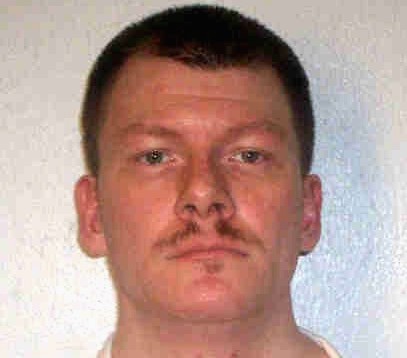
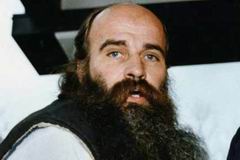
Billy Thessing
Murderer Robert Martines Perez
Murderer · USA · 1994
Name: Robert Martines Perez · Other name used in proceedings: Robert Martinez P…
15 victims
Robert Martines Perez
Murderer · USA · 1994
Name: Robert Martines Perez · Other name used in proceedings: Robert Martinez P…
15 victims
 Billy Frank Vickers
Murderer · USA · 1993
Billy Frank Vickers Vickers was executed by lethal injection in Texas on Januar…
14 victims
Billy Frank Vickers
Murderer · USA · 1993
Billy Frank Vickers Vickers was executed by lethal injection in Texas on Januar…
14 victims
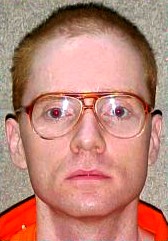 Robert Glen Jones
Murderer · USA · 1996
Defendant: Robert Glenn Jones (ADC#070566) · Co-defendant: Scott Nordstrom (ADC…
7 victims
Robert Glen Jones
Murderer · USA · 1996
Defendant: Robert Glenn Jones (ADC#070566) · Co-defendant: Scott Nordstrom (ADC…
7 victims
 Otoya Yamaguchi
Murderer · Japan · 1960
Otoya Yamaguchi (山口 二矢, Yamaguchi Otoya, February 22, 1943 - November 2, 1960)…
1 victim
Otoya Yamaguchi
Murderer · Japan · 1960
Otoya Yamaguchi (山口 二矢, Yamaguchi Otoya, February 22, 1943 - November 2, 1960)…
1 victim
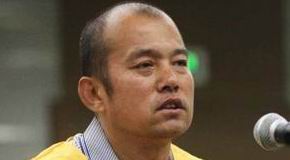 Wang Shujin
Serial killer · China · 1994
Wang Shujin was a death row prisoner who was convicted of raping and killing at…
4 victims
Wang Shujin
Serial killer · China · 1994
Wang Shujin was a death row prisoner who was convicted of raping and killing at…
4 victims
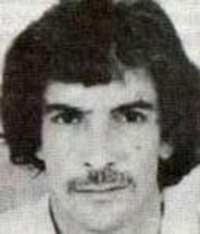 Keith Faure
Murderer · Australia · 1976
Keith George Faure was born in June 1951. He was an Australian career criminal…
4 victims
Keith Faure
Murderer · Australia · 1976
Keith George Faure was born in June 1951. He was an Australian career criminal…
4 victims
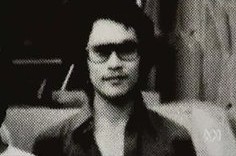 Joji Obara
Murderer · Japan · 1992
Joji Obara (織原城二; Obara Jōji) was born in 1952 in Osaka, Japan. He was a convic…
1 victim
Joji Obara
Murderer · Japan · 1992
Joji Obara (織原城二; Obara Jōji) was born in 1952 in Osaka, Japan. He was a convic…
1 victim
 Nicholas Vernage
Murderer · Canada · 1991
Nicholas Vernage (26) murdered Sgt Alan King and also killed Lorna Bogle and Ja…
3 victims
Nicholas Vernage
Murderer · Canada · 1991
Nicholas Vernage (26) murdered Sgt Alan King and also killed Lorna Bogle and Ja…
3 victims
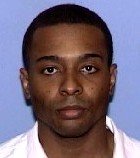 Vaughn Ross
Murderer · USA · 2001
Vaughn Ross was convicted of capital murder in Texas for the deaths of Douglas…
2 victims
Vaughn Ross
Murderer · USA · 2001
Vaughn Ross was convicted of capital murder in Texas for the deaths of Douglas…
2 victims
- Gender
- male
- Country
- USA
- Location
- Pulaski County, Arkansas, USA
- Date of birth
- September 11, 1968
- Age at first offence
- 35
- Characteristics
- robbery, convicted rapist, drug addict
- Victim profile
- Mattie Basinger, 67
- Method of murder
- Beat her, cut her throat, then kicked her in the head
- Date(s) of murder
- February 11, 2003
- Years active
- 2003
- Date of arrest
- 6 days after
- Status
-
Sentenced to death
Sentenced to death on September 20, 2004
Case details
Billy Thessing was convicted of capital murder, residential burglary, and theft by receiving property valued in excess of $2500.00, and he was also charged with misdemeanor theft by receiving property valued at less than $500.00. The information further charged Thessing as a habitual offender with four or more prior felony convictions. His sentences included the death penalty for the capital murder charge.
Other details
Thessing went to 67-year-old Mattie Basinger’s home to rob and beat her to death. Thessing stole Bassinger’s car and planned to return to her home to set the house on fire to make the death appear accidental. Thessing was arrested after he wrecked Bassinger’s car. A friend testified that Thessing confessed to killing an elderly woman and gave her Bassinger’s food and a television set. Thessing maintained his innocence and testified twice that he was a victim of a satanic conspiracy. Prosecutors in the appeal included Bart Dickinson. Defense lawyers included Bill McLean and Bret Qualls.
Timeline
- February 11, 2003 — Pam McNew testified that Thessing came to her house late on the evening of February 11, 2003, after she returned from the store, and that he was burning trash in her front yard.
- February 17, 2003 — Susan Basinger Sweet went to the home of her mother, Mattie Basinger, and discovered that her mother’s car was not there; Takeisha Gilbert, a patrol officer for the Little Rock Police Department, was the first officer to arrive at the scene; Pam McNew went to the Benton Police Department after seeing a news report on television about Ms. Basinger’s murder; Thessing wrecked Ms. Basinger’s car and was arrested by a Benton police officer for public intoxication.
- April 16, 2003 — The prosecuting attorney filed a four-count information against Thessing charging capital murder, residential burglary, and theft by receiving property valued in excess of $2500.00, and misdemeanor theft by receiving property valued at less than $500.00, with habitual offender allegations.
- December execution date — The judge set a December execution date, while the case proceeded through several appeals.
- September 20, 2004 — Thessing was sentenced to death.
- 3-2-06 — The Supreme Court of Arkansas issued an opinion in No. CR05-420, affirming the judgment and commitment order.
- Wider procedural history referenced in the appeal — Thessing raised nine points and requested reversal of his convictions or reversal of his death sentence and remand for resentencing; the Supreme Court held that his points were without merit and affirmed the judgment and commitment order.
Background
Susan Basinger Sweet drove from work on Hwy. 67/167 four years before her mother’s murder when a car jumped across the median and hit her car head-on, nearly killing her. She was in a coma for several days, and doctors did not think she was going to make it. She was in the hospital for a month and in rehab for 15 days. She lay up in bed for several months at home. Her husband and her mother took care of her while she recovered. Her mother, Mattie Basinger, had cancer and would drive from Little Rock to Ward and stay a week and feed and bathe Susan until she could get on her feet. Susan said, “I was in bed for a year.” She also said, “I'm lucky to be walking.”
A year later, her 67-year-old mother, Mattie Basinger, was brutally murdered in her home off Geyer Springs Road. A parolee named Billy Thessing entered her home and beat her, cut her throat, then kicked her in the head, leaving a bloody footprint that the police eventually matched to his boot.
The offence
Thessing went to Mattie Basinger’s home to rob and beat her to death. Susan Basinger Sweet described seeing the aftermath when her son Jeremiah entered and found his grandmother lying on the floor in the hallway outside her bedroom. Jeremiah went outside and said, "Mom, she's here." Susan’s daughter remembered, "There was blood all over." The daughter said: "He'd dragged her from the living room, all the way back to the bedroom and what used to be my room. She had two black eyes and had swallowed her own blood. Her nose was gone. The kick in the head is probably what killed her."
Susan said, "She was on cancer medication, and she bled faster," and she added, "She lay there gurgling, and he kicked her anyway." Thessing stole Basinger’s car and wheelchair and took items including her food, silverware, Bible, and ID. Thessing also left a bloody footprint matched to his boot.
Investigation
Takeisha Gilbert, a patrol officer for the Little Rock Police Department, was the first police officer to arrive at the scene. She observed blood throughout the house and found Ms. Basinger’s body in the bedroom. The autopsy later revealed that Ms. Basinger had a total of six stab and cutting wounds on multiple parts of her body, and she also received blunt force wounds to her head. Two of the stab wounds were in the cheek region, which caused bleeding inside her mouth. The bleeding in her mouth caused her to aspirate blood into her trachea that subsequently went into her lungs. The medical examiner testified that Ms. Basinger was alive when she received all these injuries and concluded that Ms. Basinger was alive and breathing in her own blood for ten to fifteen minutes before a blunt force trauma to her head caused her death.
On February 17, 2003, Pam McNew went to the Benton Police Department to talk to police officers after seeing a news report on television about Ms. Basinger’s murder. McNew testified that Thessing had come to her house late on the evening of February 11, 2003; that he told her he had killed someone earlier that evening; and that he brought in groceries, a television set, vitamins, unfilled prescription slips, and a large Bible. McNew also told authorities that the car he drove to her house was the car that belonged to Ms. Basinger. She later found Ms. Basinger’s wheelchair in her shed. Police officers also found silverware and credit cards on the premises which were taken from Ms. Basinger. McNew stated that Thessing tried to convince her fiancé to go with him to burn down Ms. Basinger’s home so he could make the murder look like an accident.
McNew testified that she, Thessing, and her fiancé used crack cocaine together that night. She said she ordered him to leave her house because she had a child and did not want to get in trouble herself. She stated that Thessing left in Ms. Basinger’s car. McNew said that the police officers came and recovered all the things Thessing had left at her home. She said, "She got in the car with her oldest son, Jeremiah, and her daughters Amanda and Jennive" when she arrived at her mother’s house after waiting for an answering machine to come on. Susan Sweet also said, "I tried to call her," and that "There was no answer. Even the answering machine didn't come on. I knew there was something wrong then." McNew received a $400 reward for going to the police.
On February 17, 2003, Thessing wrecked Ms. Inside Ms. Basinger’s car, police officers found a pair of boots with Ms. Basinger’s blood on them. Additionally, police investigators found Thessing’s fingerprints in Ms. Basinger’s home.
Arrest
On February 17, 2003, a Benton police officer arrested Thessing for public intoxication.
Trial
Thessing moved for an order that he was incompetent to stand trial, and he was later judged competent to stand trial at a pretrial hearing. At trial, he was tried and convicted of all four charges against him.
Competency to stand trial
Thessing claimed the circuit judge erred in finding he was competent to stand trial. He pointed to testimony of Dr. Mary Wetherby, a psychologist, who stated that Thessing was not competent to stand trial because he had a psychotic disorder and was delusional, and testimony of Dr. Bradley Diner, a psychiatrist, who stated Thessing was not competent because he suffered from a delusional disorder of the persecutory type. Thessing also stated that Dr. Charles Mallory, a psychologist on the staff of the Arkansas State Hospital, testified that Thessing was competent to stand trial and was not delusional but was malingering. Thessing also conceded that prior to trial he was extensively examined at the Arkansas State Hospital and that three reports prepared by doctors there concluded he was competent to stand trial.
Thessing claimed he made statements during pretrial hearings and throughout his trial testimony revealing the depth of his delusional disorder. For example, he continuously referred to a satanic cult that was trying to harm him. The Supreme Court concluded substantial evidence supported the circuit court’s finding that Thessing was competent to stand trial, including the circuit judge’s own assessment and reliance on reports signed by Dr. Michael J. Simon, Dr. John R. Anderson, Dr. O. Wendell Hall, III, and Dr. Charles H. Mallory after extensive examinations at the Arkansas State Hospital, each concluding that Thessing was competent to stand trial.
Voir dire
Thessing asserted the circuit judge erred by denying defense counsel the right to question prospective jurors after the prosecutor challenged those jurors for cause on whether they could impose the death penalty under certain circumstances. Thessing also contended the error was obvious because the circuit judge himself conducted rehabilitative questioning of prospective jurors in the venire inclined to impose the death penalty.
Use of crack cocaine
Thessing argued that the circuit judge erred in denying his motion for mistrial after Pam McNew testified on direct examination that she, her fiancé, and Thessing used crack cocaine at her house after Thessing told her earlier that evening he had killed someone. Thessing argued the testimony should have been inadmissible under Arkansas Rule of Evidence 404(b) and was introduced to show propensity. He maintained the drug use did not take place at the crime scene and was not contemporaneous. He argued the testimony prejudiced him by leaving an inflammatory image with jurors.
The Supreme Court held that testimony regarding Thessing’s drug use was admissible as part of the res gestae and thus admissible under Rule 404(b).
Closing argument about competency
Thessing claimed the circuit judge should have granted a motion for mistrial or admonished the jury when, in closing argument during the guilt phase, the deputy prosecuting attorney told the jury that Thessing "has been judged competent for trial." Thessing argued competency had already been decided by the circuit judge and was not a matter for the jury, and that the argument could prejudice him against mitigation evidence in the penalty phase.
The Supreme Court concluded no reversible error occurred. It stated that Thessing put mental competency at issue through his own testimony and that the circuit judge had instructed the jury that counsel’s arguments were not evidence and that any argument without a basis in the evidence should be disregarded. The court also noted that in Verdict Form 2A the jury unanimously found that "In addition to his mental illness, Billy Thessing was suffering from drug and alcohol abuse at the time of Mattie Basinger's death." It further stated that Verdict Forms 2B and 2C reflected jurors finding mental illness as a mitigator in some instances.
Thessing’s testimony in the competency-related discussion included the following verbatim statements:
I don't know why she specifically was killed, no, but I, I have been having problems similar for a long time. And I have told judges, and I have told attorneys. I have told police. I have tried to make police reports. I have filed lawsuits. I have wrote complaints and grievances, sheriff's [sic], detectives, you name it. I have told everybody for the last ten years, Hey, I have got some real serious problems with people out here killing people and poisoning people and spreading contamination, terrorists, militants, whoever they are, satanic cults, gangs. I have documentation for the last ten years where I have been trying to tell people about this and won't listen and it's almost like they're all in on it. And I know it sounds crazy and you're saying how does he know about all this and - if he is not part of it. And if, even in Jesus's day why - can't you see he is possessed and have the devil? And others say, no, he is not. He is a goodman. And I have been trying to tell everybody for the last ten years, and if everybody had listened, then Ms. Basinger probably wouldn't be dead today.
Because maybe they would have stopped them before this happened. They have done the same thing to me. I have been poisoned. I have been beat, and they have even put a mark on my hand and forehead, the scar on my head. And I have tried to tell everybody about it, and nobody will listen. They think I'm delusional. They think I'm crazy.
Other claims raised on appeal
Thessing also raised claims related to:
- Pecuniary gain: He argued the state failed to prove motive for pecuniary gain because it did not prove monetary value of property taken; the Supreme Court held there was substantial evidence supporting pecuniary gain.
- Vulnerable victim: He argued the state failed to prove a severe physical disability; the Supreme Court held there was substantial evidence supporting the finding that the victim was especially vulnerable due to temporary or permanent severe physical disability.
- Caldwell argument: He argued the prosecutor told jurors during the penalty phase that the Governor, not jurors, would determine the time and manner of his death; the Supreme Court concluded the prosecutor did not make an inaccurate statement about the jury’s role and upheld the denial of mistrial or admonition.
- Mitigators: He argued the jury instructions imposed a requirement that mitigation probably existed and that the statutory scheme required only that mitigation be found to exist; the Supreme Court affirmed, holding the discrepancy did not affect burden of proof and benefitted Thessing.
- Time of mitigators: He argued the penalty-phase verdict forms were confusing about the time in his life when mitigating circumstances existed; the Supreme Court concluded the discrepancy did not rise to the level of serious error or an error essential to death penalty consideration.
Sentencing
Thessing was sentenced to death for the capital murder charge. The Supreme Court affirmed the judgment and commitment order, including the death penalty.
Appeals
Thessing appealed from his judgment and commitment order for multiple offenses and sentences, including death. He raised nine points and requested that the Supreme Court reverse his convictions and remand or, alternatively, reverse his death sentence and remand for resentencing. The Supreme Court held that his points were without merit and affirmed the judgment and commitment order.
The Supreme Court’s opinion was delivered as “Opinion Delivered 3-2-06” and it was in “SUPREME COURT OF ARKANSAS No. CR05-420” in the case “BILLY THESSING, APPELLANT, Vs. STATE OF ARKANSAS, APPELLEE.”
Susan Sweet indicated that the judge had set a December execution date and that Thessing had several appeals before execution, saying, "He has five years to appeal," and also describing financial strain from Susan's hospital bills after her car accident and her mother's funeral.
Outcome
The Supreme Court affirmed the judgment and commitment order, including the death sentence. The court also stated that the record was reviewed under Supreme Court Rule 4-3(h), and no reversible error was found.
Spotted an error, or have more information about this case?