Gordon Hay
Homicide Robert Mone
Homicide · United Kingdom · 1967
Robert Francis Mone was born in 1948. He grew up with his parents and two siste…
4 victims
Robert Mone
Homicide · United Kingdom · 1967
Robert Francis Mone was born in 1948. He grew up with his parents and two siste…
4 victims
 Peter Hogg
Homicide · United Kingdom · 1976
Peter Hogg was an airline pilot for Air Europe. Margaret Hogg worked as an airl…
1 victim
Peter Hogg
Homicide · United Kingdom · 1976
Peter Hogg was an airline pilot for Air Europe. Margaret Hogg worked as an airl…
1 victim
 Ronald Henry Marwood
Homicide · United Kingdom · 1958
Ronald Henry Marwood was a 25-year-old scaffolder. He was executed by hanging a…
1 victim
Ronald Henry Marwood
Homicide · United Kingdom · 1958
Ronald Henry Marwood was a 25-year-old scaffolder. He was executed by hanging a…
1 victim
 Richard Harley Greenway
Murderer · USA · 1988
27 March 1988 — Greenway and Christopher Lincoln burglarized the Tucson home of…
2 victims
Richard Harley Greenway
Murderer · USA · 1988
27 March 1988 — Greenway and Christopher Lincoln burglarized the Tucson home of…
2 victims
 Kaspars Petrovs
Serial killer · Latvia · 2000
Kaspars Petrovs was a convicted serial killer who was sentenced to life in pris…
38 victims
Kaspars Petrovs
Serial killer · Latvia · 2000
Kaspars Petrovs was a convicted serial killer who was sentenced to life in pris…
38 victims
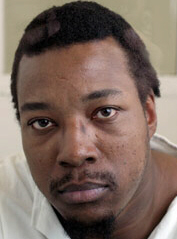 Richard Head Williams
Murderer · USA · 1997
Richard Head Williams killed Jeanette Williams in a capital murder committed fo…
1 victim
Richard Head Williams
Murderer · USA · 1997
Richard Head Williams killed Jeanette Williams in a capital murder committed fo…
1 victim
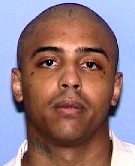 Nelson Gongora
Murderer · USA · 2001
Nelson Gongora Nelson Gongora was sentenced to death on June 4, 2003. · April 7…
1 victim
Nelson Gongora
Murderer · USA · 2001
Nelson Gongora Nelson Gongora was sentenced to death on June 4, 2003. · April 7…
1 victim
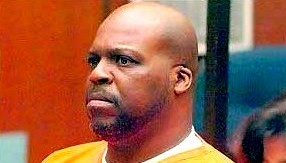 Ivan Hill
Serial killer · USA · 1979
Ivan Hill was known as the “60 Freeway Killer” and the “60 Freeway Slayer.” He…
9 victims
Ivan Hill
Serial killer · USA · 1979
Ivan Hill was known as the “60 Freeway Killer” and the “60 Freeway Slayer.” He…
9 victims
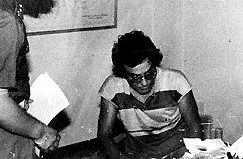 Giancarlo Giudice
—
Defendant: Giancarlo Giudice · Victim profile: Prostitutas italianas (incluyend…
Giancarlo Giudice
—
Defendant: Giancarlo Giudice · Victim profile: Prostitutas italianas (incluyend…
- Gender
- male
- Country
- United Kingdom
- Location
- Biggar, Scotland, United Kingdom
- Date of birth
- 1950
- Age at first offence
- 17
- Characteristics
- juvenile (17)
- Victim profile
- Linda Peacock, 15
- Method of murder
- Strangulation
- Date(s) of murder
- August 6, 1967
- Years active
- 1967
- Date of arrest
- —
- Status
-
Imprisoned
Sentenced to be detained during Her Majesty's Pleasure in 1968
Case record: Gordon Hay
Background
Gordon Hay was a 17-year-old juvenile. Linda Peacock was a 15-year-old girl.
The offence
On 7 August 1967, the body of 15-year-old Linda Peacock was discovered in a cemetery near her home. She had been reported missing from her home in Biggar, Scotland on the day before, after she went missing on 6 August 1967.
Linda Peacock had been attacked and strangled. The police believed there was no evidence to suggest she had been raped, but she had been attacked. The investigation included a deep bite mark on her right breast, and there were teethmarks on her right breast.
The forensic account described Linda Peacock as having been bashed on the head with some heavy implement, then strangled from behind, with burn marks of some rope described as black on her white neck. Her clothes were described as undone and her body exposed, but she was described as not having had sex—“willingly or unwillingly” was included in the narrative. The forensic account stated that below her body the earth was disturbed and her fingernails were broken and bloody, and that she had struggled and fought.
Investigation
Photographs of the bite-marks were taken and sent to John Furness, a lecturer in Forensic Dentistry at the Police Training School in Liverpool. After studying the photos he maintained that it would be possible to match the marks to the assailant once the person was found.
Dr Warren Harvey, an expert in forensic odontology from Glasgow University, was also called. His view was that the bite was unique, particularly with both canine teeth having holes or pits.
Detective Chief Superintendent William Muncie was described as the cop in charge. The Regional Crime Squad from Glasgow was called in, and every force in the Central Belt was described as giving troops.
The investigation involved checking the teeth of men in the area. A local school for problem teenage boys was visited, and suspicion fell on Gordon Hay. It was stated that care careful elimination led to proving that the teethmarks were made by Hay.
The investigation also described the use of aerial photographs by the Daily Record, taken in a plane inch by inch, which were then passed to the police. A detective noticed that the Loaningdale Approved School was within very easy walking distance from the scene of crime.
Arrest
Gordon Hay was called for questioning. At first he denied having anything to do with the murder, but he did agree to have impressions of his teeth taken.
Trial
Hay’s trial took place in 1968.
At his trial on 26 February 1968 at the High Court, Edinburgh, evidence was described as being spelled out in full. The prosecution described evidence that Hay had slipped out of the school, met Linda, and tried to have sex with her. When Linda refused, the prosecution alleged he lost his temper, battered her head in with a boat hook stolen from another boy, and strangled her with a cord. The narrative stated that the police had part of the cord and found blood on Hay’s clothes but they needed more, and that it all came down to the bite mark.
Hay had a strong alibi. It was stated that he was in bed in his dorm at school on that night and that Loaningdale was staffed at all times. As far as the school’s records were concerned, that was where Gordon Hay was that night.
The defence lawyers tried to have the evidence disallowed. They claimed it was not unscientific, but that the warrant used to take impressions of Gordon Hay’s teeth was not legal. The defence lost and the evidence was heard.
Expert witnesses argued for both sides. Dr Keith Simpson, pathologist for the Home Office, was called as an outside expert. Simpson agreed that the bite was unique. It was also stated that the jury agreed. Gordon Hay was found guilty.
It was stated that Gordon Hay was the first person in the UK to be convicted by forensic dentistry.
Sentencing
Because Gordon Hay was under eighteen years of age and therefore could not be sentenced to life imprisonment, he was sentenced to be detained during Her Majesty's Pleasure in 1968.
Outcome
Gordon Hay was found guilty and was sentenced to be detained during Her Majesty's Pleasure in 1968.
Other details
Gordon Hay was described as being from Aberdeen, and as a thief with no record of violence or having any problem with females. The narrative stated there was no pattern in his previous behaviour suggesting he was an extreme risk to anyone.
The narrative stated that at the time, the trial revealed to the public that troubled teenagers could at will walk out of an institution meant to have them under control, and that demands were made to make all such schools more secure so young offenders—even if legally children—could be kept under lock and key.
The Loaningdale Approved School management was described as explaining that Gordon Hay had no previous record of violence, never mind extreme violence to women, and that no one could have predicted that Hay would turn killer.
The narrative included local reaction in Biggar, Scotland, describing concern that any risk should not be run with the community’s innocents and that dangerous young men were allowed to wander almost freely among them, with concern that another girl could be killed brutally, including mention of a girl like Linda Peacock.

Spotted an error, or have more information about this case?