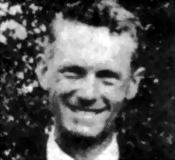
Peter Hogg
Homicide Robert Mone
Homicide · United Kingdom · 1967
Robert Francis Mone was born in 1948. He grew up with his parents and two siste…
4 victims
Robert Mone
Homicide · United Kingdom · 1967
Robert Francis Mone was born in 1948. He grew up with his parents and two siste…
4 victims
 Mick Philpott
Homicide · United Kingdom · 2012
Michael “Mick” Philpott was an Englishman who had gained notoriety as a crimina…
6 victims
Mick Philpott
Homicide · United Kingdom · 2012
Michael “Mick” Philpott was an Englishman who had gained notoriety as a crimina…
6 victims
 Lila Gladys Young
Murderer · Canada · 1928
Lila Gladys Young was also named Lila Gladys Lila Coolen. Lila Gladys Young was…
100 victims
Lila Gladys Young
Murderer · Canada · 1928
Lila Gladys Young was also named Lila Gladys Lila Coolen. Lila Gladys Young was…
100 victims
 Diane Marsh
Homicide · USA · 2007
Diane Marsh was the mother of 5-year-old autistic child Brandon Williams. She a…
1 victim
Diane Marsh
Homicide · USA · 2007
Diane Marsh was the mother of 5-year-old autistic child Brandon Williams. She a…
1 victim
 Syvasky Poyner
Spree killer · USA · 1984
Syvasky Lafayette Poyner challenged three Virginia state court judgments that s…
5 victims
Syvasky Poyner
Spree killer · USA · 1984
Syvasky Lafayette Poyner challenged three Virginia state court judgments that s…
5 victims
 Tommie Collins Hughes
Murderer · USA · 1997
Tommie Collins Hughes was convicted of capital murder for the robbery-related s…
2 victims
Tommie Collins Hughes
Murderer · USA · 1997
Tommie Collins Hughes was convicted of capital murder for the robbery-related s…
2 victims
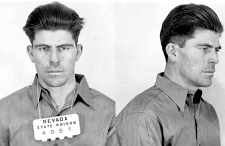 Raymond Plunkett
Murderer · USA · 1942
Raymond Plunkett was executed in the Nevada State Prison on June 30, 1944. He w…
1 victim
Raymond Plunkett
Murderer · USA · 1942
Raymond Plunkett was executed in the Nevada State Prison on June 30, 1944. He w…
1 victim
 Ashley Cameron
Murderer · USA · 2012
Ashley Cameron was a 25-year-old woman from Onawa, Iowa. She was the mother of…
1 victim
Ashley Cameron
Murderer · USA · 2012
Ashley Cameron was a 25-year-old woman from Onawa, Iowa. She was the mother of…
1 victim
- Gender
- male
- Country
- United Kingdom
- Location
- Surrey, England, United Kingdom
- Date of birth
- 1920
- Age at first offence
- 56
- Characteristics
- parricide
- Victim profile
- Margaret Hogg, 37 (his wife)
- Method of murder
- Strangulation
- Date(s) of murder
- October 17, 1976
- Years active
- 1976
- Date of arrest
- March 4, 1984
- Status
-
Sentenced to four years for manslaughter, obstructing a coroner, and perjury in his divorce proceedings
Case record: Peter Hogg
Background
Peter Hogg was an airline pilot for Air Europe. Margaret Hogg worked as an airline stewardess for Air Europe, and they married on 11th November 1963. Over the next thirteen years their relationship deteriorated.
Margaret Hogg had a three-year affair with banker Graham Ryan. Margaret had a lover, and she spent the week prior to her disappearance, on Sunday 17th October 1976, with Graham Ryan at a cottage in Dorset. The affair was described as being less than discrete.
Graham Ryan and Peter Hogg both featured in the court proceedings. The marriage later ended in divorce proceedings in which Peter Hogg committed perjury.
The offence
Margaret Hogg died in October 1976. Peter Hogg was described as her husband and killer.
After strangling Margaret Hogg during one of their frequent fights, Peter Hogg wrapped her body in a carpet, tied it to a block of concrete, and dumped the body in Wast Water lake in the Wasdale valley in the Lake District National Park, England.
The body settled at a depth of 34 metres (110 ft). Due to the lack of oxygen, her body did not decompose and was preserved like wax (grave wax).
Peter Hogg later drove north and took the body out in a rowing boat on Wast Water, then tipped it over the side weighted down with a concrete block. He stated that if he had rowed just a few yards further before lowering the carpet bag shrouded corpse, the weighted body would have missed the ledge it landed on and plunged to the bottom of the lake.
Investigation
In July 1983, 21-year-old Veronique Mireille Marré vanished. She was an agricultural student from Paris who was staying at Wasdale youth hostel in the Lake District. She left a local pub and was last seen heading towards Wast Water.
Police frogmen searched the four-mile long lake but found no trace of the girl.
In 1983, the lake was searched for the body of Veronique Mireille Marre, a missing French student.
In February of the following year, an amateur diver, Neil Pritt, explored the icy waters of the lake and, at a depth of a hundred feet, noticed a bundle lying on a ledge. Police were summoned, and their divers brought the bundle to the surface.
When the bundle was opened, they knew the half-naked body was not that of the young French girl. The body was that of a middle-aged woman. The corpse wore a plain, gold wedding ring. On the inside of the band, the inscription read: "Margaret 11.11.63 Peter."
Mrs Gillian Seddon read in the newspaper the report of the discovery and contacted the police. She had once been employed as housekeeper to the Hoggs and knew the date of their marriage.
Police investigation in the Lakes was led by Chief Inspector Jack Taylor.
Friends initially recognised the body as Margaret Hogg. Shortly after the recovery, the body was identified by friends. Six days later friends recognised the described lady as Margaret Hogg.
The body of Veronique Marré was later found at the bottom of Broken Rib Crag in April 1984. It was determined that she died from a fall, although the cause of the fall is unknown.
Arrest
Peter Hogg was traced to Mead Road, Cranliegh. On 4th March 1984, he was arrested and charged with his wife's murder.
At his trial at the Old Bailey, he pleaded not guilty.
Trial
Peter Hogg appeared at the Old Bailey. He denied murdering his wife.
His defence was one of provocation, stating that he had quarrelled with his wife and, after some mutually inflicted violence, he had accidentally strangled her.
Patrick Back QC told the jury that Hogg was provoked for years by the "unfaithful and bad" behaviour of his wife. He claimed Margaret Hogg “flaunted” her affair with another man. Patrick Back QC said she was “a piece of erring humanity.”
The QC said his client’s main defence was provocation and stated:
“The law recognises that within every human being lies the fires of emotion and you can provoke a human being just so far.”
Graham Ryan told the court that he had been away together in Dorset the week before Mrs Hogg died. Her return from that rural trip sparked off the fatal row.
When asked: “Had you murdered your wife?” Peter Hogg replied:
“Murder is not the right word. Certainly she died. I think I strangled her. We had an argument, she did her usual act, she was always throwing things at me.”
He described the row:
“She was scratching my face, kicking me in the crotch and I belted her. She flew at me hitting and kicking , then I grabbed her round the neck and squeezed hard. I realised one of her eyes had glazed and I let go. She fell back on the floor and I realised she was dead.”
Peter Hogg was described in court as “cool and calculating” in the minutes after the strangling. He changed his clothes and trussed up the body before working out how to dispose of it.
Peter Hogg described the drive north and rowing an inflatable boat out onto the pitch black lake:
“It was the longest night of my life. You don’t realise how difficult it was. I nearly went in with her.”
He said:
“I was in a perfectly logical frame of mind once I had recovered from my original horror. Possibly after my 30 years training I put my mind to dealing with the current emergency.”
He reported his wife as missing to Surrey police a month later.
The jury returned a verdict of manslaughter. It took the jury just over an hour to find Hogg not guilty of murder. Considerable evidence was presented about Margaret's affair with Graham Ryan.
The tabloid press described Mrs Hogg as a “cow” in trial reports.
Sentencing
Peter Hogg was sentenced to four years’ imprisonment.
He was jailed for three years for manslaughter, and another year was added for obstructing a coroner and to perjury in divorce proceedings.
He was sentenced to four years for manslaughter, obstructing a coroner, and perjury in his divorce proceedings.
After his early arraignment, he was granted £20,000 bail.
Outcome
The verdict was not guilty of murder and guilty of manslaughter. The sentencing reflected manslaughter along with obstructing a coroner and perjury in divorce proceedings.
Aftermath
The body of Veronique Marré was found in April 1984. Her remains were found on a mountain at the bottom of a cliff (Broken Rib Crag), and it was determined that she died from a fall, although the cause of the fall is unknown. Veronique Marré’s remains were found two months after the discovery of Margaret Hogg’s body and around the time of Peter Hogg’s trial.
Margaret Hogg was described as the murder victim who became known as the Wasdale Lady in the Lake.

Spotted an error, or have more information about this case?