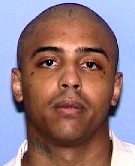
Nelson Gongora
Murderer Russell Ellwood
Murderer · USA · 1991
Russell Ellwood was a former taxi driver. Authorities suspected him of killing…
20 victims
Russell Ellwood
Murderer · USA · 1991
Russell Ellwood was a former taxi driver. Authorities suspected him of killing…
20 victims
 Robert Martines Perez
Murderer · USA · 1994
Name: Robert Martines Perez · Other name used in proceedings: Robert Martinez P…
15 victims
Robert Martines Perez
Murderer · USA · 1994
Name: Robert Martines Perez · Other name used in proceedings: Robert Martinez P…
15 victims
 Billy Frank Vickers
Murderer · USA · 1993
Billy Frank Vickers Vickers was executed by lethal injection in Texas on Januar…
14 victims
Billy Frank Vickers
Murderer · USA · 1993
Billy Frank Vickers Vickers was executed by lethal injection in Texas on Januar…
14 victims
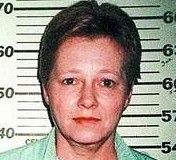 Gaile Owens
Murderer · USA · 1985
Gaile Kirksey Owens was convicted of accessory before the fact to wit: murder i…
1 victim
Gaile Owens
Murderer · USA · 1985
Gaile Kirksey Owens was convicted of accessory before the fact to wit: murder i…
1 victim
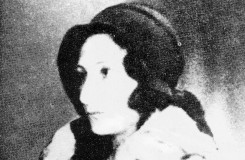 Anna Antonio
Murderer · USA · 1932
Anna Antonio, “Little Anna,” was an Italian woman who was 28 years old. She had…
1 victim
Anna Antonio
Murderer · USA · 1932
Anna Antonio, “Little Anna,” was an Italian woman who was 28 years old. She had…
1 victim
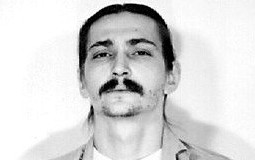 Larry C. Williams
Murderer · USA · 1979
Larry C. Williams and the other men drank beer, smoked pot, and watched TV for…
2 victims
Larry C. Williams
Murderer · USA · 1979
Larry C. Williams and the other men drank beer, smoked pot, and watched TV for…
2 victims
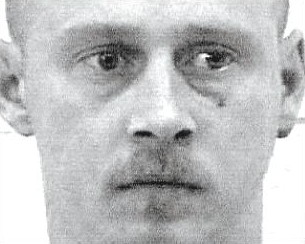 Arthur Ray Jenkins
Murderer · USA · 1991
Arthur Ray Jenkins III was executed by lethal injection in Virginia on April 20…
2 victims
Arthur Ray Jenkins
Murderer · USA · 1991
Arthur Ray Jenkins III was executed by lethal injection in Virginia on April 20…
2 victims
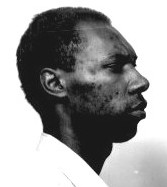 Larry Smith
Murderer · USA · 1978
Larry Smith (offender #643) Larry Smith was convicted for intentionally causing…
1 victim
Larry Smith
Murderer · USA · 1978
Larry Smith (offender #643) Larry Smith was convicted for intentionally causing…
1 victim
- Gender
- male
- Country
- USA
- Location
- Tarrant County, Texas, USA
- Date of birth
- August 20, 1979
- Age at first offence
- 22
- Characteristics
- robbery, gang
- Victim profile
- Delfino Sierra (male, 36)
- Method of murder
- Shooting ( .38 caliber handgun)
- Date(s) of murder
- April 7, 2001
- Years active
- 2001
- Date of arrest
- —
- Status
-
Sentenced to death
Sentenced to death on June 4, 2003
Name
Nelson Gongora
Status
Nelson Gongora was sentenced to death on June 4, 2003.
Timeline
- April 7, 2001 — Gongora and co-defendants attempted to rob a 36 year old hispanic male; during the struggle, gunshots were fired striking the victim, resulting in his death.
- April 27, 2001 — Vargas was arrested.
- May 9, 2001 — Vargas met with Detective Carlos Ortega to correct the falsehoods in his first statement and identified appellant as the shooter.
- June 19, 2001 — After being arrested pursuant to a warrant, Gongora waived his rights and gave a voluntary signed statement.
- March 2003 — A jury convicted Gongora of capital murder.
- June 4, 2003 — The trial judge sentenced Gongora to death pursuant to the jury’s answers to the special issues.
- February 1, 2006 — The Sixth Circuit delivered its decision affirming the judgment.
Background
Gongora was a leader in the criminal street gang Puro Li'l Mafia ("PLM"). He was also described as a framer, forklift operator, and laborer. Prior prison record was none. His education level was 06. His name appeared as Nelson Gongora in the Court of Criminal Appeals of Texas case.
The offence
On the night of April 7, 2001, Juan Vargas was driving his van accompanied by Gongora and others when they saw Delfino Sierra walking down the street and decided to rob him. When Vargas pulled over, Gongora and Orosco jumped out of the van, ran toward Sierra, and demanded his money. When Sierra began to run, Gongora shot him in the head with a .38 caliber handgun. Gongora and Orosco then returned to the van.
Gongora told his companions that he "took [Sierra's] dreams" and did "what [he] had to do" and warned them to remain silent. Gongora appeared to be bragging about what he had done.
Approximately two hours after Gongora killed Sierra, Vargas drove Gongora and Almanza to the house of a rival gang member. Almanza, in order to become a PLM member, shot into the house in retaliation for drive-by shootings that had occurred at Gongora's house. During the shooting, Gongora stood outside the van armed with a nine-millimeter handgun. The victim of this shooting survived.
Investigation
An anonymous phone call helped establish that Vargas and Maria Morales owned the suspect van.
Vargas gave a written statement to police naming Almanza as Sierra's killer.
Vargas met with Detective Carlos Ortega on May 9 to correct the falsehoods in his first statement and identified Gongora as the shooter. Vargas explained that he had initially lied because he feared retaliation from Gongora.
Gongora, after being arrested pursuant to a warrant, waived his rights and gave a voluntary signed statement on June 19. In his statement, Gongora admitted getting out of the van with others to rob Sierra. Then he heard shots and saw the man lying on the ground, but claimed not to know who fired the shots.
Arrest
Vargas was arrested on April 27. Gongora was arrested on June 19 pursuant to a warrant.
Trial
In March 2003, a jury convicted appellant of capital murder under Tex. Penal Code Ann. § 19.03(a).
Pursuant to the jury's answers to the special issues set forth in Texas Code of Criminal Procedure Article 37.071, sections 2(b) and 2(e), the trial judge sentenced appellant to death (Art. 37.071, § 2(g)).
Sentencing
The trial judge sentenced Gongora to death on June 4, 2003.
Appeals
Direct appeal to the Court of Criminal Appeals of Texas
Gongora appealed his conviction, raising twenty-seven points of error.
- The appellate court overruled appellant’s claims that the trial court erred in overruling his motion to quash the indictment because it failed to put him on notice that the State would seek to establish criminal responsibility as a party or co-conspirator. The appellate court held that guilt as a party does not increase responsibility or maximum sentence and that the law of parties need not be pled in the indictment. It overruled points of error one through three.
- The appellate court overruled point of error fourteen regarding restrictions on cross-examining Vargas about an aggravated robbery offense allegedly committed with Maria Morales using the same van as the one used in the capital murder. It described proceedings outside the presence of the jury, including Vargas invoking Fifth Amendment rights and testifying about a plea agreement in the instant case. It concluded the trial court did not abuse its discretion and overruled point of error fourteen.
- The appellate court overruled the related fifteenth point of error regarding similar restrictions on cross-examining Morales about the aggravated robbery. It found the alleged error, if any, did not harm appellant under Tex. R. App. P. 44.2 and overruled point of error fifteen.
- The appellate court overruled the sixteenth point of error regarding denial of mitigation testimony from sisters, Ana and Erika Gongora, after the sisters were arrested on warrants alleging they had threatened a co-defendant's family members who had been watching the proceedings. It concluded the record did not support appellant’s assertion that the State’s actions deprived him of this evidence, and that other family members could have testified to the same information. It also held appellant failed to preserve an issue about the trial judge’s role and overruled point of error sixteen.
- The appellate court overruled points seventeen and eighteen regarding the trial court’s failure to include an instruction on the lesser-included offense of robbery at the guilt phase. It concluded that because Gongora was indicted as a party or co-conspirator to capital murder, the jury could not rationally have acquitted him of capital murder and convicted him only of robbery.
- The appellate court overruled points nineteen through twenty-one regarding the trial court’s denial of a mistrial based on the prosecutor’s improper comment on failure to testify. It reproduced the prosecutor’s comments and trial court rulings, including sustained objections, jury instructions to disregard, and overruling of mistrial motions. It held the comments were not so blatant as to render the instructions ineffective.
- The appellate court overruled the twenty-second point of error regarding the prosecutor’s improper argument at the punishment phase concerning another case where a victim allegedly identified the wrong person. The trial court had sustained an objection, instructed the jury to disregard, and denied a mistrial; the appellate court concluded the instruction removed any possible prejudice.
- The appellate court overruled points four through nine challenging constitutionality of mitigation questions and related due process and jury trial issues. It cited that similar claims had been rejected previously and overruled those points.
- The appellate court overruled points ten through twelve challenging constitutionality of the capital-sentencing scheme based on refusal to define "probability" for the future-dangerousness question.
- The appellate court overruled the thirteenth point of error challenging constitutionality based on the “anti-parties” charge and reliance on Enmund v. Florida and Tison v. Arizona, concluding the evidence showed appellant himself exited the van and shot the victim and that the party-authorized conviction did not make the statute unconstitutional as applied to him.
- The appellate court overruled the twenty-third and twenty-fifth points challenging the “10/12” rule and another constitutional claim about jury discretion and mitigation evidence review.
- The appellate court overruled the twenty-fourth and twenty-sixth points regarding sufficiency review of mitigation evidence, stating it did not review sufficiency and that failure to conduct such review did not violate constitutional rights.
- The appellate court overruled the twenty-seventh point alleging cumulative effect of constitutional violations because it concluded there were no constitutional violations.
The appellate court affirmed the judgment of the trial court.
Delivery date and publication
The Sixth Circuit delivered: February 1, 2006. The opinion stated: Do Not Publish.
Other details
Parties and co-defendants
On April 7, 2001, Gongora and co-defendant Orosco attempted to rob Delfino Sierra. Other individuals included Juan Vargas, appellant’s companion Carlos Almanza, Steven Gongora, and James Luedtke. The van was owned by Vargas and Maria Morales. The victim of the robbery was Delfino Sierra. The surviving victim of the later shooting was described as surviving.
Names and quoted statements
Gongora’s quoted statements to his companions included:
- "took [Sierra's] dreams"
- "what [he] had to do" He also warned them to remain silent.
During the prosecutor’s argument about witnesses and roles of persons in the van, the record reproduced the following comments in full as provided:
[THE PROSECUTOR:] I want to talk about the people you heard from. We're talking about Juan [Vargas] and James [Luedtke] through this entire deal. I used his first name, because, in this case, we have little brothers involved, you know, Steven Gongora, you know, Pablo Vargas. I'm using first names to keep everybody clear. Who did you expect us to bring to you? There's six people inside that van. When you look at it, here it is. Who would you expect for us to give to you to establish who the shooter is? Are you going to be satisfied in a case with gang members just looking at one person, even though he's telling you the exact truth, no matter what? Even if the time that he first told this story, he told the truth - he told the truth about someone he's scared to death of - this is James Luedtke. He had nothing against him. He had no crime pending. He had no reason to hide the truth. He had no reason to talk to us, but he told us the truth. You listen to people inside there. Who else would you want to hear from, though? The shooter? We're not going to talk to that person. We're not going to make a deal with that person. This person deserves what they get. This person right here - [DEFENSE COUNSEL:] Your Honor, could the record reflect he's pointing at the Defendant's name on the chart - I can't see the Defense exhibit number - as he was making the statement? THE COURT: So reflect. [THE PROSECUTOR:] Nelson Gongora, the shooter. That's the person on trial. That's the person who deserves to be found guilty of capital murder. Who should we go ahead and talk to? Who should we go ahead and present to you? Should we talk to the shooter? Should we talk to - [DEFENSE COUNSEL:] Your Honor, I'm going to object. That's a comment on the failure to testify. [THE PROSECUTOR:] Let me make that clear. I don't mean talk to the shooter. What I mean is this. Who - Defense counsel then asked for a ruling on his objection and the trial court sustained it. The trial court then granted counsel's request for an instruction to the jury to disregard the comment but overruled counsel's motion for a mistrial. The prosecutor continued: [THE PROSECUTOR:] Let me say this. And I don't want to give the wrong impression in any sort of way. We're asking, who do you expect to take the stand? Who do you expect to hear from, right? [DEFENSE COUNSEL:] Your Honor, I object. That's a continuation of the previous comments, and I, again, object to commenting on the failure to testify. The court again sustained appellant's objection to the prosecutor's comment, granted his request to instruct the jury to disregard the comment, and overruled his motion for a mistrial. The prosecutor continued: [THE PROSECUTOR:] I don't want - to make it clear, y'all, Defendant has a Fifth Amendment right not to testify. And, of course - and I don't want to give any wrong impression on that whatsoever. Okay? What I want to talk about is this. When you talk about the credibility of a person, I wish you - and I made a - I made a big mistake there. I'll make it very clear. I'm not talking about, do you want to hear from him, because you can't do that. [DEFENSE COUNSEL:] Your Honor, again, I'm going to object. It's on the same continuing subject matter. We object to comment on the failure . . . to testify. THE COURT: As to that particular statement, overruled. [THE PROSECUTOR:] Let me back up and tell you this. Let me define it by the roles in the car. That's what I'm trying to get at. Okay? The roles in the car are this. You have a person inside the car who is the shooter. You have a person inside the car who got out with the shooter. You have a person inside the car who was guilty - or, actually, may have participated in another shooting later that night. You have a person inside the car who is just sitting there who is present. And then you have a person inside the car who is the Defendant's brother, right? Where is that person? We know the person was there. They could have brought that person, but you never heard from that person. And that's - [DEFENSE COUNSEL:] Your Honor, I'm going to object as to what that person is and ask to approach the bench to make a record. THE COURT: Counsel approach. (At the bench, on the record:) [DEFENSE COUNSEL:] I'll be brief. Judge, our objection is that we issued bench warrants and subpoenas. We asked to have people brought in. They took the Fifth. And when he says "that person," that diagram is still up there showing Albert [Orosco] and everybody else, and that is an improper comment, and it's not invited. [THE PROSECUTOR:] Judge, I'm trying to correct that right now to make it better in terms of I'm just talking about the roles of the persons involved. THE COURT: All right. Sustain the objection, Counselor. [THE PROSECUTOR:] Excuse me. Let me make one comment for the record also. Immediately - what [the prosecutor] was talking about there, so it's clear for the record, was that he mentioned the name "Steven Gongora." He mentioned the name, and he said, "The Defendant's brother." And he said, "Where is that person?" Steven Gongora is the Defendant's brother, and his name is also on the chart, and that's what he was talking about. THE COURT: All right. You need to clear it up, Counselor. [THE PROSECUTOR:] I will. (Open court:) Defense counsel then asked if his objection was sustained. The trial court sustained the objection and, on request of defense counsel, instructed the jury to disregard the comment. The trial court then overruled appellant's motion for mistrial. The prosecutor continued: [THE PROSECUTOR:] Ladies and gentlemen, I want to wrap this up, because that's what I'm talking about, the confusion in the case. When I - when you're talking about the people inside the car, this is it. You have the person inside the van and, from all the testimony, established one person is the shooter. You have a person in the car who got out and could possibly have stopped the killing from ever taking place. You have a person inside the car, by the testimony, you all know was involved in another shooting later that night. You have a person in the car who was related to the Defendant. That is his brother. Right? Then you have a person inside there who is just present. Okay? * * * Those are the different roles of the persons inside the car. You ask who - you know, you hear from this case, and who should - you know, how to determine the credibility. Who do you want to hear from? Who do you expect to hear from? The person who wasn't involved at all, that had nothing at all, just present during that deal? Of course, you hear from that person. When you're considering and evaluating the credibility of the next person - and that's who I'm talking about in talking about who you're going to hear from. I'm talking about, when listening to Juan Vargas, there's different people who played different roles. When you consider the fact that we actually spoke to him, that's what I'm talking about. I'm not talking about who would you want to hear from, who would you expect us to call, but I meant to define it in the terms of the roles of those involved in the case. Okay? The roles that are defined in this case are abundantly clear. When you look at all the roles of those persons involved, the person in this case who is, you know, least culpable, besides the person who didn't do anything, is the driver, right? That's what I wanted you to consider. That's what I was trying to discuss about the different roles and who you would expect to hear from or expect us, you know, to be looking at. That was it. Just examine their roles. When you look at all of this, the facts in the case are clear when you establish who is the shooter. Determine the credibility regarding what you heard. Determine the credibility by asking whether their statements were consistent. The consistencies - consistencies throughout this trial are abundantly clear. When you look at this case, the fact is this. When Nelson Gongora got back inside his car - excuse me - got back inside the van, was he remorseful when he got back inside there? No. You heard from Juan and James. When he got back inside there, the fact is, he wasn't crying. The fact is, he was not remorseful. The fact is, he was not yelling at someone, saying, "Why did you kill this person?" You heard from them. The fact is, when he got back inside there, he was bragging about what he did. You heard from James Luedtke what [appellant] said when he got out - got inside that van. He said this. "I took his dreams. I took his dreams." Well, he not only took his dreams, he took the family's dreams. He took a family's dreams. He took his brother's dreams. He took his children's dreams. Took his wife's dreams. He took all of Delfino Sierra's family's dreams.
The prosecutor’s comments at punishment phase included the following quoted statements:
In this case, the criminal justice system somewhat failed [the victim] Amy Arreola, and y'all can resolve this. Something kind of unique in that case happened. They didn't show the victim a photo spread. No one was shown a photo spread in that case. Sure enough, when she went to court, when the person who was supposedly charged with this offense went to court, Amy looked at this person and said, "That's not the person who did it." That's why [co-counsel] offered these plea papers here. Y'all heard, once the victim went to court out at juvenile, Amy, she looked at the person who was willing to accept the guilt for this - remember, that was Pablo Vargas. And you heard from Maria Almendarez [a witness who identified appellant as the actual perpetrator]. Why would [Vargas] do that? Frankly, because having to rat out [appellant] has more repercussions than simply accepting the guilt.
Identification and key dates for defendant attributes
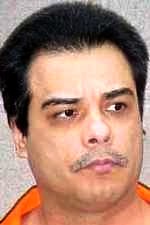
Nelson Gongora’s date of birth was 08/20/1979. The date received was 06/04/2003. The age at received was 23. The date of offense was 04/07/2001. The age at the offense was 21. County was Tarrant. Race was Hispanic. Gender was male. Hair color was black. Eye color was brown. Height was 05'07". Weight was 171. Native county and native state were listed as Native. Prior occupation was framer, forklift operator, laborer. Prior prison record was none.
Victim and other people named
The victim was Juan Vargas’s companion’s victim Delfino Sierra. Another identified witness was Maria Almendarez. The victim in an unrelated assault described during punishment argument was Amy Arreola. The prosecutor’s argument referred to co-counsel and to co-defendants, including Pablo Vargas and Maria Almendarez, in the punishment-phase discussion.
Outcome
The appellate court affirmed the trial court’s judgment, and the trial court’s death sentence remained in effect.
Spotted an error, or have more information about this case?