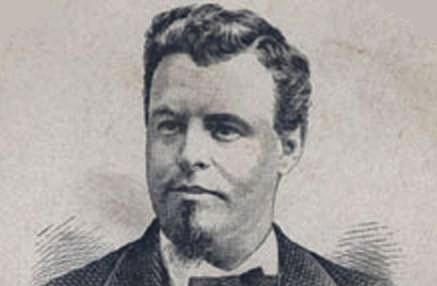
Rev. Herbert Hayden
Murderer Henry Newton Brown
Murderer · USA · 1870
Henry Newton Brown — 19th century gunman; orphan; raised by relatives in Rolla,…
6 victims
Henry Newton Brown
Murderer · USA · 1870
Henry Newton Brown — 19th century gunman; orphan; raised by relatives in Rolla,…
6 victims
 Joseph LaPage
Murderer · USA · 1874
Joseph LaPage was described as a French-Canadian trapper who donned a bearskin…
2 victims
Joseph LaPage
Murderer · USA · 1874
Joseph LaPage was described as a French-Canadian trapper who donned a bearskin…
2 victims
 Louis Wagner
Murderer · USA · 1873
Louis Wagner had lived on Smuttynose Island with six Norwegian immigrants: Mare…
2 victims
Louis Wagner
Murderer · USA · 1873
Louis Wagner had lived on Smuttynose Island with six Norwegian immigrants: Mare…
2 victims
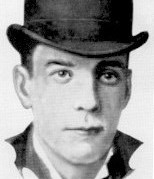 Marion Hedgepeth
Murderer · USA · 1870
Name: Marion Hedgepeth · Also known as: “Handsome Bandit,” “Debonair Bandit,” “…
2 victims
Marion Hedgepeth
Murderer · USA · 1870
Name: Marion Hedgepeth · Also known as: “Handsome Bandit,” “Debonair Bandit,” “…
2 victims
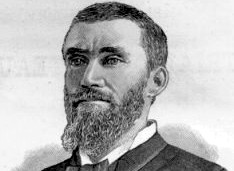 Charles Guiteau
Murderer · USA · 1881
Charles Julius Guiteau (September 8, 1841 – June 30, 1882) was an American lawy…
1 victim
Charles Guiteau
Murderer · USA · 1881
Charles Julius Guiteau (September 8, 1841 – June 30, 1882) was an American lawy…
1 victim
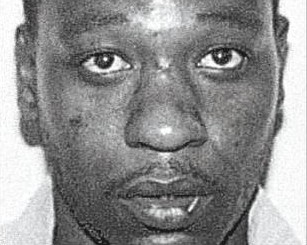 Tony Albert Mackall
Murderer · USA · 1986
Tony Albert Mackall was convicted of robbery, displaying a firearm in a threate…
1 victim
Tony Albert Mackall
Murderer · USA · 1986
Tony Albert Mackall was convicted of robbery, displaying a firearm in a threate…
1 victim
 Jason Hann
Murderer · USA · 1999
Jason Hann was convicted of killing his 2-month-old daughter, Montana, and also…
2 victims
Jason Hann
Murderer · USA · 1999
Jason Hann was convicted of killing his 2-month-old daughter, Montana, and also…
2 victims
 David Funches
Murderer · USA · 1974
David Livingston Funchess was the petitioner and appellant in federal habeas co…
2 victims
David Funches
Murderer · USA · 1974
David Livingston Funchess was the petitioner and appellant in federal habeas co…
2 victims
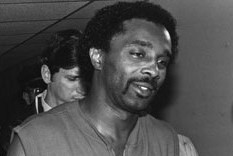 Carlton Gary
Serial killer · USA · 1975
Carlton Gary was an American serial killer convicted for the murders of elderly…
8 victims
Carlton Gary
Serial killer · USA · 1975
Carlton Gary was an American serial killer convicted for the murders of elderly…
8 victims
 Lesley Eugene Warren
Serial killer · USA · 1987
Lesley Eugene Warren Lesley Eugene Warren was born on October 15, 1967 in Candl…
8 victims
Lesley Eugene Warren
Serial killer · USA · 1987
Lesley Eugene Warren Lesley Eugene Warren was born on October 15, 1967 in Candl…
8 victims
- Gender
- male
- Country
- USA
- Location
- Madison, Connecticut, USA
- Date of birth
- 18 50
- Characteristics
- poisoner
- Victim profile
- Mary Stannard, 22 ( young servant girl)
- Method of murder
- S lit her throat - Poisoning (arsenic)
- Date(s) of murder
- September 3, 1878
- Years active
- 1878
- Date of arrest
- —
- Status
-
Died in custody
A hung jury; released on January 14, 1880; died in May 13, 1907
Case record: Rev. Herbert Hayden
Background
Rev. Herbert H. Hayden was a married father and a minister of a Methodist church in Rockland, Conn. He was accused of poisoning his mistress, a young servant girl, Mary Stannard, whom he believed he had gotten pregnant.
Mary Stannard came from a poor family. She worked as a servant and was described by those who knew her as cheerful and hard-working. She was 19 when she had an illegitimate child, Willie, by a man whose name she never revealed.
In 1878, Mary Stannard was employed by the 29-year-old Reverend Hayden and his wife Rosa. Hayden and his wife had two children and were expecting a third. Mary and Hayden were attracted to each other, and Mary did not rebuff his advances.
The offence
On 20 March 1878, Hayden and Mary slipped away from the parish oyster supper and had a furtive sexual encounter. Mary thought that it resulted in her becoming pregnant. She confided in her sister that the man responsible for her condition was the minister. She said she would confront him and ask him to arrange for her to have an abortion.
On Monday, 2 September, Mary managed to see Hayden alone in his barn and he promised to get her some “medicine” that would bring this about.
The following day, he left for Middletown although he told his wife he was going to Durham to buy some oats. He gave himself a reason for visiting Middletown by first calling for a man who was making him some tools. He then went to Tyler’s Drigstore where he purchased an ounce of arsenic for ten cents, saying he wanted to get rid of rats that were a problem around his house. The poison was wrapped up and clearly labelled and its sale, but nor its purchaser, was entered in the sale book.
After Hayden left the drugstore, he was accosted by a man who knew him, and they spoke of the imminent birth of Hayden’s third child.
On his way back to Rockland, Hayden called at the Stannard house ostensibly to ask for a drink of water, but really to speak to Mary and tell her that he had obtained the “medicine” and would meet her that afternoon at the Big Rock, which was well away from prying eyes.
When he arrived at the Big Rock at 2.30, Mary was awaiting. Hayden dissolved the whole ounce (28 000 mg) in water and persuaded her to drink it all down. By 3 p.m. she knew something was wrong, and at 3.15 she was screaming in agony and starting to run home.
Hayden grabbed a chunk of wood and with two heavy blows knocked her unconscius. He then took out his jacknife and slit her throat. He arranged Mary’s body in a peaceful pose, with her hat under her head, so that it appeared as if she had deliberately lain down to die.
He planned not to leave the knife at the scene. He ran to the woodlot, stacked a few logs to show that he had been there that afternoon, and went home. He washed his jacknife and placed it out of sigh on a high shelf. He then intended to return later with another knife.
Investigation
Mary’s body was discovered by a member of her family who went to look for her, worried that she had not returned home after a heavy downpour late that afternoon.
An autopsy had been performed on Mary’s body, which revealed that she had not been pregnant but was suffering from an ovarian cyst. The doctor who performed it did not search for evidence that she had died of poisoning because that was not suspected.
Arrest
At the inquest, Hayden was accused of her murder by Mary’s sister and he was arrested the following day.
Trial
On Tuesday, 10 September, Herbert Hayden appeared before the Justice Court, which was held in the basement of the Congregational Church in nearby Madison. After a two-week trial, the court decided that he was innocent of the charge of murdering Mary Stannard, and he left court to the cheers of a large group of supporters.
A further issue arose when Professor Samuel Johnson of Yale Medical College presented new evidence. When it was realized that Hayden had been to Middletown to purchase arsenic the day Mary died, a new warrant for the minister’s arrest was issued on 8 October.
He was brought to trial a year later, by which time Mary’s body had been twice disinterred for further samples to be taken for arsenic tests.
The forensic evidence against Hayden was described as damning and of a much higher standard than normal. Professor Samuel Johnson of Yale and his colleague Professor Edward Dana took the stand on behalf of the prosecution.
Dana travelled to England to the Devon Great Consols mine to obtain samples of arsenic trioxide, described as the sole source of arsenic that was sold throughout the USA. He obtained it because it was possible to identify a particular batch of arsenic trioxide by examining its crystals under a microscope. Dana learned that the material could be identified despite the crystals being ground up before being bagged and shipped, because the tiniest crystals were unaffected by the grinding and their shape varied from batch to batch.
Dana’s evidence indicated that the arsenic in Mary’s stomach was the same as that from the drugstore in Middletown and different from the ounce of arsenic in the spice tin that was eventually handed over to the Court.
Dana was able to identify different samples of arsenic crystals presented in random order without being told where they were from. Johnson and Dana had performed the Marsh test on all samples they obtained.
Two other professors also provided forensic evidence of arsenic in the organs taken from Mary’s body.
The defence counsel challenged the scientific evidence repeatedly. The jurors appeared to have ignored it when reaching their verdict, because the defence endlessly challenged it and the professors were always reluctant to swear that there was absolutely no doubt about their findings.
The defence also maintained that the large amount of arsenic found in Mary’s stomach had been planted there deliberately to incriminate Reverend Hayden.
The quantities discovered in Mary’s body were described as exceedingly large: 23 grains (1500 mg) were extracted from her liver, the place where most of the arsenic absorbed through the stomach wall had ended up, although some had penetrated her lungs and brain. When it was challenged that this was not possible in the short time she had lived, further evidence proved it was possible: the professor took small doses of arsenic and showed that it could be detected in their urine within 15 minutes.
When it was suggested that the arsenic in Mary’s brain could have diffused there from the stomach as her body lay in the grave, tests on other cadavers were carried out to show this did not happen.
The defence also emphasized that Mary was not pregnant, thereby removing the motive alleged for the minister’s murdering her. The wife’s testimony was also described as important: Rosa performed emotionally and tearfully in the witness box. Many in the court were moved to tears as she showed complete faith in her husband’s innocence and lied for him about his movements that day.
Sentencing
No sentencing information was stated, because the result was a hung jury.
Outcome
On 14 January 1880, the jury retired to consider its verdict. Voting slips indicated that they originally voted 10-to-2 for not guilty. The following day, the vote shifted to 11-to-1. After another nine ballots, they never achieved the necessary 12-to-0 for an acquittal.
The jury was hung. The Reverend Herbert Hayden walked free because the state was not prepared to finance another long drawn out prosecution that would be likely to fail.
Hayden was released on January 14, 1880.
Aftermath
After his release, the family moved to New Haven where Hayden worked as a carpenter and shop assistant. He died of liver cancer when he was 57. He died in May 13, 1907.
Spotted an error, or have more information about this case?