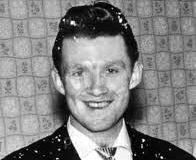
Ronald Henry Marwood
Homicide Robert Mone
Homicide · United Kingdom · 1967
Robert Francis Mone was born in 1948. He grew up with his parents and two siste…
4 victims
Robert Mone
Homicide · United Kingdom · 1967
Robert Francis Mone was born in 1948. He grew up with his parents and two siste…
4 victims
 Christopher Craig
Homicide · United Kingdom · 1952
Christopher Craig Christopher Craig was ordered to be detained at Her Majesty's…
1 victim
Christopher Craig
Homicide · United Kingdom · 1952
Christopher Craig Christopher Craig was ordered to be detained at Her Majesty's…
1 victim
 Michael John Davies
Homicide · United Kingdom · 1953
Michael John Davies was a twenty-year-old labourer from Turret Grove, Clapham.…
1 victim
Michael John Davies
Homicide · United Kingdom · 1953
Michael John Davies was a twenty-year-old labourer from Turret Grove, Clapham.…
1 victim
 Marlon DeWayne Williams
Murderer · USA · 1993
Marlon DeWayne Williams was a drug dealer. Williams was black. He was 26 when e…
1 victim
Marlon DeWayne Williams
Murderer · USA · 1993
Marlon DeWayne Williams was a drug dealer. Williams was black. He was 26 when e…
1 victim
 Raymond Bailey
Murderer · Australia · 1957
Raymond Bailey was convicted of the murder of Sally (Thyra) Bowman (43), her da…
3 victims
Raymond Bailey
Murderer · Australia · 1957
Raymond Bailey was convicted of the murder of Sally (Thyra) Bowman (43), her da…
3 victims
 Horacio Reyes-Camarena
Murderer · USA · 1995
Sentenced to death on January 21, 1997 Horacio Alberto Reyes-Camarena was 47 wh…
1 victim
Horacio Reyes-Camarena
Murderer · USA · 1995
Sentenced to death on January 21, 1997 Horacio Alberto Reyes-Camarena was 47 wh…
1 victim
 Chai Soua Vang
Mass murderer · USA · 2004
Chai Soua Vang (born September 24, 1968) shot several deer hunters in northern…
6 victims
Chai Soua Vang
Mass murderer · USA · 2004
Chai Soua Vang (born September 24, 1968) shot several deer hunters in northern…
6 victims
 Julian Andrew Frank
Mass murderer · USA · 1960
6 January 1960 — National Airlines Flight 2511 exploded and crashed 1-1/2 miles…
33 victims
Julian Andrew Frank
Mass murderer · USA · 1960
6 January 1960 — National Airlines Flight 2511 exploded and crashed 1-1/2 miles…
33 victims
- Gender
- male
- Country
- United Kingdom
- Location
- London, England, United Kingdom
- Date of birth
- 1933
- Age at first offence
- 25
- Characteristics
- alcohol
- Victim profile
- P olice constable Raymond Henry Summers, 23
- Method of murder
- Stabbing with knife
- Date(s) of murder
- December 14, 1958
- Years active
- 1958
- Date of arrest
- January 27, 1959 (surrenders)
- Status
-
Executed
Executed by hanging at Pentonville Prison on May 8, 1959
Overview
Ronald Henry Marwood was a 25-year-old scaffolder. He was executed by hanging at Pentonville Prison on May 8, 1959.
Timeline
- 14 December 1958 — Ronald Henry Marwood became involved in a gang fight outside a dance-hall in Holloway, on Seven Sisters Road.
- 27 January 1959 — Marwood walked into a police station and admitted to the killing of Police Constable Raymond Henry Summers.
- 18 March 1959 — Marwood’s trial opened at the Old Bailey before Mr. Justice Gorman.
- 20 April 1959 — Marwood’s appeal was heard by the Lord Chief Justice, Hubert Parker, with Mr. Justice Donovan sitting with Mr. Justice Salmon; the appeal was dismissed.
- 7 May 1959 — The Home Secretary, Richard Austen Butler, announced that there would be no reprieve.
- 8 May 1959 — Marwood was executed at 9am after an attempt by his family to obtain the Attorney General’s intervention and after demonstrations outside and within Pentonville.
The offence
On 14 December 1958, Marwood celebrated his first wedding anniversary. His wife did not feel well enough to go out, and she told him: “So go and have a drink with the boys,”. Marwood later consumed ten pints of brown ale and became involved in a fight between two gangs outside a dance-hall in Holloway, on Seven Sisters Road.
Police Constable Raymond Henry Summers, aged 23, was patrolling the street alone and intervened to separate the brawling youths. Moments later, a knife was used and Constable Summers was stabbed and fell to the pavement mortally wounded.
The police constable was stabbed in the back with a 10-inch stiletto. Evidence at trial included Marwood’s statement that he intended to push the policeman away from him and that he did not realise he had the knife in his hand.
Marwood was charged with the murder of a police officer in the execution of his duty, which was a capital crime under the 1957 Homicide Act.
Investigation and arrest
Eleven of the brawling youths were eventually arrested and charged. Marwood was picked up and released after he denied being involved. He told police he had been involved in a fight in Finsbury Park that night and knew nothing of the brawl in which PC Summers was killed.
Subsequent inquiries revealed that he was lying, and he had disappeared when the police went to his home to question him further. A hunt was launched and newspapers published his photograph.
On 27 January 1959, Marwood walked into the Caledonian Road police station. He did so with his father and went under caution. He confessed to the murder, saying: “I did stab the copper that night.” He also said: “I will never know why I did it. I have been puzzling over in my mind during the last few weeks why I did it, but there seems no answer.”
Marwood went on to claim that when he saw a friend “being pushed along by a copper, I walked up to the policeman. As I got up to him, he half turned round and said words to the effect of ‘Go away’ or ‘Clear off.’ “He struck me with his fist in the region of the shoulder. I remember I had my hands in my overcoat pockets. I pulled out my hand, intending to push him away. I must have had my hand on the knife in my right-hand pocket. I struck out, with the intention of pushing him away from me. I remember striking him with the knife, and the policeman fell. I ran away and kept on running.”
Marwood was arrested following committal proceedings at the North London Court and was remanded in custody to stand trial at the Central Criminal Court.
Police arrest and trial of other youths Eleven youths came to trial in February 1959. Nine pleaded guilty to unlawful assembly with intent to disturb the peace and possession of offensive weapons. One was convicted only on the unlawful assembly charge, and one was convicted only on the possession charge. Their prison sentences ranged between 6 and 15 months.
Trial
Marwood’s trial opened at the Old Bailey before Mr. Justice Gorman on 18 March 1959. The prosecution was led by Mr. Christmas Humphreys and the defence by Neil Lawson and Mr M Levene. Marwood pleaded not guilty.
During the trial, Marwood told the court that he and Mick Bloom had been drinking heavily on the Sunday evening. He said they drank firstly in Spanish Patriot’s pub and then later at the Double R Club, before going with some others to Gray’s Dancing Academy.
Marwood said that when they arrived at Gray’s Dancing Academy, some young men came out and one of them attacked him with a chopper, injuring his hand. He claimed he saw the policeman talking to Bloom and went up to them. Marwood said the constable told him to clear off and punched him, and he responded by punching back.
Marwood said he suggested to the court that the statement he had made at Caledonian Road Police station was made up by the police. He said he signed it without reading it after being there for 10 hours. This was denied by Det Supt Robert Fenwick.
Neil Lawson QC asked Marwood if he had anything in his hand when he did so. Marwood replied: “No sir”.
Marwood’s defence and jury decision Evidence was given of Marwood’s previous good character and his successful two years of National Service. His Discharge Book was quoted as saying: “He is a thoroughly reliable man has undoubted ability ”.
Marwood was linked to the crime by his alleged confession and other evidence.
The jury deliberated for 2 ½ hours before reaching a verdict of guilty to capital murder. After the guilty verdict, Mr. Justice Gorman sentenced Marwood: “to suffer death in the manner authorised by law.” The death sentence did not make reference to hanging. Marwood was taken to Pentonville prison, and his legal team lodged an appeal.
Appeals
Marwood’s appeal was heard by the Lord Chief Justice, Hubert Parker, with Mr. Justice Salmon on 20 April 1959. The appeal was dismissed.
Sentencing and execution
The execution was then set for Friday 8 May 1959.
Reprieve petition and Home Secretary decision The Labour MP for Islington South West, Mr Albert Evans, had got up a petition for a reprieve signed by 150 MPs (mostly Labour) and presented it to the Home Secretary. On 7 May 1959, the Home Secretary Richard Austen Butler announced that there would be no reprieve. Butler also wrote to Albert Evans telling him that Marwood had had a full trial and that having carefully examined the case he could find no reason to recommend a reprieve.
Family attempt to intervene On Thursday morning, there was an attempt by Marwood’s family to get the Attorney General to intervene on his behalf. They presented a document requesting his fiat to appeal to the House of Lords. This was ruled to be out of time as it should have been presented within seven days of the Appeal Court decision.
Demonstrations at Pentonville and execution On Thursday evening, there was a noisy demonstration within Pentonville by other prisoners lasting around 30 minutes. Burning materials were seen being pushed out of cell windows. Some 500 demonstrators had assembled outside the prison on Thursday evening, and this grew to an estimated 1000 by Friday morning. Some had banners inscribed with “Save Marwood” and “hanging is no deterrent”. Mounted police were used to disperse protestors, and several arrests were made.
Inside Pentonville, Harry Allen assisted by Harry Robinson carried out the execution at 9am. Marwood was hanged at Pentonville Prison on 8 May 1959.
Aftermath and political reaction
Marwood’s case became a rallying cause for the liberal left.
On Sunday 10 May, Cannon Collins gave a sermon in St. Paul’s Cathedral. He said that the Homicide Act of 1957 should be amended. Cannon Collins told the congregation: “Surely the offence against Christian principle committed on Friday morning must make us do more than wring our hands in despair.” He also said: “In a democracy we are all guilty. In our determination to abolish the death penalty we must see that all that can be done is done to safeguard police and prison officers in the exercise of their duty. It should be the state’s duty to treat generously the dependents of victims of murder.”
On 12 May, Sidney Silverman, the left wing MP for Nelson and Colne and a noted abolitionist, introduced a motion in the Commons to abolish capital punishment in the wake of Marwood’s hanging and the anomalies of the 1957 Act. Another MP, Mr. E L Mallalieu, drew up a motion to disallow the use at trial of confessions made by a person to the police unless they were made in the presence of a magistrate.
Other related death Although not related to her fiancée’s murder, 21-year-old Sheila McKenzie, who had been engaged to Constable Summers, collapsed and died in a night club in September 1959.
Additional described similar case A month after Marwood’s death, 19-year-old Terrence Cooney stabbed Allan Johnson at the Woodward Hall in Barking in the course of a similar gang fight. Cooney was a member of the “Dagenham Boys” gang, and Johnson was a member of “The Canning Town Boys”. Cooney got a life sentence and did not spend the rest of his life behind bars.
Other details
Marwood lived in Huntingdon Street, Islington, London.
Marwood was associated with “Teddy Boys” culture and the gangs were described as being armed with a chopper, knives, knuckle dusters, and broken bottles.
Constable Summers was attacked after taking hold of one of Marwood’s friends, Michael David Bloom, and was then attacked by Marwood.
Marwood said he then ran away and threw the knife over a garden wall.
At his trial, the defence invited the jury to find Marwood guilty of manslaughter if they thought that the Crown had proven he was indeed the person who had stabbed the constable and if they thought he had done so in a drunken and befuddled state.
Marwood claimed he had not intended to use the knife and only intended to push the policeman away from him. He further claimed that he did not realise he had the knife in his hand.
It was stated that the only evidence linking Marwood to the crime was his alleged confession and that the jury did not accept his account.
Marwood was taken to the gallows at Pentonville Prison on May 8, 1959.
The record included that William Marwood was Britain’s principal hangman from 1874–1883 and that Ronald Henry Marwood was one of 29 men hanged in England and Wales after the passing of the 1957 Homicide Act, which differentiated murders into capital and non-capital. It also stated that a further three men were executed in Scotland in this period.
“I did stab the copper that night”
“I will never know why I did it. I have been puzzling over in my mind during the last few weeks why I did it, but there seems no answer.”

Spotted an error, or have more information about this case?