
Christopher Richee
Murderer Russell Ellwood
Murderer · USA · 1991
Russell Ellwood was a former taxi driver. Authorities suspected him of killing…
20 victims
Russell Ellwood
Murderer · USA · 1991
Russell Ellwood was a former taxi driver. Authorities suspected him of killing…
20 victims
 Robert Martines Perez
Murderer · USA · 1994
Name: Robert Martines Perez · Other name used in proceedings: Robert Martinez P…
15 victims
Robert Martines Perez
Murderer · USA · 1994
Name: Robert Martines Perez · Other name used in proceedings: Robert Martinez P…
15 victims
 Billy Frank Vickers
Murderer · USA · 1993
Billy Frank Vickers Vickers was executed by lethal injection in Texas on Januar…
14 victims
Billy Frank Vickers
Murderer · USA · 1993
Billy Frank Vickers Vickers was executed by lethal injection in Texas on Januar…
14 victims
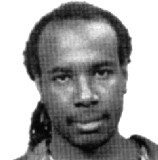 Gregory Rouster
Murderer · USA · 1986
John and Henrietta Rease, an elderly couple who lived in Gary, Indiana, cared f…
2 victims
Gregory Rouster
Murderer · USA · 1986
John and Henrietta Rease, an elderly couple who lived in Gary, Indiana, cared f…
2 victims
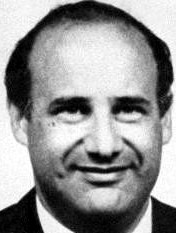 Jean-Claude Romand
Spree killer · France · 1993
Jean-Claude Romand (born February 11, 1954) was a French impostor and murderer…
5 victims
Jean-Claude Romand
Spree killer · France · 1993
Jean-Claude Romand (born February 11, 1954) was a French impostor and murderer…
5 victims
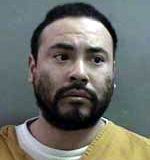 William Marrufo
Homicide · USA · 2005
William Jesus Marrufo was a former drummer for the band Ozomatli. Marrufo’s fam…
1 victim
William Marrufo
Homicide · USA · 2005
William Jesus Marrufo was a former drummer for the band Ozomatli. Marrufo’s fam…
1 victim
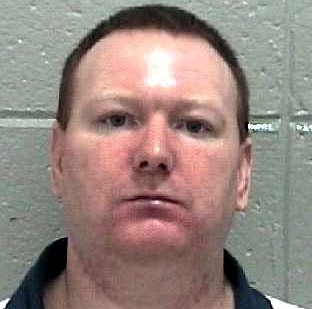 Billy Daniel Raulerson
Murderer · USA · 1993
Defendant: Billy Daniel Raulerson Jr. Age: 27 Court/case references: Raulerson…
3 victims
Billy Daniel Raulerson
Murderer · USA · 1993
Defendant: Billy Daniel Raulerson Jr. Age: 27 Court/case references: Raulerson…
3 victims
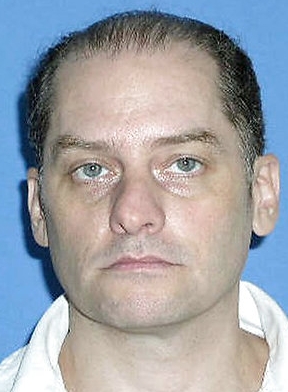 Donald Anthony Miller
Murderer · USA · 1982
Donald Anthony Miller was executed by lethal injection on February 27, 2007. Do…
2 victims
Donald Anthony Miller
Murderer · USA · 1982
Donald Anthony Miller was executed by lethal injection on February 27, 2007. Do…
2 victims
 Jesus Romero
Murderer · USA · 1984
Jesus Romero was convicted of capital murder of Olga Lydia Perales and was sent…
1 victim
Jesus Romero
Murderer · USA · 1984
Jesus Romero was convicted of capital murder of Olga Lydia Perales and was sent…
1 victim
- Gender
- male
- Country
- USA
- Location
- Chicago, Illinois, USA
- Date of birth
- 1966
- Age at first offence
- 30
- Characteristics
- thrill killer
- Victim profile
- Nan Toder, 33
- Method of murder
- Strangulation - St abbing with machete
- Date(s) of murder
- December 13, 1996
- Years active
- 1996
- Date of arrest
- —
- Status
-
Life imprisonment
Resentenced to 40 years in prison in 2006 after the Illinois Appellate Court reversed a 2002 guilty verdict and after Richee had been sentenced to natural life in prison in 2003; he pleaded guilty in January 2006 while maintaining his innocence.
Case overview
Christopher Richee was a former hotel handyman and the maintenance manager of the Hampton Inn in Crestwood. He pleaded guilty to the 1996 killing of Nan Toder, a Florida woman staying in Room 227 at a suburban Chicago hotel in Crestwood, Illinois. At the same proceeding in January 2006, Cook County Circuit Judge Thomas Panichi accepted a prosecution and defense request for Richee to receive 40 years in prison for the machete slaying of Nan Toder. Richee released a handwritten statement to the media maintaining that he stood “today and still maintain my innocence.”
Background
Nan Toder was a Florida resident who was visiting the Chicago area for training for her new position as vice-president of Vance Wholesale Floral Company (Vance) in Florida. She arrived in Chicago on December 9, 1996, and was staying in Room 227 at the Hampton Inn in Crestwood, Illinois. She was to return home to Florida on December 13, 1996.
On the evening of December 12, 1996, Toder declined a dinner invitation with the president of Vance, went to a nearby gym, and then visited Jewel Food Stores where she made several purchases at 8:25 p.m. She returned to the hotel at approximately 8:54 p.m. and entered the hotel through the front lobby area alone while carrying a Wendy’s bag. She asked the front desk for a 5 a.m. wake-up call the next morning. She spoke with her mother on the phone at 9:56 p.m.
Richee worked at the Hampton Inn. As described, he had been the maintenance manager and had intimate knowledge of the locks. He was described in the original trial as a thrill killer.
Richee was indicted for the murder in December 1999.
The offence
Nan Toder’s body was discovered on the morning of December 13, 1996. Toder was found on the floor between two beds in Room 227. She was lying on her back, propped up on her elbows with her head tilted back. She was wearing a robe, which was open, exposing her breasts and pubic area. Her neck was bound by pantyhose and a phone cord was wrapped around her left wrist, and her feet were also bound with a phone cord. A bedspread partially covered her legs. At the scene, her panty hose had been tied around her neck, and a phone cord was described as being wrapped around her left wrist. She was nearly nude, and prosecutors said there was no evidence of sexual assault.
Her injuries included strangulation with pantyhose, she was bound with telephone cords, and she was slashed in the back of the head several times, causing massive bleeding. Dexter Bartlett, a qualified crime scene investigation expert, opined that Toder was attacked while lying face down on the bed closest to the door and that her body had been “posed.” Rod Englert opined that Toder was sleeping, lying face down on the bed closest to the door with her head at the head of the bed when she was approached from behind, and he opined the massive blood on the bed came from multiple blows to Toder’s head. Englert opined that the wounds to Toder’s head were caused by a machete. Bartlett also opined that the offender used a machete and had worn gloves. Englert testified the bloody imprint of a machete was left on the bed sheet. Bartlett opined that the crime scene was “staged.” Englert opined that after the attack, Toder’s body was pulled from the bed onto the floor.
Dr. Cogan performed the autopsy. Dr. Cogan determined that the cause of death was multiple injuries and that the cuts to Toder’s head could have been caused by a machete. Dr. Cogan could not determine the exact time of death.
The room appeared to have been burglarized. A bloody washcloth containing DNA from someone other than Nan was left in the room. Prosecutors said Richee grabbed it from another room sometime earlier and left it at the scene to throw police off the track. Her panty hose had been tied around her neck.
Investigation
Wake-up calls and access to Room 227
On the morning of December 13, 1996, two wake-up calls to Toder’s room went unanswered.
Concepcion Dominguez, a housekeeper employed at the Hampton Inn, made her rounds on the morning of December 13, 1996. At about 10:15 a.m., Dominguez knocked on the door of Room 227. There was no response, so Dominguez used her metal key to access the room. The metal key opened all of the hallway doors on the second floor. The door to Room 227 would not open, so Dominguez summoned her supervisor, Mirta Arroyo. Arroyo tried to open the door to Room 227 with her metal key as well, but the door only opened slightly. Arroyo then knelt down, pushed away what was on the other side of the door, and the door opened. It appeared that a suitcase had been blocking the door.
Once the door was fully open, Dominguez noticed blood all over the bed. Arroyo told Dominguez to go down the hallway. Arroyo summoned hotel manager Brenda Randazzo. Arroyo and Randazzo returned to Room 227; Randazzo used her master key to unlock the door. Upon entering the room a second time, they viewed the body of Nan Toder lying between the two beds and quickly exited.
Police response and observations
Crestwood police officer John Barolga was on patrol on December 13, 1996, when he received a call of a possible homicide at the Hampton Inn. When he arrived, he was greeted by Richee, who took him to the second floor and directed him to Room 227, where he opened the door with a key. Richee stated that he did not have any knowledge about where the victim was located within the room. Officer Barolga ordered Richee to stay out of the room.
Officer Barolga entered the room and noticed a black suitcase just inside the door. He also saw, immediately to his right, a door that led to Room 229, an adjoining room. He proceeded into the adjoining room and saw a bloody pillow and bedspread on the bed closest to the door. He observed a towel on the bathroom floor that appeared to have blood on it. While Officer Barolga was in the bathroom looking around, he observed Richee enter the room, pass the bathroom where he was standing, and continue moving toward the main room. Officer Barolga again ordered Richee to stay out of the room. Richee backed up and stopped near the doorway. Officer Barolga ordered him to leave again. Officer Barolga then observed Toder’s dead body lying on the floor between two beds.
Crime scene experts and locks
Dexter Bartlett arrived at approximately 10:33 a.m. on December 13, 1996, viewed Toder’s body in Room 227, and opined that Toder’s body had been “posed.” Bartlett opined that her injuries were not readily apparent but that her body had been posed. Bartlett opined that the offender used a machete and had worn gloves based on blood transfer patterns. He believed Room 227 was in disarray, and he opined the crime scene was “staged.”
Bartlett examined the locks on the outside of the door to Room 227. He observed two locks on the exterior: an upper locking device operated by a key card and a lower locking device operated by a metal key. There were marks and partial damage to the lock operated by a metal key. Bartlett opined the marks were made by someone inserting a screwdriver or other similar device and moving it up and down, and he found that despite the damage the lock was still in good working order.
Bartlett described three locking devices on the inside of the door of Room 227 leading to the hallway. The uppermost was a security lock only activated from inside the room that could not be opened with a key and allowed the person inside to open the door slightly to look outside into the hallway. The second was a deadbolt only activated from inside the room. The third was a passive door lock that automatically locks from the outside if the door is closed. Bartlett opined that all three locking devices were in working order on the morning of December 13, 1996.
Bartlett initially concluded the point of entry was the door leading from the hallway to Room 227, but after learning about the initial inability of housekeeping to open the door due to the suitcase, he opined the point of entry was the door from adjoining Room 229. Bartlett stated the deadbolt on Toder’s adjoining door was found locked and that there was no way to unlock the deadbolt on the adjoining door from inside Room 229. Bartlett also stated that if the small metal bar from the deadbolt lock on Toder’s adjoining door were removed, the lock would appear locked although it would actually be disconnected. Bartlett further stated a person seeking to gain entry to Toder’s room would have to place tape on the striker bolt or on the hole in the door frame before Toder entered her room. Bartlett believed it would have been impossible for Toder’s killer to leave through the hallway door due to the suitcase, and that exiting would require again taking apart the locking mechanism, replacing the metal bar and removing the tape. Bartlett opined the killer would not be able to lock the deadbolt on Toder’s adjoining door if he was in Room 229 and would have to come back into Toder’s room later to lock the deadbolt on her adjoining door.
Rod Englert reviewed reports and approximately 400 photographs from the crime scene, as well as individual articles of clothing and bedding taken from Room 227. Englert opined that Toder was approached from behind while she was on the bed face down, and that the massive amount of blood came from multiple blows to Toder’s head. Englert opined Toder was attacked with a machete. Englert opined the wounds on Toder’s head were caused by a machete and that a bloody imprint of a machete was left on the bed sheet. Englert opined the offender likely wore gloves because no fingerprints were recovered from the sheet. DNA samples were taken from the bed sheet and none of the DNA matched defendant. Englert opined that Toder’s body was pulled from the bed onto the floor after the attack and that her body had been posed.
Arrest
Richee was a suspect from the beginning. However, there was no evidence to arrest him and it took several years for detectives to piece together enough circumstantial evidence to implicate him in the killing.
Trial
Procedural posture and charges
Following a jury trial, Richee was convicted of first degree murder and sentenced to life imprisonment.
The appellate opinion described that the trial court had reversed a 2002 guilty verdict and remanded for a new trial due to errors in admitting other crimes evidence.
Witness testimony regarding Richee’s access and conduct
Lisa Dellorto worked at the front desk of the Hampton Inn on the evening of December 12, 1996, from 11 p.m. to 7 a.m. She received a telephone call from Richee shortly after arriving at work. Richee told Dellorto he was at Bongo Johnny’s, a bar and dance club in Chicago Ridge, Illinois, and asked if she wanted him to bring her a burrito. Dellorto said no. Richee said he was coming to the hotel anyway and would be bringing a burrito for himself. Later, Dellorto saw Richee standing at the front desk; she did not see him enter through the main hotel entrance. Dellorto stated Richee wore a dark sweater, jeans and white tennis shoes, and that his tennis shoes struck her as unusual because she had previously seen him wear dirty shoes. Richee told her he got the shoes for Christmas from his mother and rarely wore them. Dellorto and Richee went to the back office to talk, and later Dellorto saw Richee looking at the hotel’s computer. The hotel computer was used strictly for hotel information and could determine which rooms were occupied. Dellorto last saw Richee at approximately 12:30 p.m. on December 12, 1996, when he told her he was going to turn on the hotel’s outside Christmas lights. Dellorto testified she was familiar with the key system at the Hampton Inn. She stated a master key was kept at the front desk and employees coming in through the front desk area had access to that key.
Brenda Randazzo was the general manager of the Hampton Inn on December 12, 1996. Randazzo testified that on December 12, 1996, Richee worked his normal hours of 7 a.m. to 3:30 p.m. Randazzo was familiar with the locking systems. Randazzo had a master metal key opening the lock on the outside of a hotel room door, and the key would operate even if the deadbolt lock was activated. Other department managers including Wendy Heberling, the assistant manager, Mirta Arroyo, the executive housekeeper, and defendant had master keys. Randazzo testified a fifth master key was kept in a locked box on the wall in the back office, and that key was still in the locked box on the morning of December 13, 1996. Randazzo testified that the key kept at the front desk was not capable of overriding a deadbolt on the hotel room door.
Randazzo testified that a new locking system came into effect at the Hampton Inn on December 13, 1996, in the afternoon. She stated a meeting took place on December 12, 1996 regarding the new locking system and that a representative of the company installing the new locking system was present and explained to the hotel staff, including Richee, how the new locks worked. The new locks were described as computerized electric locks, with new locks to be installed on the outside of each hotel room door. Managers were to receive new master key cards capable of circumventing the same locks they circumvented under the old system. Randazzo testified the computerized system recorded information about whose key was used to enter a hotel room and the time of entry, including whether the key was a guest key, maintenance key, or housekeeping key. Randazzo stated this information was not available from the locking system as it existed on December 12, 1996.
Relationships and pose-nude testimony
Jill Paoletti testified that she and Richee were dating in December 1996. At approximately 8:30 p.m. on the evening of December 12, 1996, she went to Richee’s house in Burbank, Illinois and left at approximately 11 p.m. the same evening after Richee complained of having a stomachache. Paoletti testified about a conversation with police on December 16, 1996 and that following that conversation she spoke with Richee. Paoletti asked him if he had gone out on the evening of December 12, 1996 after she left his house, and he stated he went out to get a burrito because he was hungry. Paoletti found this unusual because Richee was not feeling well and he normally did not eat late in the evening. Paoletti testified that during the three years she dated Richee, she was in his bedroom two or three times a week. Paoletti saw a hunting knife with a serrated blade in Richee’s bedroom. The knife was approximately eight inches long but could have been longer. Paoletti also testified that she had sexual relations with defendant several times during her menstrual period. Paoletti could not recall if she was menstruating the week that Toder was murdered.
Patricia Yodka testified she was having a secret relationship with Richee in December 1996. She normally met Richee and his friend Mike Duello on Tuesday and Thursday nights at Bongo Johnny’s, then went to Richee’s house. Yodka testified that in the first week of December 1996 Richee shaved his legs, pubic hair, arm pits and facial hair but not his head hair. She testified that on Thursday, December 12, 1996, she went to Bongo Johnny’s but Richee did not show up. At 2:30 a.m. on the morning of December 13, 1996, Yodka went to Richee’s house and knocked on his bedroom door, accessible from the outside. Yodka testified Richee answered the door, told her “tonight's not a good night, that I have puke all over me,” and shut the door. Yodka testified that during her relationship with Richee, he would ask her to pose nude and wanted her to lie on her back with her arms back, her knees bent, her legs sprawled open and her head either up or back. Yodka also testified that Richee once took a picture of her while she slept.
Michael Duello testified that on the evening of December 16, 1996, Richee called him and said police were going to search his house and asked him to remove a bloody towel from his bedroom. Duello disposed of the bloody towel in a Dumpster. About a week later, Duello went to Richee’s house, noticed the machete Richee normally kept in a cargo net was no longer there, and in the garage saw the blade of a machete that resembled the one previously seen in the cargo net but with the handle missing. Duello asked Richee what happened to the machete and Richee said he was “screwing around with it and the handle broke.” Duello asked Richee if he had “killed the girl.” Richee asked Duello what he thought and, when Duello said “no,” Richee said “stick with that.” Duello testified he again asked whether Richee had done it and Richee told him no, then yes, then no.
Jill Alexejun testified she and Richee dated in 1994. During that time, Alexejun worked as an assistant manager for the Lincoln Property Company and Richee worked as a maintenance technician. Alexejun testified that as part of defendant’s job she observed him change locks on apartment doors, gain access to vacant apartments, and that if the knob lock was locked he used a screwdriver to unlock it and if the deadbolt was locked he used a drill. Alexejun also testified she witnessed him unlock a door with a credit card.
Evidence about other crimes
The appellate opinion stated that the State presented evidence of other crimes. Two witnesses testified about a Hollywood Park burglary in the spring of 1992. Six witnesses testified regarding burglaries at the Old Willow Springs Shopping Center on March 9, 1998. The opinion described that the jury convicted Richee of first degree murder and the court sentenced him to life imprisonment.
In the Hollywood Park burglary evidence, Patrick Brennan testified he and Richee were friends in March 1992. Brennan described conversations where Richee indicated he was considering breaking into Hollywood Park to steal money from the office safe and asked Brennan’s help. Brennan stated Richee wanted to make the burglary look like it was not an “inside job.” Brennan testified that about a week later Richee told him he had figured out a way to get into the safe and showed Brennan a plastic key described as “clear plexiglass” hanging on a string from Richee’s mirror. Brennan described that Richee told him he made a copy of the key by heating plexiglass, sticking it in the hole, and grinding it down, and that Richee indicated he tested the key in the safe and it worked. Brennan testified Richee told him to dress in normal clothes with black clothes over them and to bring a pair of gloves. Brennan stated on the next day Richee called him at approximately 6 p.m. and told him he would be picking him up. Richee arrived at Brennan’s home at 9 p.m., and they transferred what Brennan believed was a hoe from Richee’s truck to the trunk of another vehicle and left for Hollywood Park. Brennan testified that Richee told him he borrowed the hoe from Hollywood Park and used it as an excuse to go there. Brennan testified Richee pulled the car around back and went in through the front, indicated he was going to open the back door, then came through the back door to the trunk and removed the hoe. Brennan and Richee went into a maintenance room through the back door. Brennan testified Richee instructed him to use a ladder inside the maintenance room to access the roof. They waited for the park to close, and Brennan testified they both wore gloves and defendant was in possession of a backpack with tools including “a chisel, hammer, tin snips, needle-nose pliers, flashlight and a rope,” and also “a two way radio.” Brennan described that once the park closed, Richee paced off a location on the building’s roof above the office, kicked stones away, and started to cut by “beat[ing] a hole with the chisel to get it started and use tin snips to open it up.” Brennan testified that Brennan acted as lookout while Richee cut the hole. Brennan testified Richee handed bags of money to Brennan through the hole in the roof, totaling three bags of money and the safe door. Brennan testified defendant climbed back through the hole and onto the roof, threw the safe door over the west side of the building, and the cash went into defendant’s backpack. They left by scaling the wall using a rope looped around an air conditioning unit, freed the rope from the air conditioning unit, retrieved the safe door and returned to a car parked less than a mile away. Brennan testified that defendant and Brennan stripped off black clothing and put everything, including the bags of cash and the safe door, in the trunk, drove to a body of water at Ridgeland Avenue, and threw the safe door in. Brennan testified they returned to Brennan’s house where defendant gave Brennan one bag holding approximately $5,000 to $7,000, and defendant kept the other two bags, Brennan estimated containing $18,000 to $20,000. Brennan testified defendant told Brennan that if anyone began asking questions about the burglary “it never happened.” Brennan testified Brennan remembered the radio left on the roof and called defendant the next morning, and defendant said he would take care of it.
Chris Paliga testified he owned Hollywood Park since 1996 and that in April 1992 he was the general manager and defendant was the manager. Paliga testified about the building, surrounding premises, and that the back door led to a maintenance room with a ladder providing access to the roof. He also testified there was no alarm system on the second floor known to defendant. Paliga testified about two safes: one safe with two keys (one kept in the manager’s safe and one in the possession of the armored car service) and a second daily-use safe with a combination lock. Paliga identified photographs showing the safe door replacement in 2002 and photographs of the safes in 1992. Paliga testified that on April 20, 1992 Richee called him saying someone had burglarized the building and that defendant sounded upset. Paliga testified defendant stated he could not believe someone would do something like that. Paliga testified police investigating the scene opined the hole in the roof was cut from the inside.
For the Old Willow Springs Shopping Center burglaries, officer Paul McGrath testified he responded March 9, 1998 to a report of a burglary at the Old Willow Shopping Center in Willow Springs, Illinois. McGrath testified the Old Willow Shopping Center was a three-story commercial building housing 10 to 25 businesses. McGrath testified he spoke with the business owner, observed the door to the business was broken in with physical damage to the doorway, and noticed gang graffiti spray painted on walls of the second-floor hallway and down the stairwell. McGrath testified he believed the graffiti to be “fake.” McGrath testified that at the bottom of the stairwell there was an outside door and he observed duct tape over the latch of the door to prevent the locking mechanism from catching. He reviewed 20 photographs depicting graffiti.
Robert Zygmunt testified he and Richee were friends. Zygmunt stated that in March 1998 he helped prepare for the opening of defendant’s tanning spa on the second floor of the Old Willow Springs Shopping Center. Zygmunt testified later that month defendant brought several Gateway computers (towers, printers, keyboards) and a wastepaper basket with various other office-related items. Zygmunt testified defendant told him he stole the equipment from a business in the building where his tanning spa was located and asked Zygmunt to hold onto the equipment because he was being investigated. Zygmunt testified he could do whatever he wanted with one of the computers, but defendant wanted him to hold on to the other because he wanted it back later. Zygmunt sold one computer for $100. Zygmunt testified defendant told him that if police came asking questions about the computers, he should say defendant bought them at the flea market. Zygmunt testified police eventually interviewed him and he turned the remaining computer over to them.
Mary Ann Racilla testified she owned an environmental consulting firm called Environmental Assessment Group located on the third floor of the Old Willow Springs Shopping Center and that defendant’s tanning spa was on the second floor. Racilla testified that on March 9, 1998 she arrived and noticed graffiti painted in the hallway, and that her office had been vandalized and several things stolen from her office including a printer. Racilla testified the locking mechanism on the door leading to her business was operable after the burglary.
David Lucado testified he worked for Comprehensive Planning, Inc. located on the third floor across from Environmental Assessment Group. Lucado testified that on March 9, 1998 when he arrived at work he noticed the door to the office open and several items missing including two computers and a fax machine.
Edward Doyle of the Cook County sheriff’s police department testified that on May 21, 1999 he executed a search warrant on the tanning spa owned by defendant located in Old Willow Springs Shopping Center. Doyle testified he found a fax machine in the bottom drawer of a file cabinet and that the fax machine was missing its serial number.
Thomas Weatherald of the Illinois State Police testified that on May 21, 1999 he executed a search warrant on defendant’s home at 8136 South Mobile in Burbank, Illinois. Weatherald testified that in defendant’s bedroom he found speakers for a Gateway computer and a printer, which were proceeds returned to their rightful owner.
Findings of the trial and sentencing
A Cook County jury convicted Richee of first degree murder. A judge sentenced him to natural life in prison in 2003. A separate description in the appellate opinion stated that the court sentenced Richee to life imprisonment after the jury convicted him following a jury trial.
Appeals
In January 19, 2005 appeal proceedings described in the appellate opinion, the presiding justice delivered the opinion and addressed multiple claims.
The appellate opinion described Richee’s arguments on appeal: (1) trial court improperly admitted other crimes evidence; (2) trial court erred in denying his motion in limine; (3) trial court improperly admitted irrelevant and prejudicial evidence; (4) the prosecutor made improper remarks during closing argument; and (5) he was denied a fair trial by cumulative effect of errors. The appellate court found that admission of other crimes evidence and the quantity of evidence presented relating thereto was error.
The appellate court stated it had determined that the trial court abused its discretion by permitting testimony concerning defendant’s prior burglaries because the differences between the murder and the Hollywood Park and Willow Springs burglaries outweighed the similarities. The court also stated that even assuming arguendo relevance, the probative value was outweighed by prejudicial effect given the presentation of “two trials within a trial,” and described the evidence was detailed and flagrantly excessive. The appellate court concluded the evidence deprived defendant of the right to a fair trial and that the error was not harmless.
Regarding the pose-nude evidence, the appellate court stated it did not find testimony of Patricia Yodka to be irrelevant because the body was found posed and the description was strikingly similar. The appellate court concluded the denial of defendant’s motion in limine was not an abuse of discretion with respect to that evidence.
The appellate court reversed the judgment and remanded for a new trial. It also stated that because it was remanding, it reviewed whether evidence was sufficient to sustain a conviction beyond a reasonable doubt, and found evidence sufficient. The appellate court found no double jeopardy impediment to a new trial, and it noted it made no finding binding on retrial.
Outcome
Richee pleaded guilty in January 2006 to the 1996 killing of Nan Toder. A handwritten statement was released by Richee maintaining his innocence.
Cook County Circuit Judge Thomas Panichi accepted the prosecution and defense request that Richee receive 40 years in prison for the machete slaying. Panichi said:
"I wish I could understand more about how something like this happened," Panichi said of the slaying. "I guess there could be something said for Mr. Richee not putting the family and friends of the victim through a long, tedious and brutal trial."
Toder’s father Sol Toder commented after the proceeding:
"I think the last time after trial I referred to him as a subhuman species, and I still do," said Sol Toder, the victim's father, who was joined by his wife and other family members. "It's just horrible that the Appellate Court overturned the decision. There's a chance now that this beast can be out."
Sol Toder later called the experience like:
"going through hell again."
Prosecutors said in the first trial that Richee tried to make Toder’s killing look like the work of an outsider who picked the lock to get into her room. No DNA evidence was presented linking Richee in the first trial.
Authorities alleged that Richee plotted the slaying, possibly for months, disabling the deadbolt lock on the door between the adjoining room and Toder’s room. As the hotel’s maintenance manager, he had intimate knowledge of the locks and was one of the first to respond to the scene in the hotel room where Toder’s body was posed, with her feet tied with a telephone cord. Prosecutors said Toder did not know Richee. The appellate opinion stated that the State urged admission of other crimes evidence under modus operandi, and the appellate court ruled the admission was error and prejudicial.
With the guilty plea, the 2006 sentencing was described as ensuring Richee would not be sentenced to life in prison, and he could be out of prison in 13 to 14 years because the judge credited him with six years he had served since the original indictment.
Aftermath
The Illinois Appellate Court reversed a 2002 guilty verdict. Richee’s conviction was overturned after the appellate court ruled that evidence of two robberies Richee allegedly committed should have been ruled inadmissible, even though prosecutors believed they showed parallels to Toder’s slaying.
Scott Cassidy, one of three Cook County assistant state's attorneys working the case, said the Appellate Court’s decision substantially impaired the case:
Cassidy said. "substantially impaired our case."
"It was an integral part of the case," Cassidy said. "In a circumstantial case--which this was--when some of the pieces of the puzzle are taken away, it's hard to prove to a fact-finder beyond a reasonable doubt" that the defendant committed the crime.
Tom Justic, one of Richee’s three public defenders, said he was satisfied with the deal:
"it worked out as well as we could have expected" short of a not-guilty verdict.
Richee’s mother Lindy called the plea bargain a victory for her son and said:
"I am so happy that he took the plea. I want to see him again before I die," said the 69-year-old woman. "Just because he said it, it doesn't mean he is guilty."
Richee provided a handwritten statement to the media asserting innocence:
“I stand here today and still maintain my innocence,” Richee wrote in his statement. “But as prepared as [my public defenders] are, I still have no faith in the system that charged me with the crime in the first place. I just can't risk spending the rest of my life in jail for something I didn't do.”
Since Richee’s 2002 conviction, the Toder family settled out of court with hotel owners for $4.6 million, vowing to use the money to raise hotel safety awareness and to press for laws requiring background checks on employees with access to keys. The Toders pushed lawmakers in their home state of Pennsylvania to enact such legislation.
Sol Toder constructed a red handout folder with a gold key and a small cutout photo glued to the outside of it that read:
"You are the key to Nan's Law."
The posting also included the phrase:
Nan’s Law
The worst murderers are the thrill killers. While no killing is ever acceptable, it’s possible to understand at least what drives a sexual sadist or desperate criminal to slay someone. The ones that make absolutely no sense and can not be justified under any set of morals are the killings where someone does it just to see if he or she can get away with it.
It further stated that in January 2006, Christopher Richee pleaded guilty to murdering Nan Toder at a suburban Chicago hotel and received a 40-year prison term, and that he could be out of prison in a little over a decade because of time already served.
Other details
Prior sentence and reversal referenced at resentencing
Richee was sentenced to natural life in prison in 2003. The appellate court ruled in the prior appeal that evidence of two robberies should have been ruled inadmissible, and the guilty verdict was reversed in the process that led to a retrial.
Timeline of named dated events and procedural points
- December 9, 1996 — Nan Toder arrived in Chicago and stayed in Room 227 at the Hampton Inn in Crestwood, Illinois.
- December 12, 1996 — Toder declined a dinner invitation, went to a nearby gym, and visited Jewel Food Stores where she made several purchases at 8:25 p.m.; she returned to the hotel at about 8:54 p.m. and asked the front desk for a 5 a.m. wake-up call for the next morning.
- 8:54 p.m., December 12, 1996 — Toder returned to the hotel and entered through the front lobby area alone while carrying a Wendy’s bag.
- 9:56 p.m., December 12, 1996 — Toder spoke with her mother on the phone.
- approximately 11 p.m., December 12, 1996 — Jill Paoletti left Richee’s house after he complained of having a stomachache.
- about 12:30 p.m., December 12, 1996 — Dellorto last saw Richee when he said he was going to turn on the hotel’s outside Christmas lights.
- 2:30 a.m., December 13, 1996 — Patricia Yodka knocked on Richee’s bedroom door and received a response that “tonight's not a good night, that I have puke all over me.”
- December 13, 1996 — Two wake-up calls to Toder’s room went unanswered; housekeeping gained access and discovered Toder’s body in Room 227.
- approximately 10:15 a.m., December 13, 1996 — Dominguez knocked on Room 227, found no response, and used a metal key; the door would not open until a suitcase blocking the door was moved.
- approximately 10:33 a.m., December 13, 1996 — Dexter Bartlett responded to the Hampton Inn and viewed Toder’s body.
- December 16, 1996 — Jill Paoletti had a conversation with police; she then spoke with Richee.
- December 16, 1996 — Richee called Michael Duello and asked him to remove a bloody towel from his bedroom; Duello disposed of the towel in a Dumpster.
- December 1999 — Richee was indicted for the murder.
- 2002 — Richee was found guilty in the case, which was later reversed.
- 2003 — Richee was sentenced to natural life in prison.
- January 19, 2005 — An appellate opinion described reversible error concerning admission of other crimes evidence and remanded for a new trial.
- January 2006 — Richee pleaded guilty; the court sentenced him to 40 years in prison.
- 2006 — Resentencing to 40 years in prison occurred.
Spotted an error, or have more information about this case?