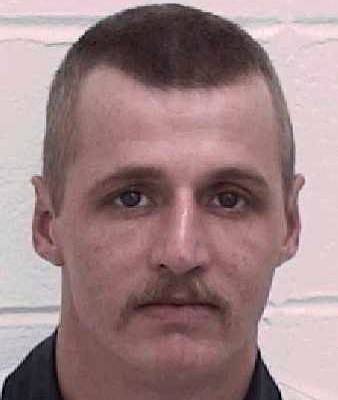
Timothy Pruitt
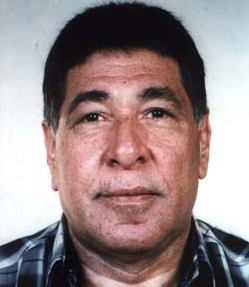 Gameel Al-Batouti
Mass murderer · USA · 1999
Gameel Al-Batouti (also rendered “Gamil ElBatouty” or “El Batouty” in U.S. offi…
216 victims
Gameel Al-Batouti
Mass murderer · USA · 1999
Gameel Al-Batouti (also rendered “Gamil ElBatouty” or “El Batouty” in U.S. offi…
216 victims
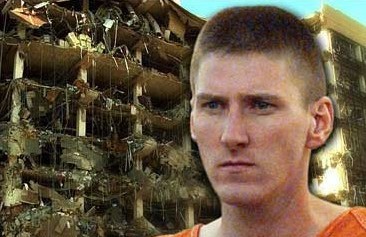 Timothy McVeigh
Mass murderer · USA · 1995
Timothy James McVeigh (April 23, 1968 – June 11, 2001) was a United States Army…
168 victims
Timothy McVeigh
Mass murderer · USA · 1995
Timothy James McVeigh (April 23, 1968 – June 11, 2001) was a United States Army…
168 victims
 Jack Kevorkian
Homicide · USA · 1990
Jack Kevorkian (born May 26, 1928) was a controversial American pathologist. He…
130 victims
Jack Kevorkian
Homicide · USA · 1990
Jack Kevorkian (born May 26, 1928) was a controversial American pathologist. He…
130 victims
 Julio Gonzalez
Mass murderer · USA · 1990
Julio Gonzalez was sentenced to 174 twenty-five-year sentences (a total of 4,35…
87 victims
Julio Gonzalez
Mass murderer · USA · 1990
Julio Gonzalez was sentenced to 174 twenty-five-year sentences (a total of 4,35…
87 victims
 David Koresh
Homicide · USA · 1993
David Koresh (born Vernon Wayne Howell; August 17, 1959 – April 19, 1993) led t…
79 victims
David Koresh
Homicide · USA · 1993
David Koresh (born Vernon Wayne Howell; August 17, 1959 – April 19, 1993) led t…
79 victims
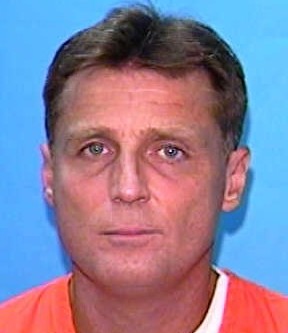 Glen Edward Rogers
Serial killer · USA · 1993
Glen Edward Rogers was a spree killer whose cross-country rampage in 1994-95 le…
70 victims
Glen Edward Rogers
Serial killer · USA · 1993
Glen Edward Rogers was a spree killer whose cross-country rampage in 1994-95 le…
70 victims
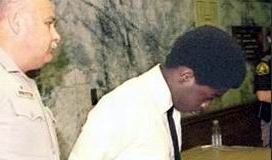 Willard Jimerson
Homicide · USA · 1994
Willard Jimerson was 13 years old when he was charged with the first degree mur…
1 victim
Willard Jimerson
Homicide · USA · 1994
Willard Jimerson was 13 years old when he was charged with the first degree mur…
1 victim
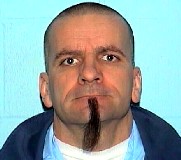 Niels Nielsen
Murderer · USA · 1995
Niels Christian Nielsen was convicted of killing his ex-wife, Sue Marshel, and…
2 victims
Niels Nielsen
Murderer · USA · 1995
Niels Christian Nielsen was convicted of killing his ex-wife, Sue Marshel, and…
2 victims
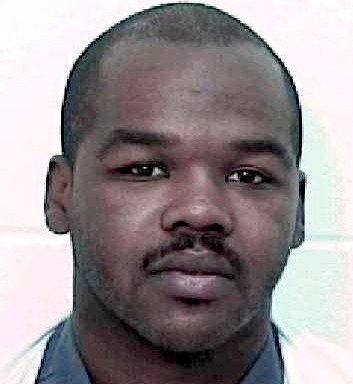 Curtis Osborne
Murderer · USA · 1990
Curtis Osborne was a male inmate convicted by a Spalding County jury of the mur…
2 victims
Curtis Osborne
Murderer · USA · 1990
Curtis Osborne was a male inmate convicted by a Spalding County jury of the mur…
2 victims
 Christopher Halliwell
Murderer · United Kingdom · 2002
Christopher Halliwell pleaded guilty to the murder of Sian O'Callaghan. He rece…
2 victims
Christopher Halliwell
Murderer · United Kingdom · 2002
Christopher Halliwell pleaded guilty to the murder of Sian O'Callaghan. He rece…
2 victims
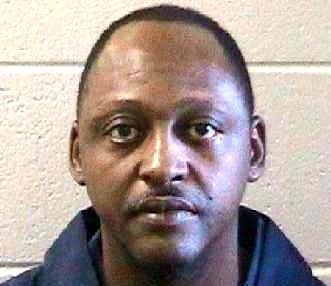 Ronnie Thornton
Murderer · USA · 1991
Ronnie Thornton was sentenced to death on January 11, 1993. His convictions wer…
1 victim
Ronnie Thornton
Murderer · USA · 1991
Ronnie Thornton was sentenced to death on January 11, 1993. His convictions wer…
1 victim
- Gender
- male
- Country
- USA
- Location
- Lumpkin County, Georgia, USA
- Date of birth
- 1966
- Age at first offence
- 26
- Characteristics
- rape, sexual abuse, dismemberment, drunken rage, abuse
- Victim profile
- Wendy Nicole Vincent (10-year-old neighbor girl)
- Method of murder
- St abbing with knife
- Date(s) of murder
- April 10, 1992
- Years active
- 1992
- Date of arrest
- Same day
- Status
-
Sentenced to death
Sentenced to death on October 15, 1996
Case overview
Timothy Pruitt was sentenced to death in Lumpkin County in October 1996 for the stabbing and strangulation killing of a 10-year-old neighbor girl. Wendy Nicole Vincent was killed in her own home. The judgment was decided March 19, 1999; reconsideration was denied April 1, 1999 (PRUITT v. THE STATE. S98P1962. (270 Ga. 745) (514 SE2d 639) (1999) SEARS, Justice).
Timeline
- April 9, 1992 (about midnight) — Pruitt arrived at Lovell’s trailer; he was drunk and violent and he and Lovell got into an argument.
- April 9, 1992 (about 1:15 a.m.) — Pruitt angrily left, punching Lovell’s porch light as he was leaving and cutting his hand.
- April 10, 1992 (about 3:00 a.m.) — Pruitt entered a convenience store and asked to use the bathroom; he had blood on him.
- April 10, 1992 (about 3:45 a.m.) — Pruitt returned to the convenience store and again went back into the bathroom for five minutes.
- April 10, 1992 (about 6:30 a.m.) — Ms. Gottschalk returned home and found her daughter lying dead on the bedroom floor; Wendy Nicole Vincent had been stabbed several times and her throat was cut.
- March 19, 1999 — The case was decided (DECIDED MARCH 19, 1999).
- April 1, 1999 — Reconsideration was denied (RECONSIDERATION DENIED APRIL 1, 1999).
- October 15, 1996 — Pruitt was sentenced to death (Sentenced to death on October 15, 1996).
Background
In April 1992, Myrtle Ricketts was renting two trailer homes on her property: one to Tammy Lovell and one to Vicky Gottschalk. Gottschalk lived with her ten-year-old daughter, Wendy Nicole Vincent. Lovell lived with her two young sons. Pruitt was Lovell’s ex-husband. In early April 1992, Lovell and Pruitt were attempting a reconciliation, and Pruitt sometimes stayed the night at his ex-wife’s trailer.
The offence
At about midnight on April 9, 1992, Pruitt arrived at Lovell’s trailer. He was drunk and violent, and he and Lovell got into an argument. Lovell told him she did not want him there. At about 1:15 a.m., Pruitt angrily left, punching Lovell’s porch light as he was leaving and cutting his hand.
At about the same time, Gottschalk left her home to work a night shift; her daughter remained sleeping in her trailer. The trailers shared a common driveway and Gottschalk had to wait for Pruitt to pull out first. Shortly thereafter, Lovell looked out her window and saw a man she assumed was Pruitt unscrewing the porch light on the Gottschalk trailer. She looked away to attend to a sick child, and when she looked out again, the area was dark.
At about 6:30 a.m. on April 10, 1992, Gottschalk returned home and found her daughter lying dead on the bedroom floor. Wendy had been stabbed several times and her throat was cut. The medical examiner also testified that there was trauma to her vagina and anus. Semen stains on the bed indicated that the assault began there and the victim was then moved to the floor and killed.
Semen was discovered in the victim’s anus, and DNA extracted from the semen matched Pruitt. The State’s DNA expert testified that the frequency of this DNA profile among Caucasians is one in seven billion.
Investigation
A clerk at a convenience store recognized Pruitt because he was a regular customer, but she did not know his name. Pruitt had blood on him, and the clerk testified that this was not unusual because Pruitt was a chicken catcher and chicken catchers usually have blood on them. Pruitt had been in the bathroom for about ten minutes and then left the store. Later, at about 3:45 a.m., Pruitt returned and went back into the bathroom for five minutes; he emerged, stared at the clerk while she helped another customer, and then left. When the clerk checked the bathroom shortly thereafter, paper towels and Comet were strewn about, and the water had been left running. The clerk testified that only Pruitt had used the bathroom since she cleaned it.
A friend of Pruitt testified that he called her at 3:00 or 3:30 a.m. and told her he needed to talk because he had "done something bad." The friend told him he could not come over because her child was sick.
When Lovell and Ricketts returned to the Gottschalk trailer after calling police, Ricketts saw Pruitt reach up and screw the porch light bulb until the light came on. Ricketts did not see him try the switch first.
The police became suspicious of Pruitt due to the description of his movements during the last few hours and because he had scratches and cuts on his hands. Lovell consented to a search of her trailer. The police noticed bloodstains on the clothes Pruitt had been wearing the previous night.
Pruitt was arrested. A broken window screen at the Gottschalk trailer indicated the assailant’s entry point. Beneath the window inside the trailer was a vinyl chair containing a partial shoe print.
A State expert determined that this shoe print matched Pruitt’s Reeboks.
Type O blood was found on the jeans and shirt that Pruitt had been wearing the night of the murder and on the steering wheel cover in his car. At the Gottschalk trailer, type A blood was found on the porch light bulb, the screen door latch, and near the entry window. Pruitt was type A and the victim was type O.
Inside the victim’s bedroom, hairs consistent with Pruitt’s head hair were found on the bedroom floor, a bed sheet, a pillow, and the victim’s body, panties, socks and shirt. Hairs consistent with Pruitt’s pubic hair were found on the bed sheet and the bedroom floor. Fibers found on the bed sheet microscopically matched fibers from the jeans worn by Pruitt the night of the murder.
Gottschalk testified that Pruitt had never been a guest in her home, and the only time she had ever seen him in her trailer was the brief time he felt for the victim’s pulse on the morning of April 10, 1992.
Arrest
Because neither trailer had a phone, Lovell went to Ms. Ricketts’s house to call the police. When Lovell and Ricketts returned to the Gottschalk trailer, Ricketts saw Pruitt reach up and screw the porch light bulb until the light came on.
The police noticed bloodstains on the clothes Pruitt had been wearing the previous night after Lovell consented to a search of her trailer. Pruitt was arrested.
Trial
The evidence showed that Pruitt was wearing blue jeans, a flannel shirt, and Reebok tennis shoes during the events that began at his arrival at Lovell’s trailer.
At the time of the killing’s discovery, Pruitt knelt beside the victim’s body and felt for her pulse, and he was not wearing the clothes he had worn the night before.
The evidence was sufficient to enable a rational trier of fact to find Pruitt guilty of the crimes charged beyond a reasonable doubt. The evidence was also sufficient to enable the jury to find the existence of the statutory aggravating circumstances beyond a reasonable doubt.
Venue
In 1996, the trial court ordered a change of venue from Lumpkin County to Cherokee County. Pursuant to OCGA 17-7-150 (a) (3), the trial court ordered that the jury would be selected from Cherokee County, but that the trial would physically take place in Lumpkin County. Pruitt complained this procedure was reversible error in Hardwick v. State. The decision noted that after Hardwick, the General Assembly amended the statute effective July 1, 1995 to allow the trial jury to be selected from qualified jurors of the transfer county while the trial could take place in the county of the venue of the alleged crime. The court concluded the trial court’s 1996 venue order was timely, and that OCGA 17-7-150 (a) (3) was also not unconstitutional.
Speedy trial
Pruitt complained that his constitutional right to a speedy trial was violated. He was arrested in April 1992 and not tried until September 1996 and was incarcerated while awaiting trial. The court concluded much of the delay was attributable to the defense, including that Pruitt repeatedly announced that his experts were not ready for scheduled hearings or trial and asked for a delay so plea negotiations could be conducted. The court also noted that Pruitt did not assert his constitutional right to a speedy trial until May 1996 and did not assert his statutory right to a speedy trial, and it concluded he had not brought forth evidence that the delay impaired his defense. The court stated the trial court did not err by denying Pruitt’s motion to dismiss for lack of a speedy trial.
DNA evidence
Before trial, Pruitt moved to exclude the State’s DNA evidence as unreliable under Caldwell v. State. At a pretrial hearing, the State’s DNA experts testified about DNA testing procedures, probability calculations, precautionary measures, standards, and protocol at the State Crime Lab. The defense had its own DNA expert but Pruitt presented no evidence to challenge the methodology of the tests or the results. The court concluded the trial court did not err by ruling the general scientific principles and techniques were valid and capable of producing reliable results and that the Crime Lab substantially performed the scientific procedures in an acceptable manner, making the DNA evidence admissible.
Indictment and death-penalty statutes
The indictment was based on legal and sufficient evidence. The Georgia statutes providing for the imposition of the death penalty were not unconstitutional. The Unified Appeal Procedure was also not unconstitutional. Execution by electrocution was not cruel and unusual punishment.
Grand jury pool
The court found there was no evidence that any cognizable group was underrepresented in the Lumpkin County grand jury pool, or that the method of selecting individual grand jurors was improper.
Continuance and expert funds
After the jury selection order from Cherokee County, Pruitt moved for a continuance and for funds to hire an expert to study whether opinions of people aged 18–34 differed from opinions of people aged 35–44 in Cherokee County. The trial court denied the motion for a continuance after finding Pruitt knew in May 1996 that a demographic study would take eight to ten weeks and that Cherokee County was the transfer county, but waited until July 1996 (eight weeks before trial) to request a continuance. The appellate court concluded the denial was not error because a motion for expert assistance must be timely. The court also upheld the denial of funds, stating there was no evidence young people were systematically excluded from the traverse jury pool and that Pruitt failed to show why such a study was critical to his defense.
Voir dire and juror disqualification issues
The court addressed multiple complaints about death qualification and voir dire questioning.
- The death qualification of prospective jurors was not unconstitutional.
- Pruitt lacked standing to challenge the constitutionality of the OCGA 15-12-164 (a) (4) question about conscientious objection to the death penalty, and the court stated the death qualification voir dire in the case was more extensive and detailed than OCGA 15-12-164 (a) (4), with no potential juror excused or declared competent based solely on the (a) (4) statutory question.
- The court concluded it did not err by asking the OCGA 15-12-164 voir dire questions and did not err by restricting Pruitt’s voir dire of prospective jurors.
- The court stated the proper standard for disqualification based on capital punishment views was whether the juror’s views would prevent or substantially impair the performance of duties as a juror according to instructions and oath.
- On review, the court deferred to the trial court’s determinations and found no abuse of discretion in qualifying prospective jurors who expressed a strong preference for the death penalty but also stated they could consider all circumstances and both life and death as possible sentences.
- The court found no abuse of discretion in excusing for cause four prospective jurors who firmly and unequivocally stated they could not vote to impose a death sentence under any circumstances.
- The court concluded it also did not abuse discretion in excusing another prospective juror who stated the legal system was unfair because he believed his brother had been convicted in an unfair trial with witnesses who had lied; the juror stated he might hold the State to a higher burden of proof and could not lay aside his bias.
Jury instructions about aggravating circumstances
The court found that the written list of alleged statutory aggravating circumstances was properly sent out with the jury in accordance with OCGA 17-10-30 (c). The court also found it was not error for the trial court to decline to send a written copy of the court’s charge out with the jury.
Identification and suppression motions
Pruitt claimed the trial court erred by denying his motion to suppress the out-of-court identification evidence because Shirley Roach, the convenience store clerk, was subjected to an impermissibly suggestive photo lineup. Although there was conflicting evidence about how the lineup was conducted and evidence that Roach saw Pruitt’s photograph in the newspaper before the lineup, the court concluded there was no substantial likelihood of misidentification. Roach testified Pruitt was a regular customer who had been in her store many times, she recognized his face but did not know his name, she knew he was employed as a chicken catcher, and she remembered he used to come into her store with his father. Roach testified that she did not base her identification on the photos because, "I already knew him from the store before. I didn't need to see no picture." The court also noted she had reason to remember Pruitt was in her store on the night of the murder because he messed up the bathroom she had just cleaned.
Pruitt also complained that the trial court erred by denying a motion to suppress shoe print comparison evidence as unreliable. The court concluded the warrantless seizure of Pruitt’s shoes, which he was wearing when he was arrested, was proper.
Counsel compensation
Pruitt complained about denial of his motion for adequate compensation of counsel. The court concluded the attorney fee issue was not properly before it because there was no proof the alleged inadequate compensation denied effective assistance of counsel.
Conflict-free counsel and Garcia hearing
In August 1995, thirteen months before trial, the trial court learned that the district attorney had hired Pruitt’s lead counsel, Robert Chandler, the previous month to represent him in an unrelated personal matter. The court found no evidence the district attorney intended to interfere with Pruitt’s representation when it hired Chandler. Although Chandler stated his representation of the district attorney would have no effect on his representation of Pruitt, the trial court determined this relationship constituted a conflict. The trial court appointed independent counsel to advise Pruitt, and a hearing pursuant to United States v. Garcia was held in October 1995. At the Garcia hearing, Pruitt was advised about his Sixth Amendment right to conflict-free representation and questioned at length about his understanding. Pruitt waived his right to conflict-free representation.
In January 1996, Pruitt changed his mind, the trial court removed Chandler, and in March 1996 the trial court appointed new lead counsel. The appellate court concluded that without addressing waiver, Pruitt did not show harm resulting from the simultaneous representation because the conflict was resolved in January 1996 at Pruitt’s request, new lead counsel was appointed six months before trial, Pruitt had the same co-counsel throughout his case, and there was no evidence Chandler’s performance was affected during simultaneous representation or that Chandler’s removal affected Pruitt’s representation at trial. The court stated that to prevail, Pruitt had to show an actual conflict adversely affected counsel’s performance, and because he did not show representation was deficient, the court found no error.
District attorney disqualification motion
Pruitt moved to disqualify the district attorney due to conflict of interest and appearance of impropriety based on Chandler’s simultaneous employment. The court stated it did not condone district attorney actions, but concluded it was not a situation where the prosecutor previously represented the defendant, and there was no evidence the district attorney gained information about Pruitt’s defense through personal retention of one of Pruitt’s attorneys. The court also noted Pruitt did not allege Chandler divulged any information acquired in representation of Pruitt to the district attorney or that Chandler assisted the prosecution. The court found no error in denial of the motion to disqualify the district attorney.
Late-disclosed materials
The district attorney consented to a consent order that opened his file to the defense and announced at a pretrial hearing that the defendant had been provided with everything in the file except for work product. About three weeks before trial, the district attorney discovered a box of material gathered during the investigation and turned it over to the defense. Pruitt claimed prosecutorial misconduct for failure to provide it until the eve of trial.
The court found the box was misplaced and promptly turned over when discovered. It also found the box probably contained material deemed worthless to the investigation, including soda cans taken from the crime scene, a mold of Pruitt’s teeth, the original affidavits for the search warrants, a knife sheath, a flashlight taken from Pruitt’s ex-wife’s car, and statements from EMTs who arrived at the crime scene. The court concluded Pruitt did not allege beneficial evidence in the box, nothing in the box was used by the State at trial, and there was no evidence of deliberate withholding or harm. The court concluded Pruitt was not denied a fair trial due to prosecutorial misconduct.
Jury communication during guilt-innocence phase
While the jury was eating a meal during the guilt-innocence phase, the assistant manager entered the restaurant’s private dining area and said, "He is not guilty." The bailiffs removed him. The trial court questioned each juror, and each had heard the improper comment. The jurors stated they felt it inappropriate and would not affect their ability to be impartial, and there had been discussion about the stupidity of the man who made the comment but no discussion about the merits of the case. The trial court instructed each juror on the presumption of innocence and the burden of proof. The appellate court concluded the improper communication did not affect juror impartiality and the trial court did not err by denying Pruitt’s motion for mistrial.
Shackling claim
Pruitt claimed the jury saw him outside the courtroom in shackles. The trial involved Pruitt’s escort from jail to courtroom one morning in a van carrying jurors drove by. Pruitt was only a few feet outside the doorway of the jail, and the sheriff stepped in front of Pruitt to obscure him. The trial court questioned each juror, and it found no juror saw the defendant that morning. The appellate court concluded the contention was without merit.
Photographs and warrant validity
The admission of pre-autopsy photographs of the victim was not error. The arrest warrant was valid.
Psychological evaluation during trial
Pruitt complained about denial of his motion for a psychological evaluation during the trial. At the beginning of the sentencing phase, Pruitt’s counsel requested a psychological examination and said Pruitt was acting irrationally. The trial court determined the sole basis for the claim was that Pruitt told counsel after conviction he preferred a death sentence and would not testify in mitigation. Pruitt stated to the trial court he understood his decision and knew his right to testify and present mitigation evidence. The trial court noted there had never been any indication Pruitt was incompetent or had mental problems, and it found his decision was made knowingly and intelligently. The appellate court concluded the trial court did not err by denying the motion for a psychological examination during the trial.
Sentencing
The court found the death sentence was not imposed under the influence of passion, prejudice, or other arbitrary factor. It also found the death sentence was not disproportionate to the penalty imposed in similar cases. It stated the cases listed in the Appendix supported imposition of the death penalty because they involved a deliberate murder during commission of a rape or kidnapping with bodily injury.
Appeals
The case was decided March 19, 1999, and reconsideration was denied April 1, 1999. The appellate decision addressed and rejected Pruitt’s complaints on venue, speedy trial, admissibility of DNA evidence, constitutionality of death-penalty statutes, grand jury selection, jury selection and related demographic study funding, voir dire procedures and juror disqualification, written aggravating circumstances procedures, suppression motions regarding identification and shoe print evidence, counsel compensation, conflict-free representation, disqualification of the district attorney, prosecutorial misconduct regarding late-disclosed materials, denial of mistrial after jury comment, denial of shackling complaint, admission of pre-autopsy photographs, validity of arrest warrant, denial of midtrial psychological evaluation, and sentencing challenges regarding arbitrariness and proportionality.
Other details
- Pruitt was described as wearing blue jeans, a flannel shirt, and Reebok tennis shoes during the events that began when he arrived at his ex-wife’s trailer.
- The evidence included hairs consistent with Pruitt’s head hair and pubic hair located in the victim’s bedroom and on the victim’s body and items.
- The evidence included fibers on the bed sheet that microscopically matched fibers from the jeans worn by Pruitt the night of the murder.
- APPENDIX named Darrell E. Wilson, District Attorney; Thurbert E. Baker, Attorney General; Susan V. Boleyn, Senior Assistant Attorney General; Beth A. Burton, Assistant Attorney General, for appellee; and Whelchel & Dunlap; Thomas M. Cole; Summer & Summer; Chandelle T. Summer; Valpey & Walker; Gregory W. Valpey, for appellant.

Spotted an error, or have more information about this case?