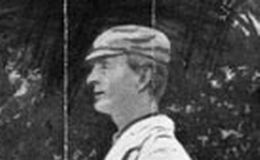
Edward Lionel Terry
Murderer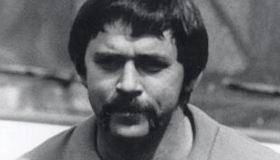 David Tamihere
Murderer · New Zealand · 1972
David Tamihere was sentenced to life imprisonment with a 10-year non-parole per…
3 victims
David Tamihere
Murderer · New Zealand · 1972
David Tamihere was sentenced to life imprisonment with a 10-year non-parole per…
3 victims
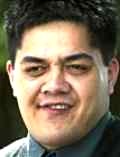 William Dwane Bell
Murderer · New Zealand · 2001
William Dwane Bell (born 1978) was a convicted murderer in New Zealand. Bell wa…
3 victims
William Dwane Bell
Murderer · New Zealand · 2001
William Dwane Bell (born 1978) was a convicted murderer in New Zealand. Bell wa…
3 victims
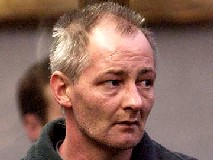 Bruce Howse
Murderer · New Zealand · 2001
Bruce Howse was the partner of Charlene Aplin and the stepfather of Saliel Apli…
2 victims
Bruce Howse
Murderer · New Zealand · 2001
Bruce Howse was the partner of Charlene Aplin and the stepfather of Saliel Apli…
2 victims
 John Barlow
Murderer · New Zealand · 1994
16 February 1994 — Financial dealers Eugene and Gene Thomas, father and son, we…
2 victims
John Barlow
Murderer · New Zealand · 1994
16 February 1994 — Financial dealers Eugene and Gene Thomas, father and son, we…
2 victims
 Mark Edward Lundy
Murderer · New Zealand · 2000
Mark Edward Lundy was the husband and father of the victims Christine Marie Lun…
2 victims
Mark Edward Lundy
Murderer · New Zealand · 2000
Mark Edward Lundy was the husband and father of the victims Christine Marie Lun…
2 victims
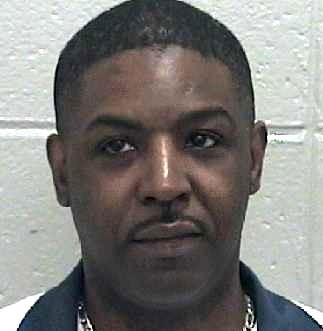 Lyndon Fitzgerald Pace
Serial killer · USA · 1988
Lyndon Fitzgerald Pace was 32 years old when he was sentenced to death in March…
4 victims
Lyndon Fitzgerald Pace
Serial killer · USA · 1988
Lyndon Fitzgerald Pace was 32 years old when he was sentenced to death in March…
4 victims
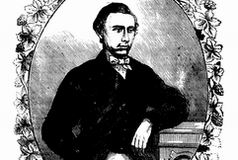 Frederick Baker
Murderer · United Kingdom · 1867
Frederick Baker was a solicitor’s clerk in Alton, Hampshire, England. On Saturd…
1 victim
Frederick Baker
Murderer · United Kingdom · 1867
Frederick Baker was a solicitor’s clerk in Alton, Hampshire, England. On Saturd…
1 victim
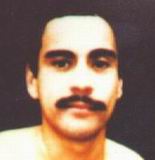 Robert Jurado
Murderer · USA · 1991
Robert Jurado Jr. was sentenced to death on October 13, 1994. · May 15, 1991 —…
1 victim
Robert Jurado
Murderer · USA · 1991
Robert Jurado Jr. was sentenced to death on October 13, 1994. · May 15, 1991 —…
1 victim
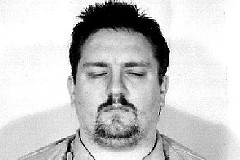 Russell Ernest Boyd
Murderer · USA · 1982
Russell Ernest Boyd was sentenced to death on October 4, 1983. He later receive…
1 victim
Russell Ernest Boyd
Murderer · USA · 1982
Russell Ernest Boyd was sentenced to death on October 4, 1983. He later receive…
1 victim
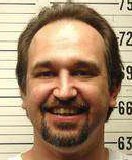 Ronnie Cauthern
Murderer · USA · 1987
Ronnie M. Cauthern was convicted of the 1987 slayings of a husband and wife who…
2 victims
Ronnie Cauthern
Murderer · USA · 1987
Ronnie M. Cauthern was convicted of the 1987 slayings of a husband and wife who…
2 victims
- Gender
- male
- Country
- New Zealand
- Location
- Wellington, New Zealand
- Date of birth
- January 6, 1873
- Age at first offence
- 32
- Characteristics
- white supremacist
- Victim profile
- Joe Kum Yung, 70
- Method of murder
- Shooting
- Date(s) of murder
- September 24, 1905
- Years active
- 1905
- Date of arrest
- Same day (surrenders)
- Status
-
Died in custody
Sentenced to death, 1906; commuted to life incarceration within New Zealand psychiatric institutions; died at Seacliff Mental Hospital on 20 August 1952
Case record: Edward Lionel Terry
Background
Edward Lionel Terry was a white supremacist and murderer.
He was born at Sandwich, Kent, England, on 6 January 1873. He was known throughout life by his second name, Lionel. He was the son of Edward Terry and Frances Lydia Thompson. His father claimed to be descended from Napoleon Bonaparte. His father was described as a prosperous corn merchant in Kent and later as managing Pall Mall Real Estate; he later established a real estate firm in Pall Mall, London. Lionel Terry was considered a successful businessman.
Lionel Terry was educated at Merton College, Wimbledon. After he became unsettled, he enlisted in the Royal Regiment of Artillery in 1892. In 1893, he transferred to the Royal Horse Guards. His father purchased his discharge in 1895, and Terry left almost immediately for South Africa.
In South Africa, he joined the mounted police at Bulawayo and participated in the Jameson raid of 29 December 1895 to 2 January 1896. After returning to London, he entered into partnership in the family firm but stayed only a short time before leaving to travel extensively overseas. He visited the United States and British Columbia. During his travels, he worked alongside Chinese immigrants; he also worked alongside Chinese immigrants earlier in South Africa. The experience engendered a deep hatred of “black and coloured races”, especially the Chinese, and it became an obsession.
Terry arrived in New Zealand in 1901. He spent some time as a temporary fieldworker with the Department of Lands and Survey in Auckland and then tried fruit-growing north of Auckland. He moved to Wellington in May 1903 and was re-employed by the department as a temporary draughtsman. After a few months he went to Taihape where he worked at bush felling. In 1904 he returned to the Lands and Survey Department and was sent to Mangonui in Northland as a surveyor. While there, he wrote The shadow, a book of verse with a long introduction on the need for racial purity. He carried out a marathon walk of nearly 900 miles from Mangonui to Wellington in July 1905, distributing copies of The shadow and giving lectures on the yellow peril.
Along the walk, a policeman described Terry’s appearance: “He looked a perfect picture. As fine a man as ever I saw – bolt upright, and with as free an action as you'd see on an athlete.”
People who came in contact with Terry commented on his magnificent physique, striking personality, conversational powers, and overall breadth of knowledge.
The offence
In July 1905, Terry attracted considerable interest by carrying out a marathon walk of nearly 900 miles from Mangonui to Wellington, distributing copies of The shadow and giving lectures on the yellow peril.
On 24 September 1905, Terry shot Joe Kum Yung, a Chinese immigrant, in Haining Street, Wellington. Joe Kum Yung died later of injuries. Joe Kum Yung was described as an elderly Canton Chinese gold prospector aged 70, with a pronounced limp as a result of a past mining accident. Terry selected Yung as his victim due to this infirmity. It was stated that Joe Kum Yung was rushed to hospital but died soon after.
Terry surrendered to the police the following morning, handing over his revolver and a copy of The shadow, which he said would explain his action.
Terry also tried to convince members of the House of Representatives and immigration officials that all non-European immigration should be stopped, after arriving in Wellington on 14 September. He had little success. In an account of his appearance in the dock in 1905, he used the occasion for a violent attack on British policy towards unnaturalised aliens, and described his crime as “a merciful delivery on a world-weary man, and a service to the community”. There was never any doubt of Terry’s guilt. He shot his victim down in the street and then went to the police station and described his crime, produced a revolver as evidence, and handed a copy of his pamphlet The shadow, a harangue on aliens, to the watchhouse-keeper with the bland remark: “If you read that you'll understand the position”.
Terry conducted his own defence at trial, and his speech from the dock was described as mostly an appeal for the elimination of alien influences in the Empire.
Investigation and arrest
After shooting Joe Kum Yung, Terry surrendered to the police the following morning, handing over his revolver and a copy of The shadow.
Trial
On 21 November 1905, Terry was tried in the Supreme Court at Wellington. He conducted his own defence but failed to justify the killing. He was sentenced to death.
The Chief Justice, Sir Robert Stout, told the jury that the material question was the mental state of the prisoner: “a question of the mental state of the prisoner”
Spotted an error, or have more information about this case?