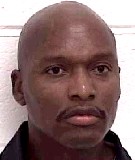
Warren Lee Hill
Homicide Jack Kevorkian
Homicide · USA · 1990
Jack Kevorkian (born May 26, 1928) was a controversial American pathologist. He…
130 victims
Jack Kevorkian
Homicide · USA · 1990
Jack Kevorkian (born May 26, 1928) was a controversial American pathologist. He…
130 victims
 David Koresh
Homicide · USA · 1993
David Koresh (born Vernon Wayne Howell; August 17, 1959 – April 19, 1993) led t…
79 victims
David Koresh
Homicide · USA · 1993
David Koresh (born Vernon Wayne Howell; August 17, 1959 – April 19, 1993) led t…
79 victims
 Edward Charles Allaway
Homicide · USA · 1976
Edward Charles Allaway Edward Charles Allaway was found not guilty by reason of…
7 victims
Edward Charles Allaway
Homicide · USA · 1976
Edward Charles Allaway Edward Charles Allaway was found not guilty by reason of…
7 victims
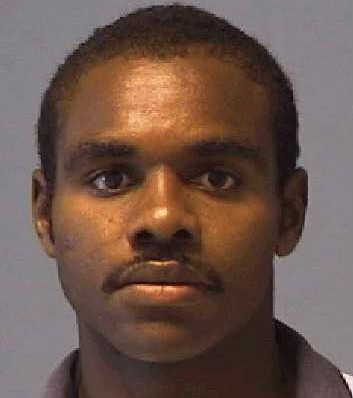 Clinton Bankston
Homicide · USA · 1987
15 August 1987 — Ann Morris (63), her sister Sally Nicholson (59), and Sally’s…
5 victims
Clinton Bankston
Homicide · USA · 1987
15 August 1987 — Ann Morris (63), her sister Sally Nicholson (59), and Sally’s…
5 victims
 Robert Wayne Harris
Mass murderer · USA · 1999
March 15, 2000 — Robert Wayne Harris masturbated in front of a female customer…
6 victims
Robert Wayne Harris
Mass murderer · USA · 1999
March 15, 2000 — Robert Wayne Harris masturbated in front of a female customer…
6 victims
 Richard Archer Prince
Homicide · United Kingdom · 1897
Richard Archer Prince was found “guilty, but according to the medical evidence,…
1 victim
Richard Archer Prince
Homicide · United Kingdom · 1897
Richard Archer Prince was found “guilty, but according to the medical evidence,…
1 victim
 Jesus Aguilera
Serial killer · USA · 1981
Jesus Aguilera was a convict serving time for two murders that occurred in New…
3 victims
Jesus Aguilera
Serial killer · USA · 1981
Jesus Aguilera was a convict serving time for two murders that occurred in New…
3 victims
 Mia Gonzales
Homicide · USA · 2007
Mia Gonzales, age 36, was charged in connection with the Oct. 27, 2007 shooting…
1 victim
Mia Gonzales
Homicide · USA · 2007
Mia Gonzales, age 36, was charged in connection with the Oct. 27, 2007 shooting…
1 victim
 James Ronald Meanes
Murderer · USA · 1981
James Ronald Meanes (African-American) was executed for his involvement in a mi…
1 victim
James Ronald Meanes
Murderer · USA · 1981
James Ronald Meanes (African-American) was executed for his involvement in a mi…
1 victim
- Gender
- male
- Country
- USA
- Location
- Cobb County/Lee County, Georgia, USA
- Date of birth
- 1960
- Age at first offence
- 25
- Characteristics
- abuse, mentally retarded
- Victim profile
- His girlfriend / Joseph Handspike, 34 (fellow inmate)
- Method of murder
- ??? / Beating to death with a nail-embedded board
- Date(s) of murder
- May 30, 1985 / August 17, 1990
- Years active
- 1985–1990
- Date of arrest
- —
- Status
-
Life imprisonment
Sentenced to death in September 1991; commuted to life in prison
Case record: Warren Lee Hill
Background
Warren Lee Hill was 36 when he was sentenced to death in September 1991 in Lee County. He was serving time for a 1985 murder at the time of the killing in this case.
Hill was convicted of murder by a jury in Lee County and sentenced to death. He appealed his conviction and sentence.
Hill and the victim were both serving time at the Lee Correctional Institute. Hill was sentenced to death for the beating death of fellow inmate Joseph Handspike, 34.
The offence
Early in the morning of August 17, 1990, a correctional officer, hearing a loud noise, rushed to Hill's cell. The officer observed Hill bludgeoning the victim as the latter lay in his bed. By the time the officer called for assistance and returned to the cell, the victim was mortally wounded.
Hill surrendered his weapon, a board embedded with nails. The board was apparently removed by Hill from under a bathroom sink.
Investigation
A correctional officer observed the assault and Hill surrendered the weapon. The evidence supported the conviction.
The U.S. Supreme Court decision referenced in the appellate opinion was “Jackson v. Virginia, 443 U. S. 307 (99 SC 2781, 61 LE2d 560) (1979).”
Trial
The trial ended August 2, 1991. Hill was tried in 1991 and sentenced to death for the killing.
At trial, Hill’s attorneys presented evidence that Hill was intellectually slow, but Hill’s own expert testified that he was not mentally retarded. His trial lawyers did not ask the jury for a guilty but mentally retarded verdict.
Hill’s conviction and death sentence were affirmed on direct appeal in 1993.
Motions to recuse and to adjourn; jury sequestration
Before trial, the defense filed a motion to sequester and a motion to adjourn at a reasonable time. The trial court initially indicated that it would grant the adjournment, but it was inclined not to sequester the jury until deliberations were begun.
The defense submitted a proposed order covering, among other things, adjournment at 5:00 p.m. during the trial and sequestration from the time the jurors were sworn.
In response to this proposed order, the trial court telephoned defense counsel’s office. In this telephone conversation, the trial court acknowledged that sequestration in Georgia capital cases was automatic under OCGA 15-12-142 (a) unless the defendant waived the right to sequestration. The trial court indicated, however, that it was inclined to extend substantially the length of the trial day if the jury were sequestered, because the court felt that fairness to the jurors warranted trying to minimize the amount of time they spent locked in a motel, unable to attend to their business and personal obligations.
Defense counsel moved that the trial judge be recused for bias and filed an affidavit in support of the motion, setting out the discussed facts. The trial judge, pursuant to Uniform Superior Court Rule 25.2, considered the legal sufficiency of the facts set forth in the affidavit to determine if referring the motion to another judge was warranted.
The trial court determined that, taking the facts of the affidavit as true, they did not support a charge of bias sufficient to warrant recusal under the decisions “Jones v. State, 247 Ga. 268 (257 SE2d 67) (1981)” and “State v. Fleming, 260 Ga. 640, 647 (9) (398 SE2d 179) (1990).”
The appellate decision stated that on the whole, the record did not reveal that the trial was unfairly expedited, either through long sessions or truncated arguments and examinations, and “No abuse of discretion has been shown in this case.”
The appellate decision referenced “Lynd v. State, 262 Ga. 58 (4) (414 SE2d 5) (1992).”
Hill was represented by three attorneys.
Challenges to the jury arrays; jury cross-section
Hill contended that his challenges to the jury arrays should have been granted. Hill argued that the jurors actually reporting for service did not represent a fair cross-section of the community because the jury commissioners failed accurately to determine which citizens of Lee County were competent and able to serve, resulting in a high number of excusals each term.
Hill pointed to evidence that blacks were underrepresented by more than five percent on two of nine traverse jury venires, and that women were similarly underrepresented on three of those venires. Hill argued that he demonstrated “systematic” underrepresentation.
The appellate decision disagreed, stating that when venires are drawn randomly from jury lists, some variation in the makeup of individual venires is expected, citing “Meders v. State, 260 Ga. 49 (2) (389 SE2d 320) (1990).” The appellate decision stated that on analysis of data Hill provided, blacks and women were mildly underrepresented on some venires but mildly overrepresented on others, and that on balance neither women nor blacks were significantly underrepresented either on venires as drawn or as present for court.
The appellate decision concluded that no “systematic” underrepresentation had been shown, citing “Duren v. Missouri, 439 U. S. 357 (99 SC 664, 58 LE2d 579) (1979).”
Death penalty laws; constitutional challenges
The appellate decision stated that Hill’s death penalty laws arguments were not unconstitutional for any reason alleged.
Refusal to strike a prospective juror; comment about the death penalty
In his ninth enumeration of error, Hill contended that the trial court erred by refusing to strike one of the venire members after telling her that the court was in favor of the death penalty but would not impose it where it was not warranted.
The appellate decision stated it did not read the court’s comment as encouraging the imposition of a death penalty in this case, and that the court was merely trying to explain “prejudice,” following a lengthy examination of the prospective juror on this point. The appellate decision stated that the juror was not prejudiced by the comment.
Merging convictions after sentence
After imposing sentence for the counts alleging felony murder and aggravated assault, the trial court amended the sentencing form to reflect that these offenses merged into Hill’s malice murder conviction. The state conceded that merger was appropriate and cited “Biddy v. State, 253 Ga. 289 (2) (319 SE2d 842) (1984).”
Hill complained that the court merged only the sentences, not the convictions. The appellate decision disagreed. It stated that while the court’s orders were somewhat inartfully drafted, the most reasonable construction was that Hill’s convictions for underlying offenses merged into the malice murder conviction and that the convictions on Counts 2 and 3 were vacated.
The appellate decision stated that since the aggravated assault conviction stood vacated, Hill’s other complaints about the aggravated assault count were moot.
Excusing prospective jurors Daniel and Flowers
The court excused prospective jurors Daniel and Flowers. Daniel testified he “believed in” capital punishment, but did not believe he could sleep with himself if he voted to impose it and did not think he could live with it if he was part of it.
Flowers testified that if the defendant asked for mercy, she would not impose a death sentence, stating: “that's a man asking to save his life.”
The appellate decision stated the court was authorized to conclude their views would prevent or substantially impair their duties as jurors in accordance with instructions and oath, citing “Alderman v. State, 254 Ga. 206, 207 (4) (327 SE2d 168) (1985),” quoting from “Wainwright v. Witt, 469 U. S. 412 (105 SC 844, 83 LE2d 841) (1985).”
The appellate decision stated there was no improper limitation of the voir dire examination, citing “Curry v. State, 255 Ga. 215 (2) (b) (336 SE2d 762) (1985).” It also disagreed with the claim that the trial court’s handling of “Witherspoon” and “reverse-Witherspoon” questioning was “imbalanced,” citing “Lynd v. State, 262 Ga. at 65-66 (Benham, J., concurring specially).”
Prosecutor’s comments during voir dire
During the course of objecting to defense counsel’s statement to one prospective juror during voir dire that the state was going to ask “the twelve folks that are selected as jurors to put the defendant to death,” the prosecutor stated: “[T]here is no question that [this juror] or this jury is not going to be sending this gentleman to death, even if they should find a death penalty in this.”
Hill contended this comment reduced the juror’s sense of responsibility for determining the appropriateness of death, citing “Caldwell v. Mississippi, 472 U. S. 320 (105 SC 2633, 86 LE2d 231) (1985).”
The appellate decision stated it noted that while the jury might sentence the defendant to death, it would not “put” him to death or attend his execution. It then stated that any improper impact the prosecutor’s remark may have had on this juror was ameliorated by a curative instruction given immediately by the court.
Prosecutor’s word choice about life and death
Hill contended the trial court’s use of the verbs “fix” when referring to the jurors’ authority to impose a life sentence and “recommend” when addressing the death penalty unconstitutionally lessened the jury’s sense of responsibility during the sentencing phase, citing “Caldwell, supra.”
The appellate decision quoted the sentencing charge language concluding with: “Whatever penalty is to be imposed within the limits of the law, as I have instructed you, is a matter solely for you, the members of the jury to determine. . . . The jury charge as a whole did not give the jury a view of its role in the capital sentencing procedure that was fundamentally incompatible with the Eighth Amendment's heightened "need for reliability in the determination that death is the appropriate punishment in a specific case." Caldwell, supra, 472 U. S. at 340. Accord Holiday v. State, 258 Ga. 393 , 399 ( 369 SE2d 241 ) (1988).”
Jury selection and replacement of ill juror
The jury was selected late one afternoon and allowed to go home that evening, with the consent of the defendant. The jury was to return the next morning to be sworn in and sequestered.
The next morning, one juror called in sick. The trial judge talked to her himself and reported she was coughing and sounded quite ill. A deputy sent to her home reported that she was out and had called to report that she had been to the doctor “to get her medicine.” The trial judge excused her and replaced her with an alternate.
The appellate decision stated a trial judge is authorized by OCGA 15-12-172 to replace a juror who dies, becomes ill, or for some other good cause is found unable to perform duty.
Hill contended the trial judge failed adequately to investigate the need for excusing the juror, noting the trial judge failed to talk to the juror’s doctor. The appellate decision stated the trial court had an obligation to investigate the need to excuse an ill juror, citing “Green v. Zant, 715 F2d 551, 556 (11th Cir. 1983),” and that it is especially true where the jury has begun deliberations and the juror has participated in those deliberations.
The appellate decision stated in this case the juror was excused not only before the beginning of deliberations but before any evidence was presented, in fact before the jury was even sworn. It stated the trial judge personally examined the juror. It concluded that while more investigation could have been done, it found no abuse of discretion, citing “Graham v. State, 171 Ga. App. 242 (5) (319 SE2d 484) (1984)” and “Forney v. State, 255 Ga. 316, 317 (1) (338 SE2d 252) (1986).”
Racial discrimination claim; Batson analysis
In his 17th enumeration of error, Hill raised an issue of racial discrimination in the prosecutor’s exercise of peremptory challenges, citing “Batson v. Kentucky, 476 U. S. 79 (106 SC 1712, 90 LE2d 69) (1986).”
There were seven blacks on the panel of forty-two qualified jurors. The prosecutor peremptorily struck three. The remaining four served on the jury.
The prosecutor explained the strikes as follows:
- “The first of the three was conscientiously averse to the death penalty.” (Hill did not seriously dispute that strike was justified.)
- The second juror was struck because she was a “follower,” and because she was of “limited mental capacity” with a “lesser understanding of the English language.”
- The third juror was struck because he had “independent reports” that he had been “cutting up” and “did not seem to be taking this proceeding very seriously.”
The appellate decision referenced “Gamble v. State, 257 Ga. 325, 327 (357 SE2d 792) (1987),” stating: “The explanation offered for striking each black juror must be evaluated in light of the explanations offered for the prosecutor's other peremptory strikes, and, as well, in light of the strength of the prima facie case. The persuasiveness of a proffered explanation may be magnified or diminished by the persuasiveness of companion explanations, and by the strength of the prima facie case. A court charged with the duty of determining whether the prosecutor has rebutted a prima facie case may be less troubled by one relatively weak explanation for striking a black juror when all the remaining explanations are persuasive than where several of the prosecutor's proffered [explanations] are questionable. Similarly, a weak prima facie case may be rebutted more readily than a strong one.”
The appellate decision stated that in this case the prosecutor struck only one black juror more than would have been statistically proportionate. It also stated that the defendant, the victim and key witnesses were black, citing “Hernandez v. New York, ---- U. S. ---- (111 SC 1859, 1872, 114 LE2d 395) (1991).” It concluded the trial court was authorized to conclude the prosecutor’s explanations were sufficiently race neutral to overcome Hill’s accusation, citing “Ford v. State, 262 Ga. 558 (423 SE2d 245) (1992).”
Admission of extrinsic transaction evidence about 1985 murder
In his 18th enumeration of error, Hill contended the trial court improperly admitted extrinsic transaction evidence relating to the 1985 murder for which Hill was incarcerated when he committed the crime on trial.
The appellate decision stated the state’s proffer did not meet the first and third requirements for admission of independent offenses as set forth in “Williams v. State, 261 Ga. 640, 642 (409 SE2d 649) (1991).” However, it found no reversible error.
The appellate decision reasoned that because the jury knew the crime occurred in prison and that Hill was an inmate, his character was already unavoidably implicated to some extent before extrinsic transaction evidence was introduced. It also reasoned that evidence establishing Hill’s guilt of the murder was overwhelming, and the introduction of facts of the prior crime did not measurably contribute to the jury’s guilty verdict. It concluded the error, if any, was harmless.
Photographs at sentencing phase
The appellate decision stated the state laid a sufficient foundation for admission of photographs of the 1985 extrinsic-crime victim, which the jury properly considered at the sentencing phase, citing “Williams v. State, 255 Ga. 97 (4) (335 SE2d 553) (1985).”
Closing argument and comment about motive
During closing argument, the prosecutor stated while explaining that motive was unknown and not an element the state had to prove: “nobody knows the motive but Warren Lee Hill, and he's not talking.”
Hill objected and moved for a mistrial. The prosecutor conceded the objection was good and apologized for the comment, emphasizing that the comment “was inadvertent, and I did not realize what I had said until he made the motion for mistrial.”
The trial court gave curative instructions, including the following: “I charge you that the last remark that Mr. Smith made was inappropriate and has no place in this case. . . . I charge you that a defendant in a criminal case is under no duty to present any evidence tending to prove his innocence and is not required to take the stand and testify in the case. If he elects not to testify, no inference hurtful, harmful or adverse to the defendant shall be drawn by the jury, nor shall any such fact be held against him in any way whatsoever.”
The appellate decision stated the comment was not so egregious as to be incurable and that, in light of inadvertence and curative instructions, denial of Hill’s motion for mistrial was not erroneous, citing “Lingerfelt v. State, 238 Ga. 355 (5) (233 SE2d 356) (1977).”
Impeachment charge omission; implied malice
The appellate decision addressed a complaint about omission of impeachment charge by proof of conviction. It referenced “McCoy v. State, 262 Ga. 699 (425 SE2d 646) (1993)” and “Thomas v. State, 234 Ga. 615, 618 (216 SE2d 859) (1975),” stating any error was clearly harmless considering facts and the court’s charge on credibility as a whole.
It rejected the burden-shifting complaint about the charge on implied malice, citing “Gooden v. State, 261 Ga. 691 (2) (410 SE2d 113) (1991).” It stated it did not address vagueness complaint because one to whose conduct a statute clearly applied may not successfully challenge it for vagueness, citing “Parker v. Levy, 417 U. S. 733, 756 (94 SC 2547, 41 LE2d 439) (1974).”
Rebuttal witnesses; notice provisions
Two witnesses testified in rebuttal for the state at the sentencing phase. Hill was furnished the name of one witness before trial, and his attorneys interviewed him. The witness, a prison inmate, testified more favorably to Hill than the prosecutor had anticipated based on pretrial interviews by the state’s investigator.
The state called the investigator to testify about prior inconsistent statements of the inmate witness, citing “Gibbons v. State, 248 Ga. 858 (286 SE2d 717) (1982).”
Hill contended the notice provisions of OCGA 17-10-2 were not complied with and the testimony of the two witnesses should have been excluded. The appellate decision found no error, stating that because the testimony was offered in rebuttal and Hill had at least some notice, exclusion was not warranted, citing “Buttrum v. State, 249 Ga. 652 (9) (293 SE2d 334) (1982)” and “Alderman v. State, 254 Ga. 206 (8) (327 SE2d 168) (1985).”
Exclusion of evidence about victim’s personal characteristics
The appellate decision stated the trial court did not err by excluding evidence Hill offered at the sentencing phase concerning the “personal characteristics of the victim,” including his bad character and criminal record, citing “Sermons v. State, 262 Ga. 286, 288 (417 SE2d 144) (1992).”
It stated the general rule that the character of the victim is not relevant and the defendant is no more entitled to present such evidence than the state, citing “Bryant v. State, 249 Ga. 242, 243 (2) (290 SE2d 75) (1982).”
Psychologist report; state’s right to see report
The appellate decision addressed that during the sentencing phase trial, defense counsel began questioning Hill’s psychologist about his report, and the psychologist began testifying from it. The state asked to see the report.
Defense counsel furnished a copy to the prosecutor without objection. The appellate decision concluded that because there was no objection to furnishing the report, any issue about the state’s right to see the report at that time was not preserved for review.
Misstatement about aggravating circumstance; jury instructions the next day
The appellate decision stated the trial court’s explanatory remarks at the outset of the sentencing phase trial contained a misstatement of law concerning OCGA 17-10-30 (b) (2) statutory aggravating circumstance. Defense counsel did not object.
The appellate decision stated the court’s instructions to the jury the next day, following evidence and closing argument, did not contain the misstatement. It concluded the jury charge and written instructions, including oral instructions defining “aggravated battery,” adequately supplied the legal definition and sufficiently narrowed sentencing discretion under “Davis v. State, 255 Ga. 588 (3) (c) (340 SE2d 862) (1986).”
Closing argument at sentencing; procedural default; future dangerousness
Hill’s 38th through 42nd enumerations argued improper prosecutor argument at the sentencing phase, including misstating evidence, expressing personal opinions, referring to possibility of escape, and seeking to minimize the importance of the jury’s role. The appellate decision stated none of these objections were raised at trial, so review was limited to whether there was improper argument of such magnitude that it “in reasonable probability [it] changed the result of the trial,” citing “Todd v. State, 261 Ga. 766, 767 (2) (a) (410 SE2d 725) (1991).”
The appellate decision stated a prosecutor was entitled to argue inferences from evidence even if those inferences were not the ones the defendant would like the jury to draw. It stated it would be improper to urge a death penalty based upon religious beliefs, but counsel could bring to use in discussion well-established historical facts and may allude to such principles of divine law relating to transactions of men as appropriate to the case, citing “Conner v. State, 251 Ga. 113, 122-123 (303 SE2d 266) (1983).”
The appellate decision concluded that even assuming the prosecutor went beyond fully permissible in this regard, it found insufficient prejudice given brevity of religious references (approximately one page of transcript in a forty-nine-page argument). It cited “Todd v. State, supra at 768.”
It also stated future dangerousness was a legitimate issue for argument, citing “Ross v. State, 254 Ga. 22 (7) (326 SE2d 194) (1985).” The appellate decision stated the trial court did not err by denying Hill’s motion for new trial on closing argument complaints raised for the first time after trial.
Refusal to deliver certain jury instructions; covered in substance
The trial court did not err by declining to deliver Hill’s requests to instruct the jury that if sentenced to life imprisonment, he would spend the remainder of his life in prison and that if sentenced to death, he would be electrocuted. The appellate decision cited “Bennett v. State, 262 Ga. 149 (10) (b) (414 SE2d 218) (1992).”
The appellate decision stated the remaining defense requests to charge were covered in substance by the court’s instructions, citing “Pruitt v. State, 258 Ga. 583, 588 (13) (373 SE2d 192) (1988).”
Arguing multiple statutory circumstances; aggravating circumstances
The appellate decision stated the state was not precluded from arguing the presence of OCGA 17-10-30 (b) (2) and (b) (7) simply because aggravated battery was an element of both circumstances, citing “Lonchar v. State, 258 Ga. 447 (6) (369 SE2d 749) (1988).”
Sentencing
Statutory aggravating circumstances found by the jury
The jury found three statutory aggravating circumstances:
- b (1) (the murder was committed by an offender with a prior record of conviction of a capital felony)
- b (2) (the murder involved the commission of an aggravated battery)
- b (7) (the murder was outrageously or wantonly vile, horrible or inhuman in that it involved torture, depravity of mind, or an aggravated battery to the victim)
The appellate decision cited “OCGA 17-10-30.” It cited “OCGA 17-10-35 (c) (2)” and “Jefferson v. State, 256 Ga. 821 (9) (353 SE2d 468) (1987).” It also cited “Davis v. State, 255 Ga. 588, 593 (3) (c) (340 SE2d 862) (1986).”
The appellate decision stated that the jury’s b (7) finding was returned in the disjunctive and agreed that it should have been returned in the conjunctive to ensure unanimity concerning the necessary elements of the b (7) circumstances, citing “Lipham v. State, 257 Ga. 808, 813 (7) (364 SE2d 840) (1988).”
It then stated the death penalty could be affirmed based on the remaining statutory aggravating circumstances, citing “Zant v. Stephens, 250 Ga. 97, 100-101 (297 SE2d 1) (1982).”
Excessiveness and arbitrariness
The appellate decision stated it did not find Hill’s death sentence was imposed as the result of impermissible passion, prejudice or other arbitrary factor, citing OCGA 17-10-35 (c) (1).
It stated Hill’s death sentence was neither excessive nor disproportionate to penalties imposed in similar cases considering both the crime and the defendant, citing OCGA 17-10-35 (c) (3).
It stated similar cases listed in the Appendix supported imposition of the death penalty, and listed the following: “Spencer v. State, 260 Ga. 640 (398 SE2d 179) (1990); Kinsman v. State, 259 Ga. 89 (376 SE2d 845) (1989); Moon v. State, 258 Ga. 748 (375 SE2d 442) (1988); Childs v. State, 257 Ga. 243 (357 SE2d 48) (1987); Hicks v. State, 256 Ga. 715 (352 SE2d 762) (1987); Cook v. State, 255 Ga. 565 (340 SE2d 843) (1986); Walker v. State, 254 Ga. 149 (327 SE2d 475) (1985); Mincey v. State, 251 Ga. 255 (304 SE2d 882) (1983); Tucker v. State, 245 Ga. 68 (263 SE2d 109) (1980); Davis v. State, 241 Ga. 376 (247 SE2d 45) (1978); Stephens v. State, 237 Ga. 259 (227 SE2d 261) (1976).”
Appeals
Direct appeal
“Head v. Hill, No. S03X0560, Hill v. Head, No. S03A0559 (Sup. Ct. Ga. Oct. 6, 2003)” was referenced in the material, along with a decision from “263 Ga. 37 Supreme Court of Georgia 427 S.E.2d 770 HILL v. THE STATE March 15, 1993 Docket number: S92P1336.”
The appellate decision in 1993 stated: “Hill was convicted of murder by a jury in Lee County and sentenced to death. He appeals. We affirm.”
It included the enumerations of error and the conclusions on each.
State habeas and mental retardation standard of proof
Hill filed a state petition for a writ of habeas corpus in 1994, alleging that he was mentally retarded. The habeas judge found Hill mentally retarded, but not to the high degree of proof Georgia requires. The spokesperson and attorneys named in the material discussed the ruling as part of the state habeas process.
A Muscogee County Superior Court Judge John D. Allen assigned to hear the habeas petition ordered a jury trial on the issue of retardation and found that Hill would only have to prove retardation by a preponderance of the evidence standard.
The Georgia Supreme Court reversed that ruling in 1998, finding Hill was not entitled to a jury trial under that standard because he was tried after the effective date of a state law giving defendants the chance to prove retardation at trial.
Under the state law definition referenced in the material, mentally retarded meant: “having significantly subaverage general intellectual functioning resulting in or associated with impairments in adaptive behavior which manifested during the developmental period.”
Typically, retardation involved an IQ below 70.
Allen’s May 16, 2002 order found Hill had not proven mental retardation beyond a reasonable doubt. Allen wrote that Hill had satisfied that burden of proof on one element of retardation (subaverage intellectual functioning), but not on the other element (impairments in adaptive behavior). Four months later, after considering “Ring v. Arizona, 536 U.S. 584 (2002)” and “Atkins v. Virginia, 536 U.S. 304 (2002),” Allen again ordered a jury trial on mental retardation and said the standard of proof should be the lower one, preponderance of the evidence.
Allen found Georgia’s high standard of proof did not afford proper due process protections in accordance with the federal ban on executing the mentally retarded and was unconstitutional.
The material described the majority conclusion that Allen had misapplied those U.S. Supreme Court decisions. It described that in Ring, the U.S. Supreme Court found that if a state made an increase in a defendant’s authorized punishment contingent on finding of a fact, the fact must be found by a jury beyond a reasonable doubt. It described that in Atkins, the U.S. Supreme Court barred execution of the mentally retarded.
The “Ring” decision discussion attributed to Carley included that Ring did not establish a constitutional requirement for a jury trial on mental retardation. Carley wrote: “the Georgia General Assembly, the first legislative body to create such an exemption, was originally and now remains within constitutional bounds in establishing a procedure for considering alleged mental retardation that limits the exemption to those whose mental deficiencies are significant enough to be provable beyond a reasonable doubt.”
The dissenting discussion attributed to Presiding Justice Leah W. Sears included multiple quotes. Sears wrote: “Despite the federal ban on executing the mentally retarded, Georgia's statute, and the majority decision upholding it, does not prohibit the state from executing mentally retarded people,” and she wrote: “To the contrary, the State may still execute people who are in all probability mentally retarded. The state may execute people who are more than likely mentally retarded. The State may even execute people who are almost certainly mentally retarded. Only if a mentally retarded person succeeds in proving their retardation beyond a reasonable doubt will his or her execution be halted.”
The dissent further included: “Sears insisted, ‘...’” with the quote that followed in the material: “The Constitution, she wrote, cannot on the one hand simultaneously limit the state to the preponderance of the evidence standard when seeking to prosecute a capital defendant who claims incompetence, yet allow the state to impose the beyond a reasonable doubt standard when that same defendant, after being convicted and sentenced to death, claims mental retardation.”
It also included: “I am convinced this situation violates the tenants of due process as that concept is embodied in our Federal Constitution. Therefore, I dissent.”
The material also discussed that Carley added that “the fundamental fairness and accuracy of determining mental retardation would not be increased by having a jury rather than a trial judge make the determination.” It also stated that Hill could have had a jury trial on that issue but waived that right at the 1991 trial.
Outcome
A majority of Georgia Supreme Court justices affirmed in a 4-3 decision that Georgia’s standard of proof in claims of mental retardation required proof beyond a reasonable doubt. The material included that “Standard of Proof Stands in Claims of Retardation” (Trisha Renaud - Fulton County Daily Report October 7, 2003). The material attributed satisfaction to a spokesperson for the state Attorney General and expressed disappointment from Hill’s lawyer.
Hill was serving a life sentence in Lee County Correctional Institute for killing his girlfriend when he beat another prisoner, Joseph Handspike, to death with a 2-by-6 board as Handspike slept. Hill was tried in 1991 and sentenced to death for that killing. His conviction and death sentence were affirmed on direct appeal in 1993.
Hill was committed to state procedures on mental retardation claims via state habeas proceedings. The final legal status in this case record was that Hill’s death sentence was commuted to life in prison.
Aftermath
Hill’s lawyer, Thomas H. Dunn of the Georgia Resource Center, said he would appeal to the U.S. Supreme Court and, if that failed to prohibit Hill’s execution, would file a federal habeas petition.
Other details
Docket and case identifiers
The material included: “Head v. Hill, No. S03X0560, Hill v. Head, No. S03A0559 (Sup. Ct. Ga. Oct. 6, 2003).”
It also included a Georgia Supreme Court opinion identifier: “263 Ga.
State and counsel names appearing in the material
The appellate opinion listed the following for appellee: John R. Parks, District Attorney, Michael J. Bowers, Attorney General, Susan V. Boleyn, Senior Assistant Attorney General, Rachelle L. Strausner, Staff Attorney, R. Rucker Smith.
The material also listed Hill’s lawyer in connection with the habeas appeal: Thomas H. Dunn and Brian S. Kammer.
State officials mentioned in the material included:
- Trisha Renaud (as the reporter name attached to “Standard of Proof Stands in Claims of Retardation”)
- Natalie Z. DiSantis (spokesperson for state Attorney General Thurbert E. Baker)
- Deputy Attorney General Mary Beth Westmoreland
- Senior Assistant Attorney General Susan V. Boleyn
- Assistant Attorney General Beth A. Burton
Presiding and other justices named in the dissent/majority discussion included:
- Justice George H. Carley
- Presiding Justice Leah W. Sears
- Chief Justice Norman S. Fletcher
- Justice Robert Benham
- Justice George H. Carley (majority writer)
Notes about procedural history as stated in the material
The material included the following notes:
- The crime occurred on August 17, 1990. He was indicted in January 1991. The case went to trial on July 29, 1991. The trial ended August 2, 1991. Hill’s motion for new trial was denied June 5, 1992. The appeal was orally argued in this court on October 14, 1992.
- Hill’s data shows that of 730 jurors drawn for service, 515 were present in court for roll call. Of the 730 jurors drawn, 19.73 percent were black and 53.5 percent were women. Of the 515 jurors who showed up at court, 21.36 percent were black and 52.43 percent were women. Similar figures may be derived from the data supplied for the three grand juries (and one supplemental list). These figures compare favorably with a total county population (18 and older) that is 22 percent black and 51 percent female.
- The juror testified she did not like the death penalty, could not vote for it, and did not believe in the principle of “an eye for an eye and a tooth for a tooth,” citing “Davis v. State, 263 Ga. 5 (10) (426 SE2d 844) (1993).”
- The transcript of the voir dire examination provides some support for the prosecutor's explanation, including that the juror answered: “Not too bad. It's o.k.” to a question about how she felt about a defendant in a criminal case. It also included that she answered “No, sir. I don't know where Milwaukee is” when asked if she had heard “anything about the [recent] events up in Milwaukee.” It stated she did not understand the Biblical concept of “an eye for an eye and a tooth for a tooth,” and she did not know what the word “mercy” meant.
- This evidence would, of course, have been admissible at the sentencing phase in any event, citing “Ford v. State, 257 Ga. 461, 463 (360 SE2d 258) (1987).”
- In its initial explanatory comments, the court told the jury that aggravated assault is a capital felony, and it noted it is not, citing OCGA 16-5-21. It also stated that the court’s charge on the b(2) circumstance did not include “capital felony,” only “aggravated battery.”

Spotted an error, or have more information about this case?