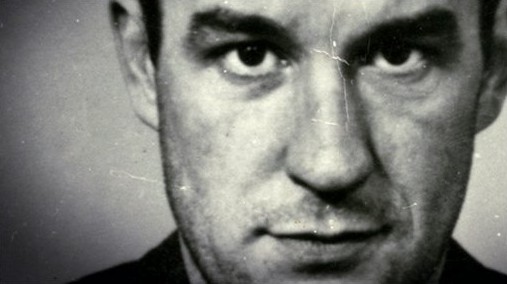
Peter Manuel
Serial killer Angus Sinclair
Serial killer · United Kingdom · 1961
Angus Sinclair was sentenced to life in prison for the murders of Helen Scott a…
8 victims
Angus Sinclair
Serial killer · United Kingdom · 1961
Angus Sinclair was sentenced to life in prison for the murders of Helen Scott a…
8 victims
 Ian Brady
Serial killer · United Kingdom · 1963
Ian Brady — Scottish serial killer. Ian Brady was born Ian Duncan Stewart on Ja…
5 victims
Ian Brady
Serial killer · United Kingdom · 1963
Ian Brady — Scottish serial killer. Ian Brady was born Ian Duncan Stewart on Ja…
5 victims
 John Thomas Straffen
Serial killer · United Kingdom · 1951
John Thomas Straffen was sentenced to death on July 25, 1952. Home Secretary Si…
3 victims
John Thomas Straffen
Serial killer · United Kingdom · 1951
John Thomas Straffen was sentenced to death on July 25, 1952. Home Secretary Si…
3 victims
 Bruce Lee
Serial killer · United Kingdom · 1973
Bruce Lee was born Peter George Dinsdale in 1960. He later changed his name to…
26 victims
Bruce Lee
Serial killer · United Kingdom · 1973
Bruce Lee was born Peter George Dinsdale in 1960. He later changed his name to…
26 victims
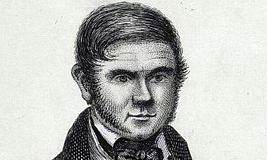 William Burke
Serial killer · United Kingdom · 1827
William Burke (1792 – 28 January 1829) was born in Urney, near Strabane, in the…
17 victims
William Burke
Serial killer · United Kingdom · 1827
William Burke (1792 – 28 January 1829) was born in Urney, near Strabane, in the…
17 victims
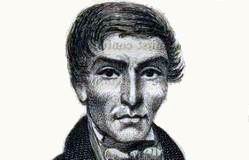 William Hare
Serial killer · United Kingdom · 1827
William Hare and Brendan “Dynes” Burke committed serial murders in Edinburgh, S…
17 victims
William Hare
Serial killer · United Kingdom · 1827
William Hare and Brendan “Dynes” Burke committed serial murders in Edinburgh, S…
17 victims
 Andre Graham
Murderer · USA · 1993
Andre Graham · Andre L. Graham Andre Graham was executed by lethal injection in…
3 victims
Andre Graham
Murderer · USA · 1993
Andre Graham · Andre L. Graham Andre Graham was executed by lethal injection in…
3 victims
 Donald Wackerly
Murderer · USA · 1996
Donald Wackerly was executed by lethal injection in Oklahoma on October 14, 201…
1 victim
Donald Wackerly
Murderer · USA · 1996
Donald Wackerly was executed by lethal injection in Oklahoma on October 14, 201…
1 victim
 Alfred Burns
Murderer · United Kingdom · 1951
Beatrice Alice Rimmer was bludgeoned to death in her home in the Wavertree area…
1 victim
Alfred Burns
Murderer · United Kingdom · 1951
Beatrice Alice Rimmer was bludgeoned to death in her home in the Wavertree area…
1 victim
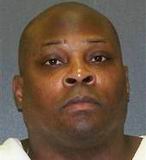 Gayland Bradford
Murderer · USA · 1988
Gayland Bradford was convicted of capital murder and sentenced to death in Texa…
1 victim
Gayland Bradford
Murderer · USA · 1988
Gayland Bradford was convicted of capital murder and sentenced to death in Texa…
1 victim
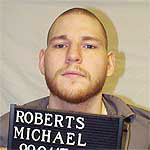 Michael Shane Roberts
Murderer · USA · 1994
Michael Shane Roberts was sentenced to death for the murder of his neighbor and…
1 victim
Michael Shane Roberts
Murderer · USA · 1994
Michael Shane Roberts was sentenced to death for the murder of his neighbor and…
1 victim
- Gender
- male
- Country
- United Kingdom
- Location
- England/Scotland, United Kingdom
- Date of birth
- March 15, 1927
- Age at first offence
- 29
- Characteristics
- robbery
- Victim profile
- Anna Knielands, 17 / Marion Watt, 45, her daughter Vivienne, 16, and Marion's sister Margaret, 41 / Sydney Dunn (taxi driver) / Isabelle Cooke, 17 / Peter Smart, 45, his wife Doris, and their son Michael, 10
- Method of murder
- Shooting
- Date(s) of murder
- 1956 - 1958
- Years active
- 1956–1958
- Date of arrest
- January 13, 1958
- Status
-
Executed
Executed by hanging at Barlinnie prison in Glasgow on July 11, 1958
Case record: Peter Manuel
Background
Peter Manuel (born in the United States; died July 11, 1958) committed crimes in Scotland.
Manuel moved to Coventry, England in 1932 with his family after being born in New York to Scottish parents. He was considered a juvenile delinquent throughout childhood, and his first jail term occurred at age 16 for sexual assault. He served further sentences for rape before moving to Glasgow, Scotland in 1953 to join his family, who had moved there. While in custody, he confessed to killing eighteen people.
Manuel was described as a career criminal. Police described him as a local villain and noted he was normally broke but was spending freely in local bars. He had a history of offences that started when he was 12 years old, and he was on bail for a break-in at a local colliery. After the Wat(s) murders, he was suspected by officers in charge of the manhunt but evaded capture.
The offence
Manuel was charged and tried for murders committed between 1956 and 1958, and he was found guilty in May 1958 on seven counts of murder.
One murder case involved Anne Kneilands:
- Manuel stalked Anne Kneilands on 2 January 1956 at an East Kilbride golf course.
- Kneilands was raped and bludgeoned to death with a length of iron.
- Although Manuel was questioned by police about the murder and would confess to it two years later, he escaped arrest when his father gave him an alibi.
- He was charged with this murder in 1958, but the case against him was dropped due to a lack of evidence.
- At his trial in May 1958, he was found not guilty of the murder of Anne Knielands on the direction of the judge.
Three victims were the Marion Watt family members:
- Marion Watt, her daughter Vivienne Watt, and her sister Margaret Brown were shot to death in their home in Burnside, Glasgow, on 17 September 1956.
- Manuel was out on bail for a burglary at a nearby colliery at the time of the murders.
- Police suspected Manuel but he evaded capture following the arrest of Marion’s husband, William.
- William was later exonerated and released after detectives realized they had no sound evidence against him.
A separate murder involved Sydney Dunn:
- On 8 December 1957, Manuel shot and killed his fifth victim, taxi driver Sydney Dunn, while looking for work in Newcastle.
- Dunn’s body was found on moorlands in Northumbria soon after, but by this time Manuel had already returned to Lanarkshire.
- There remained some doubt as to whether Manuel did indeed kill Dunn; an inquiry held a fortnight after the killer was hanged officially tied the crime to him after a button found in Dunn’s taxi was matched to one of his jackets.
A murder involved Isabelle Cooke:
- Isabelle Cooke, aged 17, disappeared after leaving her Mount Vernon home to go to a dance at Uddingston Grammar School on 28 December 1957.
- Manuel stalked her, raped and then strangled her, and buried her in a nearby field.
- He later led officers to the spot where he had disposed of her body.
- In one account, when police were taken to the burial spot and asked where her body was, he remarked: "This is the place. In fact, I think I'm standing on her now."
- Another account reported: "You are standing on her".
A final murder involved the Peter Smart family:
- Peter Smart, Doris Smart, and their son Michael Smart (ages 45, 42, and 10) were shot to death in their Uddingston home on 1 January 1958.
- Manuel stayed in their household for nearly a week, eating leftovers from a Hogmanay meal and feeding the family cat.
- He stole some brand-new banknotes that Peter Smart had been keeping for a holiday.
- He took the family car and dumped it nearby.
- Manuel later gave a lift in this car to a police officer investigating the disappearance of Isabelle Cooke and told him that he felt the police weren’t looking in the right places.
Investigation
On 4 January 1956, Anne Kneilands’ body was found on the fifth fairway of East Kilbride Golf Course.
In the Watt murders, Mrs Helen Collison arrived at the High Burnside bungalow on 17 September 1956 at 8.45 in the morning to start work as the daily help and found the house locked and the curtains drawn. A pane of glass in the kitchen door had been broken. Mrs Collison went next door to ask for help and Peter Collier, a postman, reached through the broken glass and opened the door. Mrs Collison entered the house and soon came back out again. In bed were the bodies of Marion Watt (45) and her sister Margaret, both shot at close range. Mrs Collison remembered Vivienne Watt, the 16-year-old daughter, and found Vivienne lying dead in her bedroom. William Watt, described as a master baker who owned a string of shops in Glasgow, was away on a fishing holiday and had been out for a week. Margaret had been staying with Marion during William’s absence.
Police investigating the killings heard of another bungalow in Fennbank Avenue that had been burgled during the night. An officer investigating the second break-in recognized the handiwork of local villain Peter Manuel.
Police hurried around to Manuel’s home but could find no evidence, and Manuel frustrated police efforts by refusing to tell them his movements.
A couple of weeks later Manuel was given 18 months for the colliery job.
Police suspicions centered on William Watt. Police had interviewed a ferryman on the Clyde who thought he carried Mr Watts’ car across on the night of the killings. Because of this mistake William Watts spent over two months in jail before police were satisfied of his innocence and he was released.
Police returned to the Smarts’ murder investigation using banknotes:
- Police recovered some of the £1 notes Manuel had passed and found them to be crisp and of a newly printed batch.
- At the bank, the serial numbers were checked and the notes were found to have been paid over to Mr Smart, who had cashed a cheque in preparation for a holiday.
- This led to Manuel being arrested and placed on an identification parade.
- He was identified by staff and drinkers at a bar where he had handed over other new blue notes that were in the same sequence as the ones given to Peter Smart.
Regarding Sydney Dunn, an inquiry held a fortnight after Manuel was hanged officially tied the crime to him after a button found in Dunn’s taxi was matched to one of Manuel’s jackets.
Arrest
Manuel was arrested on 13 January 1958 after new banknotes he stole from the Smarts’ home aroused suspicion of a local bartender. The police traced the notes to Peter Smart and arrested Manuel, who was charged with seven murders.
In the narrative of the Smart family events:
- Neighbours noticed tension in the street; curtains were closed at strange times and reopened later.
- Manuel was arrested at his family home in Birkenshaw, near Uddingston, on 14 January in one account.
- He was reported to have confessed to eight murders.
Trial
Manuel conducted his own defence at his trial at Glasgow High Court, and he was unable to convince the judge of his insanity plea.
At his trial in May 1958:
- He was found guilty on seven counts of murder.
- He was found not guilty of the murder of Anne Knielands on the direction of the judge.
- The judge ruled Manuel’s confession to the murder of Anne Kneilands was inadmissable.
Sentencing
After his conviction in May 1958, Manuel was hanged.
Appeals
An account stated that his appeal failed in June.
Outcome
Manuel was executed by hanging at Barlinnie prison in Glasgow on July 11, 1958.
At the time of his execution, he was still only 31 years old.
Aftermath
Further commentary described that Manuel was not the last person executed in Scotland, but was the third-last. It stated that:
- Anthony Miller followed Manuel on to the Barlinnie gallows in December 1960.
- Henry John Burnett suffered a similar fate at Craiginches Prison, Aberdeen in August 1963.
In 2009, a BBC programme titled "Inside the Mind of a Psychopath" argued that the authorities colluded to ensure Manuel was hanged, despite him being a known psychopath.
A Scottish actor Brian Cox based his portrayal of Hannibal Lecter in Manhunter on Manuel.
A BBC News segment discussed Vital information about Scotland's most notorious serial killer and claimed that evidence about Manuel’s mental health may have been suppressed to ensure he was hanged. Dr Richard Goldberg, of Aberdeen University's law school, stated:
"I think there was considerable evidence that he was a psychopath, there was debate over whether there should be a reprieve, and in my view insufficient weight was given to that evidence and also to the fact that Manuel suffered from temporal lobe epilepsy. " "To me it is in the public interest that we have access to this information, that the public should see that justice was done properly, and they should have access to everything in the Manuel files. " "I think it is remarkable that 50 years after his trial there are still files that are closed and there is still uncertainty about what evidence still lies there."
In the same discussion, Goldberg stated:
"When you read the files you see the pressure from the Scottish Home Department. " "They look at this issue of his psychopathic personality and they say 'We don't think he's a psychopath, but even if he is a psychopath he's a very marginal psychopath', so there is a pressure on people at the time to get him hanged. " "The problem is that psychopathic personality disorder still is not a basis for a plea of diminished responsibility, unlike in England, and this remains an anomaly."
A journalist named Russell Galbraith, who covered Manuel’s trial, stated:
"I don't remember any great enthusiasm from people trying to save Manuel, I must say, although there was obviously an abhorrence at the death penalty in many places."
Many of the papers used in Manuel’s case were sealed for 75 years in 1958.
Other details
Dates and victim information from multiple accounts
Manuel confessed while in custody to killing eighteen people, though he was tried for murders of only eight people in 1958 in one account. Another account stated he confessed to eight murders and was suspected of involvement in many more killings.
A description of the murders used the following date range and venue:
- Date(s): 1956-58
- Venue: Scotland/England
- Victims: 9-12
- Motive: CE/Sad
- Method of operation: Career criminal; murdered victims during robberies
- Disposition: Hanged in Glasgow, July 11, 1958
Conviction related to counts
At trial in May 1958, Manuel was found guilty on seven counts of murder and found not guilty of the murder of Anne Knielands on the direction of the judge.
Tying related events to Manuel
Police linked the Watt murders and related suspicion to the possibility of Manuel’s involvement:
- Manuel had been out on bail for a burglary at a nearby colliery at the time of the Watt murders.
- Police were able to recover serial-numbered new £1 notes from the Smart burglary that were traceable to Peter Smart.
- Manuel agreed to help detectives and confessed to killing the Smarts and also to the murder of the Watts and Isabelle Cooke, and he owned up to the murder of Anne Knielands.
- At trial, his confession to the murder of Anne Kneilands was ruled inadmissible by the judge.
Quotations attributed within the narrative
The following quotations were presented in relation to events:
- Mrs Helen Collison, via the context of the event, did not have a direct quote.
- Peter Collier opened the door (no quote).
- Mr McMunn called to his wife: "Where's the gun?"
- Manuel remarked at the burial spot: "This is the place.
- Another account attributed this remark to Manuel: "You are standing on her"
- The case narrative also included: "I don't remember any great enthusiasm from people trying to save Manuel, I must say, although there was obviously an abhorrence at the death penalty in many places."
Spotted an error, or have more information about this case?