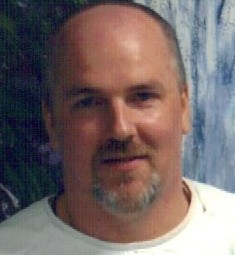
Daniel Wilson
Murderer Brian Kevin Rosenfeld
Murderer · USA · 1985
Brian Kevin Rosenfeld Brian Kevin Rosenfeld was sentenced to three concurrent l…
23 victims
Brian Kevin Rosenfeld
Murderer · USA · 1985
Brian Kevin Rosenfeld Brian Kevin Rosenfeld was sentenced to three concurrent l…
23 victims
 Russell Ellwood
Murderer · USA · 1991
Russell Ellwood was a former taxi driver. Authorities suspected him of killing…
20 victims
Russell Ellwood
Murderer · USA · 1991
Russell Ellwood was a former taxi driver. Authorities suspected him of killing…
20 victims
 Robert Martines Perez
Murderer · USA · 1994
Name: Robert Martines Perez · Other name used in proceedings: Robert Martinez P…
15 victims
Robert Martines Perez
Murderer · USA · 1994
Name: Robert Martines Perez · Other name used in proceedings: Robert Martinez P…
15 victims
 Billy Frank Vickers
Murderer · USA · 1993
Billy Frank Vickers Vickers was executed by lethal injection in Texas on Januar…
14 victims
Billy Frank Vickers
Murderer · USA · 1993
Billy Frank Vickers Vickers was executed by lethal injection in Texas on Januar…
14 victims
 John Kogut
Murderer ? · USA · 1984
John Kogut was a 21-year-old high school dropout and unemployed landscaper. In…
1 victim
John Kogut
Murderer ? · USA · 1984
John Kogut was a 21-year-old high school dropout and unemployed landscaper. In…
1 victim
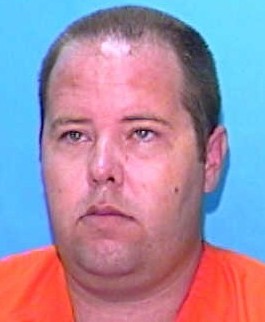 Robert Eugene Hendrix
Murderer · USA · 1990
Robert Eugene Hendrix (DC # 104721; DOB: 10/21/66) was tried in the Fifth Judic…
2 victims
Robert Eugene Hendrix
Murderer · USA · 1990
Robert Eugene Hendrix (DC # 104721; DOB: 10/21/66) was tried in the Fifth Judic…
2 victims
 James Brewer
Murderer · USA · 1977
James Brewer was convicted of murder on February 17, 1978, after a jury trial,…
1 victim
James Brewer
Murderer · USA · 1977
James Brewer was convicted of murder on February 17, 1978, after a jury trial,…
1 victim
 Michael Wayne Evans
Murderer · USA · 1987
Michael Wayne Evans was executed by lethal injection in Texas on December 4, 19…
2 victims
Michael Wayne Evans
Murderer · USA · 1987
Michael Wayne Evans was executed by lethal injection in Texas on December 4, 19…
2 victims
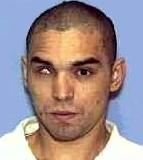 Joe Franco Garza
Murderer · USA · 1998
Joe Franco Garza, Jr. was convicted of capital murder committed on December 31,…
1 victim
Joe Franco Garza
Murderer · USA · 1998
Joe Franco Garza, Jr. was convicted of capital murder committed on December 31,…
1 victim
- Gender
- male
- Country
- USA
- Location
- Lorain County, Ohio, USA
- Date of birth
- September 10, 1969
- Age at first offence
- 22
- Characteristics
- kidnapping, alcohol, arson
- Victim profile
- Carol Lutz (female, 24)
- Method of murder
- Burning the victim alive in the trunk of her car
- Date(s) of murder
- May 4, 1991
- Years active
- 1991
- Date of arrest
- 5 days after
- Status
-
Executed
Executed by lethal injection on June 3, 2009 in Ohio
Case record: Daniel Wilson
Timeline
- May 4, 1991 — Daniel Wilson killed Carol Lutz by locking her in the trunk of her car, puncturing the gas tank, and setting the car on fire, allowing her to burn to death.
- May 9 — Police took Wilson into custody; Detective Ray Riley interviewed Wilson after advising him of his Miranda rights.
- September 10, 1969 — Daniel E. Wilson was born.
- April 8, 2009 — Wilson filed an action under 42 U.S.C. § 1983 in federal district court in the Southern District of Ohio alleging Defendants intended to violate his constitutional rights by executing him without necessary safeguards to prevent maladministration of the lethal injection protocol.
- May 13, 2009 — The district court granted Defendants’ motion to dismiss Wilson’s § 1983 action as time-barred and denied as moot Wilson’s motion for a preliminary injunction.
- June 2, 2009 — Wilson was delivered to the Ohio death house to spend his final 24-hours before his execution.
- June 3, 2009 — Daniel Wilson was executed by lethal injection in Ohio; he was pronounced dead at 10:33 a.m. at the Southern Ohio Correctional Facility.
Background
Daniel E. Wilson was executed by lethal injection in Ohio on June 3, 2009. He was 39 years old at the time of execution. He was a White male.
Wilson executed for the 1991 slaying of acquaintance Carol Lutz.
The record described Wilson as having spent time drinking before the killing and as having claimed intoxication. In state proceedings and later federal proceedings, Wilson raised issues including jury instructions related to intoxication and burdens concerning a kidnapping-related element/specification.
The offence
In Elyria, Ohio, on Saturday, May 4, 1991, around 1:30 p.m., Wilson killed Carol Lutz by locking her in the trunk of her car, puncturing the gas tank, and setting the car on fire. Wilson walked away and allowed Lutz to burn to death.
Events leading to the killing
On the previous afternoon, Wilson was drinking at the Empire Tavern, a bar he frequented. Between 5:00 and 6:00 p.m., Wilson went to the home of Angie Shelton, a girl he dated, and an argument ensued. During the argument, Wilson got angry, slammed Shelton against the wall, threw her on the bed, and went to hit her. Shelton told him that if he hit her, she “would be the last person that he hit.”
That evening, Carol Lutz drove her 1986 Oldsmobile Cutlass to the Empire Tavern to meet Douglas Pritt, an old boyfriend, and Wilson, apparently a new friend. Pritt, Lutz, and Wilson played pool and drank together. Pritt left the bar sometime between 12:30 a.m. and 1:00 a.m. Lutz left close to 2:30 a.m., and Wilson left right after she did.
According to Wilson’s confession, Lutz offered him a ride home. She drove with him to the trailer where he lived, and they drank one or two beers.
Custody and confinement in the trunk
When Wilson woke up on May 4, around 7:30 a.m. to 8:00 a.m., he was in a parking lot sitting in the driver’s seat of Lutz’s Oldsmobile. Lutz, who was locked in the trunk, asked him to let her out, but he refused.
Wilson stated he could not recall how she got there. He drove to various places, including a park where he took a walk. Wilson stated that he remembered thinking, “How am I going to get out of this?” Throughout this time, Lutz remained locked in the trunk.
Attempted ignition and later killing
Later that morning, Wilson drove to a school and parked the Oldsmobile. After a while he took off the gas cap, stuffed a rag in the open neck of the gas tank, and lit the rag, but the fire burned out. Lutz told him “she really had to go to the bathroom.” He took the rag back out of the gas tank and let her out to go to the bathroom.
When Wilson told her to get back in the trunk, she pleaded with him. Lutz begged and pleaded with Wilson, telling him she would turn around for 30 seconds and let him run like hell. Wilson told her to get back in the trunk a second time and she complied. She sat in the trunk for fifteen to twenty minutes with the lid up. They talked, and Lutz asked him why he did not just let her go. Wilson said he even gave her a cigarette.
Wilson then closed the trunk lid, “poked a hole in the gas tank,” stuffed a towel or blanket into the gas tank, “let it soak with gas ... and ... lit it,” and walked away from the car and went to a nearby park.
Discovery of the body and cause of death
While out driving that day, Janette Patton and her mother noticed smoke and saw Lutz’s Oldsmobile enveloped in fire. Fire personnel extinguished the fire and forced open the Oldsmobile’s trunk, revealing Lutz’s body.
Lutz died from third-degree burns and carbon monoxide poisoning. An arson investigator estimated the trunk could have been heated to over 550 degrees. Investigators found no holes in the trunk but found a puncture in the gas tank. Investigators found a gas cap under the driver’s seat and a tire iron and cross bar in the back seat. Several samples of materials taken from inside the car tested positive for kerosene.
Police detective Ray Riley traced the car to Carol Lutz and learned that she had last been seen with Wilson at the Empire Tavern. On May 9, police took Wilson into custody; Riley interviewed Wilson after advising him of his Miranda rights. Wilson waived his rights and agreed to talk with police. Riley tape-recorded the interview. Wilson confessed to keeping Lutz locked in the trunk intermittently from 7:30 a.m. on May 4 until her death, and he admitted that at approximately 1:30 p.m. he killed her by setting the Oldsmobile ablaze.
Investigation
The investigation included arson investigation at the scene of the car fire and analysis of items found in the Oldsmobile. Investigators found a puncture in the gas tank; a gas cap was found under the driver’s seat; and a tire iron and cross bar were found in the back seat. Several samples taken from inside the car tested positive for kerosene.
Police detective Ray Riley interviewed Wilson after Wilson was taken into custody on May 9. Riley advised Wilson of his Miranda rights; Wilson waived those rights and agreed to talk; Riley tape-recorded the interview.
Arrest
On May 9, police took Wilson into custody.
Trial
Wilson defended himself by claiming intoxication and lack of prior calculation and design. The jury found Wilson guilty on all counts.
Charges and jury findings
Wilson was indicted on three aggravated murder counts:
- Count I charged aggravated murder by prior calculation and design.
- Count II charged felony murder predicated on kidnapping.
- Count III, as amended, charged felony murder predicated on aggravated arson.
Each murder count had three death specifications:
- Specification one charged murder to escape “detection, apprehension, trial, or punishment” for kidnapping.
- Specification two charged murder during kidnapping.
- Specification three charged murder during an aggravated arson.
Wilson was also indicted for:
- Count IV: kidnapping.
- Count V: aggravated arson.
Penalty phase
At the penalty phase, the prosecutor elected to proceed to sentencing only on Count I (prior calculation and design) and specification one (evading detection or punishment for another offense in violation of R.C. 2929.04(A)(3)). Accordingly, neither the court nor jury considered the other two murder counts or the felony-murder death-penalty specifications in assessing the penalty.
The trial court sentenced Wilson to death and also imposed imprisonment for kidnapping and aggravated arson.
Final statement and final meal (execution day)
Wilson delivered final words at 10:20 a.m. during the execution process. His final words were:
“I want to say to the Lutz family that I'm very sorry for what I did to Carol. I want to say to my family that I'm sorry for how things turned out. I love you. I believe in Jesus. He's my Lord and Savior. I'm going home. . .”
A final meal was described for Wilson as including: a well-done porter house steak with steak sauce, a baked potato with sour cream and bacon bits, salad with lettuce, cucumbers, tomatoes, radishes, green peppers, carrots and French dressing, corn on the cob with butter, grapes, macaroni and cheese, dinner rolls and Cool Ranch Doritos with a jar of salsa, strawberry ice cream and strawberry cheesecake (both with real strawberries), a 2-liter of Dr. Pepper with ice and one tea bag.
Sentencing
Wilson was sentenced to death for aggravated murder. The record listed convictions as:
- Count 1: Aggravated Murder (Death)
- Count 4: Kidnapping (10–25 yrs)
- Count 5: Aggravated Arson (10–25 yrs)
The record also described sentencing proceedings in terms of the selection of only the prior calculation and design count and evading detection or punishment specification for the death penalty decision.
Appeals
Ohio Supreme Court (direct appeal)
In State v. Wilson, 74 Ohio St.3d 381, 659 N.E.2d 292 (Ohio 1996), the Ohio Supreme Court affirmed Wilson’s convictions and sentence of death. The opinion addressed multiple propositions of law related to jury selection/voir dire, evidence, jury instructions, effective assistance of counsel, constitutional claims, and independent sentence assessment.
Federal habeas corpus
In Wilson v. Mitchell, 498 F.3d 491 (6th Cir. 2007), the court affirmed the denial of habeas relief. It held that the error, if any, in giving the intoxication instruction that shifted the burden with respect to the knowledge element of the evading-kidnapping aggravator was harmless, and it rejected Wilson’s remaining claims.
Section 1983 execution-protocol litigation
In Wilson v. Strickland, 2009 WL 1477248 (6th Cir. 2009) (per curiam), the court affirmed the dismissal of Wilson’s § 1983 action. The panel concluded that the claim was barred by the doctrine of res judicata. The court also denied Wilson’s motion to stay execution.
Outcome
The execution occurred at the Southern Ohio Correctional Facility.
He was pronounced dead at 10:33 a.m. Witnesses for the Lutz family were described as including Martha Lutz, Jerry Lutz, and Doug Lutz. Martha Lutz stated:
“We have waited 18 years 29 days for this to happen. It finally has come and we thank God,”
She also said:
“People may think we're cruel, but the cruel part of this is not being able to have Christmas with Carol ever again.”
The process was described as incorporating a revised protocol allowing an additional dose of sedative if needed. The warden was described as calling Wilson’s name and pinching his arm before proceeding with additional lethal drugs.
A spiritual adviser, Rev. Neil Kookoothe, described Wilson’s religious status and said:
“Dan wanted to make sure his sorrow for the Lutz family and his remorse for taking Carol's life is sincere,”
and:
“He wanted people to know that.”
Rev. Kookoothe also made a statement criticizing preparation of the clemency rejection letter and the death penalty, including:
“This situation began with death, and it ends with death,”
“There's death along the whole spectrum. Nothing was achieved.”
After the execution, Martha Lutz was described as stating:
“People think we're cruel,”
“But the cruel part of this is never to have Carol with us ever again.”
Aftermath
Wilson’s execution ended litigation that included direct appeal, federal habeas corpus, and a federal § 1983 action challenging the lethal injection protocol, which was dismissed on res judicata grounds.
Other details
People associated with the offence and investigation
- Carol Lutz — victim; acquaintance; died after being locked in the trunk and burned alive.
- Martha Lutz — Carol Lutz’s mother; witnessed the execution.
- Jerry Lutz — Martha Lutz’s husband; witnessed the execution.
- Doug Lutz — Carol Lutz’s brother; witnessed the execution.
- Angie Shelton — Wilson’s girlfriend at the time; involved in an argument the day prior to the killing; she told Wilson that if he hit her, she “would be the last person that he hit.”
- Douglas Pritt — an old boyfriend of Carol Lutz and a person present at the Empire Tavern; left between 12:30 a.m. and 1:00 a.m.
- Darlene DeBolt — a service station cashier in Stow; testified about seeing Wilson and smelling alcohol; Wilson tried to get her to go out with him; she refused.
- Ray Riley — police detective; interviewed Wilson after advising Miranda rights; tape-recorded the interview.
- Janette Patton and her mother — noticed smoke and saw the car fire.
- Fire department personnel — extinguished the fire and forced open the trunk.
Wilson’s background as presented at trial and on appeal
The trial included testimony regarding Wilson’s childhood and alcoholism. Wilson’s alcoholic father was described as brutalizing Wilson and his siblings. The evidence described Wilson’s father locking sons in their bedroom at night and refusing to let them out, including even to go to the bathroom, and calling them “liars, cheats, and thieves” while hitting them with a leather belt during drunken rages.
Wilson’s mother testified about frequent slapping and terrorizing by Wilson’s father.
When Wilson was twelve, he was arrested for vandalizing a friend’s house. About a year later, Wilson’s mother moved out of the family home, took Wilson’s younger brother Donald, and left Wilson and David with their father.
At fourteen, Wilson broke into a neighbor’s house, struck the elderly man and caused him to break his hip, and ripped the phone cord out of the wall. The neighbor was not found for two days and died as a result of injuries and lack of medical attention.
A juvenile court adjudged Wilson delinquent by reason of involuntary manslaughter and remanded him to the custody of the Ohio Department of Youth Services. Wilson spent one year in a state facility for serious offenders and then was sent to a halfway house.
Days before reaching seventeen, Wilson went to live with Shirley Spinney, a foster parent. The record described Wilson graduating high school with a B average, working part-time, and attending college for two semesters while continuing to work. Spinney described Wilson as compassionate, sensitive, and considerate, and later discovered Wilson had a serious drinking problem. Spinney’s other foster child, Mark, was killed in an accident in 1988; Wilson was devastated and began to drink more heavily.
Wilson left Spinney’s home the next year and lived with friends, then moved in with his mother and grandfather, sleeping in a camper behind their house. While there, he attempted to expunge his juvenile record and made plans to join the Navy.
In an unsworn statement presented at trial, Wilson asserted that his father “could do no wrong” in his eyes and that he liked and spent a lot of time with him despite the terrible things described.
Wilson denied that he “intended to hurt” Lutz and said:
“I still do not know why I reacted the way I did.”
Wilson also said:
“I would like to say to her family [he is] sorry.”
and:
“He did not want to die, and asked for another chance at life.”
A psychologist, Dr. James Eisenberg, examined Wilson and found Wilson above average in intelligence, with difficulty becoming emotionally involved with others. Eisenberg described Wilson’s lifestyle as marked by strong dependency needs, maladjustment, and chaos; alcohol dependence; and a mixed personality disorder with borderline and antisocial features. The record described Eisenberg’s conclusion that Wilson knew right from wrong and could conform to the law and function in an institutional setting.
Additional procedural and evidentiary matters addressed on appeal (factual record included)
- The grand jury indicted Wilson on three aggravated murder counts; Wilson was found guilty on all counts.
- The prosecutor elected to proceed at the penalty phase only on the prior calculation and design count and evading detection or punishment specification.
- Wilson’s confession was described as voluntary after advice of Miranda rights and waiver.
- The appellate and habeas proceedings included discussion of jury instructions related to intoxication, including shifting burdens for the kidnapping knowledge element and harmless-error analysis.
- The habeas proceedings addressed a claim under Brady v. Maryland about alleged late disclosure of a psychological report by a Department of Youth Services psychologist and concluded the claim lacked merit.
- The habeas proceedings also addressed a claim about dismissal of a potential juror for cause, an instruction about Wilson’s unsworn statement, and ineffective assistance of appellate counsel for failure to raise the Brady claim.
Spotted an error, or have more information about this case?