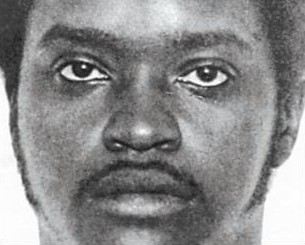
Syvasky Poyner
Spree killer Paul John Knowles
Spree killer · USA · 1974
Paul John Knowles (April 17, 1946 – November 18, 1974) was an American spree ki…
35 victims
Paul John Knowles
Spree killer · USA · 1974
Paul John Knowles (April 17, 1946 – November 18, 1974) was an American spree ki…
35 victims
 Bobby Joe Maxwell
Spree killer · USA · 1978
Name: Bobby Joe Maxwell Sex: M Race: B Type: T Motive: PC-nonspecific Method of…
11 victims
Bobby Joe Maxwell
Spree killer · USA · 1978
Name: Bobby Joe Maxwell Sex: M Race: B Type: T Motive: PC-nonspecific Method of…
11 victims
 Manuel Pardo
Spree killer · USA · 1986
Manuel Pardo, Jr. was a former police officer who was convicted of nine counts…
9 victims
Manuel Pardo
Spree killer · USA · 1986
Manuel Pardo, Jr. was a former police officer who was convicted of nine counts…
9 victims
 Michael Alan Silka
Spree killer · USA · 1984
Michael Alan Silka was killed during a shoot-out with the police on May 19, 198…
9 victims
Michael Alan Silka
Spree killer · USA · 1984
Michael Alan Silka was killed during a shoot-out with the police on May 19, 198…
9 victims
 Richard D. Moore
Murderer · USA · 1979
Richard D. Moore. Moore went to the home of her parents on 36th Street in India…
3 victims
Richard D. Moore
Murderer · USA · 1979
Richard D. Moore. Moore went to the home of her parents on 36th Street in India…
3 victims
 Billy Sunday Birt
Murderer · USA · 1972
Billy Sunday Birt was sentenced to death in 1975, for murder counts connected w…
3 victims
Billy Sunday Birt
Murderer · USA · 1972
Billy Sunday Birt was sentenced to death in 1975, for murder counts connected w…
3 victims
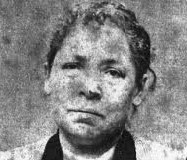 Marie Goold
Murderer · Monaco · 1907
Marie Goold was sentenced to death on December 4, 1907. Her sentence was commut…
1 victim
Marie Goold
Murderer · Monaco · 1907
Marie Goold was sentenced to death on December 4, 1907. Her sentence was commut…
1 victim
- Gender
- male
- Country
- USA
- Location
- Virginia, USA
- Date of birth
- 1956
- Age at first offence
- 28
- Characteristics
- robbery, kidnapping, rape, sexual abuse
- Victim profile
- Joyce Baldwin / Louise Paulett and Christine Brooks / Vicki Ripple / Carolyn Hedrick
- Method of murder
- Shooting ( .38 caliber revolver)
- Date(s) of murder
- January -February 1984
- Years active
- 1984
- Date of arrest
- February 4, 1984
- Status
-
Executed
Executed by electrocution in Virginia on March 18, 1993
Case overview
Syvasky Lafayette Poyner challenged three Virginia state court judgments that sentenced him to death for the capital murder of five women. The United States Court of Appeals for the Fourth Circuit considered his federal habeas corpus claims and affirmed the district court’s denial of relief.
STATUS
Poyner was executed by electrocution in Virginia on March 18, 1993.
Timeline
- January 23, 1984 — Poyner entered a hair salon in the City of Hampton and robbed clerk Joyce M. Baldwin before shooting her in the back of the head.
- January 30, 1984 — Poyner left his home in the City of Newport News, stole an automobile, drove to the City of Williamsburg, and robbed motel manager Clara Louise Paulette.
- January 30, 1984 — While the armed robbery was in progress, Poyner shot motel housekeeper Chestine Brooks and Clara Louise Paulette in the backs of their heads.
- January 31, 1984 — Poyner stole another automobile and went to Newport News, where he robbed and shot Vicki Ripple.
- February 2, 1984 — Poyner approached Carolyn J. Hedrick with a gun in his hand, forced her into her car, and later raped her; he then shot her in the left side of her head and pushed her nude body from the car.
- February 3, 1984 — Newport News police officers discovered the Hedrick car parked in the vicinity of the church parking lot where her body had been found.
- February 4, 1984 — Poyner was arrested by detectives of the Hampton police department for the murder of Carolyn J. Hedrick; a search warrant was obtained for his home, yielding keys to Hedrick’s car and a .38 caliber revolver. Within hours, Poyner confessed to killing all five victims.
- May (early days) — Poyner confessed to all five murders “by the early days of May.”
- June 6, 1984 — Poyner was convicted after a jury trial in the Circuit Court of the City of Williamsburg for the capital murder of Clara Louise Paulette and Chestine Brooks, and the Williamsburg jury fixed the penalty at death on the statutory ground that there was a probability he “would commit criminal acts of violence that would constitute a continuing serious threat to society.”
- June 13, 1984 — Poyner was tried without a jury in the Circuit Court of the City of Hampton for the capital murder of Carolyn J. Hedrick and Joyce M. Baldwin; the court sentenced him to death on each count after finding continuous threat and that the acts were “outrageously vile, horrible, and inhuman” and “involved depravity of mind and aggravated battery to the victims.”
- July 11, 1984 — A Newport News jury convicted Poyner of the capital murder of Vicki Ripple; the jury fixed the penalty at death based on probability of continuous serious threat to society.
- July 31, 1991 — The federal appeal was argued.
- May 8, 1992 — The United States Court of Appeals for the Fourth Circuit decided the appeal and affirmed.
Background
Syvasky Lafayette Poyner was 36 at the time of his execution. He had lived in prison for most of his adult life.
In 1981, Poyner was convicted on two counts of burglary. He was paroled in September 1983, residing with an elderly minister while he found work in a local fast-food restaurant.
The record described Poyner as having committed economic crimes aimed at reaping easy money, and then having turned to killing. His crimes in 1984 were characterized as an 11-day crime spree that left five women from the Tidewater area of Virginia dead, all victims of gunshot wounds to the head.
The offence
Poyner’s robbery and murder spree began around noon on January 23, 1984, when he was riding around the City of Hampton in an automobile stolen earlier that morning. He entered a hair salon on impulse with the apparent intention of robbing occupants.
Joyce M. Baldwin (hair salon, Hampton)
Joyce M. Baldwin, the clerk at the hair salon, initially mistook Poyner for a customer and began showing him hair care products. Poyner pulled a .38 caliber revolver and demanded money. Baldwin complied by opening the cash register and placing between forty and sixty dollars in a bag. Poyner then ordered her to walk to the back of the store.
Baldwin turned her back and began to walk while crying and begging him to spare her life. Poyner shot her in the back of the head from a range of approximately four to six feet, mortally wounding her. Baldwin was described as 45 years old.
Clara Louise Paulette and Chestine Brooks (motel, Williamsburg)
Around noon on January 30, 1984, after stealing an automobile, Poyner drove to Williamsburg and selected a motel “just on impulse,” again appearing to rob the clerk. He found Clara Louise Paulette, the manager of the motel. Poyner pointed his gun at Paulette and demanded money. Paulette gave him approximately forty dollars, after telling him he “hit her at a bad time.”
While the armed robbery was in progress, Chestine Brooks, a housekeeper at the motel, walked into an adjacent room and saw what was happening in the motel office. When Poyner saw Brooks, he ordered both Brooks and Paulette into a kitchen area near the office and forced them to turn and face away from him. Poyner then shot both women in the backs of their heads from close range, killing them. Paulette and Brooks were described as elderly and as 43-year-old Christine Brooks in the execution narrative.
Vicki Ripple (ice cream store, Newport News)
Poyner killed again the next day, January 31, 1984, in Newport News. He stole another automobile and rode around the streets. Around noon he passed an ice cream store where he observed Vicki Ripple working alone. Poyner parked the car and entered the store, where Ripple was cleaning up.
He pointed his gun at her and demanded money, causing her to put the money from the cash register into a bag and hand it to him. Ripple walked into the corner of the store and covered her head. Poyner shot her in the back of the head and left her to die. Ripple was described as 18 years old. The execution narrative described the event as her being shot to death on her job.
Carolyn J. Hedrick (carjacking/abduction, rape, and murder, Newport News)
Poyner walked from his home in Newport News to Hampton on the morning of February 2, 1984. Around noon he observed Carolyn J. Hedrick emerge from a store and begin to get into her car. He approached her with a gun in his hand and told her he wanted her money and that she was to get into her car. Hedrick screamed and appeared nervous but complied and got into the passenger seat.
Poyner got into her car and began driving, ordering her to remove her clothing. He stated that he did this so that she would be less likely to attempt escape by jumping out of the car. Poyner continued driving until they reached a parking lot behind a church, where he proceeded to rape her.
After raping her, Poyner shot her in the left side of her head while she sat in the passenger seat of her car, crying and begging him not to shoot her. After taking no more than forty dollars from her pocketbook, he pushed her nude body from the car and drove away.
That afternoon, Poyner continued driving around the Newport News area in Hedrick’s car. He stopped at a local barber shop, where he attempted to sell candy that he had found in the Hedrick car.
On February 3, 1984, police officers discovered the Hedrick car parked in the vicinity of the church parking lot where her body had been found. Poyner’s fingerprints were found inside the car, and eyewitnesses reported seeing him driving the car during the afternoon of the Hedrick murder.
The execution narrative added further details that police recovered the nude body of Carolyn Hedrick from a church parking lot, that her car and samples were stolen, and that a local barber provided a description of a suspect who had entered his shop trying to sell a large quantity of candy bars.
Investigation and arrest
On February 4, 1984, Poyner was arrested by detectives of the Hampton police department for the capital murder of Carolyn J. Hedrick.
A search warrant for Poyner’s home was obtained on February 4, 1984. The resulting search yielded the keys to Hedrick’s car and a .38 caliber revolver. Forensic analysis later established that the revolver was the weapon that killed Hedrick.
During the time other detectives were executing the search warrant at Poyner’s home, Spinner and Browning retraced the route of the abduction and murder of Carolyn Hedrick. Upon returning to the police station at approximately 5:35 a.m., the detectives informed Poyner of their discovery of the revolver and told him that “the gun would be checked against the other murders in Newport News, Hampton and Williamsburg, and if [Poyner] knew anything about them, to tell [the detectives] now.” Poyner responded: “I did them all.” He then made a brief statement on audiotape describing each of his five murders.
After the initial confession, Poyner telephoned and met with his wife and was returned to jail at 7:20 a.m. Later that same day, Detectives Spinner and Browning interviewed Poyner again at 8:50 p.m. Poyner read and signed a written rights waiver form prepared by Spinner, and he then confessed to each murder; the confession was recorded on videotape. This videotape, or a transcript, was introduced into evidence in both the guilt and penalty phases of his trials.
During the February 4, 1984 confession, Poyner told the interrogating detectives that he chose only women as his victims because “women are afraid of guns and are easier to rob than men.” He also said he killed his victims so that they would be unable to identify him later because, during previous jail terms, fellow prisoners had told him that they wished they had killed the people they had robbed. He identified various marital difficulties as his only motivation for these crimes.
Confessions and Miranda dispute
Poyner argued that confessions were obtained in violation of Miranda v. Arizona and its progeny.
During custodial interrogation after his arrest in the early morning hours of February 4, 1984, Poyner was placed in the custody of Detective Spinner and Detective Browning. Spinner orally advised him of his Miranda rights before any interrogation, and Poyner told Spinner and Browning he understood his rights. Poyner was then taken before a Virginia Magistrate, advised of charges and that he would be held without bond. After that, he was taken to another room and Spinner again advised him of his rights; Poyner indicated he understood.
Spinner then informed Poyner that police were aware of his involvement with Mrs. Hedrick’s car and that he had been seen trying to sell candy from that car. Poyner responded: “Didn't you say I have a right to an attorney,” to which Spinner replied: “Yes, you do, that is correct.” After this statement, Spinner and Browning began to rise from their seats and terminate the interrogation. Poyner interrupted their departure by saying “Let me tell you about the car.” Poyner then proceeded to tell the detectives about the car and the neighborhood, and Browning asked: “Did you kill her?”, to which Poyner responded: “Yes.”
Poyner later argued that the statement “Didn't you say I have a right to an attorney?” constituted a request for counsel that should have ceased all interrogation, and that his confessions should have been excluded.
The federal appellate court held that the statement did not constitute an invocation of the right to counsel under Miranda and that, even assuming arguendo that a request was made, Poyner’s subsequent volunteered statements constituted a reinitiation of interrogation and a waiver of the Miranda right to counsel.
The decision discussed the detectives’ interpretation of Poyner’s statement and concluded that the detectives’ momentary belief was not controlling for the ultimate legal determination.
The appellate court also addressed Poyner’s request for an evidentiary hearing on his Miranda claim. The court found that Poyner had been afforded a full and fair hearing at the state level as to his fifth amendment claims, noting lengthy suppression hearings where Spinner and Browning were examined and cross-examined.
Trial
Poyner was convicted of five counts of capital murder after three separate trials in the Circuit Courts of the Cities of Williamsburg, Hampton, and Newport News, Virginia.
Williamsburg trial: Paulette and Brooks
On June 6, 1984, Poyner was convicted after a jury trial in the Circuit Court of the City of Williamsburg for the capital murder of Clara Louise Paulette and Chestine Brooks. The Williamsburg jury fixed the penalty at death on the statutory ground that there was a probability that Poyner “would commit criminal acts of violence that would constitute a continuing serious threat to society.”
The Williamsburg court entered judgment on the jury’s verdicts and accepted its recommendations of death.
Hampton trial: Hedrick and Baldwin
Poyner’s second trial took place on June 13, 1984, before the Circuit Court of the City of Hampton sitting without a jury. The Hampton court found Poyner guilty of the capital murder of Carolyn J. Hedrick and Joyce M. Baldwin and sentenced him to death on each count after hearing testimony regarding aggravating and mitigating circumstances.
In fixing Poyner’s sentence at death, the Hampton court found both that he posed a continuous threat to society and that his acts were “outrageously vile, horrible, and inhuman” and “involved depravity of mind and aggravated battery to the victims,” referencing Va.Code Ann. § 19.2-264.2.
Newport News trial: Ripple
Poyner’s final trial was before a jury in the Circuit Court of the City of Newport News. On July 11, 1984, that jury convicted him of the capital murder of Vicki Ripple. During the sentencing phase, the jury found that Poyner’s conduct and history indicated a probability that he would pose a continuous serious threat to society.
The jury fixed the penalty at death, and the trial court accepted the recommendation and entered judgment on its verdict.
Sentencing
Poyner received three death sentences arising from the five capital murder convictions. The appellate decision affirmed the district court’s denial of Poyner’s habeas corpus petitions challenging the convictions and death sentences.
Appeals
Poyner appealed all five convictions and death sentences to the Supreme Court of Virginia. That court affirmed each conviction and death sentence, as stated in Poyner v. Commonwealth, 229 Va. 401, 329 S.E.2d 815 (1985).
The United States Supreme Court denied his petition for a writ of certiorari in Poyner v. Virginia, 474 U.S. 865, 106 S.Ct. 189, 88 L.Ed.2d 158 (1985).
Poyner then filed collateral review petitions in the Virginia state courts. Petitions for writs of habeas corpus were filed in each of the three convicting courts. Each court denied the respective petition after hearing argument but without holding evidentiary hearings. The Supreme Court of Virginia refused Poyner’s petitions for appeal after finding no error.
The United States Supreme Court subsequently denied his second petition for a writ of certiorari in Poyner v. Bair, 488 U.S. 871, 109 S.Ct. 185, 102 L.Ed.2d 154 (1988).
Poyner then sought relief in federal court. On January 12, 1989, he filed three separate petitions for writs of habeas corpus in the United States District Court for the Eastern District of Virginia. The district court adopted and approved three reports and recommendations by a United States Magistrate and denied Poyner’s objections by three final orders dated December 21, 1990.
Poyner moved to alter or amend those final orders under Fed.R.Civ.P. 59(e). The district court denied that motion, and the appeals followed.
The federal appellate decision affirmed the district court’s denial of relief, stating “AFFIRMED.”
Outcome
The United States Court of Appeals for the Fourth Circuit affirmed the denial of Poyner’s habeas corpus petitions. The judgments of the district court were affirmed in the cases numbered No. 91-4001, No. 91-4002, No. 91-4003, No. 91-4004, No. 91-4005, and No. 91-4006.
Aftermath
Poyner lost a final Supreme Court appeal earlier on March 18, 1993 in which he had sought to have Virginia’s method of carrying out capital sentences, by electrocution, held in violation of the Constitution’s ban on cruel and unusual punishment. The Supreme Court voted 7 to 2 not to stop the execution after lawyers for the state contended that Poyner’s appeal amounted to a delaying tactic.
Poyner was executed at Greensville Correctional Center, and a prison operations officer, Wayne Brown, stated he was pronounced dead at 11:13 P.M.
As he was led to the execution chamber and strapped into the chair by five guards, a chaplain read a statement from Poyner. The statement expressed hope for healing “every hurt that has ever been done.” The statement said: “I choose to forgive, and I ask to be forgiven.” He appeared calm as he was led to the execution chamber.
Other details
The appeal caption and tribunal
Poyner was named as “Syvasky Lafayette Poyner, Petitioner-Appellant, v. Edward W. Murray, Director, Virginia Department of Corrections, Respondent-Appellee. (Six Cases) No. 91-4001.”
The appeal was in the United States Court of Appeals, Fourth Circuit, with a panel consisting of RUSSELL, WIDENER, and HALL, Circuit Judges.
Claims raised in federal habeas proceedings
Poyner urged reversal on these grounds:
- Confessions obtained in violation of his rights under Miranda v. Arizona.
- Ineffective assistance of trial counsel.
- Virginia’s system of appointing counsel for indigent defendants violated due process.
- Error in refusing an evidentiary hearing on Miranda and ineffective assistance claims.
The appellate decision addressed and rejected these claims.
Ineffective assistance and psychiatric evidence
Poyner argued that counsel was constitutionally ineffective for failing to pursue psychiatric evidence that he fit categories of “serial killers” identified by Dr. Park Elliott Dietz. The affidavit asserted possible categories including “Psychopathic Sexual Sadists” characterized by “repeated intentional infliction of psychological or physical suffering in order to produce sexual excitement,” a “Crime Spree Killer” who kills “repeatedly during a series of crimes motivated by the search for excitement, money, and valuables,” and a “Supposed Psychotic” who claims “to be acting at the direction of command hallucinations or under the influence of compelling delusions.”
The appellate decision described that before trial, each trial judge ordered Poyner be sent to Central State Hospital for psychological evaluation, including examinations under Dr. James C. Dimitris between March 20 and April 2, 1984, designed to evaluate an insanity defense, competency, and mitigating mental conditions. It also described that Poyner’s counsel retained Dr. Wendell J. Pile, who evaluated Poyner, and that staff contacted Poyner’s wife, father, step-father, and former psychiatrists.
The appellate decision stated that Dr. Dimitris and staff found Poyner exhibited passive-aggressive and antisocial personality disorders, that his intelligence was evaluated at the “dull normal” level, that he was neither “feebleminded” nor psychotic, and that he suffered from no disease of the mind or irresistible impulse. Dr. Pile came to essentially the same conclusions.
During penalty phases, Poyner’s counsel introduced evidence based on Dr. Dimitris’s testimony and other psychiatric evaluations; juries and the Hampton court found the mitigation insufficient to outweigh the crimes.
The appellate decision rejected Poyner’s ineffective assistance claims and his requests for evidentiary hearings, stating that an evidentiary hearing would be superfluous or would not alter the conclusion under Strickland.
Appointment of counsel claim and procedural default
Poyner claimed Virginia’s informal method of appointing counsel led to undue delay in appointment of trial counsel, impairing his ability to investigate and defend against capital murder charges, violating the due process clauses of the fifth and fourteenth amendments.
The state habeas courts held the claim was procedurally barred under Slayton v. Parrigan, because it had not been raised timely at trial or on direct appeal. The appellate decision discussed procedural default principles under Wainwright v. Sykes and Coleman v. Thompson and addressed Poyner’s arguments as cause, including novelty under Reed v. Ross, ineffective assistance of counsel, and the gravity of the sentence.
The appellate court described the sequence of counsel appointments after Poyner’s arrest: a Virginia court appointed Vincent Conway, Esq. on Monday, February 6, 1984; Conway was replaced on February 14, 1984 by Richard Blackwell and Kevin Shea for the Hampton proceedings; James Bradberry was appointed on February 16, 1984 for the Newport News murder and was later replaced by Sharon A. Coles-Stewart and Joyce A. Melvin-Jones who tried the Newport News case; and David Holland, Esq. was appointed on March 13, 1984 for the Williamsburg murders.
The appellate court concluded Poyner had failed to establish actual and substantial prejudice and held the procedural bar could not be excused.


Spotted an error, or have more information about this case?