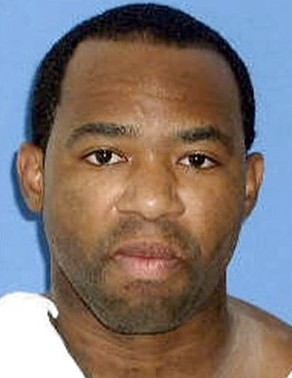
Tommie Collins Hughes
Murderer Russell Ellwood
Murderer · USA · 1991
Russell Ellwood was a former taxi driver. Authorities suspected him of killing…
20 victims
Russell Ellwood
Murderer · USA · 1991
Russell Ellwood was a former taxi driver. Authorities suspected him of killing…
20 victims
 Robert Martines Perez
Murderer · USA · 1994
Name: Robert Martines Perez · Other name used in proceedings: Robert Martinez P…
15 victims
Robert Martines Perez
Murderer · USA · 1994
Name: Robert Martines Perez · Other name used in proceedings: Robert Martinez P…
15 victims
 Billy Frank Vickers
Murderer · USA · 1993
Billy Frank Vickers Vickers was executed by lethal injection in Texas on Januar…
14 victims
Billy Frank Vickers
Murderer · USA · 1993
Billy Frank Vickers Vickers was executed by lethal injection in Texas on Januar…
14 victims
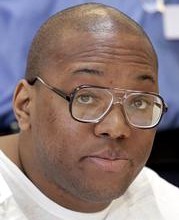 Terrick Nooner
Murderer · USA · 1993
Terrick Nooner was sentenced to death on September 28, 1993. At approximately 1…
1 victim
Terrick Nooner
Murderer · USA · 1993
Terrick Nooner was sentenced to death on September 28, 1993. At approximately 1…
1 victim
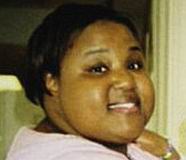 Veronica Cirella
Murderer · USA · 2011
Veronica Cirella was 31 and lived in Plainview, New York. She was the mother of…
1 victim
Veronica Cirella
Murderer · USA · 2011
Veronica Cirella was 31 and lived in Plainview, New York. She was the mother of…
1 victim
 Mark Wiles
Murderer · USA · 1985
Mark Wiles was a White male convicted in Portage County of an aggravated murder…
1 victim
Mark Wiles
Murderer · USA · 1985
Mark Wiles was a White male convicted in Portage County of an aggravated murder…
1 victim
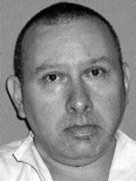 Donald Aldrich
Murderer · USA · 1993
Donald Loren Aldrich was a member of what became known as the “CB gang,” so nam…
1 victim
Donald Aldrich
Murderer · USA · 1993
Donald Loren Aldrich was a member of what became known as the “CB gang,” so nam…
1 victim
- Gender
- male
- Country
- USA
- Location
- Dallas County, Texas, USA
- Date of birth
- August 15, 1974
- Age at first offence
- 23
- Characteristics
- robbery
- Victim profile
- Foluke Erinkitola (female, 25) and Roxanne Mendoza (female, 29)
- Method of murder
- Shooting ( automatic pistol)
- Date(s) of murder
- August 13, 1997
- Years active
- 1997
- Date of arrest
- Next day
- Status
-
Executed
Executed by lethal injection in Texas on March 15, 2006
Case overview
Tommie Collins Hughes was convicted of capital murder for the robbery-related shootings of Foluke Erinkitola and Roxanne Mendoza outside a Dallas theater parking lot, and he was sentenced to death. He was executed by lethal injection in Texas on March 15, 2006.
Timeline
- August 13, 1997 — Hughes suggested to his girlfriend and another man that they rob someone; Hughes and the other man approached Foluke Erinkitola and Roxanne Mendoza in a Dallas movie theater parking lot; using an automatic pistol, Hughes shot and killed Erinkitola and Mendoza; the two men took the victims’ purses, wallets, jewelry, cell phone and pager.
- August 13, 1997 (after the shootings) — Police who had been conducting an undercover operation in the theater parking lot tailed the trio’s car, later stopped it, and arrested the three after receiving a report of the shootings; in the car, police found the victims’ belongings and discovered the murder weapon beneath Hughes’ seat; blood from one victim found on Hughes’ clothing suggested he shot her at close range.
- After August 13, 1997 (the day after the shooting) — In a telephone conversation with a cousin, Hughes was asked why he had killed the two women; Hughes said the two victims could have identified them.
- Oct. 1, 1997 — A Dallas County grand jury indicted Hughes for the capital murder of Foluke Erinkitola.
- May 1, 1998 — A jury found Hughes guilty of capital murder.
- May 7, 1998 — After a punishment hearing, the trial court assessed a death sentence.
- Apr. 12, 2000 — The Texas Court of Criminal Appeals affirmed Hughes’ conviction and sentence.
- Sept. 13, 2000 — The Court of Criminal Appeals denied habeas corpus relief.
- Nov. 6, 2000 — The United States Supreme Court denied certiorari review.
- Mar. 14, 2001 — Hughes filed a petition for writ of habeas corpus in a U.S. federal district court.
- Mar. 19, 2004 — The federal district court denied habeas corpus relief.
- June 10, 2005 — The 5th Circuit Court denied Hughes’s application for a Certificate of Appealability.
- Feb. 21, 2006 — The Supreme Court denied Hughes’s petition for certiorari.
- March 15, 2006 — Hughes was executed by lethal injection in Texas.
The offence
On the evening of August 13, 1997, Hughes suggested to his girlfriend and another man that they rob someone. The trio drove to a Dallas movie theater parking lot. Hughes and the other man approached Foluke Erinkitola and Roxanne Mendoza, who were walking to their car.
Hughes used an automatic pistol to shoot and kill Erinkitola and Mendoza. After the shootings, the two men took the victims’ purses, wallets, jewelry, cell phone and pager.
After the trio left the parking lot, police who had been conducting an undercover operation in the theater parking lot tailed the car and later stopped the vehicle. Police arrested the three after receiving a report of the shootings. Police found the victims’ belongings in the car and discovered the murder weapon beneath Hughes’ seat. Blood from one of the victims found on Hughes’ clothing suggested that he shot her at close range.
In the telephone conversation with a cousin the day after the shooting, Hughes was asked why he had killed the two women. Hughes said the two victims could have identified them.
Victims
- Foluke Erinkitola, 25 (shot and killed)
- Roxanne Mendoza, 29 (shot and killed)
Investigation and arrest
Police conducted an undercover operation in the theater parking lot and tailed the trio’s car after the shootings. After the vehicle was stopped, the three were arrested following the report of the shootings.
Police found the victims’ belongings in the car and located the murder weapon beneath Hughes’ seat.
Trial
Charges and conviction
Hughes was indicted for the capital murder of Foluke Erinkitola. A jury found Hughes guilty of capital murder.
Hughes was charged with both killings but he was only tried for Erinkitola’s death.
Trial participation and co-defendants
Hughes’ defense attorneys presented no witnesses at his trial.
Hughes’ girlfriend at the time, Alina Henry, and Hughes’ cousin were involved in the events described at trial. Henry drove the getaway car. A cousin testified that Hughes snickered when asked why he killed the women and said they could have identified him. Hughes denied he planned the robbery or killed the women.
At a separate trial, Derric D. English was convicted of capital murder and sentenced to 40 years in prison.
Henry pleaded to a lesser charge of aggravated robbery in exchange for her testimony against both men and was sentenced to 11 years.
Verbatim statements and testimony
Hughes made a final statement on March 15, 2006, saying:
"I love my family," Tommie Hughes said. "You all stay strong. Watch over each other," he told his mother, grandmother and some friends as they watched from a nearby window. Hughes kept repeating "I love you" and looking at his family until the drugs took effect. He was pronounced dead at 6:23 p.m., eight minutes after the dose began. Hughes said nothing about his victims, but at one point turned his head and stared at their relatives.
In an additional final statement while strapped to a gurney in the death chamber, Hughes said:
"I love you. I love you. It's my hour. It's my hour. I love you. Stay strong."
A statement attributed to Hughes in the reporting about his claim at trial included:
"The picture that they painted of me as being the mastermind, it's just totally off the rock," he said.
In the reported testimony and statements during the trial, a cousin testified Hughes said in a jail phone call that they had to kill the women because they could identify them, and Erinkitola was quoted replying:
"Roxanne and Foluke are not bitches," Mr. Erinkitola told Mr. Hughes in his statement. "You are the only bitch here."
Erinkitola’s brother, Adekunle Erinkitola, addressed Hughes from the witness stand after the verdict, saying:
"You're a coward. You're an idiot. You're a disgrace," said Ms. Erinkitola's brother, Adekunle Erinkitola, addressing Mr. Hughes from the witness stand. "You must suffer the consequences for your actions."
The reported closing argument attributed to Hughes’ attorney included:
"I don't know that anything is served by making Mr. Hughes' family the scapegoat. I feel sorry for them. They are good people. They truly are," Mr. Johnson said. "It seems now with this verdict and with this sentence that the Hughes family is also going to lose a loved one, and we feel that is just a tragedy for everyone involved."
Assistant District Attorney Toby Shook, the lead prosecutor, was quoted as saying:
"I am relieved as a member of this society that he is going to be executed," Mr. Shook said. "It was a rock-solid case. The police did some great work out there. We had some great detectives that caught him almost virtually in the act."
During the sentencing arguments, Shook was quoted as saying:
"You 12 people are the only people who can stop Tommie Collins Hughes, and we will ask you to do that based on the evidence in this case. Stop Tommie Collins Hughes," he said.
A reported statement from Paul Brauchle described his closing argument:
In his closing argument, Mr. Hughes' other attorney, Paul Brauchle, told the jurors he could do nothing to change their minds if they already had put on their "killing clothes." He argued that Mr. Hughes should be sentenced to life in prison because he doesn't pose a further threat to society behind bars.
Sentencing
After a punishment hearing, the trial court assessed a death sentence on May 7, 1998. The jury’s answers to the special punishment issues necessitated that a sentence of death be imposed by the trial court.
Punishment-phase evidence and background
The State presented evidence including Hughes’ disciplinary problems and domestic abuse while in the Marine Corps, and that he was passed over several times for promotion. Once, he was accused of stealing the personal property of a fellow Marine. In June 1994, he pleaded guilty to possession of a false identification card and marijuana use. He was sentenced to 60 days incarceration and received a bad-conduct discharge.
Allegations that Hughes abused his wife led to police investigations and at least two arrests in April 1994 and May 1995. In January 1996, a convenience store clerk was killed during a robbery. Hughes bragged to friends that he killed the clerk.
In January 1997, Hughes was arrested in Grand Prairie, Texas, after he resisted arrest while police were investigating domestic disturbance involving his girlfriend. In March 1997, Hughes was arrested by the highway patrol for driving while intoxicated. At the jail, Hughes tried to assault one of the deputies.
In June 1997, Grand Prairie police arrested Hughes after a domestic disturbance report involving his girlfriend. Hughes was also linked to another armed robbery at the same theater parking lot four days before the shooting.
The jury sentenced Hughes to death after convicting him of the Aug. 13 shooting death of Foluke Erinkitola.
Appeals and post-conviction
State proceedings
- Hughes filed a state application for writ of habeas corpus on Oct. 18, 1999.
- The Texas Court of Criminal Appeals affirmed Hughes’ conviction and sentence on Apr. 12, 2000.
- The Court of Criminal Appeals denied habeas corpus relief on Sept. 13, 2000.
U.S. Supreme Court
- The United States Supreme Court denied certiorari review on Nov. 6, 2000.
- Hughes’ petition for writ of habeas corpus in federal district court was denied on Mar. 19, 2004.
- The Supreme Court denied Hughes’s petition for certiorari on Feb. 21, 2006.
Federal habeas and certificate of appealability
Hughes filed a petition for writ of habeas corpus in a U.S. federal district court on Mar. 14, 2001. The federal district court denied habeas corpus relief on Mar. 19, 2004.
The 5th Circuit Court denied Hughes’s application for a Certificate of Appealability on June 10, 2005.
In the federal habeas proceedings, Hughes raised issues including ineffective assistance of counsel, peremptory strike arguments, parole-eligibility related claims, admission of evidence of an unadjudicated extraneous offense during the punishment phase, constitutionality of the Texas death penalty scheme, jury misconduct investigation, suppression of evidence seized without a warrant or probable cause, and cumulative effect.
The Northern District of Texas denied the application and dismissed the case with prejudice.
The United States Court of Appeals for the Fifth Circuit denied the application for a Certificate of Appealability.
Aftermath
Hughes was executed by lethal injection in Texas. He was pronounced dead at 6:23 p.m. on March 15, 2006, eight minutes after the dose began.
For his final meal, Hughes requested six pieces of fried chicken with hot sauce, six jalapeno peppers, French fries, four buttered rolls, two large sodas and two menthol cigarettes.
The Texas Board of Pardons and Paroles rejected requests to commute Hughes’ sentence to life or to issue a 90-day reprieve.
A federal judge in Houston and the 5th U.S. Circuit Court of Appeals denied appeals to stop the execution on grounds that the lethal drugs are unconstitutionally cruel. About an hour before the execution, the U.S. Supreme Court also turned down an appeal.
Spotted an error, or have more information about this case?