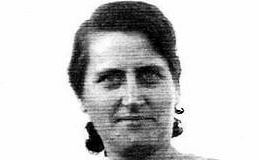
Lila Gladys Young
Murderer Tooba Yahya
Murderer · Canada · 2009
Tooba Yahya was a 41-year-old second wife in the polygamous Shafia household. H…
4 victims
Tooba Yahya
Murderer · Canada · 2009
Tooba Yahya was a 41-year-old second wife in the polygamous Shafia household. H…
4 victims
 Allyson McConnell
Murderer · Canada · 2010
Allyson McConnell was convicted of manslaughter in the bathtub drowning of her…
2 victims
Allyson McConnell
Murderer · Canada · 2010
Allyson McConnell was convicted of manslaughter in the bathtub drowning of her…
2 victims
 Cherrylle Dell
Murderer · Canada · 1995
Cherrylle Dell poisoned her husband, Scott Dell, with antifreeze-laced wine. Sc…
2 victims
Cherrylle Dell
Murderer · Canada · 1995
Cherrylle Dell poisoned her husband, Scott Dell, with antifreeze-laced wine. Sc…
2 victims
 Evelyn Dick
Murderer · Canada · 1944
Evelyn Dick was born to Donald MacLean and Alexandra MacLean on October 13, 192…
2 victims
Evelyn Dick
Murderer · Canada · 1944
Evelyn Dick was born to Donald MacLean and Alexandra MacLean on October 13, 192…
2 victims
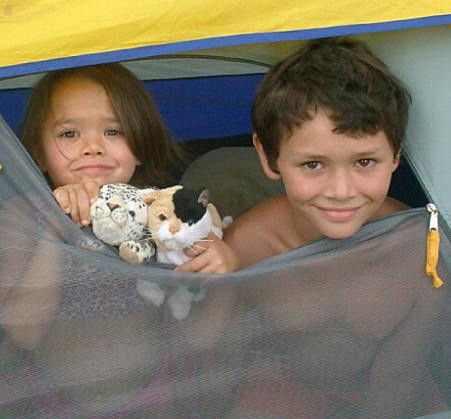 Jane LaMarsh
Murderer · Canada · 2009
Name: Jane LaMarsh Jane LaMarsh was a 50-year-old woman from Wallaceburg, Ontar…
2 victims
Jane LaMarsh
Murderer · Canada · 2009
Name: Jane LaMarsh Jane LaMarsh was a 50-year-old woman from Wallaceburg, Ontar…
2 victims
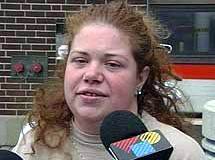 Melanie Alix
Murderer · Canada · 2001
Melanie Alix was a South Shore resident. Her brother, Francois Alix, was 18 mon…
2 victims
Melanie Alix
Murderer · Canada · 2001
Melanie Alix was a South Shore resident. Her brother, Francois Alix, was 18 mon…
2 victims
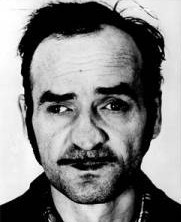 Fritz Honka
Serial killer · Germany · 1971
Fritz Honka Fritz Honka was a German serial killer. He killed at least four pro…
4 victims
Fritz Honka
Serial killer · Germany · 1971
Fritz Honka Fritz Honka was a German serial killer. He killed at least four pro…
4 victims
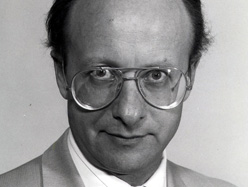 Valery Fabrikant
Mass murderer · Canada · 1992
Valery Fabrikant was a former associate professor of mechanical engineering at…
4 victims
Valery Fabrikant
Mass murderer · Canada · 1992
Valery Fabrikant was a former associate professor of mechanical engineering at…
4 victims
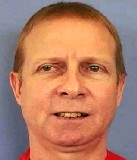 Jeffrey Keller Davis
Murderer · USA · 1991
Jeffrey Keller Davis was sentenced in Greene County, Mississippi, in May 1992 f…
1 victim
Jeffrey Keller Davis
Murderer · USA · 1991
Jeffrey Keller Davis was sentenced in Greene County, Mississippi, in May 1992 f…
1 victim
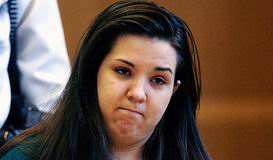 Jennifer Mee
Murderer · USA · 2010
Jennifer Mee became known as the “Hiccup Girl” after she experienced a case of…
1 victim
Jennifer Mee
Murderer · USA · 2010
Jennifer Mee became known as the “Hiccup Girl” after she experienced a case of…
1 victim
 Dawud Mu'Min
Murderer · USA · 1973
Dawud Majid Mu'Min (born as David Michael Allen) was a convicted murderer execu…
2 victims
Dawud Mu'Min
Murderer · USA · 1973
Dawud Majid Mu'Min (born as David Michael Allen) was a convicted murderer execu…
2 victims
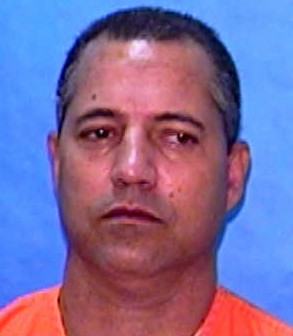 Ronald Palmer Heath
Murderer · USA · 1977
05/24/89 — Ronald Heath and his live-in girlfriend, Penny Powell, drove to Heat…
2 victims
Ronald Palmer Heath
Murderer · USA · 1977
05/24/89 — Ronald Heath and his live-in girlfriend, Penny Powell, drove to Heat…
2 victims
- Gender
- female
- Country
- Canada
- Location
- East Chester, Nova Scotia, Canada
- Date of birth
- 1899
- Age at first offence
- 29
- Characteristics
- abuse, kidnapping
- Victim profile
- Babies
- Method of murder
- Starvation
- Date(s) of murder
- 1928 - 1947
- Years active
- 1928–1947
- Date of arrest
- —
- Status
-
Died in custody
Acquitted at a three-day trial in May 1936; convicted on June 5, 1946 of illegally selling babies to four American couples and fined a total of $428.90; died of leukemia in 1967
Case identification
Lila Gladys Young was also named Lila Gladys Lila Coolen.
Background
Lila Gladys Young was the daughter of devout Seventy-Day Adventist parents. She was born at Fox Point, Nova Scotia, in 1899.
She became a teacher after finishing school and taught school in Fox Point, Nova Scotia. In 1925, at the age of 26, she met William Peach Young and they were married in 1925.
William Peach Young was born on 11 Jan 1898. He was an unordained Seventh-day Adventist minister from Memramcook, New Brunswick. He graduated from the Medical Evangelists College in 1923. He was a self-designated medical missionary, caring for the sick and spreading the gospel along the South Shore.
In December 1927, William graduated from the National College of Chiropractic. Soon after their marriage, with Lila expecting the first of five children, the Youngs moved to Chicago, where William was licensed as a chiropractor in December 1927.
Two months later, they moved back to Nova Scotia and opened the Life and Health Sanitarium in East Chester, forty miles southwest of Halifax. Lila entered service as a professional midwife, and their establishment was soon rechristened the Ideal Maternity Home and Sanitarium, with William acting as the superintendent and Lila as managing director.
Other details
The clients’ arrangements were described as “Mothers Refuge also department for girls. NO PUBLICITY Infants home in connection. Write for literature. East Chester, N.S.”
The home’s brochures promised to shield expectant mothers from gossip, but every service had its price. Married women seeking refuge with the Youngs paid an average of $75 each for delivery and two weeks of convalescence in the early days of operation. Unwed mothers faced a stiffer price.
The Youngs demanded an average of $100 or $200 in advance for room and board, delivery, and arranging subsequent adoptions, plus another $12 for diapers and supplies. They also charged an average two-dollar weekly maintenance fee for warehousing infants between delivery and adoption. If a baby died at the home, the mother was charged $20 for a funeral. The funeral was performed by the Youngs’ handyman at a standing rate of fifty cents per corpse, with white pine butter boxes standing in for coffins.
Girls without the ready cash in hand were sometimes allowed to work off their debts at the home, providing the Youngs with a steady stream of unpaid domestic help.
Medical care was described as shortcuts: Lila and William each billed themselves as doctors on their letterheads. Lila delivered the babies herself, while William knelt at the bedside in prayer. Some clients complained of rough and even brutal handling by Lila. One client recalled that she was physically immense, had an overwhelming presence and a great sense of power, and could strike terror into people. The same passage stated that no one dared challenge her.
The Ideal Maternity Home became a virtual baby factory, hosting scores of unwed mothers averaging age seven-teen. Between 1928 and 1935, Lila reported 148 births and twelve infant deaths at the home. This was described as a mortality rate of 8.1% that nearly tripled Nova Scotia’s 3.1% average.
Between 1937 and 1947, the Youngs banked at least $3.5 million from the adoption (sale) of infants. In the 1930s, they charged an average of $800 to $1,000 per infant, escalating to an average of $5,000 per head during World War II. The 1940s were described as producing $60,000 per year from live-in clients, including a special $50 fee from any mother who specified adoptive parents of a particular religion.
A client who changed her mind in 1946 and sought to get her child back was told the boy had already been placed for adoption, but he might be retrieved “... if the mother could come up with $10,000 in cash.”
By 1943, the Youngs were housing seventy infants on any given day. Their original cottage had grown to a sprawling complex of fifty-four rooms, fourteen bathrooms, and multiple nurseries, valued at $40,000 with no outstanding mortgage. Clients could reserve private or semiprivate rooms, if they were put off by the thought of sleeping on a common ward.
Public health officials had been watching the Youngs for a decade. The first concrete evidence of neglect was described as occurring in 1945, when inspectors reported squalid conditions, swarming flies and filthy bedding, including infants weighing 50% of the norm for their age. Lila responded with charges of harassment.
A new amendment to the Maternity Boarding House Act of 1940 broadened licensing requirements to incorporated companies, and the Youngs’ license application was swiftly rejected. The Ideal Maternity Home was ordered shut down in November 1945. The Youngs continued to operate without a license while their case was on appeal.
U.S. Immigration officers joined the chorus of complaints in early 1945, citing evidence that Lila had smuggled black market babies into the States.
In March (in the early 1940s period described in the record), the Youngs were arraigned on eight counts including violation of the Maternity Boarding House Act and practicing medicine without a license. Their conviction on three counts on March 27 resulted in a fine of $150.
The home and its operation were further described as involving elaborate contracts signed by unwed mothers. These contracts gave William power of attorney and legal authority over their babies and their adoptions. If not signed within 14 days of the birth, the mother was charged an additional $30.00. By the time the girls left the home, their bills often exceeded $300.00.
The record also described billing conditions as “Payment on arrival was a condition, between $100 and $500 for room and board, delivery, and the adoption of the baby.” It also stated it was “an additional $12 for layette, and a baby sitting service of $2 per week (charged in the early days of operation).”
It further stated that “Burial fees of $20 were also charged to cover the cost of the burial of babies that died at the Home.” It specified that “The $20 included $5 toward a shroud, and $15 for the Youngs, who would be present at the burial.” It added that the burial fee included a white pine “coffin.” It stated that “They were ‘lovely butterboxes’, (from the local grocer) mitered and very, very smooth, according to Lila, and always lined with satin.”
The record stated that the opportunity to work off debt, if unable to pay their bill, was an option for the young mothers.
It also stated that the Youngs began to arrange adoption placements across borders. It described U.S. adoption agencies’ rule requiring babies to be placed with families of the same religious background and said that the Youngs “had no problem breaking that rule.” It included verbatim quotations: “You want a Jewish baby? Here’s a Jewish baby.” “You want twins? Here’s twins.” The record described the adopting parents as not asking many questions and as “desperately” wanting a baby or two.
It stated that some adoption rejects—described as including children of mixed race or those with physical defects—were reportedly starved to death on a diet of water and molasses.
It described unreported deaths and disposal practices. Handyman Glen Shatford would later admit burying between 100 and 125 babies in a field owned by Lila’s parents near Fox Point adjoining the Adventist cemetery. Shatford said: “We buried them in rows, he said, so it was easy to see how many there were.” A typical case recalled by Shatford from April 1938 was described as an unnamed infant lying in the Youngs’ tool shed for five days, covered by a box, before it was driven to Fox Point for burial.
The record further described that the RCMP adopted a policy of investigating each reported death at the home in years to come, with the issue of unreported infant deaths.
It also stated that some corpses were tossed into the sea or burned in the furnace of the Ideal Maternity Home.
Timeline
- December 1927 — William was licensed as a chiropractor in Chicago.
- December 1927 — William graduated from the National College of Chiropractic.
- February 1928 — The Youngs opened “The Life and Health Sanitarium - Where the Sick Get well.”
- March 4, 1936 — Lila and William were charged with two counts of manslaughter in the January deaths of Eva Nieforth and her newborn child.
- May 1936 — Both were acquitted at a three-day trial.
- June 5, 1946 — Lila and William were convicted of illegally selling babies to four American couples and fined a total of $428.90.
- November 1945 — The Ideal Maternity Home was ordered shut down; the Youngs continued to operate without a license while their case was on appeal.
- September 23, 1962 — The building scheduled for conversion into a resort hotel burned to the ground.
- 1967 — Lila died of leukemia.
The offence
On March 4, 1936, Lila and William were charged with two counts of manslaughter in the January deaths of Eva Nieforth and her newborn child. The deaths were alleged to have been caused by negligence and unsanitary conditions at the home.
On June 5, 1946, they were convicted of illegally selling babies to four American couples.
Investigation
The Royal Canadian Mounted Police adopted a policy of investigating each reported death at the home in years to come.
In 1945 inspectors reported squalid conditions, swarming flies, filthy bedding, and some infants weighing 50% of the norm for their age.
Following the manslaughter trial, an amendment to the Maternity Boarding House Act of 1940 broadened licensing requirements, and the Youngs’ license application was rejected.
The record described U.S. Immigration officers joining complaints in early 1945, including evidence that Lila had smuggled black market babies into the States.
It described New Jersey officials coming to the aid of efforts to crack down on illegal adoptions and baby smuggling, and it stated that child welfare officials in Canada and the U.S remained on the lookout for unauthorized movement of adopted babies without government approval.
Trial
The manslaughter charges were tried over three days, and both Lila and William were acquitted at the trial in May 1936.
The record also described that, after arraignment on eight counts including violation of the Maternity Boarding House Act and practicing medicine without a license, conviction on three counts on March 27 resulted in a fine of $150.
On June 5, 1946, they were convicted of illegally selling babies to four American couples and fined a total of $428.90.
Sentencing
Lila and William were fined a total of $428.90 after their June 5, 1946 conviction for illegally selling babies to four American couples.
The record also described a fine of $150 following conviction on three counts on March 27.
Appeals
The record stated that the Youngs continued to operate without a license while their case was on appeal.
Outcome
Lila and William were acquitted at a three-day trial in May 1936.
Lila and William were convicted on June 5, 1946 of illegally selling babies to four American couples and fined a total of $428.90.
Aftermath
The record stated that the Youngs filed a $25,000 libel suit against a local newspaper after being exposed to media coverage of her case. Jurors dismissed the suit after brief deliberation.
Following that trial, the Ideal Maternity Home was closed before years end. The Youngs were described as bankrupt and debt-ridden, and they sold off their property and moved to Quebec.
The building scheduled for conversion into a resort hotel burned to the ground on September 23, 1962.
Cancer was described as claiming William’s life before Christmas 1962, and Lila died of leukemia in 1967.
The record stated that Lila’s tombstone bears the legend: “Till We Meet Again.”
It also stated that Lila returned to Nova Scotia and resumed teaching school near Fox Point.
Other details
The record stated that the cemetery burial location was in the Seventh-day Adventist Cemetery in Fox Point, adjacent to where the butter box babies had been buried. The record also stated that this burial was close to “the many babies, in their Butterbox Coffins, who didn’t have a chance to enjoy life.”
Spotted an error, or have more information about this case?