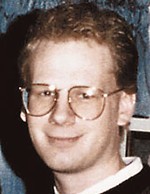
Dustin Lee Honken
Murderer Brian Kevin Rosenfeld
Murderer · USA · 1985
Brian Kevin Rosenfeld Brian Kevin Rosenfeld was sentenced to three concurrent l…
23 victims
Brian Kevin Rosenfeld
Murderer · USA · 1985
Brian Kevin Rosenfeld Brian Kevin Rosenfeld was sentenced to three concurrent l…
23 victims
 Russell Ellwood
Murderer · USA · 1991
Russell Ellwood was a former taxi driver. Authorities suspected him of killing…
20 victims
Russell Ellwood
Murderer · USA · 1991
Russell Ellwood was a former taxi driver. Authorities suspected him of killing…
20 victims
 Robert Martines Perez
Murderer · USA · 1994
Name: Robert Martines Perez · Other name used in proceedings: Robert Martinez P…
15 victims
Robert Martines Perez
Murderer · USA · 1994
Name: Robert Martines Perez · Other name used in proceedings: Robert Martinez P…
15 victims
 Billy Frank Vickers
Murderer · USA · 1993
Billy Frank Vickers Vickers was executed by lethal injection in Texas on Januar…
14 victims
Billy Frank Vickers
Murderer · USA · 1993
Billy Frank Vickers Vickers was executed by lethal injection in Texas on Januar…
14 victims
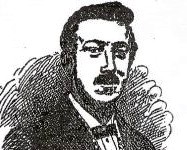 Nicholas Melady
Murderer · Canada · 1868
Nicholas Melady Jr. (1845 - December 7, 1869) was a convicted murderer from Hur…
2 victims
Nicholas Melady
Murderer · Canada · 1868
Nicholas Melady Jr. (1845 - December 7, 1869) was a convicted murderer from Hur…
2 victims
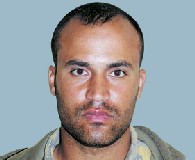 Hicham Raoui
Serial killer · M orocco · 2007
Hicham Raoui was born in 1976 in the region of Aïn Darbane, province of Settat.…
3 victims
Hicham Raoui
Serial killer · M orocco · 2007
Hicham Raoui was born in 1976 in the region of Aïn Darbane, province of Settat.…
3 victims
 Stephen Michael West
Murderer · USA · 1986
Stephen Michael West was sentenced to death in 1987. A jury in Union County fou…
2 victims
Stephen Michael West
Murderer · USA · 1986
Stephen Michael West was sentenced to death in 1987. A jury in Union County fou…
2 victims
 Thomas Miller-El
Murderer · USA · 1985
Defendant: Thomas Joe Miller-El, convicted of capital murder in Texas state cou…
1 victim
Thomas Miller-El
Murderer · USA · 1985
Defendant: Thomas Joe Miller-El, convicted of capital murder in Texas state cou…
1 victim
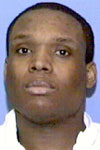 Lamont Reese
Murderer · USA · 1999
Lamont D. “Mont” Reese was a 28-year-old black male. He was scheduled to be exe…
3 victims
Lamont Reese
Murderer · USA · 1999
Lamont D. “Mont” Reese was a 28-year-old black male. He was scheduled to be exe…
3 victims
- Gender
- male
- Country
- USA
- Location
- Cerro Gordo County, Iowa, USA
- Date of birth
- 1968
- Age at first offence
- 25
- Characteristics
- murder for hire, torture, drugs, rape
- Victim profile
- Greg Nicholson, his girlfriend, Lori Ann Duncan, 31, and her two daughters, Kandace Duncan, 10, and Amber Duncan, 6 / Terry DeGeus, 32
- Method of murder
- Shooting
- Date(s) of murder
- July 25/November 4, 1993
- Years active
- 1993
- Date of arrest
- August 30, 2001
- Status
-
Sentenced to death
Sentenced to death on October 11, 2005
Case overview
Dustin Lee Honken was convicted in the slayings of two federal drug informants who once sold methamphetamine for Honken. Honken and his former girlfriend, Angela Johnson, 44, were convicted in federal court for the killings.
One of the informants was Greg Nicholson of Mason City. Nicholson disappeared in June 1993 along with his girlfriend, Lori Duncan, also of Mason City, and Lori Duncan’s two daughters, Kandace Duncan, 10, and Amber Duncan, 6.
The other informant was Terry DeGeus of Britt. DeGeus disappeared months later.
The bodies were discovered in two graves near Mason City in 2000 after Johnson gave information about the locations of the graves to a jailhouse informant.
Honken was sentenced to death on October 11, 2005. Iowa repealed its death penalty law in 1965, and the last execution in Iowa had taken place in 1963.
The offence
Honken was found guilty of the execution-style slayings of two dealers turned informants, Greg Nicholson and Terry DeGeus. Honken was also found guilty of killing Nicholson’s girlfriend, Lori Duncan, and her daughters, Kandace Duncan and Amber Duncan.
During the penalty phase, Lori Duncan’s brother recalled that his father blamed himself for the granddaughters’ deaths and believed: “if he had watched the girls that night, they’d still be with us now,” his son said.
Testimony described the group as being tortured, bound, gagged, and shot in the back of the head, and also described strangling and other assaults connected with the killings. The state medical examiner determined that all five people died of gunshot wounds.
Investigation
A federal grand jury proceeding included testimony from Greg Nicholson against Honken. Authorities later sought the missing persons unsuccessfully.
Robert McNeese provided authorities with two maps, with information given to him by Johnson, pointing to two spots where the bodies were located. The remains were discovered in wooded and farm areas near Mason City.
Excavations and searches
Sept. 11, 1997 — Iowa Division of Criminal Investigation agents excavated property in Hancock County, unsuccessfully attempting to locate the five missing persons.
Arrest
Timeline events included Honken’s arrests on drug charges in March 1993 and subsequent indictments in federal court.
Trial
Honken was prosecuted in federal court. He was expected to be taken to a federal prison in Terre Haute, Indiana, to await his execution.
Honken maintained his innocence at sentencing and accused the judge in his case of having a “death agenda.” He also accused his prosecutors of being “magicians and tricksters” and claimed the case was won by stoking the jury’s passions.
During sentencing, Honken told Bennett that he had taken no persons’ lives and argued against the death sentence.
Jury verdict and convictions
The jury decided Honken deserved the death penalty.
Honken was convicted in October 2004 of murder in the 1993 deaths of five North Iowans.
U.S. District Judge Mark Bennett issued two sentences of death by lethal injection for Honken for his part in killing two young children. Honken was given sentences of life in prison for the murder of three adults.
Sentencing
Timeline
- March 21, 1993 — Britt native Dustin Honken and Timothy Cutkomp, formerly of Mason City, were arrested in Mason City on drug charges.
- March 26, 1993 — Honken was indicted in federal court for alleged methamphetamine trafficking in Iowa from his residence, then in Tempe, Ariz.
- April 20, 1993 — Greg Nicholson testified against Honken before a federal grand jury.
- July 3, 1993 — Angela Johnson of Klemme filed an application for and obtained a permit to buy a handgun.
- July 7, 1993 — Angela Johnson purchased a Tech-9 9 mm handgun at a pawnshop in Waterloo.
- July 26, 1993 — Nicholson, Nicholson’s girlfriend Lori Ann Duncan (31), and her two daughters, Amber (10) and Kandace (6), were reported missing.
- Nov. 5, 1993 — Terry DeGeus (32) of rural Britt was reported missing.
- March 21, 1995 — The original charges against Honken were dismissed because witnesses could not be located.
- Feb. 7, 1996 — Local, state and federal law enforcement officers executed a search warrant at Honken’s Mason City home and discovered a meth lab.
- April 29, 1996 — Honken and Cutkomp were arrested in Mason City for conspiring to manufacture and distribute methamphetamine from 1993 to 1996.
- June 11, 1996 — Chemicals used to manufacture methamphetamine were seized from a storage shed at Johnson’s home.
- Feb. 24, 1998 — Honken was sentenced to 24 years in prison.
- Oct. 9, 2002 — Dustin Honken pleaded innocent to charges of murder.
- Oct. 11, 2005 — Honken was sentenced to death.
- Oct. 13, 2000 — The remains of Lori Duncan, her daughters and Nicholson were discovered buried in a wooded area just off Cerro Gordo County Road S34 west of Mason City.
- Nov. 8, 2000 — The body of DeGeus was discovered in a farm field one mile west of Burchinal.
- October 2000 — Jailhouse informant Robert McNeese provided authorities with two maps pointing to two spots where the bodies were located.
- July and August 2001 — Indictments charging Honken and Johnson with murder were issued.
- April 24, 2002 — U.S. District Judge Mark Bennett ruled that any evidence found as a result of jailhouse notes from Robert McNeese was inadmissible in the case against Johnson.
- Feb. 13, 2003 — Federal prosecutors argued in an appeal that Robert McNeese was not a government agent when obtaining the two locations of the five murdered victims.
- Feb. 18, 2003 — A federal judge denied a request to release the remains of the five victims, ruling the bodies were key evidence in the on-going cases.
- June 2, 1997 — Honken pleaded guilty to one count of conspiracy to manufacture and distribute methamphetamine and one count of attempting to manufacture the drug.
- March 1994 — Cutkomp was sentenced to four years and six months on drug charges.
- July 25, 1993 — Angela Johnson showed up at Duncan’s home posing as a cosmetics saleswoman who was lost, let into her home, and Honken followed, brandishing a handgun.
- July 1993 — Honken agreed to plead guilty to federal drug charges, and the week before he was scheduled to appear Nicholson disappeared.
- Late October — Honken was transported to the federal death row in Terre Haute.
- October 2004 — Honken was convicted.
Appeals
Assistant U.S. Attorney C.J. Williams said the average length of appeal for federal death penalty cases is between six and seven years.
Outcome
Honken was sentenced to death by lethal injection on October 11, 2005.
“I have committed many wrongs ... but never have I taken another life,” he said.
“I have taken no persons’ lives,” Honken told Bennett during his sentencing, which lasted just over an hour. “You believe me guilty, but it is not so.”
“I have committed many wrongs,” Honken said, “but never have I taken another life.”
Honken told Bennett that he had destroyed and withheld evidence, but he said he only found out about the murders after the fact.
At sentencing, Honken maintained his innocence and accused the judge in his case of having a “death agenda.”
Honken also called his prosecutors “magicians and tricksters” and said they won their case by stoking the jury’s passions.
Aftermath
Honken wrote journal entries while on death row. The journal entries were published through Death Row Speaks, an anti-death penalty web site founded in 2001 by federal death row inmates.
Excerpts from Honken’s journal included the following, written as follows:
August 3, 2006
“I just got back from my visit with my kids. It would be impossible for me to explain the melancholy I feel. I visited with them, my mother, and my sister the last couple of days. The whole while I was talking with my kids I felt this great crushing weight of despair upon me for failing them so. I was so utterly disgusted with myself this morning for being such a failure that it took every single ounce of my will just to move. I am so sick with myself for letting them down that I wish myself non-existent. I can't think of no other point in my life where I have been so troubled as I have been over this past month. A tide of contempt for myself has assailed me for many days now. I have realized my unrivaled genius for throwing my life away, perhaps it is the only thing I have ever been good at. I do not write for pity, I write to shame what is left of myself. With every fiber, I have wished to start anew, to turn right instead of left. But the past is immutable and madness counts those that dwell too long there. I can say with the utter sincerity of a broken and humbled man that I deeply regret every single transgression I have ever done in my life no matter how small. When those people finally get around to killing me they'll realize only the shell of me remains, the heart of me died long ago.”
August 10, 2006
“It's two O'clock in the mourning and I'm still up. Why? Well, because some rotten no-good piece of work below my cell keeps pounding on his stainless steels shower wall every twenty minutes so none of us can go to sleep. Even though he is on the floor below me it sounds like a gong going off in my room. He's doing it to get at some guy below him but in the process is torturing all of us around him. I hollered at him through the vent that connects our rooms to please stop banging on the shower but he just lied and blamed it on the guy below him he is beefing with. He's a liar and a coward, real convicts do not do cell warrior stuff like that, they wait and deal with the problem when they can do physical combat. Just making noise or yelling slights at a person is what cowards do. Any real convict always considers other around him and conducts himself accordingly to not infringe upon others' prison time. Over the years I've punished a few guys for being disrespectful, stupid, or for doing something to one of my friends. Several of them had no clue whatsoever that it was coming or that I was their enemy. I used to really enjoy punishing someone I disliked, but as I have gotten older I just want to be left alone, in peace.”
Honken was on death row in Terre Haute, Indiana.
Angela Johnson was also sentenced to death and was being held at a prison in Fort Worth, Texas.
Other details
Honken’s background and drug dealing
Dustin Honken was described as a community college chemistry whiz who began manufacturing methamphetamines with his brother and a childhood friend in 1992.
He sold several pounds of the stimulant to two Iowa men, Terry DeGues and Greg Nicholson.
Honken started his methamphetamine operation in Arizona and brought the product to Iowa.
Additional testimony and statements
Fred Tokars, who was serving life for murdering his wife, testified at Honken’s trial in 2004. Ron McIntosh also testified, and he had an extensive criminal record.
McNeese testified about what he told Johnson.
“I told her I had been in prison a long time,” he said. “I knew a lot of people. I told her she would have to describe how the crimes were committed, what the people were wearing when they were killed and where the bodies were located.”
Tokars testified that Honken told him:
“I killed my rats,” Honken told federal prisoner Fred Tokars, who is serving life for murdering his wife. “Honken used Johnson to get to the victims.”
A tape played at Honken’s trial, recorded by a cooperating inmate witness, revealed Honken enjoyed killing. It stated:
“It’s like getting high,” he said.
Tokars described Honken’s statements about strangling and the presence of children and also quoted Honken:
“Dustin said that when he was done taping, he hit Nicholson over the head with a pistol and strangled him,” said Tokars.
Tokars testified that Honken said:
“Tokars also testified that Honken told him Johnson later arranged to meet DeGeus by telling him that she and Honken had broken up and that she wanted to talk about getting back together with DeGeus.”
Tokars testified Honken asked him to contact someone from “The Dixie Mafia” to kill someone in the fall of 1998.
McIntosh testified that Honken told him:
“I strangled the rat and his girlfriend,” McIntosh said Honken told him. “Kate strangled the children because they wouldn't shut up.”
McIntosh quoted Honken’s reply about the name “Kate”:
“No, the one that is the mother of my daughter,” referring to Johnson, McIntosh testified.
Honken’s discussions included involvement of a rope and a gun in a canvas bag, and Honken’s statements about a rope or a cord used to strangle the victims.
Johnson attempted suicide when she learned she had been double-crossed.
Repetition notes on the record cleaning
The record contained duplicated fragments and run-on navigation text, but all substantive facts, names, ages, and quoted material were preserved and separated into case sections without repeating the same sentence twice.
Spotted an error, or have more information about this case?