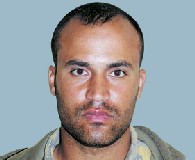
Hicham Raoui
Serial killer Abdelaâli Hadi
Serial killer · M orocco · 2001
Abdelaâli Hadi was a homeless man living near the place where the bodies of the…
9 victims
Abdelaâli Hadi
Serial killer · M orocco · 2001
Abdelaâli Hadi was a homeless man living near the place where the bodies of the…
9 victims
 Edson Isidoro Guimaraes
Serial killer · Brazil · 1999
Edson Isidoro Guimarães was a Brazilian nursing assistant and nurse’s aide at S…
131 victims
Edson Isidoro Guimaraes
Serial killer · Brazil · 1999
Edson Isidoro Guimarães was a Brazilian nursing assistant and nurse’s aide at S…
131 victims
 Javed Iqbal
Serial killer · Pakistan · 1998
Javed Iqbal (born 1956 in Lahore, Punjab, Pakistan; died October 8, 2001, in La…
100 victims
Javed Iqbal
Serial killer · Pakistan · 1998
Javed Iqbal (born 1956 in Lahore, Punjab, Pakistan; died October 8, 2001, in La…
100 victims
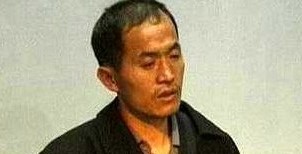 Yang Xinhai
Serial killer · China · 2000
Yang Xinhai (simplified Chinese: 杨新海; pinyin: Yáng Xīnhǎi; 17 July 1968–14 Febr…
67 victims
Yang Xinhai
Serial killer · China · 2000
Yang Xinhai (simplified Chinese: 杨新海; pinyin: Yáng Xīnhǎi; 17 July 1968–14 Febr…
67 victims
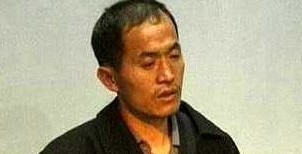 Yang Xinhai
Serial killer · China · 2000
Yang Xinhai (simplified Chinese: 杨新海; pinyin: Yáng Xīnhǎi; 17 July 1968–14 Febr…
67 victims
Yang Xinhai
Serial killer · China · 2000
Yang Xinhai (simplified Chinese: 杨新海; pinyin: Yáng Xīnhǎi; 17 July 1968–14 Febr…
67 victims
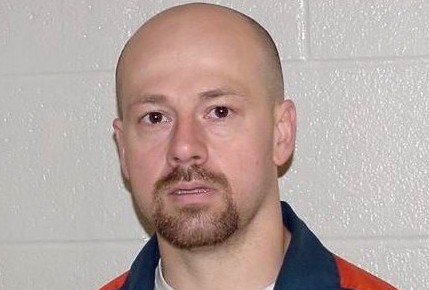 John Thomas Wolfenbarger
Mass murderer · USA · 2002
John Thomas Wolfenbarger, 31, of Detroit, was convicted of murdering a jeweler…
5 victims
John Thomas Wolfenbarger
Mass murderer · USA · 2002
John Thomas Wolfenbarger, 31, of Detroit, was convicted of murdering a jeweler…
5 victims
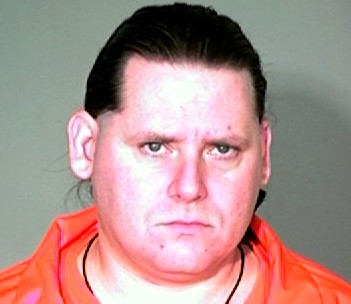 Darrel Pandeli
Murderer · USA · 1992
Darrel Pandeli was convicted of murder and sentenced to death, and his case ret…
2 victims
Darrel Pandeli
Murderer · USA · 1992
Darrel Pandeli was convicted of murder and sentenced to death, and his case ret…
2 victims
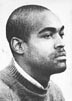 John Hicks
Murderer · USA · 1985
John Hicks was executed by the state of Ohio on November 29, 2005, by lethal in…
2 victims
John Hicks
Murderer · USA · 1985
John Hicks was executed by the state of Ohio on November 29, 2005, by lethal in…
2 victims
 Brian Kinder
Murderer · USA · 1990
Defendant: Brian Kinder On Friday, December 21, 1990, at about 6:30 p.m., Kinde…
1 victim
Brian Kinder
Murderer · USA · 1990
Defendant: Brian Kinder On Friday, December 21, 1990, at about 6:30 p.m., Kinde…
1 victim
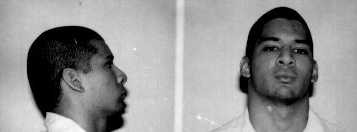 Derek Jermaine Guillen
Homicide · USA · 1998
Name: Derek Jermaine Guillen · TDCJ Number: 999310 · Date of Birth: 10/20/1980…
1 victim
Derek Jermaine Guillen
Homicide · USA · 1998
Name: Derek Jermaine Guillen · TDCJ Number: 999310 · Date of Birth: 10/20/1980…
1 victim
- Gender
- male
- Country
- M orocco
- Location
- Settat, Chaouia-Ouardigha, M orocco
- Date of birth
- 1976
- Age at first offence
- 31
- Characteristics
- alcohol, rape
- Victim profile
- Fatima Zahra Hajjaj, 20 / Nezha Mansar, 22 / Nawal Taâlabi, 22
- Method of murder
- Strangulation
- Date(s) of murder
- February 2007 - January 2008
- Years active
- 2007–2008
- Date of arrest
- March 17, 2008
- Status
-
Sentenced to death
Sentenced to death À Settat (maroc) entre le 2 janvier 2007 et le 3 janvier 2008
Background
Hicham Raoui was born in 1976 in the region of Aïn Darbane, province of Settat. He was the younger sibling of a sister and a brother. His father was absent and repudiated his mother before she had given birth to him; the mother did not benefit from the marital home. His mother took Hicham and her other two children to their grandfather, who served as a caretaker at a primary school.
His early life included moving from douar Darbane to the quartier Al Amal. At the age of seven, Hicham was enrolled in school Tawhid. He did not continue beyond the fifth year of primary education.
For work, Hicham and his mother and grandfather placed him with a bicycle and moped repairer because they could not afford the money for school supplies and clothing. He did not like that work, and he later worked as a mechanic and then as a tinsmith (tôlier). He spent five years learning the tinsmith trade, and he abandoned it in 1996 when he was twenty years old.
In order to earn money and help support his grandfather, his mother, his sister, and his brother, he became a street vendor (marchand ambulant) until 2003. In 2003 he left Settat to earn money elsewhere. On a bus, he arrived in douar Khemiss Aït Aâmira in the Agadir region and worked in agriculture. He stayed there for seven months and then went to Marrakech. In his region he worked in an olive oil mill. After several months he returned to his hometown, Settat, and resumed his street vending.
In the quartier Al Amal where he lived with his family, at the Souk Makro, Souk D’hab and Souk Chtayba where he carried out his commerce, people who knew him described him as a discreet man without problems who was more or less closed in on himself. He did not smoke and did not take drugs.
In 2005, at twenty-nine years old, Hicham began to drink alcohol. “Quelques bières lui suffisaient pour se sentir libre et draguer les filles… ” was said to ALM by “un jeune qui le connaissait au Souk D’hab”. The narrative then connected alcohol use to later events, including that he would drink alcohol, feel free, and flirt with girls.
The offence
Hicham Raoui raped and killed three women described as young girls from the same neighbourhood.
Three bodies were discovered in connection with killings involving sexual assault and sodomy. The first victim was killed after being raped and was described as having been “only sodomized” and killed by “asphyxie mécanique” (mechanical asphyxiation). The second and third victims were similarly described as “only sodomized” and killed by mechanical asphyxiation.
Hicham Raoui was described as having been a serial killer, with an arrest leading to the identification of the author of three murders.
Investigation
First murder investigation and identification issues
The first body was discovered on the Saturday 11 February 2007 near the quartier des abattoirs, close to souk Chtayba. The first victim was Fatima Zahra Hajjaj, a twenty-year-old woman who lived in the quartier Annahda. She had disappeared for eleven days. The narrative described that on Friday 2 February 2007 evening she returned home after a day of work, and a quarter of an hour later she left to buy a charger for her mobile phone but did not give further signs of life until discovery of her corpse.
The investigators initially found no trace of violence on her body. For the police judiciaire investigators in Settat, “une chose est certaine : Fatima Zahra a été violée.” Her body was evacuated to the medico-legal hospital in Casablanca. The autopsy report concluded that she had been “uniquement sodomisée” and killed by “asphyxie mécanique.” The account explained that her killer had “occlus la bouche et le nez pour la liquider.”
The identity of the author remained unknown at that stage. The investigation did not identify him not because investigators had not deployed sufficient effort, but because the advanced state of decomposition had not allowed the medico-legal doctor to collect traces of semen or a fingerprint evidence that could facilitate identification.
Second murder investigation
After the first discovery, the body of another young woman aged twenty-two was discovered “sur la route nationale n°9.” The second victim also lived in the same quartier as the first. The account described that this led to terror among residents of the quartier Annahda believing a serial killer targeted their daughters, and investigations initially remained without result.
The second victim was later identified as Nezha Mansar, aged twenty-two years and described as single. Her father was said to be an instructor at the primary school Sidi Abdelkrim.
The narrative reported that Nezha had obtained her diploma of commerce at the Institut spécialisé de technologie appliquée (ISTA) that year. Her father told ALM that Nezha left home with the intention of going to the Post Office to collect “quelques lettres réponses” for companies she had contacted with job applications. He stated she went out around 16 hours on Monday 11 February. He questioned why the corpse was found in a place with no relation to the route she intended to travel between her home and the Post Office.
The narrative included a question of whether she had been taken under threat of a white-bladed weapon, and stated that “Seul le meurtrier dispose de la réponse.”
To investigate the second killing, police investigators of the PJ in Settat focused on repeat offenders who had previously served prison sentences for rape. The account identified Hicham Raoui as part of those repeat offenders, having previously received a one-year prison sentence for the rape of the nurse.
Hicham Raoui was addressed as being detained and later subjected to DNA analysis based on saliva sampling. An account said an arrest took place on Sunday 17 February in the afternoon. An saliva sample was collected for DNA analysis, and he was photographed before being released because there were no proofs linking him to the crime at that time. It was also stated that the police made substantial efforts to elucidate the new murder and that their head in 2004 had led an investigation into the murder of nine adolescents solved with the arrest of the paedophile and serial killer Abdelali Hadi, and that this head suspected an unusual killer, possibly a serial killer, based on the emerging circumstances.
Third murder and DNA match
On Tuesday 11 March 2008, the third body was discovered in a pit covered with trees behind the quartier industriel, not far from Oued Abou Moussa. The third victim was Nawal Taâlabi, aged twenty-two years, described as an engineering institute student (Institut spécialisé de technologie appliquée).
The narrative described the final known activities of Nawal Taâlabi: on Sunday 9 March she had accompanied her sister, a pharmacist, who was staying with her paternal aunt. The aunt later said that when they arrived near “Kissariat Chaouia,” about one and a half kilometers from their parents’ home, the aunt asked her to return home and handed her ten dirhams, asking her to take a small taxi. Nawal replied that she would return on foot. Around 21 h 19 the pharmacist called Nawal, and Nawal answered in a low voice. When the pharmacist asked her to return home, the mobile call was ended and Nawal’s phone no longer responded.
The family alerted the father, who was in Nador. He took the coach to reach Settat on Monday evening and arrived Tuesday morning. His father led him to a vacant lot next to Oued Ben Moussa, where he discovered his daughter’s body in a pit covered with wild plants.
Investigators conducted initial crime scene observations and noticed that Nawal had been sodomized and had lost her virginity. They collected a saliva sample from the young woman and a drop of semen on her left cheek. The sample was sent to the scientific and technical laboratory in Casablanca, and the body was evacuated to the medico-legal hospital in the same city. The autopsy report concluded she had been sodomized, as in the two other cases, and she had lost her virginity.
The DNA analysis and comparison with samples taken from repeat offenders who had been questioned after the second body’s discovery produced the key. It was found that the DNA matched that of Hicham Raoui.
Hicham Raoui was quickly arrested and submitted to interrogations. He confessed he was the killer of the three young girls, recognized having “racolées” (recruited/picked up), and said each victim accompanied him willingly to where their bodies were discovered.
The narrative included details of how he described the second victim: she was accompanied by a girl and two boys, and he said she had not become familiar with the second boy, which was why she preferred to walk away from them. It was described as the moment when he approached her, encouraged her to accompany him, and used seduction. She then accompanied him to RN n°9 near a petrol station.
Concerning the third victim, he told investigators that she accompanied him even in a small taxi up to the road giving access to the vacant lot next to Oued Ben Moussa, in a way described as similar to the first victim. He also stated that he preferred sodomy but did not know why he ended up smothering his victims.
The narrative stated that when asked why he had not killed the nurse, he said he released her when he heard a noise, and that this noise saved a life “contre un plaisir qui enterre d’autres !”
Additional rape case investigation preceding the murders
A separate earlier rape case involving a nurse was connected to repeat offender profiling.
On Tuesday 16 January 2007 in the afternoon, a young nurse aged twenty-four arrived at the police station. The account described that she was in a deplorable state and with tears in her eyes, and that she stated she had been raped by a “beau gosse.” She left the nursing institute after finishing that day’s courses to take her usual route home in the quartier Mabrouka. When she arrived near the Pizzeria on boulevard Hassan II, she met a young man described as a tall strong man, charming and well dressed. He presented himself as a police inspector in civilian clothes. He showed her a card with two diagonal lines, one red and the other green. The narrative explained the card was only delivered by a sports club.
He whispered “deux mots mielleux” and invited her to drink something. She refused, and the tone of the interaction shifted to vulgar words. She begged him to let her be. She felt as if the ground opened to swallow everyone around her. She struggled to loosen the grip of her assailant, in vain, and was described as becoming like “un poulet.” He led her to a vacant lot next to souk Chtayba, where he sodomized her “atrocement” before releasing her. She filed a complaint with the PJ in Settat.
Three weeks passed without results. The narrative stated it was not due to incompetence, but due to time and insufficient elements to determine the proper track. After discovery of Fatima Zahra Hajjaj’s body, investigators were intrigued by earlier events.
The narrative further stated that after twenty-two days from the nurse’s complaint (five days after Fatima Zahra Hajjaj’s disappearance and six days before discovery of her corpse), the nurse encountered the person she accused. She immediately went to the police prefecture and alerted the brigade handling the case. Without losing time, they accompanied her to the place where she had seen him, and arrested him on Thursday 7 February 2007. The account states the person arrested was Hicham Raoui.
Arrest
Hicham Raoui was arrested after the nurse’s rape complaint on Thursday 7 February 2007, after she encountered him about twenty-two days after filing her complaint.
After the second murder discovery, Hicham Raoui was also interpellated on Sunday 17 February in the afternoon. His saliva sample was taken for DNA analysis and he was photographed. He was released because no evidence linked him at that time.
After the third murder, following a DNA match to samples from Hicham Raoui, he was arrested and subjected to interrogation on an unspecified date in the narrative between the DNA match and his eventual confession.
Trial
Trial relating to rape of the nurse
Hicham Raoui was “traduit devant la justice” after his arrest for the nurse rape case and was condemned to one year of “prison ferme.”
The narrative said he completed his twelve months behind prison walls on Thursday 7 February 2008.
The narrative also asserted that he denied the rape during his trial before the criminal chamber near the Court of Appeal of Settat, stating “Et s’il avait reconnu cet acte de viol contre elle devant la police judiciaire, il l’a nié devant la Chambre criminelle près la Cour d’Appel de Settat.” It stated that the nurse’s testimony had not convinced the court. It states “A la fin de l’examen de son dossier, la cour l’a condamné à un an de prison ferme.”
Trial and death sentence for the triple murder
After his arrest tied to DNA evidence, the account stated that he confessed to killing three young girls and he was condemned to death, in connection with the triple murder.
Sentencing
Hicham Raoui received a one-year prison sentence for rape in the nurse case, and later received a death sentence for the triple murder.
Outcome
Hicham Raoui was sentenced to death for a triple killing described as involving three young girls.
Aftermath
The narrative described that residents of Settat were relieved after the arrest of a serial killer. It also described the earlier fear among residents of the quartier Annahda that a serial killer targeted their daughters.
Timeline
- 16 January 2007 — A twenty-four-year-old nurse arrived at the police station and said she had been raped.
- 2 February 2007 — Fatima Zahra Hajjaj returned home after work and left shortly after to buy a phone charger.
- 11 February 2007 — Fatima Zahra Hajjaj’s body was discovered near the quartier des abattoirs, close to souk Chtayba.
- 7 February 2007 — Hicham Raoui was arrested after the nurse identified him following her earlier complaint.
- 7 February 2008 — Hicham completed his twelve months of imprisonment behind bars.
- 13 February 2008 — A corpse of a young girl was found near a petrol station close to national road n°9; the victim was described as having been sodomized and killed by mechanical asphyxiation.
- 17 February — Hicham Raoui was interpellated in the afternoon; saliva was taken for DNA analysis and he was photographed before release.
- 11 March 2008 — The third body was discovered in a covered pit behind the quartier industriel, not far from Oued Abou Moussa.
- 9 March 2008 — Nawal Taâlabi left after accompanying her sister; she did not return and her phone was later ended and unreachable.
- 20 March 2008 — Police announced they had arrested a serial killer implicated in the triple murder.
- 28 March 2008 — An article described Hicham Raoui’s background and the triple murder sequence.
Other details
The account named Fatima Zahra Hajjaj as an employee in a cable company, aged twenty, living in the quartier Annahda.
The narrative also described Nezha Mansar as having been found near national road n°9; her father questioned the location relative to her planned route.
In the discussion of Fatima Zahra Hajjaj’s case, the narrative explained that because of decomposition, investigators could not collect sperm or fingerprint evidence.
For the nurse case, the account included the nurse’s description of her assailant presenting as an inspector and showing her a sports club card with two diagonal lines (one red and one green), after which she was invited to drink and then raped.
The narrative quoted the nurse’s claimed assailant description as a “beau gosse.”
A police-source statement said: “Nous venons d’arrêter le mis en cause et nous le soumettons encore aux interrogatoires”, and another statement added: “Sans révéler de détails sur l’affaire, la même source a affirmé que le suspect n’avait pas manifesté la moindre résistance devant les enquêteurs et avait déballé facilement comment il a commis ses crimes.”
The narrative also included: “Tout d’un coup, à la salle de trafic, le téléphone sonne.” Another detail described the victim Fatima Zahra Hajjaj’s clothing: she was wearing a djellaba while her pantalon and maillot had been removed.
The narrative included: “une chose est certaine : Fatima Zahra a été violée.” and “occlus la bouche et le nez pour la liquider.”
It also included the line: “une question de temps” describing why there was no immediate identification in the nurse rape case.
For Hicham Raoui’s arrest after DNA match, the narrative included that “Il a avoué être bel et bien le tueur des trois jeunes filles.”
The narrative included the statement: “Il semble qu’elle ne s’est pas familiarisée avec le deuxième garçon, a-t-il précisé.” It also included: “Et pourquoi il n’a pas liquidé l’infirmière ? Il l’a relâchée quand il a entendu un bruit.”
The criminal outcome in the status field matched a death sentence, described as “Sentenced to death” at Settat (maroc).
Spotted an error, or have more information about this case?