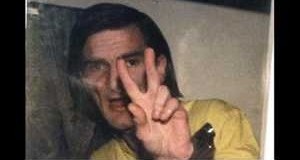
Howard Hughes
Murderer John Cooper
Murderer · United Kingdom · 1985
John Cooper was a serial killer from Milford Haven, Pembrokeshire. Cooper was c…
4 victims
John Cooper
Murderer · United Kingdom · 1985
John Cooper was a serial killer from Milford Haven, Pembrokeshire. Cooper was c…
4 victims
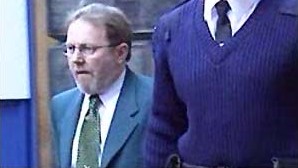 Andrew Walker
Murderer · United Kingdom · 1985
Royal Scots corporal Andrew Walker killed three Army colleagues in a payroll ro…
3 victims
Andrew Walker
Murderer · United Kingdom · 1985
Royal Scots corporal Andrew Walker killed three Army colleagues in a payroll ro…
3 victims
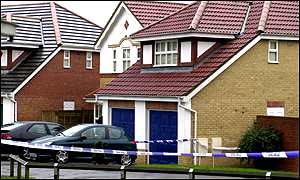 Anthony Smith
Murderer · United Kingdom · 2001
Anthony Smith was a former sergeant in the Coldstream Guards. He had left the C…
3 victims
Anthony Smith
Murderer · United Kingdom · 2001
Anthony Smith was a former sergeant in the Coldstream Guards. He had left the C…
3 victims
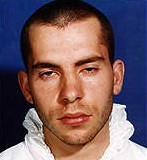 David John Copeland
Murderer · United Kingdom · 1999
David John Copeland was born in Isleworth, in the London Borough of Hounslow, a…
3 victims
David John Copeland
Murderer · United Kingdom · 1999
David John Copeland was born in Isleworth, in the London Borough of Hounslow, a…
3 victims
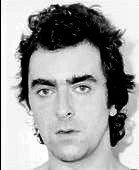 John Cannan
Murderer · United Kingdom · 1986
John Cannan Susannah “Suzy” Lamplugh was a British estate agent reported missin…
3 victims
John Cannan
Murderer · United Kingdom · 1986
John Cannan Susannah “Suzy” Lamplugh was a British estate agent reported missin…
3 victims
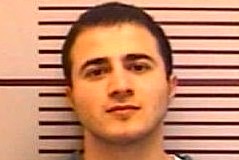 Alexander Pogosyan
Mass murderer · USA · 1998
Alexander Pogosyan was convicted murderer in the so-called Labor Day Massacre i…
5 victims
Alexander Pogosyan
Mass murderer · USA · 1998
Alexander Pogosyan was convicted murderer in the so-called Labor Day Massacre i…
5 victims
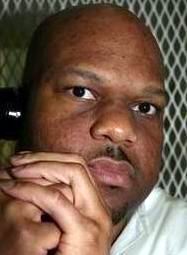 George Alarick Jones
Murderer · USA · 1992
April 13, 1993 — George Alarick Jones and three accomplices went to the Red Bir…
2 victims
George Alarick Jones
Murderer · USA · 1992
April 13, 1993 — George Alarick Jones and three accomplices went to the Red Bir…
2 victims
 Rhonda Glover
Murderer · USA · 2004
Rhonda Glover was tried and convicted for the murder of her on-again, off-again…
1 victim
Rhonda Glover
Murderer · USA · 2004
Rhonda Glover was tried and convicted for the murder of her on-again, off-again…
1 victim
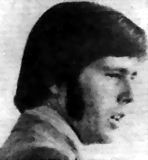 Wayne Clifford Boden
Serial killer · Canad a · 1969
Wayne Clifford Boden was a Canadian serial killer and rapist active from 1968 t…
4 victims
Wayne Clifford Boden
Serial killer · Canad a · 1969
Wayne Clifford Boden was a Canadian serial killer and rapist active from 1968 t…
4 victims
 Clifford Boggess
Murderer · USA · 1986
Clifford Boggess was convicted of murdering Moses Frank Collier, an 86-year-old…
2 victims
Clifford Boggess
Murderer · USA · 1986
Clifford Boggess was convicted of murdering Moses Frank Collier, an 86-year-old…
2 victims
 Russell Bucklew
Murderer · USA · 1996
Russell E. Bucklew was convicted in State of Missouri v. Russell E. Bucklew, 97…
1 victim
Russell Bucklew
Murderer · USA · 1996
Russell E. Bucklew was convicted in State of Missouri v. Russell E. Bucklew, 97…
1 victim
- Gender
- male
- Country
- United Kingdom
- Location
- Llandudno, Wales, United Kingdom
- Date of birth
- 1965
- Age at first offence
- 30
- Characteristics
- rape
- Victim profile
- Sophie Hook, 7
- Method of murder
- Strangulation
- Date(s) of murder
- July 29, 1995
- Years active
- 1995
- Date of arrest
- Same day
- Status
-
Life imprisonment
Sentenced to life in prison on July 18, 1996
Case record: Howard Hughes
Background
Howard Hughes (born 1965 in Llandudno, Wales) was the youngest of four children born to Gerald and Renee Hughes. He had three older sisters. His father ran a construction firm and was described as wealthy.
Hughes was born with a genetic disorder that caused him to grow at an abnormally quick rate. When he started primary school in 1969, he gained a reputation for being aggressive with other pupils.
Hughes was expelled from several primary and secondary schools for violent attacks on other pupils. His father offered the headteacher of one private school double fees to keep him on, but the headteacher refused to allow Hughes to remain at the school. Hughes regularly played truant from school. He and other tearaways stole items including bicycles from garden sheds, and he sold stolen bicycles from the garden of the family home. When his parents divorced, he moved into his mother’s house.
Hughes came to police attention in 1981, when at the age of 16 he was arrested for strangling a seven-year-old boy so fiercely that he was rendered unconscious and had to go to hospital. He was convicted of assault and was placed on probation.
After leaving home, he moved into a flat in Llandudno and began a lengthy feud with his female next-door neighbour. Hughes would peer over the fence when she was sunbathing, threatened to “blow her head off” with a gun, and regularly played loud music.
In 1985, Hughes was briefly admitted to a mental hospital in Northamptonshire but failed to make any real progress.
According to a friend, Hughes continued to walk the streets of Llandudno and look up girls’ skirts while standing below a footbridge, as well as peering into the dormitory at an all-girls boarding school. By this stage, local schoolchildren gave him the nickname “Mad Howard”.
Hughes had been aware of sexual deviance for 15 years before Sophie Hook was killed. Police had been unable to secure convictions in earlier matters because the parents of young victims were reluctant to allow them to testify. In the two-and-a-half years before his arrest, Hughes allegedly attacked or threatened at least five girls. A day before Sophie Hook disappeared from the house in Llandudno, north Wales, he was suspected of having tried to abduct a six-year-old girl but was not charged.
In 1987, Hughes was charged with raping a 14-year-old girl, but the case collapsed due to a lack of evidence. After the unanimous verdicts in the Sophie Hook trial, jurors were told that Hughes had been charged with raping a 14-year-old girl nine years ago, and that charge would be allowed to lie on the file.
The offence
Sophie Hook was seven years old.
On 29 July 1995, Sophie travelled to Llandudno with her family. She was allowed to sleep in the back garden in a tent that night with two other children, both family members. In the morning, Sophie was missing. Her naked body was later found washed up on the beach at Craig-y-Don at just after 7.00am by a man walking his dog. Sophie’s parents identified her body later that day.
A post mortem revealed that Sophie had been raped and strangled. Her injuries included injuries inflicted before she died. Sophie had been raped, beaten about the head and strangled. Her attacker stripped her of her Winnie the Pooh nightdress. It was alleged that the attacker “almost certainly” broke one of Sophie’s arms in an act of deliberate violence.
The trial described the family day: Sophie travelled with her mother, Julie. Mrs. Hook later returned to Cheshire, but the remaining children were enthusiastic about the tent. Sophie’s aunt and uncle, Danny and Fiona Jones, agreed that Sophie, her elder sister, and their two cousins could spend the night in the tent. They ate an evening barbecue and played party games, including charades. The children settled down to sleep at about 12.30am on July 30, and the patio door to the house was left open in case they wanted to abandon the adventure.
At around 12.20am, Sophie’s six-year-old cousin decided he wanted to sleep indoors. When Mr. Jones checked the remaining three at 12.45am, they were all seemingly asleep. He zipped up the tent and went to bed. Sophie’s disappearance was not detected until 8.15am. At first she was thought to be hiding. Later, the absence was reported to police after it was noticed she had left behind her favorite cuddly toy, “Blankies”.
It was alleged that the attacker abducted or lured Sophie away from the garden in the middle of the night, killed her, disposed of the body, and concealed her clothes. Hughes possessed resourcefulness and cunning, prosecutors said.
It was also alleged that Hughes left Sophie’s body in the sea as a deliberate means of erasing scientific evidence that might link him to her murder. The crown rejected any suggestion that Sophie had accompanied him willingly, and argued that she could be lifted without instantly waking. Prosecutors said by the time she might have realized that it was not so, it would have been too late.
Sophie was found less than a mile away.
Investigation
Hughes was arrested within hours of Sophie Hook’s body being found. He was charged with murder two days later.
The prosecution said there was no forensic evidence linking Hughes to Sophie's death, but it presented information from three witnesses. Gerald told the jury that Hughes admitted the murder shortly after he was arrested and held in custody at a local police station.
Jonathan Carroll, described as a 30-year-old thief who was in prison at the time he testified, told the jury he had seen Hughes carrying a hessian sack along a Llandudno street on the night of Sophie Hook’s murder and that he had caught a glimpse of a body in the sack.
Michael Guidi, described as a convicted child sex offender, testified that Hughes had boasted to him some time earlier that he would like to “rape a girl of 4 or 5”.
The trial included details of the injuries Sophie sustained. However, prosecutors said there was no forensic evidence linking Hughes to these injuries.
The prosecution described the alleged confession and the police response. It alleged Hughes consistently denied any involvement in Sophie's death in the ensuing four days until the alleged confession to his father. The prosecution said Hughes’s description of his route home enabled police to find Sophie’s knickers and nightdress.
Later, during a search of Hughes’s home, officers found a collection of girls’ underwear hidden in a stone wall.
The prosecution said scientific tests on Hughes’s denim jacket, jeans and shoes could not be carried out because they had been washed, apparently by his mother, Renee, shortly after his arrest. Chemical traces found on items were described as similar to those in a jar of Jungle Formula recovered from Hughes’s home.
The prosecution also described an identity parade on Aug 2. It alleged that Hughes began shaking and told another man in the line-up: “You won’t like what I’ve done.”
A reference in the proceedings indicated that Hughes lived with his mother in Yerburgh Avenue, Colwyn Bay, and described him as an unemployed gardener.
Det. Supt Jones praised Gerald Hughes after the verdict, describing him as a man of honor who had done a brave thing. Det. Supt Jones said: “He is a man of honor who did a very brave thing. He must have searched his conscience for a very long time, but he came up with the right answer.”
The detective who led the investigation insisted that police could have done nothing more to apprehend Hughes before the murder. Det. Supt Eric Jones said: “Everything that could have been done was done.”
The Home Office said later that the issue of tighter supervision for pedophiles was under consideration.
Arrest
Hughes was arrested the afternoon following the murder.
Trial
Hughes went on trial at Chester Crown Court on 24 June 1996 charged with abduction, rape and murder.
The jury heard that there was no forensic evidence linking Hughes to Sophie’s death. The jury received information from three witnesses: Gerald, Jonathan Carroll, and Michael Guidi.
The prosecution’s opening narrative described the assault and the prosecution theory of abduction and sexual violence. The prosecutor, Gerald Elias, QC, said:
"In their innocent play these children, wearing little or nothing, made targets for the depravity he was to home in on later. Doubtless their happy chatter in the garden, their shouting that the tent was to be their bed for the night, gave him all the information he needed to carry out his evil intentions."
The prosecution also described the removal from the tent and violence. It said:
"Sophie was either led or lured away to her death in the middle of the night."
It said Sophie’s body was found “less than a mile away”, and that she had been raped, beaten about the head and strangled.
The prosecutor also alleged Hughes had boasted earlier about wanting to abduct and kill a girl of four or five, and alleged that hours before the murder Hughes tried unsuccessfully to abduct another girl aged six from a nearby park.
The jury was told about Hughes’s alleged confession to his father Gerald. The prosecution alleged that Hughes said:
“I did it, Dad. I must tell somebody.”
The prosecutor said that in a private room at Llandudno police station, Gerald asked Hughes:
“If I'm going to stay in this room I need to know whether you did it or not.”
The alleged confession included Hughes describing his actions:
“I persuaded the girl to go with me down to the beach,” he is alleged to have said.
“I've been sexually frustrated since 1990. We went to the sea and the girl started to scream. I put my hand over her mouth and kept it there until she stopped. "I took all her clothes off and threw her body in the sea.”
Hughes, described as wearing a charcoal gray suit and with brown, shoulder-length hair, denied charges of rape and murder. He leaned forward in the dock throughout the prosecution opening.
Mrs. Hook provided a written statement:
"Because it was such a lovely day Sophie took her clothes off and was running around wearing just her knickers. "I went about 4pm after they cut the birthday cake and sang 'Happy birthday'. The children waved goodbye."
Mr. Hook told police:
"She was wary of people she didn't know and I can't believe she would willingly go away from Danny's house, let alone from the garden."
The trial also described alleged admissions and routes home. The prosecution narrative stated that Hughes’s father studied a map with his son after the confession, and conversation was interrupted by the arrival of one of Hughes’s sisters, Heather.
The narrative quoted Gerald’s statement about what he said to Heather:
"Involuntarily, I said to her, 'He did it. He's just told me he's done it'."
It quoted Gerald about further questioning:
"I said, 'There's no point going over it again. He's done it'."
After Hughes emerged from the room, he was asked to make a statement but refused. The narrative included a statement Hughes made to a detective in the exercise yard:
"I will tell you this and this only - that if Howard is involved, this is the route by which he went home."
After the verdict, Hughes mouthed to the press gallery: “I didn't do it.”
Passing sentence, trial judge Mr Justice Curtis branded Hughes a “fiend” and recommended that he should never be released. Mr Justice Curtis said:
"You are a fiend and your crimes are every parent's nightmare come to pass. My recommendation, bearing in mind your appalling crimes and the risk you pose to young girls, is that you are never released."
Sentencing
On 18th July 1996, the jury returned a guilty verdict on all three charges against Howard Hughes: abduction, rape and murder.
The trial judge, Mr Justice Curtis, then sentenced Hughes to three life sentences. The sentencing narrative described Curtis as recommending Hughes should never be released and branding him a “fiend”.
Appeals
On 5 September 1997, the Court of Appeal gave Howard Hughes leave to appeal against his conviction for the abduction, rape and murder of Sophie Hook.
Six months later, Hughes sparked further outrage by launching a £50,000 compensation claim against the Bryn Estyn children’s home, where he claimed he was abused as a child.
Two weeks later, the Court of Appeal rejected Hughes’s bid to have his convictions quashed.
Hughes’s second appeal took place on 4 September 2001, but the Court of Appeal again decided there were no grounds for his convictions to be quashed. The judges also ruled they would not allow Hughes to further contest his convictions unless new evidence turned up.
Hughes decided to take his case to the European Court of Human Rights, but had not done so as of the narrative provided.
Outcome
Howard Hughes was convicted and sentenced to life in prison on July 18, 1996.
Aftermath
After the sentencing decision, on 24 November 2002 the then Home Secretary David Blunkett announced that four convicted child murderers would each spend a minimum of 50 years behind bars before being considered parole. Howard Hughes was one of them, along with Roy Whiting, Timothy Morss and Brett Tyler. The ruling meant Hughes would not be considered for release until 2045 and the age of 80. Blunkett’s powers of setting minimum terms were stripped within 48 hours as a result of a legal challenge by another convicted murderer who took his case to the European Court of Human Rights.
There was controversy in June 2004 involving the far right British National Party. It came under heavy media and public criticism for distributing literature across North Wales featuring an image of Sophie Hook and several other victims as part of a leaflet campaign for a return of the death penalty. Gerry Davies, who found Sophie’s body, spoke of his disgust and voiced his opinion that it was a “vote loser” for the BNP rather than a “vote winner.”
The narrative described that Hughes might never have been convicted without the confession made to his father, and described doubts about Hughes’s guilt due to the lack of forensic evidence and reliance on circumstantial information at the time of trial and no further evidence turning up since.
The account mentioned that Hughes came to police attention in 1981 and was given a two-year supervision order for the assault on the seven-year-old boy. It described that Hughes was interviewed about other allegations, including indecent suggestions to a four-year-old and attempts to rape a 15-year-old, with parents sometimes declining to pursue complaints or decisions being made that there was insufficient evidence.
It also included a statement that a Home Secretary, Michael Howard, announced plans to give probation officers a role in supervision of offenders on release from prison. It also included the case judge’s hope that the Home Office would act immediately upon his recommendation, so that “perhaps Sophie Hook will not have died entirely in vain.”
The narrative described Hughes’s family conference and his daughters Karen and Heather, as well as Lauren, a dance instructor who had come from Paris.
Spotted an error, or have more information about this case?