John William Hughes
Murderer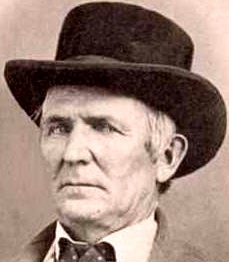 John Doyle Lee
Murderer · USA · 1857
Name: John Doyle Lee Lifespan: September 12, 1812 - March 23, 1877 Legal outcom…
120 victims
John Doyle Lee
Murderer · USA · 1857
Name: John Doyle Lee Lifespan: September 12, 1812 - March 23, 1877 Legal outcom…
120 victims
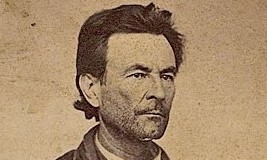 Champ Ferguson
Murderer · USA · 1861
Champ Ferguson was born November 29, 1821 in Clinton County, Kentucky, near the…
100 victims
Champ Ferguson
Murderer · USA · 1861
Champ Ferguson was born November 29, 1821 in Clinton County, Kentucky, near the…
100 victims
 John Wesley Hardin
Murderer · USA · 1867
John Wesley (Wes) Hardin (1853-1895) was an American outlaw, gunfighter, and co…
42 victims
John Wesley Hardin
Murderer · USA · 1867
John Wesley (Wes) Hardin (1853-1895) was an American outlaw, gunfighter, and co…
42 victims
 Henry Wirz
Murderer · USA · 1864
Henry Wirz (also known as Heinrich Hartmann Wirz) (November 25, 1823 – November…
11 victims
Henry Wirz
Murderer · USA · 1864
Henry Wirz (also known as Heinrich Hartmann Wirz) (November 25, 1823 – November…
11 victims
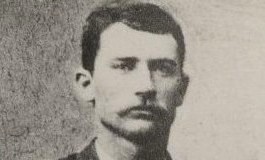 Henry Newton Brown
Murderer · USA · 1870
Henry Newton Brown — 19th century gunman; orphan; raised by relatives in Rolla,…
6 victims
Henry Newton Brown
Murderer · USA · 1870
Henry Newton Brown — 19th century gunman; orphan; raised by relatives in Rolla,…
6 victims
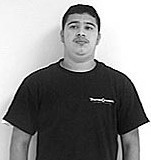 Gerardo Flores
Murderer · USA · 2004
Gerardo Flores (1986- ) of Lufkin, Texas, was convicted of two counts of capita…
2 victims
Gerardo Flores
Murderer · USA · 2004
Gerardo Flores (1986- ) of Lufkin, Texas, was convicted of two counts of capita…
2 victims
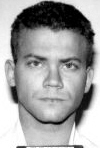 Ronford Styron
Murderer · USA · 1993
Ronford Lee Styron was convicted of the capital murder of his eleven-month-old…
1 victim
Ronford Styron
Murderer · USA · 1993
Ronford Lee Styron was convicted of the capital murder of his eleven-month-old…
1 victim
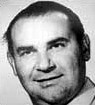 Stephen Leslie Bradley
Murderer · Australia · 1960
Stephen Leslie Bradley was convicted of the murder of eight-year-old Graeme Tho…
1 victim
Stephen Leslie Bradley
Murderer · Australia · 1960
Stephen Leslie Bradley was convicted of the murder of eight-year-old Graeme Tho…
1 victim
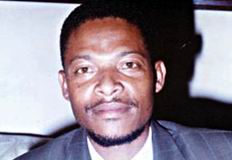 Nasser Kara
Murderer · Malawi · 2002
Nasser Ismail Wali Kara was a Malawian politician and a member of the National…
3 victims
Nasser Kara
Murderer · Malawi · 2002
Nasser Ismail Wali Kara was a Malawian politician and a member of the National…
3 victims
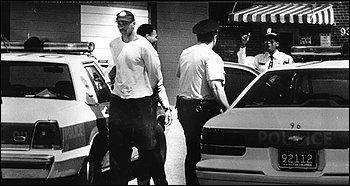 James Edward Swann
Serial killer · USA · 1993
James Edward Swann, Jr., also known as “The Shotgun Stalker,” was an American s…
4 victims
James Edward Swann
Serial killer · USA · 1993
James Edward Swann, Jr., also known as “The Shotgun Stalker,” was an American s…
4 victims
- Gender
- male
- Country
- USA
- Location
- Cuyahoga County, Ohio, USA
- Date of birth
- 1833
- Age at first offence
- 32
- Characteristics
- parricide, alcohol
- Victim profile
- Tamzen Parsons, 17 (his wife)
- Method of murder
- Shooting
- Date(s) of murder
- August 9, 1865
- Years active
- 1865
- Date of arrest
- Same day
- Status
-
Executed
Executed by hanging on February 10, 1866
Case record: John William Hughes
Background
John William Hughes was born in 1833 on the Isle of Man. His father, who owned a large hereditary estate on the island, died when John was four. A fierce legal battle between his mother and his guardian uncle followed over control of family property. The victorious uncle sent John off to boarding school at age seven. Three years later, the uncle moved him to the fashionable Glenview Academy.
In his early teens, after several attempts to run away from his uncle’s harsh regime, Hughes shipped on a merchantman bound for Calcutta, but the ship sprang a leak ten days out and was forced to return to port. He crept stealthily back to his mother, who nursed him when a bout of rheumatic fever made it impossible to return to the ship. After he recovered, the uncle took him to his own house in Ramsey, on the Isle of Man, but could not hold him under tight rein.
The guardian recognized the youth’s freedom by giving him an independent suite of rooms “furnished in princely style.” Hughes had his “first taste of fashionable life . . . [he] kept a pony, had an unlimited supply of money, the income of half his estate, drank champagne, smoked cigars, indulged in wine and women, and every tradesman in Ramsey respected his frequent orders.” His uncle urged him to prepare for a career in law, divinity or medicine, but Hughes would not be dictated to in the choice of a profession. Despite his romance with the sea, he elected to study navigation under the tutelage of a mathematician well known on the Isle of Man. His interest in lessons flagged, and he entered King William’s College intending to prepare for the ministry. Before he could finish training in theology, operations of the college were shut down by an onslaught of cholera, and Hughes went back to Ramsey to resume his fast life.
When old quarrels with his guardian revived, John ran away to Liverpool and, at age twenty-seven, enlisted in the British Army. He was sent to the Crimea and, at the battle of Balaklava, was severely wounded in the left leg. After he was mustered out of service, Hughes’s love life remained unsuccessful. His “beautiful and accomplished” fiancee from the western part of the Isle of Man broke their engagement. He married the “Belle of Ramsey,” a fisherman's daughter who was a servant in his house.
Marriage briefly inspired a zeal for agriculture. Aided by his brother-in-law, he revolutionized the farm economy of his estate, increasing the livestock fourfold and employing modern equipment and a large force of laborers. He then enrolled in the Royal College of Surgeons in Edinburgh and graduated in 1857. Returning to the Isle of Man, he financed new extravagances by selling off his estate, a step he always bitterly regretted. A period of restless wandering followed.
In 1860 he came to America and travelled through Canada and the West with a young English nobleman. When they parted at Detroit, Hughes came to Cleveland to visit some Manx friends. He visited again without his family in the spring of 1861 and during this stay opened an office in Warrensville, where he drilled recruits for the Civil War. In 1863, Hughes brought his wife and child to Cleveland, installing himself in a medical office on Public Square.
By May, wanderlust had bitten him again. Leaving his family behind in Warrensville, he went to Buffalo to join the Navy, but returned to practice medicine in Chicago. He returned again to Warrensville under the urgings of his wife and family, practicing there and in Bedford until March 1864.
In Bedford, Hughes made the acquaintance of Thomas Parsons through Thomas’s English cousin, Henry Parsons, but did not meet Thomas’s daughter Tamzen at that time.
The offence
Hughes enlisted in March 1864 in the 58th Regiment of the Ohio Volunteer Infantry and was promoted to sergeant at Columbus on April 26. In June, after passing an examination, he was discharged from the 58th Regiment and appointed Assistant Surgeon to the United States Colored Infantry. In the summer of 1864, President Lincoln authorized Surgeon Hughes to organize and administer the Marine Hospital at Vicksburg as a general hospital for black troops. He resigned in November and returned to Cleveland after hearing that his son Bisset was ill. He nursed his son for a week until the boy was out of danger and then left, vowing never to return.
In the following month, Hughes told Tamzen Parsons that the home he had come back to was not a pretty sight, that his wife was drunk and the household in disarray. Tamzen believed the doctor, particularly when he showed her what purported to be a decree of divorce. She eloped with Hughes to Pittsburgh on December 19, and they were married there on the following day.
The Parsons family pursued Tamzen. Tamzen’s brother-in-law, Joseph B. Haynes, proceeded to the Pittsburgh mayor's office, and with several policemen located Tamzen in a room at the St. Clair Hotel where she showed her marriage license. Hughes was arrested in the hotel office and jailed on charges of bigamy and forgery.
When brought before the mayor, Hughes delivered what had become a well-rehearsed speech, declaring that he would never again live with his wife whom he had found “beastly drunk” on a number of occasions.
According to Haynes, Hughes tried to buy off the criminal charges by proposing to enlist in the army as a substitute and to give his bounty payment to Tamzen. He also threatened that a continuation of the prosecution “would lead to unpleasant disclosures.” Hughes was convicted of bigamy and sentenced to one year's imprisonment in the Pennsylvania penitentiary, but after five months the governor granted a pardon following “unceasing petitions” of his wife.
In June 1865, Hughes returned to Cleveland and opened a new office on Ontario Street. Under ambiguous circumstances, his wife and child left for the Isle of Man. Hughes asserted that he had not sent his wife away and that she planned to return soon. A bystander observed Hughes parting affectionately with his wife at Union Station. It appeared that while Hughes was in jail in Pittsburgh, he had written to his agent in the Isle of Man to arrange passage for his wife.
Charlotte Parsons of Warrensville, Tamzen’s aunt, later called at Hughes’s medical office and told him that Tamzen was suffering from love and desire to see him. From that point, Doctor Hughes became “the creature of obsession.”
On the night of July 24, he arrived unannounced at Tamzen’s house and urged her to come away with him. A neighbor heard Tamzen decline, saying that Hughes had deceived her once and would not succeed at the same trick twice. When Tamzen’s father returned home and found him still on the premises, he ejected him with difficulty. On the following Saturday, Tamzen’s father swore out a warrant against Hughes for breaking and entering.
After the confrontation, Hughes scattered wild threats around the suburbs. On July 25, Hughes asked Dr. Ben Wray of Warrensville whether he had a pistol. When Wray asked what use he had for a gun, Hughes said of Tamzen: “If that damned bitch doesn't stop calling herself Mrs. Hughes, I'll shoot her.”
The next morning, while breakfasting at the Plank Road House in Warrensville where he had spent the night, he was told by Almeda Eddy that someone had fired at Tamzen and the bullet had passed through the girl's parasol. Hughes replied that, “It was a pity that it had not blown her brains out, and saved him the trouble some time.”
He drove on to Bedford and threatened Dr. Vial Salisbury that “he must hunt up Tamzen and kill her if she would not live with him.” Hughes was arrested for housebreaking on the complaint made by Tamzen’s father. Henry Parsons negotiated for charges to be dropped, but Hughes had to agree not to continue his harassment of Tamzen. The agreement was described as something he was incapable of keeping for long.
Between eight and nine o'clock on the evening of August 8, 1865, Hughes and his friend Oscar Russell, who kept the Ontario Street Saloon, hailed a carriage on Bank Street (now West Sixth Street). They asked the driver Ori Carr, whom they knew by his nickname “Bug,” the fare to Bedford. After Bug quoted $10, they ordered him to pick them up at the doctor’s office.
At the office, Hughes and Russell entered the carriage and instructed Bug to drive to several houses where they unsuccessfully attempted to pick up women for an overnight trip to the suburbs. They then went to Newburgh. Hughes directed Bug while drinking from a flask. At the Cataract House in Newburgh, Hughes and Russell had a beer, engaged rooms for the night, and arranged to return later. They returned to the carriage. Russell fell asleep as Hughes ordered Bug to push on to Bedford. At Bedford they pulled up at the Franklin House, and they changed their plans to spend the night and asked to be called at seven in the morning.
When they were awakened, Hughes and Russell continued drinking before and after breakfast and reentered the carriage. Hughes initially told Bug to drive onto the Cleveland road but stopped him almost immediately and ordered him to turn to Bedford. They stopped at Tamzen’s street. Hughes asked a boy from the Krums' house across the way to find out whether she was home; the messenger returned with the word that Tamzen and her mother had gone to pick blackberries.
Tamzen’s father came out of the house, and despite Hughes’s recent trespass he remained permitted in the area for about a half hour. Hughes returned to the carriage. They drove toward the Plank Road House. On the way, Hughes and Russell encountered Tamzen and Mrs. Parsons walking along the road with berry pails. Hughes called to Tamzen, but Mrs. Parsons motioned him away. Hughes got out of the carriage, talked to Tamzen for only a few minutes, and then a neighbor stopped his wagon to drive the women home. Hughes, frustrated, ordered Bug Carr to continue to the Plank Road House. Upon arriving there, Hughes and Russell resumed their drinking at a grocery across the street.
When Hughes returned to the carriage, he was undecided about his route. He spoke of going to Rocky River via the Twelve Mile Lock where he had a debt to collect, but the image of Tamzen’s face rose up again, blinding him to any other purpose. The carriage rolled back to the Parsons' street where Hughes learned that the family had gone to Bedford Village to have him arrested.
Hughes told Bug to drive as fast as he could for Bedford. In the village, he saw Tamzen leaving the house of Joseph Haynes and walking toward the home of William Christian. Hughes chased her up Columbus Street and called for her to stop. Tamzen cried out her refusal and rushed through the gate opened by the Christians' son Matthew, but Hughes caught hold of her before she reached the front door. He fired at close range. The bullet glanced off her head and she screamed. Hughes fired again and she dropped dead.
Meanwhile, Oscar Russell had been drinking solo in the barroom of the Fountain House. When he emerged, he saw Hughes dashing around the corner, keeping a pursuing crowd at bay with his revolver. Hughes joined Russell at the carriage, ordered him to get in, and pointed the gun at Bug Carr while directing him to drive off.
Hughes and Russell traveled to the woods. Hughes got out, asked Russell for some money, and made off toward the railroad tracks. He was followed and discovered in a little ditch covered by an oak bush just large enough for a man to hide under. To his captors, he said: “Gentlemen, you can do what you please with me — hang me up to the first pole if you choose. I came out here with that intention, and I've done it.”
Tamzen Parsons was killed during this incident.
Investigation
While in jail awaiting trial at the November session of the Cuyahoga County Common Pleas Court, Hughes was said to have turned to poetry rather than brooding. He wrote a tribute beginning:
Whose public buildings, churches, schools are classed Equal in architecture unsurpassed
By any place in homes for pretty lots — Palatial mansions grand, with cozy cots —
In shaded streets from Kinsman to St. Clair — Ohio City — Wilson to the Square,
The avenue, the suburbs round to Bank, We find abodes suited to each rank;
While style and fashion, etiquette, bon ton Are set to Euclid's rules.
They can't be wrong! Ability and talent, beauty, where To Cleveland's sons and daughters can compare?
Associations learn'd, unceasing lend Instructive aid to literature to bend
Its youth to purity of mind and heart And will, from which they never should depart.
Hughes also bemoaned the “gilded signs, the blazing lamps” of Cleveland’s taverns that lured the honest working man to ruin. He did not condemn strong spirits as an evil in themselves and asserted that bartenders adulterated drinks rather than liquor itself being the problem. He sighed over “the golden days of the past” when “The old folks' ale was made from malt and hops, Their rum was the essence of the sugar crops.”
Arrest and pre-trial
Before the killing, Tamzen’s father ejected Hughes from Tamzen’s premises after Hughes arrived on July 24. After a breaking-and-entering confrontation, a warrant for housebreaking followed. Hughes threatened Tamzen and others in the days leading up to the killing, including statements to Dr. Ben Wray and Dr. Vial Salisbury, and a remark to Almeda Eddy after the shooting at Tamzen had been discovered.
After the killing, Hughes was discovered and captured as he hid in a ditch. He awaited trial at the November session of the Cuyahoga County Common Pleas Court.
Trial
At trial, the defense did not attempt to deny the killing. It contended that Dr. Hughes did not act out of free will. The defense argued that he was blinded by temporary insanity arising from his frustrated passion for Tamzen Parsons and by an alcoholic haze due to heavy drinking immediately before the crime.
Defense counsel called witnesses to testify about Hughes’s frequent intoxication and wild conduct while drunk. J.D. Keegan, a druggist who had known Hughes since the spring of 1862, told the jury that liquor made Hughes “very reckless, and he seemed to have no regard for his character and to be indifferent as to what he might do while in that condition. When drunk he seemed utterly demented and sensensens.”
Oscar Russell, who accompanied Hughes in the carouses that ended with the killing, testified that Hughes and he had downed “the gargantuan total of twenty-five ales at the grocery opposite the Plank Road House.” Russell also provided evidence supporting the prosecution’s claim of premeditation. Russell praised as “a nice shooter” a pistol he had seen in the doctor’s office before they set out on their wild ride, and Hughes replied: “Yes, I'll put it in my pocket.”
The defense also argued hereditary predisposition to violent insanity. Dr. Cubban, a Manxman, testified that Hughes’s grandmother Jane Kenwitch committed suicide about a year after her husband’s death. She had suffered five or six fits before taking her life. Other members of Jane Kenwitch’s family were insane and one or two had also committed suicide.
In final arguments, Hughes’s counsel invoked “the madness of love.” Lawyer L.E. Knight argued that Hughes was “subject to a wild infatuation in affairs of love, but he is not the first or only one who has become the deluded victim of infatuation.” Knight referenced “Other unfortunate men” including “Paris of ancient Troy, Marc Antony, Henry VIII, and Peter the Hermit whose zeal ignited the Crusades.”
Judge Coffinberry instructed the jury about the legal relationship of insanity, intoxication, and criminal responsibility. The instructions included that when the mind had become diseased by a habit of intemperance and thereby lost the power to distinguish between right and wrong or to comprehend the nature of the criminal act, the defendant was no more subject to punishment than if his insanity had been due to natural causes. The judge instructed that if a crime was committed in a frenzy by a drunken man who was not insane when sober, the drunkenness and temporary insanity it might have induced were not a complete defense.
Judge Coffinberry further instructed that even if intoxication was not an absolute defense to murder, the jury might consider whether Hughes was so drunk at the time of the shooting as to be incapable of the mental elements of murder, including premeditation, deliberation, and intent to kill. The jury also had to resolve a final question about whether Hughes had formed a purpose to kill Tamzen Parsons while sane or sober and then “got drunk to brace his nerves and harden his mind for the act of killing.” If so, regardless of his state of mind at the moment of shooting, intoxication neither excused nor mitigated first-degree murder.
The jury returned a verdict of guilty of first-degree murder.
Sentencing
Hughes gave no sign of emotion during sentencing. He read a long statement before sentence on December 30, 1865. Although placing heavy blame on “the ‘vice’ of drinking” as his downfall, he accepted the death penalty.
Hughes’s main purpose was described as denying the prosecution’s charges that he had premeditated Tamzen’s death and had relentlessly pursued a heart that had been closed to him after the revelation of his bigamy. When he was released from prison and his wife left for the Isle of Man, Hughes told the court that he had no thought of Tamzen Parsons until he received a letter from her that reproached him for his neglect and asked him “to see her, since there was no obstacle in the way.” He said that Tamzen’s family interfered with the renewal of their ties. He said that when he thought she was playing him false with another man, he did not know what “dreadful determination” might have entered his mind. He claimed his worst fault was that he loved Tamzen too well.
Hughes was condemned to die on February 10, 1866.
Outcome
The gallows used to hang Hughes had last been used to hang James Parks eleven years earlier for the 1853 murder of William Beatson at Cuyahoga Falls. The gallows had been “brought from its long retirement amid county lumber in Akron,” and it was erected in the northeast corridor of the Cuyahoga County jail. When the trap fell on schedule, John Hughes became only the second Cleveland murderer to be hanged since the founding of the city.
He was executed by hanging on February 10, 1866.
Other details
Tamzen Parsons was sixteen years old in the account of her early interaction with Hughes, when Hughes woke up before noon and Tamzen was loosening his cravat.
During that early encounter, Hughes asked: “Who are you?” Tamzen said: “Tamzen Parsons.” Hughes asked: “Where am I?” and Tamzen replied: “In my father’s house.” Tamzen asked him: “Doctor, why do you drink so much?”
A description of Hughes’s appearance was provided in a quotation by a contemporary pamphleteer: “He was the mold of form, and presented a physique which, in point of proportion and development, must needs command the admiration not only of underlings and invalids, but of those possessed of figures which hint the Apollo. The head was large and fully developed, especially at the base. As inclination to baldness gave him an older appearance than was warranted by fact, but the hair he had was of a brown color and glossy, and dressed in the 'French twist mode.' He wore a becoming moustache and imperial.”
The account also described Hughes’s “right eye” as “looked larger than the other, owing to the fact that it was once knocked so far out that it hung upon the cheek.”
At the end of Hughes’s recital to Tamzen, the account stated: “I wish to God I were your wife.”
Hughes was described as having been hospitalized at Vicksburg by President Lincoln authorization to organize and administer the Marine Hospital at Vicksburg for black troops.
Oscar Russell kept the Ontario Street Saloon and later had been drinking solo in the barroom of the Fountain House.
When Bug Carr was threatened at gunpoint, Hughes pointed the gun at Bug Carr while ordering him to drive off.
When Hughes was apprehended, his captors were told by him: “Gentlemen, you can do what you please with me — hang me up to the first pole if you choose.
Hughes was said to be only the second Cleveland murderer to be hanged since the founding of the city.
Spotted an error, or have more information about this case?