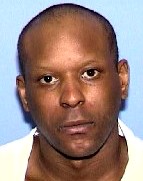
Calvin Letroy Hunter
Murderer Robert Martines Perez
Murderer · USA · 1994
Name: Robert Martines Perez · Other name used in proceedings: Robert Martinez P…
15 victims
Robert Martines Perez
Murderer · USA · 1994
Name: Robert Martines Perez · Other name used in proceedings: Robert Martinez P…
15 victims
 Billy Frank Vickers
Murderer · USA · 1993
Billy Frank Vickers Vickers was executed by lethal injection in Texas on Januar…
14 victims
Billy Frank Vickers
Murderer · USA · 1993
Billy Frank Vickers Vickers was executed by lethal injection in Texas on Januar…
14 victims
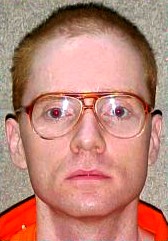 Robert Glen Jones
Murderer · USA · 1996
Defendant: Robert Glenn Jones (ADC#070566) · Co-defendant: Scott Nordstrom (ADC…
7 victims
Robert Glen Jones
Murderer · USA · 1996
Defendant: Robert Glenn Jones (ADC#070566) · Co-defendant: Scott Nordstrom (ADC…
7 victims
 Leslie Alfred Camilleri
Murderer · Australia · 1997
Leslie Alfred Camilleri was convicted in Victoria for the abduction, rape and m…
2 victims
Leslie Alfred Camilleri
Murderer · Australia · 1997
Leslie Alfred Camilleri was convicted in Victoria for the abduction, rape and m…
2 victims
 Thomas Doty
Mass murderer · USA · 1962
Thomas G. Doty was a passenger on Continental Airlines Flight 11. He was a marr…
44 victims
Thomas Doty
Mass murderer · USA · 1962
Thomas G. Doty was a passenger on Continental Airlines Flight 11. He was a marr…
44 victims
 Kenneth Eugene Bruce
Murderer · USA · 1990
Kenneth Eugene Bruce was convicted of capital murder in Texas and was executed…
1 victim
Kenneth Eugene Bruce
Murderer · USA · 1990
Kenneth Eugene Bruce was convicted of capital murder in Texas and was executed…
1 victim
 Neah Verma
Murderer · India · 2011
Name: Neah Verma Age: 23 Occupation: beautician / salesgirl for beauty products…
3 victims
Neah Verma
Murderer · India · 2011
Name: Neah Verma Age: 23 Occupation: beautician / salesgirl for beauty products…
3 victims
 Sid Ahmed Rezala
Spree killer · France · 1999
Sid Ahmed Rezala Rezala committed suicide apparently by inhaling the dense blac…
3 victims
Sid Ahmed Rezala
Spree killer · France · 1999
Sid Ahmed Rezala Rezala committed suicide apparently by inhaling the dense blac…
3 victims
 Ralph E. Davis
Murderer · USA · 1986
Ralph E. Davis was the estranged husband of Susan Davis. · Susan Davis was the…
1 victim
Ralph E. Davis
Murderer · USA · 1986
Ralph E. Davis was the estranged husband of Susan Davis. · Susan Davis was the…
1 victim
- Gender
- male
- Country
- USA
- Location
- Harris County, Texas, USA
- Date of birth
- April 30, 1971
- Age at first offence
- 32
- Characteristics
- armed robbery, robbery, abuse, domestic violence
- Victim profile
- Jung Choi (male store clerk) / Nguyen Tan Lu (female store clerk)
- Method of murder
- Shooting
- Date(s) of murder
- October 25 /November 12, 2003
- Years active
- 2003
- Date of arrest
- November 23, 2003
- Status
-
Sentenced to death
Sentenced to death on August 5, 2004
Case details
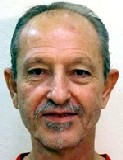
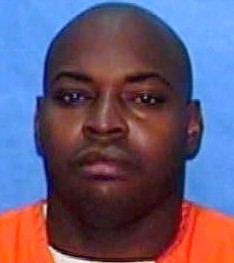
Calvin Letroy Hunter (TDCJ Number 999483) was born on 04/30/1971. He was received into TDCJ on 08/05/2004 at age 33. He was a Black male. His hair color was Black, and his height was 5' 07" with a weight of 171. His eye color was Brown. He was from Native County in Native State. His prior occupation was a laborer in Duvale Co. Florida.
Prior record
Hunter had one prior out-of-state commitment and TDCJ #863697 on a 2-year sentence from Harris County for Possession of a Firearm by a Felon.
The offence
On 10/25/2003 in Harris County, Texas, Hunter entered a convenience store and robbed the store clerk, an adult Asian male, of an unknown sum of money. Hunter shot the victim one time in the head, resulting in his death. Hunter fled the scene and was arrested one month later.
The Court of Criminal Appeals of Texas described the offence as a capital murder committed on October 25, 2003 under Tex. Penal Code Ann. § 19.03(a)(2).
Investigation and arrest
Hunter fled the scene after the shooting on 10/25/2003 and was arrested one month later.
Trial
In July 2004, a jury convicted Hunter of a capital murder committed on October 25, 2003. The case was on direct appeal from Case No. 968719 in the 230th Judicial District Court, Harris County. Meyers, J., delivered the opinion for a unanimous Court.
The jury’s answers to the special issues under Texas Code of Criminal Procedure Article 37.071, sections 2(b) and 2(e) led the trial judge to sentence Hunter to death (Art. 37.071, § 2(g)). Direct appeal to this Court was automatic (Art. 37.071, § 2(h)). After reviewing seven points of error, the Court found them to be without merit and affirmed the trial court’s judgment and sentence of death.
Mental retardation (Atkins claim)
Hunter challenged the sufficiency of the evidence supporting the jury’s determination that he was not mentally retarded.
The question of whether Hunter was mentally retarded was submitted to the jury as “Special Issue No. 1” in the punishment charge: “Do you find by a preponderance of the evidence that the defendant, Calvin Letroy Hunter, is a person with mental retardation?”
The jury unanimously answered this special issue in the negative.
The Court noted that Atkins v. Virginia held that executing one who was mentally retarded was unconstitutional. It referenced temporary judicial guidelines in Ex parte Briseno defining mental retardation as: (1) significantly subaverage general intellectual functioning; (2) accompanied by related limitations in adaptive functioning; (3) onset prior to age 18.
The Court described other evidentiary factors used in evaluating mental retardation in the criminal trial context, including questions about whether people who knew the person best thought the person was mentally retarded during the developmental stage and acted accordingly, whether the person formulated plans and carried them through or acted impulsively, whether the person showed leadership or was led around by others, whether the person’s conduct in response to external stimuli was rational and appropriate, whether the person responded coherently and rationally to oral or written questions, whether the person could hide facts or lie effectively, and whether the commission of the capital offense required forethought, planning, and complex execution of purpose.
The Court noted that jury determination of mental retardation was not required in certain contexts, citing Schriro v. Smith and Ex parte Briseno.
Defense evidence
The defense presented Dr. Richard Garnett, a psychologist in private practice with thirty-five years of experience in the field of mental retardation. Garnett did not administer any IQ or adaptive behavior tests to Hunter, but personally interviewed Hunter for two hours on May 21, 2004.
Garnett testified that Hunter verbally “communicated very well” but demonstrated “no understanding beyond [a] conversational hook.”
Garnett reviewed school records, criminal justice records, job history records, reports from prior testing, and results of testing conducted by the State’s expert.
Garnett testified that when Hunter was eight years old and in third grade, a school psychologist administered intellectual and adaptive behavior tests. Hunter achieved a verbal IQ score of 65, a performance IQ score of 68, and a full-scale IQ score of 64 on the Wechsler Intelligence Scale for Children. The school district identified Hunter as “educable mentally handicapped” and placed him in the special-education program. Garnett testified that Hunter progressed slowly academically, displayed behavior problems, and was expelled from elementary school for fighting.
Madonna Mahew, Hunter’s aunt, lived with Hunter when he was seven through eleven years old and helped him extensively with schoolwork. Mahew testified that Hunter was “slow to pick things up” and was nearly held back in the fifth grade. Hunter continued with special-education classes through high school. He was required to repeat the tenth grade and graduated with a “special diploma” after completing the eleventh grade.
Lulu Thorpe, who taught Hunter special-education language arts at Paxon Senior High School in Jacksonville, Florida, testified that Hunter was a “low functioning” but “model student” who was willing “to do something about his deficiency.” Thorpe remembered Hunter was outgoing and participated in extra-curricular activities. Thorpe testified that Hunter could communicate well and spoke up for his rights.
Linda Kittles taught Hunter special-education world-history classes during high school. Kittles testified that Hunter did not focus on academics, that his ranking in the class was “average to below average,” and that in her opinion Hunter was properly placed in special education. Kittles testified Hunter had a bit of a temper and was easily distracted but could be reasoned with. Kittles recalled Hunter was clean-cut and attractive, took pride in his appearance, was very active in the band, and was considered one of the “cool kids” in the school. Kittles testified that Hunter could make good conversation until there was something he did not know about, and then he would stop talking. Kittles testified that it was not until Hunter was in the classroom that his mental disability became apparent.
Hunter testified following high school he attended Tallahassee Community College in Tallahassee, Florida, where he took basic classes in math, English, and social science. Hunter’s mother testified that Hunter lived in an apartment with a roommate within walking distance of campus. Through an agreement between the community college and Florida A&M University, Hunter played the drums and marched with Florida A&M’s highly regarded marching band and took a music class at A&M.
Hunter’s sister, Lynette Hunter, testified that she traveled to Tallahassee to watch Hunter march with the band during home football games, but that she never saw him studying when she visited. Garnett testified that although Hunter reported he had twenty-four hours of college credit, Hunter never actually completed any courses.
Hunter was administered another IQ test by Dr. Floyd Jennings in 2004. Hunter achieved a verbal IQ score of 72, a performance IQ score of 80, and a full-scale IQ score of 74. Garnett testified that the scores on both IQ tests fell within the range of subaverage intellectual functioning, despite the full-scale score on the second being above 70, considered the “cutoff point.” Garnett explained: “roughly you look at where those ranges would overlap” and that would “give you a pretty good idea of where that true score would be.”
Garnett also testified Hunter had significant limitations in adaptive behavior. Garnett pointed out Hunter had problems dealing with money and did not budget or know how to file taxes. Garnett testified Hunter could not explain to Garnett a release that he had signed for a job or why he had filled out his W-4 form the way he had. Garnett testified Hunter could not interpret a passage from the Bible.
Garnett asked Hunter to explain an excerpt read aloud by Garnett during punishment proceedings: “Respondent paralegee filed this action for damages in equitable relief alleging that Tennessee in a number of its counties that denied them physical access to the State's courts in violation of Title 2 of the American Disabilities Act which provides no qualified individual with a disability shall, by reason of such disability, be excluded from participation or denied the benefits of the services, programs or activities of a public entity.”
Hunter was not able to do so, even though he told Garnett that he liked reading legal materials. Garnett testified Hunter was able to explain a newspaper section written at the fifth- or sixth-grade level, but was not able to look up a word or read from an encyclopedia.
Garnett testified that when he attempted to engage Hunter in conversation regarding the war in Iraq, Hunter’s answers were very superficial and displayed a “lack of really understanding at an in-depth level.” Garnett testified Hunter told him he thought they were fighting, and when further questioned Hunter told Garnett he had “heard they're fighting about oil.” Garnett then asked: “What do you think about that?” and “What do you really think that's going on over there?” Hunter responded: “Well, I just hope the troops come home soon” and “Well, it's a pretty difficult thing.”
On cross-examination, Garnett admitted that Hunter also told him that Iraq was in the Middle East near Iran and Syria and that Saddam Hussein had an illegal government.
Garnett explained Hunter wears a “cloak of competence” that masks his deficits in intellectual functioning and adaptive behavior. Garnett related that Hunter denied ever having been in special-education classes. Hunter told Garnett he learned about computers in prison, but Garnett related that Hunter had taken only a basic keyboarding class. Garnett testified that when Hunter told him he would “fix things at home,” it was only tightening a loose doorknob. Garnett testified Hunter said he could cook, but Garnett related Hunter’s “cooking” was only chopping vegetables and pouring the contents of a can into a pot. Garnett did admit on cross-examination that Hunter was able to explain the process of frying chicken.
Garnett characterized Hunter as an itinerant worker who lacked regular attendance based on Hunter’s work history showing he held twenty-seven different jobs between 1989 and 2004. Garnett testified Hunter lacked leadership qualities and had no close circle of friends, but had “many” marriages or relationships with women, indicating low adaptive functioning.
Garnett testified the actual crime did not appear to be planned but evolved quickly and impulsively. Garnett concluded Hunter was mentally retarded.
State evidence
The State presented Dr. George Carl Denkowski, a clinical psychologist who reviewed Hunter’s records and personally evaluated him. Denkowski did not administer an IQ test because Hunter had recently taken an IQ test and refused further IQ testing.
Denkowski interpreted the 2004 IQ test results, explaining that the testing manual used a confidence band of “four below and five above,” meaning Hunter’s IQ score could range from 70 to 79. Denkowski tested Hunter’s depression and anxiety using the Beck Depression Inventory and the Beck Anxiety Inventory. Denkowski testified the scores indicated Hunter was “mildly depressed.” Denkowski explained: “even mild depression can lower it by two or three points.”
Denkowski believed Hunter’s full-scale IQ score was actually higher than 74, particularly because Hunter was handcuffed during the testing, hampering performance. Denkowski testified the score artificially understated Hunter’s mental functioning because some questions were relevant only to school and not daily life. Denkowski testified the school psychologist noted Hunter’s “ability to articulate knowledge of appropriate social behavior is average” and that “the scale score analysis suggests poor academic orientation.” Denkowski explained that when academic functions were removed from scoring, the result provided a better measure of how Hunter could function in the community.
Denkowski tested adaptive behavior in 2004 by having Hunter rate himself using the Adaptive Behavior Assessment System. Hunter achieved an adaptive score of 94 with a score range of 91 to 97. Denkowski testified Hunter scored lowest in the communication area, which Denkowski explained measures: “social kinds of aspect of communication like, for example, if he comes up to you, really starts talking about something of interest to you or just blurts out whatever is on his mind, will he allow you to talk or will he dominate the conversation, will he talk over you.”
Denkowski testified that even with a low score in communication, Hunter had “a normal ability to meet the ordinary demand of everyday life.” Denkowski concluded Hunter was not mentally retarded.
Witness evidence about school placement and functioning
Yvette Baker, who dated Hunter during high school, worked with him at McDonald’s, and had a child with him, testified she did not know Hunter was in special education.
Lashon Davis also dated Hunter during high school and had three children with him. Davis testified she had no trouble conversing with Hunter and was not aware he was in special-education classes.
Hunter’s aunt, Beatrice Mayhew, testified that despite seeing Hunter often while he was growing up and considering him as her own son, she never knew Hunter was enrolled in special-education courses.
Carla Hull, Hunter’s former neighbor, testified she knew Hunter was in special-education classes but never knew why. She testified she did not think there was anything wrong with Hunter mentally and was able to converse with him.
Carl Deal, Hunter’s general foreman at Vanguard Plastics, testified Hunter fully filled out a three-page application and a medical questionnaire before being hired. Deal testified Hunter’s job duties included monitoring the extrusion of plastic film for proper thickness, width, and color, requiring that Hunter take measurements of the film, perform calculations based on a mathematical formula, and adjust machinery accordingly. Deal testified calculations and adjustments were made an average of twenty times a shift. Deal also testified Vanguard Plastics sent Hunter to a school to become certified as a forklift-operator, which required a written test. Deal testified Hunter passed and received forklift-operator certification. Deal testified Hunter caused no problems on the job and had no troubles fulfilling his duties.
Appellate reasoning on mental retardation sufficiency
The Court of Criminal Appeals held the evidence was sufficient to support the jury’s determination that Hunter failed to prove mental retardation, and that the judgment was not so against the great weight and preponderance of the evidence as to be manifestly unjust. Point of error one was overruled.
The Court also overruled Hunter’s claim that he was entitled to a pretrial determination of mental retardation separate from guilt. Point of error two was overruled.
The Court overruled Hunter’s complaint that the trial court failed to provide a definition of “society” within the future-dangerousness special issue. Point of error three was overruled.
Future dangerousness (special issue)
Hunter challenged the factual sufficiency and legal sufficiency of the evidence supporting the jury’s determination regarding future dangerousness.
The Court stated it consistently declined to conduct a factual-sufficiency review in this context and overruled point of error five.
For legal sufficiency, the Court stated it viewed evidence in the light most favorable to the jury’s finding and asked whether a rational jury could have found beyond a reasonable doubt that the answer to the future-dangerousness issue was “yes.”
The Court rejected a claim that good behavior in prison precluded a future-dangerousness finding, citing Bible v. State.
The Court described a long history of violent offences. It stated that beginning in the late 1980s and throughout the early 1990s, Hunter was abusive toward Lashon Smith, the mother of three of Hunter’s children, including hitting her on the head, face, chest, and stomach even while she was pregnant. It stated Hunter knocked Smith unconscious when he threw her against a wall. It stated Hunter beat Smith during an argument and fired two shots as she ran away. It stated Hunter pursued Smith, dragged her down the street by her hair, and beat his wife Everlyn, prompting Everlyn to call the police at least twelve times. Everlyn testified Hunter threatened her at different times with a hammer, a knife, and a gun, and fired a semi-automatic pistol while children were present.
The Court stated Hunter attempted to rape his neighbor Carla Hull in February 1990.
The Court stated that in December 1994 Hunter was involved in an armed robbery at a Wendy’s where a female employee was held at gunpoint, hit several times, and threatened with death.
The Court stated Hunter and another man committed a home invasion in January 1995. It stated Hunter placed a gun to Shenita Meyers’ head and forced her to leave with his accomplice to get money while he remained there alone with Meyers’ five-year-old daughter.
The Court stated that in January 1999 Hunter entered Ho Long’s home in Florida, placed a gun to his head, and stole his car. The Court stated that several days later Everlyn was stopped by police while driving Long’s car in Houston, which led to Hunter’s arrest soon thereafter. It stated a revolver was found in Hunter’s possession, and Hunter was charged and convicted of unlawful possession of a firearm.
The Court stated that in July 2003 Hunter stole a car at gunpoint from Tulia Jarrett, an elderly woman, in Cincinnati, Ohio. It stated Jarrett’s stolen car was recovered by police a month later in Houston with Hunter’s wallet and mail inside.
The Court stated that on September 2, 2003, Hunter entered the office of the Ambassador North Apartments in Houston and demanded money from Sandra Sanchez and Curtis Everett at gunpoint.
The Court stated that on September 15, 2003, Hunter committed a robbery at a Taco Bell and fired five shots at employee Jerall Mims, who escaped harm. It stated that as Hunter fled he crossed through a backyard behind the Taco Bell. When confronted by the resident’s father, Hunter shot him in the chest.
The Court stated that on October 23, 2003, Hunter committed a robbery at a Kentucky Fried Chicken and shot employee Elijah Mitchell in the stomach.
The Court stated that on October 25, 2003, Hunter shot Jung Choi while robbing him at Beauty Max.
The Court stated that on November 7, 2003, Hunter fired six shots at Danny Patel at the Crystal Inn when Patel investigated a sudden blackout at the Inn.
The Court stated that on November 10, 2003, Hunter committed a robbery at the Ori Sub Sandwich Shop and shot employee To Duong in the leg.
The Court stated that two days later, while committing a robbery at a Stop-N-Shop convenience store, Hunter pistol whipped and shot Nguyen Tan Lu, killing her.
The Court summarized that Hunter had shot five people, killing two of them, and had assaulted numerous others. The Court held there was sufficient evidence for a rational jury to find Hunter posed a future danger to society. Point of error four was overruled.
Extraneous-offense instruction
Hunter complained that the trial court erred by declining to instruct the jury at punishment that it could consider evidence of extraneous offenses only if it found beyond a reasonable doubt that he committed those offences.
The Court cited prior holdings that there was no error in not having a burden-of-proof instruction concerning extraneous offenses as long as the punishment charge properly required the State to prove the special issues beyond a reasonable doubt. The Court held the punishment charge in this case correctly required the State to prove non-mitigation special issues beyond a reasonable doubt. Point of error six was overruled.
Constitutionality of Texas death-penalty scheme
Hunter argued that the Texas death-penalty scheme was unconstitutional as applied to him because, with a single aggravating future-dangerousness factor, it was allegedly weighted toward an arbitrary death sentence since the jury had no discretion to assess life without parole.
The Court stated it had previously considered and rejected this claim and found no reason to reconsider. Point of error seven was overruled.
Outcome
The Court of Criminal Appeals affirmed the trial court’s judgment and sentence of death. The opinion by Meyers, J., was delivered November 7, 2007 and was published.
Other details
The case summary listed: “Current status field: Sentenced to death on August 5, 2004.”
The record included additional notes in the opinion:
- “Unless otherwise indicated all references to Articles refer to the Code of Criminal Procedure.”
- “The record before this Court does not indicate whether Dr. Jennings tested appellant on behalf of the defense or the State, or whether Dr. Jennings conducted the testing as a neutral court-appointed expert.”
- The Court stated that it had determined the excerpt read aloud by Garnett during punishment proceedings was from the syllabus of Tennessee v. Lane, and it provided the actual syllabus text: “Respondent paraplegics filed this action for damages and equitable relief, alleging that Tennessee and a number of its counties had denied them physical access to that State's courts in violation of Title II of the Americans with Disabilities Act of 1990 (ADA), which provides: "[N]o qualified individual with a disability shall, by reason of such disability, be excluded from participation or denied the benefits of the services, programs or activities of a public entity."” It also stated that “It is impossible, from the record before this Court, to know which version appellant was asked to explain.”
Spotted an error, or have more information about this case?