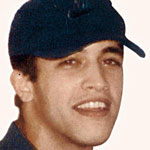
Sid Ahmed Rezala
Spree killer Christian Dornier
Spree killer · France · 1989
Christian Dornier Christian Dornier was found insane on November 10, 1989 and w…
14 victims
Christian Dornier
Spree killer · France · 1989
Christian Dornier Christian Dornier was found insane on November 10, 1989 and w…
14 victims
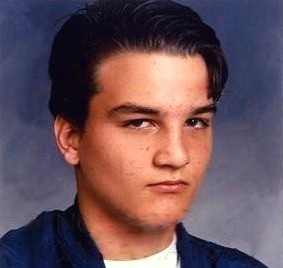 Eric Borel
Spree killer · France · 1995
Eric Borel (11 December 1978 – 24 September 1995) was a French student. At the…
5 victims
Eric Borel
Spree killer · France · 1995
Eric Borel (11 December 1978 – 24 September 1995) was a French student. At the…
5 victims
 Jean-Claude Romand
Spree killer · France · 1993
Jean-Claude Romand (born February 11, 1954) was a French impostor and murderer…
5 victims
Jean-Claude Romand
Spree killer · France · 1993
Jean-Claude Romand (born February 11, 1954) was a French impostor and murderer…
5 victims
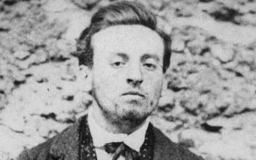 Jean-Baptiste Troppmann
Spree killer · France · 1869
Jean-Baptiste Troppmann was born in Alsace in 1848 and was executed at the age…
8 victims
Jean-Baptiste Troppmann
Spree killer · France · 1869
Jean-Baptiste Troppmann was born in Alsace in 1848 and was executed at the age…
8 victims
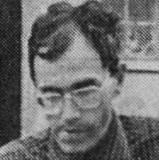 Guy Martel
Spree killer · France
Guy Martel killed seven people and wounded five others in a shooting spree thro…
7 victims
Guy Martel
Spree killer · France
Guy Martel killed seven people and wounded five others in a shooting spree thro…
7 victims
 Mohammed Merah
Spree killer · France · 2012
Mohammed Merah was a French-Algerian Islamist terrorist who had previously been…
7 victims
Mohammed Merah
Spree killer · France · 2012
Mohammed Merah was a French-Algerian Islamist terrorist who had previously been…
7 victims
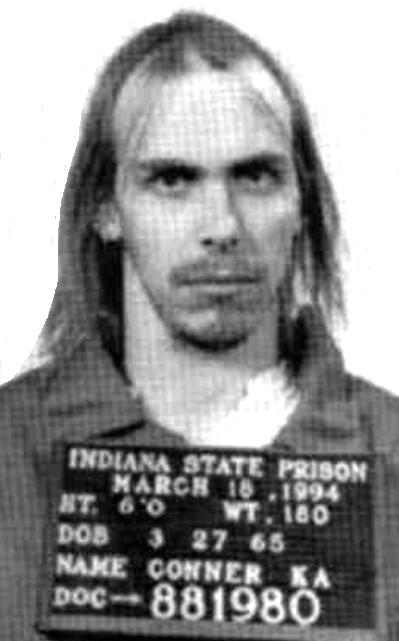 Kevin Aaron Conner
Murderer · USA · 1988
Kevin Aaron Conner was convicted by jury in the Marion Superior Court, Criminal…
4 victims
Kevin Aaron Conner
Murderer · USA · 1988
Kevin Aaron Conner was convicted by jury in the Marion Superior Court, Criminal…
4 victims
 Andrea Hicks Jackson
Murderer · USA · 1983
Andrea Hicks Jackson (also known as Felice) was convicted of murdering a black…
1 victim
Andrea Hicks Jackson
Murderer · USA · 1983
Andrea Hicks Jackson (also known as Felice) was convicted of murdering a black…
1 victim
 Randall McKinney
Murderer · USA · 1981
Randall Lynn McKinney Randall Lynn McKinney was 41 years old and was from Tular…
1 victim
Randall McKinney
Murderer · USA · 1981
Randall Lynn McKinney Randall Lynn McKinney was 41 years old and was from Tular…
1 victim
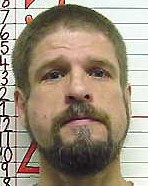 Jeffrey Tokar
Murderer · USA · 1992
March 11, 1992 — Jeffrey Tokar picked up his girlfriend, Sandra Stickley, share…
1 victim
Jeffrey Tokar
Murderer · USA · 1992
March 11, 1992 — Jeffrey Tokar picked up his girlfriend, Sandra Stickley, share…
1 victim
 Harry Thaw
Murderer · USA · 1906
Harry Kendall Thaw (February 12, 1871 - February 22, 1947) was the son of Pitts…
1 victim
Harry Thaw
Murderer · USA · 1906
Harry Kendall Thaw (February 12, 1871 - February 22, 1947) was the son of Pitts…
1 victim
- Gender
- male
- Country
- France
- Location
- France
- Date of birth
- May 13, 1979
- Age at first offence
- 20
- Characteristics
- rape, drug addict
- Victim profile
- Isabel Peake, 20 / Emilie Bazin, 20 / Corinne Caillaux, 36
- Method of murder
- Pushed from a speeding overnight train - Strangulation - St abbing with knife
- Date(s) of murder
- October 13-December 14/17, 1999
- Years active
- 1999
- Date of arrest
- January 10, 2000
- Status
-
Died in custody
Committed suicide apparently by inhaling the dense black fumes from his smouldering mattress in a Portuguese prison on June 28, 2000
Case identification
Sid Ahmed Rezala
Status / legal outcome
Rezala committed suicide apparently by inhaling the dense black fumes from his smouldering mattress in a Portuguese prison on June 28, 2000.
Background
Rezala had been described as a charming plausible and intelligent young man. He had previously been described as having a sinister, disturbing side bubbling just below the surface, and French police believed he was a “real-life Jeckyll and Hyde character” with a disturbing side.
Rezala was born in El Bar, Algeria, on 13 May 1979. He moved with his parents, two brothers and sister to the southern French port of Marseilles in 1994.
Friends and officials who dealt with him over the last five years described early delinquency at the age of 15 shortly after his family moved. He had done well at school in Algeria but in Marseille began to spend his time with drug dealers and petty criminals.
A criminal record obtained by some French newspapers showed convictions for petty theft and imprisonment for violent crime and sexual offences, including a serious sexual assault on a 14-year-old boy in 1995.
Between jail terms, Rezala worked as an apprentice baker. He was described as good-looking and cheerful and made friends easily.
Rezala met his girlfriend Nadia Abdelmalek in 1997 and she had his baby daughter a year later.
In the same year he was sent to a young offenders institution at Lyunes, France, for pulling a knife on a French railway employee. During his incarceration, Ms Abdelmalek told him she was setting up home with another man. In response, Rezala was thought to have roamed France on near-deserted night trains after his release in June last year, taking revenge on women, and his continuing attachment to Ms Abdelmalek was thought to have led to his downfall.
Rezala had previous convictions for male rape and assault. His name was placed on a list of suspects who fitted the profile and description of Isabel Peake’s killer soon after her battered and half-naked body was found by a dog walker beside the Limoges-Paris line on 13 October.
The offence / alleged killings
Rezala was the prime suspect for the deaths of three women in France between October and December last year. The alleged victims were Isabel Peake, Corinne Caillaux, and Emilie Bazin.
Isabel Peake
Isabel Peake was a 20-year-old French and law student from Barlaston, Staffordshire, who was two weeks into an exchange programme at the University of Limoges.
On 13 October 1999, she boarded the 0308 train to Paris, on her way home for a visit. Before dawn, police thought she was pushed from the train as it travelled at about 125km/h through the disused station at Chabenet, central France.
A local farmer discovered her partially clothed and mutilated body later that day, and her baggage was found strewn along the line.
Taxi drivers in Limoges told police a man fitting Rezala’s description was seen chatting to Ms Peake at the town’s station on the night of her death. He had been made to leave a train at Limoges earlier that night for travelling without a ticket.
Her parents, Annie and Brian Peake, described her as a “bright, independent, hard-working and kind girl”. She had planned to become a lawyer after her studies at Birmingham University.
Corinne Caillaux
Corinne Caillaux was a 36-year-old mother of two from Solesmes, northern France, who worked in a doctor’s surgery.
On 13 December 1999, she took a sleeper train to visit her mother in the south of France, who was going into hospital for a throat operation.
Guards found her slumped in a pool of blood in a train toilet. She had been stabbed at least 10 times and died later from her injuries.
Her five-year-old son was found asleep in a nearby carriage.
Relatives described the devoted family woman as “pretty ... and always ready to do a favour”.
Guards had cautioned Rezala for travelling on the sleeper train without a ticket.
Emilie Bazin
Emilie Bazin was a 20-year-old sociology student who had befriended Rezala.
Her body was found on 18 December 1999, buried under coal in the basement of a house where Rezala had rented a room in Amiens, northern France.
She was stripped naked and wrapped in a sheet and had been strangled.
The daughter of a textile magnate, she had been reported missing at the end of October.
The student was reported to have visited Rezala several times when he was in a youth detention centre, and was seen with him at student hang-outs in Amiens. She was also said to have accompanied her to a bus stop; that was described as the last time she was seen alive.
Investigation and identification
A nationwide alert after he was identified as the likely killer of Ms Caillaux on another overnight train in December preceded his escape.
Despite Rezala’s name being placed on a list of suspects who fitted the profile and description of Isabel Peake’s killer soon after her body was found on 13 October, magistrates investigating her murder did not circulate his name at the time. Investigators later identified him as the chief suspect and France became determinedly focused on him in December.
French rail murder suspect posters were pasted up across France, featuring Rezala’s face, in a bid to track the fugitive down.
Inquiries included study of taped video evidence from five cameras placed at the trackside during the later reconstruction.
Police reconstruction of Isabel Peake’s fall
French investigators reconstructed the moments leading up to Isabel Peake’s death.
They re-staged Ms Peake’s fall from a train on the main Toulouse-Paris line at Chabenet, near Chateauroux in central France. They threw a dummy of the same size and weight as the 20-year-old Birmingham University student, wearing the same clothes, from a train as it passed Chabenet at about 125kph (80mph). They repeated the exercise four times from four different positions to determine whether Ms Peake fell, jumped or was pushed.
Colonel Bruno Hemar, part of the Chateauroux inquiry team, said: “We are trying to recreate the exact conditions of the night the student was travelling, the fall, and especially how she came to be unclothed.”
The badly injured body was found near the station at Chabenet on 13 October. Her body was found naked up to the waist, although forensic scientists found no evidence that she had been raped.
Police had not been certain whether Ms Peake was the victim of an accident or of one or more assailants.
During the reconstruction, a man succeeded in pushing the dummies out of the train without assistance. Two were pushed through a window and two from a carriage door.
Police needed to assess the effect of the fall on her clothes. The first dummy’s head was torn off by the fall. The damage to the others was severe, with limbs dislocated and clothing torn to shreds.
After the reconstructions, the two examining magistrates, Michel Bonnieu and Jean Dematteis, expressed their “very great satisfaction” with the information gained. Mr Dematteis said: “We now know what happened,” without elaborating.
The prosecutor at Chateauroux, Christian Ponsard, said that as the day progressed, the theory of an accident became increasingly improbable, but he told a news conference it was too early to make public investigators’ opinions about what happened. He said: “There are still many theories that we have but we will have more or less convincing evidence and there will be some theories that are more convincing than others,”
Investigators planned to study taped video evidence from five cameras placed at the trackside, which filmed the reconstructions.
Two British officers flew out from Birmingham to oversee the reconstruction, although they were not officially involved in the inquiry. Journalists in France expressed surprise at the scale of the high-profile reconstruction and said it was being staged for the benefit of the British media.
Mr Ponsard said: “I don't think that since the start of the investigation we have bowed to media pressure. We have taken our time and acted in our own time until the time was right to act. This reconstruction had been planned for a long time...we needed to coordinate with the SNCF (the French rail operator) and other organisations. These things are not sorted out overnight,”
French authorities also waited to speak to a 20-year-old Marseilles man who was said by witnesses to have chatted to Ms Peake in Limoges shortly before she boarded the train.
Arrest and custody
June release / earlier incarceration context
Rezala was freed in June from a prison near the city where he had served time for “voluntary violence with a knife”.
He had been arrested on a high-speed train from Berne to Paris on 13 November, a month after the death of Ms Peake. French customs officers found him in possession of cannabis, a knife and a tear gas grenade.
Despite being listed as a suspect for the murder, Rezala spent just a few hours in custody before being set free on the orders of the public prosecutor.
Escape and subsequent arrest in Lisbon
Rezala escaped from his parents’ home in Marseilles because a formal arrest warrant had not been issued by the magistrate in charge of the case in Dijon. He took a train to Barcelona, where he was arrested on minor theft charges but released because the French authorities had not yet posted his name with Interpol.
French authorities later arrested him in Lisbon. He was arrested on 11 January in the Portuguese capital Lisbon. He was described as the chief suspect in the murder of Isabel Peake, and also suspected of killing Emilie Bazin and Corinne Caillaux.
He was arrested in a joint operation between French and Portuguese police. Thousands of posters featuring Rezala’s face were pasted up across France in a bid to track him down.
At the moment of arrest, a French police spokesman at Orleans said: “At the moment details about the circumstances of the arrest are very sketchy. But I can confirm that Rezala was apprehended by officers in Lisbon, Portugal, in the early afternoon.”
Prior self-harm in custody
In March, Rezala slashed his arm and neck with a razor blade and was transferred to a prison hospital. Portuguese prison authorities denied it as a suicide attempt at the time and dismissed it as “an attempt to draw attention to himself”.
Portuguese prison officials later described an incident on 19 January as “attention-seeking” rather than suicidal, and said he did not injure himself seriously. The incident was described as unclear in terms of how he obtained a knife.
Trial / extradition proceedings
Rezala was held in Portugal awaiting extradition to France to face trial for the killings.
A Lisbon court had authorized his extradition from Portugal to France by 14 March (as reported), and his appeal against extradition was ongoing.
Rezala lodged a final appeal against his extradition on 7 June, and he was due to be returned to France if his final appeal failed in September.
Rezala’s appeal questioned whether he would face a jail sentence in his home country of more than 25 years, which was described as the maximum allowed in Portugal. Under the Portuguese constitution, a defendant cannot be extradited to a country which allows the death sentence or a jail sentence of more than 25 years.
In May, the supreme court in Lisbon rejected an application by Rezala to overturn a lower court’s decision to extradite him.
Confession and statements attributed to Rezala
In May, the French journal Le Figaro-Magazine published what it claimed was an admission of guilt by Rezala to the three murders. He said he had experienced a sudden mental “flash” which made him kill.
Rezala was quoted as saying about Isabel Peake: “She was very sweet. We got on well together at the station in Limoges. She telephoned her bloke ... and once more I saw the flash.”
In a later account, Rezala told a French journalist Aziz Zemouri that he saw a flash and felt “ordered” to kill her. Rezala said: “There's a flash. You see her dead,”
and also said: “It's like a command that you get in the form of a picture and you go ahead and do it.”
On the murder of Isabel Peake, Rezala was quoted: “She was a very gentle girl. We started chatting at Limoges station at three in the morning... She asked me for my mobile phone and I lent it to her. She telephoned her boyfriend. She took a drag on my joint. Then I got this flash again...”
In another quoted passage in the account, Rezala told the magazine: “She was going to Paris and planned to go on to England to see her bloke. She wanted to call him. She asked to use my mobile phone. I lent it to her. I have always helped other people. She telephoned her bloke and took a drag on my joint. I saw that flash again.”
He was described as having refused to confess under hours of questioning by French police and magistrates.
Rezala said he committed the murders while high on cannabis and bourbon and that he received visions or “flashes” compelling him to kill.
Rezala also said about the alleged sexual assault and the motive frame: “If anyone had done that to someone from my family, I would have killed the guilty person, I would have ripped his heart out and I would have eaten it.”
He was also reported to have regretted the pain he had caused the families of the dead women, speaking from a prison hospital. Speaking of the deaths of Isabel Peake and Emilie Bazin, he said he had seen a “flash” and had then killed the students as if he were “carrying out an order”. He also said: “God help the families. And may He send me misery.”
Extradition-related delays and security issues
French and Portuguese authorities were described as having faced lapses of security that allowed Rezala to escape from France last December and end his days on Wednesday night.
It was stated that Rezala had been scheduled to be under “heavy surveillance” at the time of his death.
Portuguese Justice Minister Antonio Costa said he deplored the suicide and promised a full investigation.
Portugal’s Justice Minister Alberto Costa said: “I regret what has happened and await the conclusions of the inquiry.”
French justice minister Elisabeth Guigou spoke of her “terrible disappointment”.
In the case, the unofficial version of events was that Lisbon prison guards were distracted by the Portugal-France Euro 2000 semi-final on television.
The death was announced by the Portuguese news agency soon after 1am Lisbon time but occurred several hours earlier.
The French newspaper Le Monde suggested that, according to its information, Rezala used a cigarette lighter to start the fire, while guards and other prisoners watched the match, and by the time the alarm was raised he was dying.
Suicide in Portuguese prison (mattress fire and smoke inhalation)
Prison Services director Celso Manata said Rezala was alone in the cell at the time. Celso Manata said: “The mattress was fireproof. It didn't burn, but produced a lot of smoke. There were no signs of burns, so he must have died from suffocation”.
Before his final act, Rezala took precautions by blocking the cell door with a bar from his bed. He was still alive when guards forced their way in, and he was rushed out of the jail for treatment, but died later.
Rezala’s body was delivered to the Lisbon morgue before dawn for a post mortem.
Reactions from victims’ relatives and lawyers
Isabel Peake’s parents
Isabel Peake’s distraught parents had curtains drawn at their north Staffordshire home.
Brian and Annie Peake issued a statement through their lawyer. They said: “But of course it does not soften the blow of our daughter's death,” and: “We need time to consider the implications of today's news. We will not be making any further statements at this stage and ask for our privacy to be respected.”
French victims’ lawyer actions
A lawyer for one of Rezala’s French victims said he intended to bring legal actions against the French and Portuguese governments and the French railways to ensure the truth of Rezala’s four months of murderous vagrancy around France would be exposed in public.
Maitre Gilbert Collard, a lawyer for Ms Caillaux’s parents, said the suicide was the latest in a series of “disfunctions of justice”, starting with Rezala’s escape from France. He intended to bring two actions on behalf of her family, one against the Portuguese and French justice systems and one against the French railways, the SNCF, for failing to protect passengers.
Mr Collard said: “The whole Rezala affair - from his escape, to the repeated delays in his extradition, to his successful suicide, despite a previous attempt in jail in Lisbon in February - had "unfolded in the most questionable possible way.”
Another lawyer, acting for Ms Caillaux’s husband, Xavier, said the husband was torn between frustration and relief at Rezala’s death. Maitre Jean-Noel Lecompte said: “My client is deeply disappointed because he will never know the truth of the circumstances his his wife's murder,” and: “But at the same time, it is fair to say, that he feels a certain relief that Rezala will never harm anyone else.”
Commentaries on guilt and meaning of suicide
Bill Cash, MP for Stone, where Ms Peake’s parents live, said: “For the family of Isabel this would appear to be the ultimate proof of his guilt.”
Rezala’s French lawyer Jean Claude Richard said: “I find it very surprising that somebody is able to set fire to his cell without being seen or heard. We are very sad that a boy of 21 has died in this way. To us, this does not mean he was guilty.”
Mr Richard also said Rezala had last been seen in March when he was under heavy sedation.
Guild of Students president Matthew Gorman said: “You can't be happy about it I just think the whole situation is very, very sad and that there are two young people who have died.” and: “Clearly I would have liked a trial to take place in France but that's not going to be the case.” and: “raises questions of guilt” and: “Hopefully now this really will be the end of it,”
Other details
Planned legal steps in extradition
Rezala’s French lawyers had asked the consulate in Lisbon for a full explanation of the incident, and Portugal’s justice department ordered an inquiry into the prison suicide.
Rezala’s lawyers had requested an inquiry and were also reported to have planned to take his case to the European Court of Human Rights if the Portuguese appeal failed.
Mr Richard said Rezala’s case was looking positive, as he had just heard his appeal against extradition would be heard by Portuguese courts. If the appeal had failed, the lawyers were planning to bring his case to the European Court of Human Rights.
Earlier interview and procedural issues
The accounts included that Rezala fled to Portugal via Spain and made a phone call from a public call box to his girlfriend, unaware that investigators in France had tapped her phone.
Investigators then launched a lengthy judicial process for extradition.
A controversial interview in French magazine Le Figaro was described as taking place the previous month and included comments in which Rezala described feeling “ordered” to kill and referenced a flash.
French Interior Minister Jean-Pierre Chevenement was critical and said he doubted the article’s authenticity.
French police were also reported to have said Rezala made similar comments in off-the-record conversations with them.
Body found circumstances for Isabel Peake
Police had been investigating whether the death was an accident, an accident with turbulence effects ripping clothes, or a murder.
A police chief said at the initial investigation stage that “an autopsy is in progress” and preliminary investigations had shown Isabel suffered “an extremely violent impact” and that was “without a doubt the cause of her death.” Christian Ponsard said: “An autopsy is in progress but preliminary investigations have shown that Isabel suffered an extremely violent impact and that is without a doubt the cause of her death.”
He added: “We are led to believe that she fell from a train. Beyond that, all possibilities remain. It is possible it was an accident. It is possible that it was a murder.”
He also said: “When you find the body of a 20-year-old woman in suspicious circumstances, you think straight away of a sex attack, but the fact is that I have no proof that it did or did not happen. Examinations are still in progress,” and: “It is possible that the dead woman's clothes could have been ripped off her body as she fell from the train because of turbulence.” and: “This is not a criminal investigation yet ... but still an investigation into the cause of Isabel's death.”
Rail safety statements
An SNCF spokesman said it was highly unlikely Ms Peake had fallen from the train she was assumed to be on. The SNCF spokesman said: “the doors of mainline high-speed trains can not be opened between stops and that members of staff were unable to override the safety system.” and: “He said that all trains travelling between Limoges and Paris were equipped with a safety system which made it impossible to open a door at speeds of over seven kilometres per hour.” and: “At the point where Miss Peake's body was discovered trains would normally be travelling at about 160 kilometres per hour.”
Timeline
- 13 October 1999 — Isabel Peake boarded the 0308 train to Paris; her body was discovered later that day after police thought she was pushed from the train.
- 14 December 1999 — Corinne Caillaux was killed on the night train from Calais to Italy.
- 17 December 1999 — The body of Emilie Bazin was found in the cellar of a house where Rezala had been living (reported in one account as 17 December).
- 18 December 1999 — Rezala was arrested on minor theft charges in Barcelona (as described in the account of his arrest for theft).
- 23 October 1999 — Parents spoke publicly saying they were convinced Isabel did not jump to her death from a train.
- 11 January 2000 — Rezala was arrested in Lisbon, Portugal.
- 14 March 2000 — A court in Lisbon was described as having authorized Rezala’s extradition to France.
- 7 June — Rezala lodged a final appeal against his extradition.
- 19 January 2000 — Rezala slashed his neck and wrist in prison.
- 28 June 2000 — Rezala died in a Portuguese prison by inhaling dense black fumes from a smouldering mattress, apparently committing suicide.
- 30 June 2000 — A report described that Peake’s killer died while guards “watched TV”.

Spotted an error, or have more information about this case?